

What if the secret to unforgettable chorizo isn’t heat, but the slow bloom of smoked paprika and a patient cure? If the word “chorizo” has led you to bland or unfamiliar flavors, you’re not alone. Finding authentic spanish chorizo online means looking beyond the label to learn where it was made, what gives it character, and how it is meant to be enjoyed.
Genuine Spanish chorizo brings together savory pork, fragrant pimentón, and a depth shaped by its ingredients and curing style. Terms such as Ibérico, Serrano, and Cantimpalo can make choosing feel like a puzzle, though. Fresh and cured varieties also have different uses in the kitchen.
This guide explains how to assess product details, compare styles, and choose chorizo for your table. You’ll learn what origin and ingredient information can tell you, how to match the cure to your dish, and what to consider when buying food online. These same label-reading habits can help you explore Spanish and Mediterranean delicacies with greater confidence.
Key Takeaways
- Use origin and ingredient details to assess authentic spanish chorizo online.
- Compare fresh, semi-cured, and cured chorizo to choose a style suited to your dish.
- Understand how pig breed and paprika can shape chorizo’s flavor and character.
- Follow storage and serving directions to enjoy cured chorizo at its best.
- Build a Spanish-inspired table around well-chosen Mediterranean delicacies.
The Quest for Authentic Spanish Chorizo Online
You’re right to want more than a sausage that simply tastes salty or spicy. Good chorizo has character: savory pork, fragrant paprika, and a texture shaped by how the meat is prepared and cured. Searching for authentic spanish chorizo online can feel confusing, especially when a product page doesn’t explain where the sausage was made or how it was prepared.
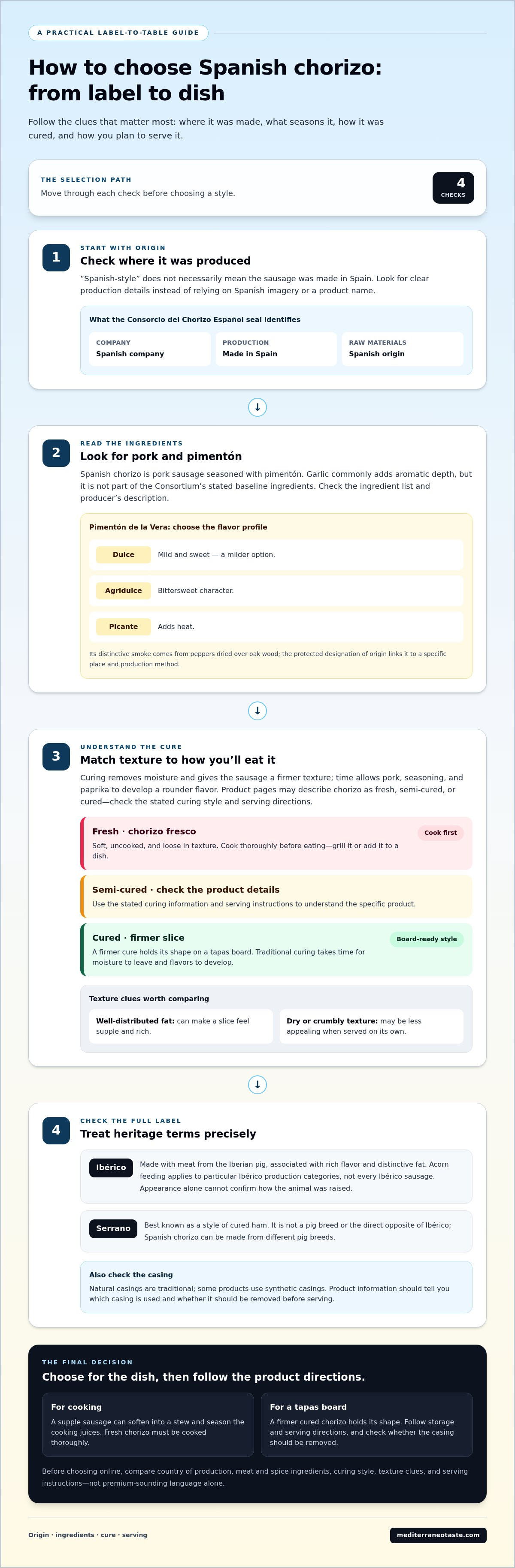
Origin matters because “Spanish-style” on a label does not necessarily mean the sausage was made in Spain. The Consorcio del Chorizo Español seal, for example, identifies chorizo made by a Spanish company, produced in Spain using Spanish raw materials. Check for clear information about both the place of production and the ingredients, rather than relying on Spanish imagery or product names alone. For a broader look at chorizo’s origins, ingredients, and regional forms, see Chorizo - Wikipedia.
Why Supermarket Alternatives Fall Short
Mass production can prioritize speed and consistency, while traditional curing takes time for moisture to leave the sausage and flavors to develop. That does not make every artisanal product better by definition. Instead, compare the details: the ingredient list, the stated curing style, and whether the producer explains how the chorizo is made. A well-cured sausage can offer layered flavor and a firmer, more satisfying slice.
Spice quality and balance matter, too. Paprika contributes chorizo’s characteristic color and aromatic warmth; an overly harsh or flat spice profile can make the flavor feel one-dimensional. Look for pimentón or paprika among the ingredients, and note whether the product is described as sweet, bittersweet, or hot. Fat also affects texture. Well-distributed fat can make a slice feel supple and rich, while a dry or crumbly texture may be less appealing for serving on its own.
The Sensory Indulgence of the Mediterranean
Picture a freshly sliced Ibérico chorizo: a deep red cut, flecked with creamy fat, releasing a warm, savory aroma. The experience begins before the first bite. A few carefully chosen slices can turn a simple board into a tasting, or add a distinctive note to a relaxed meal.
That is the appeal of exploring genuine Mediterranean flavors rather than choosing by packaging alone. To compare chorizo online, start with the details that affect your decision: country of production, meat and spice ingredients, curing style, and serving instructions. Then consider whether the texture and flavor suit the dish you have in mind. These practical cues make a crowded category easier to navigate and help you choose with more confidence.
Decoding the Craft: What Defines Authentic Spanish Chorizo?
Spanish chorizo is a pork sausage seasoned with pimentón and prepared according to Spanish charcuterie traditions. The Consorcio del Chorizo Español standard sets out specific criteria for products carrying its seal, including production in Spain by a Spanish company using Spanish raw materials. Garlic commonly adds aromatic depth, although it is not part of the Consortium’s stated baseline ingredients. For a closer look at the standard and its production principles, consult the Consorcio del Chorizo Español: What Defines Authentic Spanish Chorizo.
Ingredients are only part of the picture. During curación, or curing, the sausage dries and matures. Moisture loss firms its texture, while time allows the pork, seasoning, and paprika to develop a more rounded flavor. The casing holds the mixture in shape as it cures. Natural casings are traditional and can vary in appearance; some products use synthetic casings. Check the product information to see which casing is used and whether it should be removed before serving.
The Soul of the Sausage: Pimentón de la Vera
Pimentón de la Vera is known for its distinctive smoke, created by drying peppers over oak wood. Its protected designation of origin connects the paprika with a specific place and production method. The varieties offer different flavor profiles: Dulce is mild and sweet, Agridulce brings a bittersweet quality, and Picante adds heat. Alongside salt and curing, pimentón is a defining flavor in Spanish chorizo. If you prefer a milder sausage, look for Dulce on the label; for more heat, choose one marked Picante.
Ibérico vs. Serrano: The Importance of Heritage
Ibérico identifies chorizo made with meat from the Iberian pig, a breed associated with rich flavor and distinctive fat. Acorn feeding applies to particular Ibérico production categories, not every Ibérico sausage. If the label refers to acorn feeding, check that it describes the specific product rather than assuming the term applies to all Ibérico chorizo. A cut slice with fine streaks of fat through deep-red meat may offer a supple texture, though appearance alone cannot confirm how the animal was raised.
Serrano is not a pig breed or a direct opposite to Ibérico. The term is best known for a style of cured ham, while Spanish chorizo can be made from different pig breeds. Read the full label rather than treating these terms as interchangeable quality grades. Pairing Spanish meats with other Mediterranean delicacies can create a varied tasting, with each ingredient bringing its own character.
When shopping for authentic spanish chorizo online, use origin, ingredients, curing information, and clear labeling as your guide. These details are more useful than premium-sounding language on its own.
Selecting Your Profile: A Guide to Chorizo Varieties
Choose chorizo according to what you want it to do in the dish. A supple sausage can soften into a stew and season the cooking juices; a firmer cure holds its shape on a tapas board. The label’s curing terms help you understand texture and preparation. The shape tells you how the sausage is formed, but not whether it is fresh or cured.
- Chorizo fresco: Soft and uncooked, with a loose texture. Cook it thoroughly before eating, whether you grill it or add it to a dish.
- Semicurado: Partially cured and often yielding and sliceable. Check the product directions: some are suited to serving as they are, while softer examples can also be cooked.
- Curado: Dried for longer, so it is generally firmer and more concentrated in flavor. It can be served without cooking when the product is labeled ready to eat.
Sarta describes a horseshoe shape, while vela is a straight, candle-like format. Sarta is easy to portion for cooking or serving. Vela’s even shape makes it convenient for consistent slices. Use the curing description and serving guidance, not appearance alone, to decide how to use either format.
The Charcuterie Masterpiece: Slicing Chorizo
For a board, choose a firm curado that makes a clean cut and holds together when sliced. Ibérico and Pamplona-style chorizos can bring a rich, paprika-led presence, although their recipes and firmness vary. Slice thinly, around 2–3 mm, to let the aroma open while keeping enough texture for a satisfying bite. Arrange the slices as the centerpiece of a spread, and add complementary Mediterranean delicacies for variety.
The Culinary Workhorse: Cooking Chorizo
For stews, soups, or paella, choose fresh chorizo that is intended to be cooked, or a softer semi-cured style suited to cooking. As it warms, its fat can render into the pan, carrying paprika’s smoky savor through the other ingredients. A firm, dry sausage may keep its shape, but it will not soften into the dish in quite the same way. Sarta is a practical shape for home cooking: portion it into pieces and let it release flavor as the meal simmers.
When you search for authentic spanish chorizo online, start with the dish, then match the cure and texture to the result you want. This makes it easier to compare product descriptions and avoid choosing a sausage based on its shape or name alone.
Preserving the Peak: Storage and Slicing Techniques
Good serving begins with good care. Store chorizo according to the package directions, since requirements can differ between fresh, semi-cured, and fully cured varieties. Keep fresh chorizo refrigerated and cook it as directed. For a cut cured sausage, protect the exposed surface with suitable wrapping and return it to the refrigerator. Avoid sealing it away while damp, and use clean hands and utensils when handling it.
A pale, dry white bloom on the casing can be natural on some traditionally cured sausages. Not every mark is harmless, though. Fuzzy growth, unusual colors, a slimy surface, or an unpleasant odor are reasons to stop and follow the product’s safety guidance. If you are unsure, do not taste it to test. When the package gives no guidance and the sausage looks or smells unusual, do not eat it.
Serving at the Golden Temperature
Take cured chorizo from the refrigerator shortly before serving, while following any package instructions. Around 20–22°C, its fats soften and the aroma of pork and spices becomes more expressive. Slice it first, then allow the pieces to rest for about 30 minutes, keeping that time brief and following the product directions. With richly marbled Ibérico, you may notice the fat begin to glisten as it warms. Do not leave it out indefinitely.
Use a sharp, thin-bladed knife and make clean, even cuts. A sharp knife preserves the slice’s texture instead of crushing it, while a stable board makes serving easier. For a thicker sausage, cut at a slight angle; for a neat tasting board, keep the slices consistent.
Pairing for Sensory Indulgence
Build a balanced plate around contrast. Aged Manchego brings a firm, savory bite; crusty artisan bread offers a crisp exterior and soft center. A bold Tempranillo can stand alongside the sausage’s depth, while crisp Sherry provides a brighter counterpoint to its richness. Serve modest portions, taste the combinations, and let the paprika and cured-meat aromas lead.
A few well-chosen ingredients can turn a simple spread into a memorable tasting. If you are exploring authentic spanish chorizo online, plan for the whole experience, from storage to the first fragrant slice. Discover more Mediterranean delicacies to bring variety to your table.
Curating Your Experience with Mediterraneo Taste
A memorable Spanish meal is shaped by more than one ingredient. It is the pleasure of bringing together tradition, thoughtful choices, and flavors that reward attention. Mediterraneo Taste Spain specializes in Mediterranean delicacies and traditional Spanish food products, helping home cooks bring Spanish flavors into their own kitchens.
That focus is useful when you are exploring unfamiliar labels and styles. Rather than choosing by the lowest price or the largest selection, begin with what you want to taste and cook. Consider the origin, ingredients, and character you have learned to look for in chorizo, then build a table around complementary Spanish flavors.
The Luxury of Authentic Discovery
Authenticity is an invitation to notice the details: the fragrance of paprika, the texture of a carefully sliced sausage, and the way a well-chosen ingredient can transform a shared meal. Exploring Mediterranean delicacies is not just a step toward filling the pantry. It can be part of planning a meal and discovering flavors that suit your table.
Make your next meal feel like a small event in your kitchen. Plan a tasting, prepare a simple spread, and give each ingredient room to shine. For cured meats, follow the product’s storage and serving directions. As you shop for authentic spanish chorizo online, use the origin and style cues in this guide to compare products with confidence.
Complete Your Spanish Pantry
Build beyond the board. Pair Spanish ingredients with a traditional paella pan, or explore paella kits for a meal centered on the shared pleasure of cooking. Spanish saffron adds another distinctive ingredient to your pantry, ready for dishes where its aroma and color can take the lead.
Think of each choice as part of a larger culinary story: a heritage ingredient, the right cookware, and a table set for discovery. Explore the Mediterraneo Taste Spain collection for Mediterranean delicacies, paella products, and Spanish culinary essentials.
Bring Spanish Flavor to Your Next Table
Choosing authentic Spanish chorizo online becomes easier when you know what to look for. Spanish origin and traditional production offer important clues, while the curing style helps you match the sausage to serving or cooking. Follow the storage and serving directions so its aroma, texture, and flavor can shine.
That same attention to heritage and flavor can guide your wider Spanish pantry. Mediterraneo Taste Spain offers Mediterranean delicacies and traditional Spanish food products, including specialized cookware for preparing paella at home. A few well-chosen ingredients can make an everyday meal feel more considered.
Explore the Mediterraneo Taste collection to find Mediterranean delicacies, paella products, and inspiration for your next Spanish meal.
Frequently Asked Questions
Is it safe to eat Spanish chorizo raw, or does it need to be cooked?
Cured Spanish chorizo can usually be eaten without cooking if its packaging identifies it as ready to eat. Fresh chorizo, often labeled chorizo fresco, is uncooked and must be cooked thoroughly before serving. Semi-cured varieties can differ, so follow the label’s preparation instructions rather than relying on appearance alone. If the packaging is missing or unclear, do not assume the sausage is ready to eat.
What is the main difference between Spanish and Mexican chorizo?
Spanish chorizo is typically a cured or semi-cured sausage seasoned with pimentón, while Mexican chorizo is commonly sold fresh and uncooked, with chili and vinegar among its characteristic seasonings. Their textures and uses differ: cured Spanish chorizo can be sliced for a board, while fresh Mexican chorizo needs cooking. If you are looking for authentic spanish chorizo online, check the country of origin and whether the product is fresh or cured.
How should I store my chorizo once the vacuum seal is broken?
Follow the storage directions on the packaging, since advice can vary by product and curing style. As a general precaution, refrigerate opened chorizo, wrap the cut end to protect it from drying out, and keep it separate from foods that could contaminate it. Use clean utensils when handling slices and follow the product’s use-by guidance. Fresh chorizo should remain refrigerated and be cooked as directed.
There is white mold on my chorizo casing; is it still safe to eat?
A light, dry white coating can be intentional on some traditionally cured sausages, but do not assume every white spot is harmless. Check the label for guidance about the casing and its surface. Avoid eating chorizo with unusual colored or fuzzy growth, a slimy texture, or an unpleasant odor. If you cannot tell whether the coating is expected, do not taste it to check.
Can I freeze Spanish chorizo to extend its shelf life?
Freezing may be an option, but follow the product’s packaging instructions because the best approach depends on whether the chorizo is fresh or cured. Freezing can affect texture, particularly after thawing, so the result may be better suited to cooking than serving in thin slices. Wrap it securely to protect its quality, thaw it in the refrigerator, and use it promptly. Never use freezing to rescue chorizo that may have spoiled.
Does authentic Spanish chorizo contain nitrates or artificial preservatives?
There is no single answer for every sausage. Ingredients and curing methods vary by producer, so authenticity alone does not tell you whether nitrates, nitrites, or other preservatives are used. Read the ingredient list on the specific package. Traditional ingredients such as pork, salt, garlic, and paprika do not guarantee a product is free from added curing ingredients. If you have a dietary concern, use the label as your guide.
What is the best way to slice chorizo for a traditional tapas board?
For cured chorizo, use a sharp knife to make clean, even slices. Thin slices work well for a tapas board, letting the aroma emerge while keeping enough texture for a satisfying bite. If the sausage is straight, cut across it; for a curved piece, angle the knife slightly to create attractive slices. Let the slices rest briefly after cutting so their aroma can open before serving.