

What makes authentic Spanish seafood paella rice a good fit for your recipe? It is not simply the packet labelled “paella rice”. Bomba is known for firm, separate grains, while Senia and Bahía tend towards a creamier finish. The best option depends on the texture you want and the method you plan to follow.
If you’re concerned about mushy grains or uneven cooking, start by matching the rice to the recipe. Check the variety, origin details and cooking directions on the packet, then use a recipe written for that rice. This guide explains how to compare common Spanish varieties, what origin labels can tell you, and why a rice’s ability to absorb broth matters. Seafood paella is distinct from traditional Valencian paella, but both deserve rice suited to the dish and method.
Key Takeaways
- Choose authentic Spanish seafood paella rice by how its grains absorb broth and the texture you want on the plate.
- Compare Bomba, Calasparra and other varieties by their documented grain behaviour, then follow the cooking directions on the packet.
- Look for a clearly named rice variety and stated origin; specific details are more useful than broad promotional wording.
- Match the rice to your seafood paella recipe and experience, rather than assuming every Spanish rice dish uses the same variety.
- Consider how your paella pan, burner, accessories and ingredients work together to support a confident cook.
What makes rice suitable for authentic Spanish seafood paella?
Suitable paella rice absorbs flavourful cooking liquid while holding its shape well enough to give the finished dish tender, distinct grains. In seafood paella, that balance helps the rice take on the savoury notes of the broth without becoming a soft, sticky mass.
Rice is part of the cooking method, not a shortcut to authenticity. A packet labelled “Spanish style” or “paella rice” does not, by itself, identify the variety, its origin or how it will behave in your pan. Look for those details, then match the rice to a recipe that explains its liquid, heat and timing. The right rice supports the result, but it cannot compensate for a method that does not suit it.
When comparing authentic Spanish seafood paella rice, consider how readily it absorbs broth, whether its grains remain distinct and whether those qualities suit the texture you want to serve. These practical details are more useful than a broad claim on the front of the packet.
What texture should seafood paella rice have?
A well-made seafood paella generally has tender grains that remain recognisable rather than blending into a creamy mixture. Mushy rice or excess liquid can obscure the separate grains and make the seafood and broth flavours less distinct. Texture depends on more than rice: liquid quantity, heat, pan shape and size, and the cook’s handling all affect how evenly the grains cook. Follow the recipe’s directions rather than treating a variety name as a guarantee.
Is seafood paella the same as Valencian paella?
No. Seafood paella and Valencian paella are distinct preparations within Spain’s varied rice-cooking traditions. Seafood paella centres on seafood, while Valencian paella refers to a particular regional dish. Neither name should be used as a catch-all for every Spanish rice recipe. For a broader overview of the dish’s different versions and rice traditions, see Paella: History, Varieties, and Rice.
This distinction matters when choosing ingredients. A rice dish can be Spanish without being specifically Valencian, and a seafood-based version should not be presented as traditional Valencian paella simply because both are cooked in a paella pan. Authenticity comes from choosing ingredients suited to the particular dish and preparing them according to its method, not from Spanish-sounding packaging alone.
Start with the seafood paella recipe you intend to cook. Check which rice it specifies and how the method manages liquid and heat. Then choose a rice with clear variety information and directions that fit the dish. This gives you a sound starting point for grains that absorb the broth and finish with the texture the recipe aims for.
How Spanish rice varieties behave in seafood paella
Spanish rice is not one uniform ingredient. Varieties can differ in how they take up broth and the texture they give the finished dish. For seafood paella, the useful question is not simply which rice sounds most traditional, but whether its behaviour suits your recipe and preferred result.
Bomba is a familiar choice, but it is not the only Spanish rice suited to paella. Denomination of Origin (D.O.) details on a packet can help identify a rice’s declared growing region and variety. Treat these as useful buying information, not as a promise that the rice will cook perfectly in every recipe.
What should buyers know about Bomba rice?
Bomba is known for absorbing cooking liquid while tending to keep a firm, separate-grain texture. This can make it a useful match for seafood broth when you want the rice to take on flavour without becoming creamy. It is not the only authentic option, and the result still depends on your pan, heat and method. Follow the recipe and packet directions together.
How should Calasparra and other options be considered?
Calasparra rice is recognised for its absorption qualities, but its own packet directions should guide how you use it. Other named varieties can give different results, so do not assume they behave exactly like Bomba. Compare the variety and origin details, then choose a recipe written for the rice you have.
| Variety or label | Documented grain behaviour | Package directions | Seafood paella suitability |
|---|---|---|---|
| Bomba | Known for absorbing liquid while staying relatively firm and separate. | Use the packet’s quantities and cooking method. | A useful choice when the recipe calls for Bomba and a distinct-grain finish. |
| Calasparra | Recognised for its absorption qualities. | Follow its own stated liquid and cooking instructions. | Can suit seafood paella when the recipe is designed for it. |
| Senia or Bahía | Associated with a creamier texture than Bomba. | Follow the specific packet and tested recipe. | Consider if that texture fits the dish you want to serve. |
| Albufera | A recognised D.O. Valencia variety; use the package or recipe for specific cooking guidance. | Follow the directions for the rice in hand. | Choose when the recipe specifies it or its expected result suits your preference. |
| Balilla x Sollana | A variety covered by D.O. Calasparra; avoid assuming behaviour not stated on the pack. | Use the product’s own cooking directions. | Match it to a recipe that names this variety. |
D.O. Valencia includes Senia, Bahía, Bomba and Albufera. D.O. Calasparra covers Bomba and Balilla x Sollana. These designations make origin wording more specific; the variety name still matters when comparing likely cooking behaviour. Read both details where they appear, and do not substitute a general claim such as “premium paella rice” for clear information.
For a dependable result, choose the recipe first, then check that its named rice matches the packet. Measure and cook as directed rather than borrowing ratios or timings from a different variety. A suitable pan and steady heat also support even cooking. Explore Spanish paella ingredients and equipment as you plan your next seafood paella.
How to compare Spanish seafood paella rice before buying
A clearly labelled packet makes it easier to choose rice for your recipe. Compare the information it provides, not just the colours, seals or Spanish wording on the front. A named variety, stated origin and readable cooking directions give you useful details to weigh up before buying.
Packaging language alone cannot prove quality, authenticity or protected status. Words such as “premium”, “traditional” or “paella style” are promotional unless supported by specific information. Look for details you can use: the variety inside, where it comes from and how the producer recommends cooking it.
Which details on the rice pack are useful?
Start with the variety name and cooking directions. Instructions for liquid, method or timing help you judge whether the rice fits your chosen recipe. Stated origin adds another point of comparison, but it does not guarantee flavour or cooking performance. If you see a protected-origin or certification mark, check its exact wording and current meaning through the relevant official source rather than inferring its promise from the graphic alone.
Check the condition of the pack, too. Choose dry rice in packaging that is intact, clean and clearly labelled. Avoid packs that are torn, damp or visibly compromised. If the variety, origin or directions are difficult to read, you have less information to work with. A polished design may catch your eye, but it cannot replace useful label details.
How can buyers compare rice without relying on marketing claims?
Use the same checklist for each option. This keeps the comparison focused on what matters for your recipe, rather than letting a bold front-of-pack claim make the decision for you.
- Variety: Is a specific rice variety named, or does the pack only say “paella rice”?
- Origin: Does it state a place or recognised designation clearly?
- Condition: Is the packaging intact and the rice protected from moisture?
- Directions: Are the cooking instructions readable and specific enough to follow?
For example, if two packs both say “traditional” but only one names the variety and gives cooking directions, the second provides more useful buying information. That does not automatically make it the better rice; it gives you a clearer basis for comparing it with your recipe. Keep a note of the variety and directions you use, too. It will make your next choice easier if you like the result.
Mediterraneo Taste Spain specialises in Mediterranean delicacies and traditional Spanish food products. Explore Spanish ingredients and paella products to complement your rice choice.
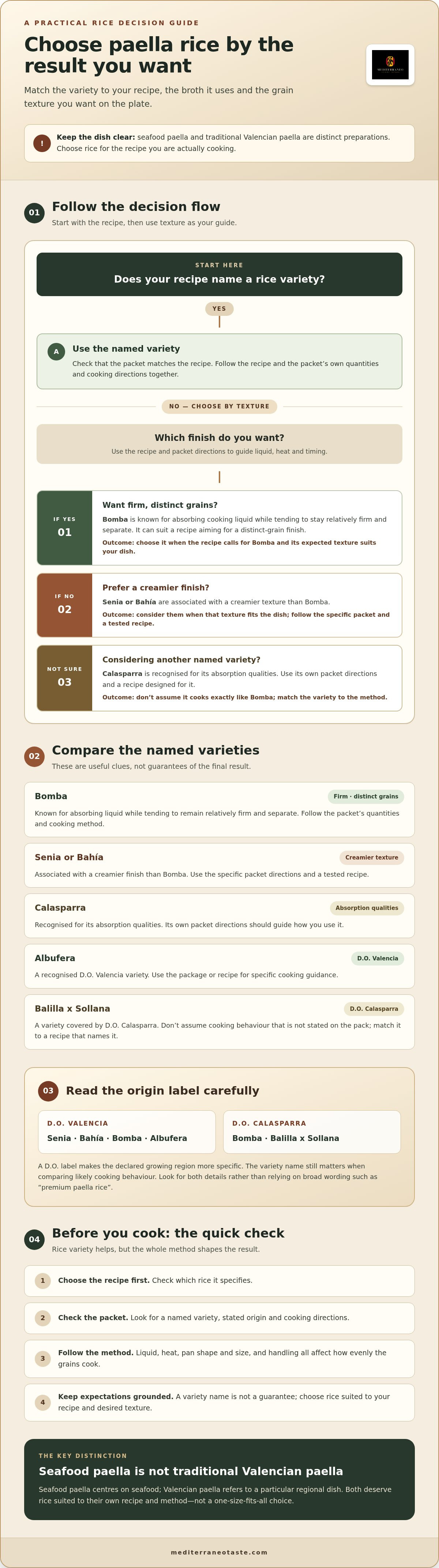
Matching seafood paella rice to your recipe and style
Choose rice with a clear result in mind, then let the recipe guide the details. This simple decision path keeps variety, texture and technique aligned:
- Select your seafood paella recipe. Decide what style of dish you want to cook.
- Check the named rice variety. Look for a recipe that suits the rice you plan to buy.
- Follow its directions. Use the recipe’s quantities and method rather than borrowing instructions from another variety.
This order matters because the rice, seafood broth, pan, heat and cooking technique all shape the result. Changing the variety while keeping every other instruction the same may affect how the rice absorbs liquid and cooks through. Treat the recipe as a whole, rather than as a loose set of interchangeable figures.
What should a first-time paella cook prioritise?
Start with clarity, not complexity. Choose a rice packet with readable cooking directions and a recipe written for that variety. Specialist Spanish rice can help you explore textures associated with paella, but it is not a requirement for every home cook. A well-explained recipe and careful attention to its method give you a sensible foundation.
Avoid swapping in a different rice simply because the name sounds similar. If your recipe specifies Bomba, for example, another variety may need different guidance. Follow the recipe’s advice on cooking liquid, heat and pan, and resist adding liquid or extending the cook by guesswork. Let the instructions lead.
How can experienced cooks refine their rice choice?
Once you are comfortable with a method, choose according to the finish you enjoy. If you prefer firmer, more distinct grains, select a variety and recipe that aim for that texture. If you favour a softer result, choose a recipe that describes that outcome. Keep the rice choice consistent while you assess the method.
Make small, deliberate comparisons. Record the variety, packet directions, recipe method and your impression of the finished grains. On a later attempt, change one element at a time, such as trying another rice while keeping the pan and technique familiar. This makes it easier to see which change affected the result, without mistaking a shift in heat or liquid for a difference in the rice.
Even a suitable grain can cook unevenly if the heat varies across the pan or the recipe’s liquid and technique do not suit the variety. Keep those factors in view as you refine your approach. For Spanish ingredients and paella essentials to complement your rice selection, explore Mediterraneo Taste Spain’s paella range.
Bring authentic Spanish seafood paella rice into your kitchen
A confident seafood paella begins with a considered match: choose a named rice variety, look for clear origin details and pair it with a recipe written for that rice. Keep your preferred finish in mind, whether you want tender grains that remain distinct or a softer texture. Together, these choices give you a clearer starting point than a broad “paella rice” claim alone.
Rice is central, but it is only part of the cooking setup. The pan, heat source, seafood broth and method all shape the dish. Mediterraneo Taste Spain brings together Spanish food products and paella equipment for home cooks creating a Spanish-inspired meal.
What equipment supports a confident paella cook?
Choose a paella pan and heat source suited to your recipe and cooking setting. The pan needs to work with the method you are following, while steady heat helps the rice cook consistently across the dish. There is no single setup for every kitchen, so consider where you will cook and what your recipe calls for.
Paella pans, gas burners, full kits and accessories can help bring your setup together. Add ingredients that suit your chosen seafood recipe, such as Spanish saffron where it is called for. Explore equipment by category and choose pieces that complement the way you plan to cook. Do not assume every burner suits every connection or setting.
What should you prepare before cooking?
Get organised before the pan gets hot. Choose your seafood paella recipe and rice together, then read the packet and recipe from beginning to end. Check that their variety and cooking directions align. If the recipe calls for a different rice, choose a suitable recipe rather than improvising quantities or timing.
Prepare seafood and other ingredients in line with a tested recipe and reliable food-safety guidance. Keep ingredients organised so you can follow the method without rushing or guessing. A little preparation leaves more attention for the cooking itself, from managing heat to noticing how the rice is progressing.
- Rice: Keep the named variety and its directions to hand.
- Recipe: Check the ingredient list and method before starting.
- Equipment: Have the pan, heat source and useful accessories ready for your cooking setting.
- Ingredients: Prepare seafood and accompaniments as the recipe directs.
Choosing authentic Spanish seafood paella rice is about making the details work together: variety, origin clarity, recipe fit and the texture you want. Mediterraneo Taste Spain specialises in Spanish food and paella equipment, including pans, burners, sets, accessories and ingredients. Explore Spanish food and paella essentials to prepare for your next cook.
Make your next paella a confident first step
Let your next seafood paella be a chance to discover what you enjoy in the finished dish. A different rice variety can change the texture and how the broth comes through. Keep your recipe and method close, and note what you would adjust next time. Each thoughtful cook helps you build a better feel for authentic Spanish seafood paella rice.
Set the scene with ingredients that suit your recipe and equipment that fits your cooking approach. Mediterraneo Taste specialises in Mediterranean delicacies and traditional Spanish food products, with paella pans and specialised cooking equipment for preparing Spanish food at home.
Explore Spanish food and paella essentials, and take the next step towards a generous, flavourful meal shared around the table. Choose your rice, gather your ingredients and enjoy the pleasure of cooking.
Frequently Asked Questions
Is Bomba rice the only authentic rice for seafood paella?
No. Bomba is a recognised Spanish paella rice, but it is not the only authentic choice for seafood paella. Spanish varieties such as Senia and Bahía are also used in rice dishes, with different texture characteristics. Choose according to the recipe and the finish you enjoy, rather than assuming one variety defines authenticity. Clear variety and origin details on the pack can help you make an informed choice.
Can I use Arborio rice for Spanish seafood paella?
You can cook with Arborio, but it is developed for a different result. Its starch release helps create the creamy, cohesive texture associated with risotto, while seafood paella is generally made with rice grains that remain more distinct. If Arborio is what you have, expect a different dish rather than a close match for a Spanish seafood paella recipe. For a more familiar paella texture, choose rice specified by your recipe.
How much rice should I allow per person for seafood paella?
A useful starting point is about 100 grams of dry rice per person. For example, allow roughly 400 grams for four diners, then consider the recipe’s other ingredients and whether paella is the main course. Measure the rice before cooking, not after it has absorbed liquid. If your recipe gives a different serving amount, follow that guidance so the rice and broth remain in balance.
Should I rinse Spanish paella rice before cooking?
Usually, follow the packet or recipe rather than rinsing automatically. Rinsing can remove loose surface starch and add water that may affect the measured liquid in your recipe. If the instructions do not call for washing, measure the rice as directed and add it to the pan. If the pack specifically says to rinse, drain it well and use the recipe’s method for the rinsed rice.
Can I use a different Spanish rice variety if my recipe names Bomba?
Yes, but the result may change, so do not treat the varieties as interchangeable. A different grain may absorb liquid or reach its preferred texture differently. For a first attempt, it is simpler to use the variety named in the recipe. If you substitute, choose a recipe written for the rice you have, or use its packet directions as your guide instead of copying Bomba-specific instructions.
How should I store an opened pack of paella rice?
Keep the rice dry and protected from kitchen moisture. Transfer an opened pack to a clean, airtight container, or seal the original packaging securely if it closes well. Store it in a cool, dry cupboard away from heat and strong-smelling ingredients. Use the pack’s storage guidance and best-before information, and check the rice for signs of moisture or pests before cooking.