

What if the secret to Spain's most celebrated communal feast isn't the saffron or the simmer, but the precise geometry of the pan itself? When you set out to buy authentic spanish paella pan cookware, the sheer variety of traditional carbon steel, sleek enameled finishes, and modern electric alternatives can quickly feel overwhelming. Sizing calculations leave many cooks second-guessing portions, while the fear of warping delicate metal or mismanaging a traditional seasoning routine often stalls the journey before the heat is even turned on.
You already know that achieving that coveted, crispy golden crust demands uncompromising thermal control and wide, shallow proportions that standard kitchen skillets simply cannot replicate. In this guide, you will discover how to select the ideal pan matched directly to your cooktop and household size, learn straightforward maintenance for lifelong durability, and create unforgettable feasts at home. We break down the performance of classic steel against contemporary electric designs so you can invest in the ultimate culinary upgrade with complete confidence.
Key Takeaways
- Master the signature wide, shallow geometry engineered to maximize evaporation and yield that coveted, caramelized socarrat.
- Learn how to calculate accurate diameter-to-serving ratios before you buy authentic spanish paella pan cookware matched to your heat source.
- Discover whether modern electric units provide the thermal responsiveness and balanced wattage needed to rival classic flame-cooked pans.
- Compare the rapid heat distribution of traditional carbon steel against low-maintenance enameled and induction-ready options.
- Identify genuine Spanish artisan craftsmanship markers and the complementary tools needed to curate an authentic cooking setup.
What Defines an Authentic Spanish Paella Pan?
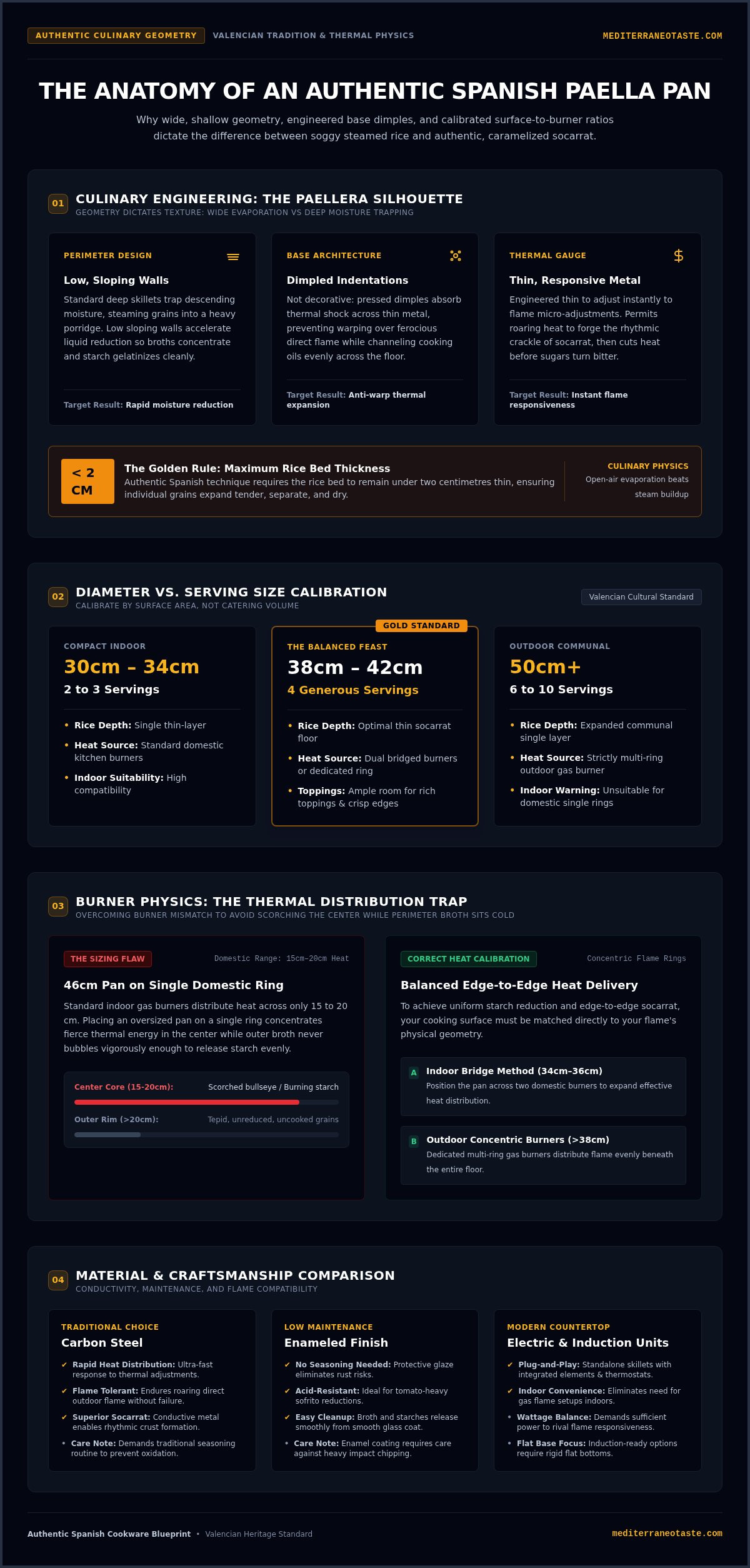
An authentic vessel, traditionally called a paellera, is an exquisite instrument of culinary geometry rather than a simple frying pan. Exploring the history of the paella pan reveals an intentional, centuries-old silhouette: exceptionally wide, remarkably shallow, and anchored by sturdy dual handles. Standard deep kitchen skillets trap falling moisture, inevitably steaming grains into a heavy, uneven porridge. In contrast, the low, sloping walls of an authentic pan accelerate liquid reduction, concentrating savory broths and letting starch gelatinize cleanly without suffocating the pan bed.
Notice the signature dimpled indentations pressed into the base. Far from decorative, these dimples absorb thermal shock, preventing thin metal from warping under fierce direct flames while channeling precious oils evenly across the floor. When you decide to buy authentic spanish paella pan cookware, you bring home purposeful engineering honed over generations to master this open-fire ritual.
The Culinary Engineering of the Paellera
Geometry dictates texture. Authentic Spanish technique requires the rice bed to remain thin, ideally under two centimetres. This expansive diameter maximizes open-air evaporation so each grain cooks individually, staying tender, separate, and delightfully dry. Master metalworkers craft these vessels from conductive, heat-tolerant materials capable of enduring roaring outdoor flames while responding smoothly to micro-adjustments in cooking heat.
The Crucible for Perfect Socarrat
The ultimate reward of communal cooking is socarrat, the savory, caramelized crust forged against the pan base during the final minutes over the fire. An expansive cooking surface guarantees that rendering fats and infused sugars toast across the entire floor rather than blistering in isolated hot spots. Because genuine pans feature thin, responsive metal, you retain total control over this sensory finale. You can raise the heat to coax out that signature rhythmic crackle, then cut the flame instantly before delicate sugars tip into bitterness.
How to Choose the Right Size: Portions and Heat Sources
Most commercial sizing charts mislead home cooks. Standard labels often claim a 40cm pan serves eight guests, but that estimate relies on catering volume, piling rice deep into a heavy, steamed mound. Valencian tradition, officially celebrated as an asset of cultural interest, demands the exact opposite. True excellence relies on an expansive pan surface where grains expand in a thin, single layer. When you plan to buy authentic spanish paella pan cookware, calibrate your purchase by surface area rather than volume.
Your flame source is equally vital. Placing an expansive pan over an undersized burner produces a scorching bullseye in the middle while leaving the outer rim tepid and raw. Perfect starch reduction requires balanced, edge-to-edge heat.
Diameter vs Serving Size Breakdown
Plan your portions around real surface space:
- 30cm to 34cm: Ideal for two to three authentic, thin-layer servings on standard kitchen burners.
- 38cm to 42cm: The gold standard for a four-person feast, offering ample room for rich toppings and crisp edges.
- 50cm and larger: Designed for six to ten generous portions, strictly suited for dedicated multi-ring outdoor burners.
Matching Your Pan to Your Home Cooktop
Standard domestic gas stoves rarely distribute heat wider than 15 to 20 centimetres. If you place a 46cm vessel onto a single indoor ring, the outer broth never bubbles vigorously enough to release starch evenly. For indoor cooking, a 34cm or 36cm pan bridged across two burners offers manageable heat control.
Once you expand beyond 38 centimetres, step outside. Pairing your vessel with a specialized, multi-ring gas burner delivers concentric flames directly beneath the entire base. If you are curating a complete alfresco kitchen, explore the specialized outdoor gear at Mediterraneo Taste Spain to find the ideal match for your pan diameter.
Electric Paella Pan Reviews: Modern Convenience vs Traditional Fire
Standalone electric skillets and dedicated countertop paella pans promise effortless cooking with simple plug-and-play ease. Equipped with integrated heating elements and thermostatic dials, these modern appliances eliminate the need for specialized gas rings or outdoor setups. They invite quick weeknight dinners straight to the kitchen bench. Yet, recreating the authentic soul of Mediterranean cooking requires intense, finely tuned thermal conductivity. While electric models deliver undeniable convenience, distinct culinary compromises emerge when you push them toward high-heat perfection.
Evaluating Electric Paella Pan Features and Performance
Most electric paella pans rely on a single circular coil cast beneath the base. This layout inevitably creates a narrow ring of high heat, leaving the outer perimeter cooler. As your broth evaporates, grains positioned over the internal element toast rapidly while peripheral rice remains soft. Thermostatic controls also cycle power intermittently to avoid overheating. This constant pulse disrupts the steady thermal acceleration needed during the crucial final reduction. Most electric units also feature synthetic non-stick coatings. Although cleanup is simple, slick non-stick surfaces actively hinder the natural starch caramelization that gives classic crust its irresistible bite.
The Verdict: Convenience Against Culinary Authenticity
Electric pans shine as accessible, low-stress options for compact spaces and quick family gatherings. They let you simmer flavorful rice dishes indoors without venting smoke or managing open fire. However, honoring the deep culinary ritual acknowledged by paella's official protected status calls for raw flame and responsive metal. True artisans seek the subtle smoky whispers, immediate thermal feedback, and seasoned patina that only fire-kissed steel can provide. When you prepare to buy authentic spanish paella pan hardware for authentic gatherings, turning to curated paella pan sets delivers the authentic flame-to-metal harmony essential for true culinary mastery.
Traditional Pan Materials Compared: Carbon Steel, Enamel, and Induction
Selecting your construction material shapes every stage of the cooking journey, from flame response to post-feast care. As you prepare to buy authentic spanish paella pan cookware, matching metal properties to your stovetop prevents frustrating warping and ensures decades of celebratory meals. Traditional metal artisans rely on three primary configurations: polished carbon steel, vitreous enamel, and dense, multi-layer induction builds. Each serves a distinct kitchen environment.
Polished Carbon Steel: The Authentic Connoisseur’s Choice
Polished carbon steel represents the timeless standard found across Spanish outdoor gatherings. Its thin gauge conducts heat instantaneously, granting swift thermal reactivity the moment you raise or lower the flame. Over time, recurring contact with rich fats builds a darkened, semi-gloss patina that enhances non-stick performance and protects raw iron from moisture. After washing, dry the surface thoroughly over low heat and seal the metal with a micro-thin wipe of neutral cooking oil. Master the routine through our carbon steel paella pan guide.
Enamelled Steel: Everyday Practicality and Ease
Porcelain-enamelled pans coat durable carbon steel in a resilient, speckled black glass layer fired at intense temperatures. This non-reactive surface welcomes acidic, slow-simmered tomato sofrito foundations without stripping metallic seasoning. It requires zero oiling routines or protective storage steps. Simply wash the vessel in warm sudsy water and wipe dry. Learn how to simplify entertaining with our enamelled steel paella pan guide.
Engineered Cookware for Modern Induction Glass Tops
Classic open-fire pans feature convex bases with subtle outward crowning designed to let hot oil collect evenly during frying. On perfectly flat ceramic glass, however, this convexity causes dramatic wobbling, poor magnetic connection, and violent centre warping. Modern flat-bottom vessels solve this through reinforced sandwich bases with bonded magnetic steel. These heavy-gauge cores diffuse intense electromagnetic energy smoothly across the entire diameter. Discover the right setup for modern glass hobs in our resource on buying an induction paella pan.
Ready to upgrade your weekend feasts? Explore genuine artisan cookware across our direct collection at Mediterraneo Taste Spain and bring authentic Spanish culinary craftsmanship into your home.
Where to Buy Authentic Spanish Cookware and Curate Your Setup
Investing in genuine culinary hardware elevates simple home cooking into an authentic Mediterranean dining ritual. Mass-market department stores often stock decorative pans pressed from flimsy tin, which buckle under high heat and scorch your rice. When you are ready to buy authentic spanish paella pan cookware, sourcing directly from dedicated purveyors ensures you receive workshop-grade metal crafted to endure years of celebratory gatherings.
Checklist for Authentic Spanish Cookware
Authentic craftsmanship reveals itself through unmistakable physical signatures. Keep these essential markers in mind before adding a pan to your kitchen:
- Origin Stamp: Look for clear embossing confirming manufacture in Spain, particularly the historic metalworking hubs of Valencia.
- Signature Red Handles: Traditional pans feature heavy-duty, dual loop handles finished in fire-resistant red enamel, secured with thick industrial rivets.
- Calibrated Metal Gauge: Quality carbon and enamelled steel vessels feel substantial in hand, resisting flexing along the sidewalls when lifted.
- Balanced Base Surface: Ensure the base exhibits uniform, subtle dimpling rather than uneven warping or sharp machine ridges.
Curating the Ultimate Mediterranean Culinary Experience
A masterfully engineered pan forms only the beginning of your culinary journey. Building an authentic open-fire station requires practical accessories. A reinforced tripod stand elevates outdoor burners to a comfortable cooking height, while a wide, long-handled skimmer gives you total control when distributing seafood and meat.
Hardware demands equally exceptional ingredients. Elevate your feast by pairing your pan with authentic Spanish saffron threads and absorbent round-grain rice that drinks in fragrant stock without turning mushy. Kick off your gathering with regional bites drawn from our authentic Spanish appetizers guide while the broth simmers. Whether preparing an intimate family dinner or an expansive backyard feast, browse our curated imports and buy authentic Spanish paella pans delivered directly to your doorstep nationwide.
Bring the Art of the Valencian Feast Home
Mastering regional Spanish cooking is a sensory journey that begins with the right foundation. As you prepare to buy authentic spanish paella pan cookware, remember that wide, shallow geometry and balanced flame responsiveness make all the difference between heavy, steamed rice and golden, crackling socarrat. Whether you choose the swift conductivity of polished carbon steel or the effortless care of vitreous enamel, matching your vessel to your heat source sets the stage for culinary triumph.
You don't need an overseas kitchen to create unforgettable Mediterranean memories. As a dedicated purveyor of genuine Spanish culinary tools and Mediterranean delicacies, our catalog offers a rigorous selection of traditional carbon steel and enamelled vessels built for lifelong performance. With seamless nationwide direct-to-consumer delivery, your next culinary adventure is closer than ever. Explore Authentic Spanish Paella Pans and Cookware today, gather your favorite people, and savor the timeless joy of cooking together.
Frequently Asked Questions
Can you achieve genuine socarrat in an electric paella pan?
Achieving authentic socarrat in an electric pan is exceptionally difficult. Most electric models cycle heat intermittently via internal thermostats, cutting off thermal momentum right when starches need intense, uninterrupted sizzle. Synthetic non-stick coatings also reduce friction, which softens rather than toasts the rice foundation. While electric units offer convenient countertop simmering, developing a crisp, uniform socarrat requires the continuous thermal intensity of open flame on traditional conductive metal.
What is the difference between polished carbon steel and enamelled paella pans?
Polished carbon steel conducts heat rapidly and develops a natural non-stick patina, but it requires diligent seasoning to prevent rust. Enamelled steel features a protective glass coating that resists corrosion and acid completely, eliminating the need for oiling routines. Carbon steel delivers superior thermal responsiveness over roaring flames, while enamel provides effortless cleanup and convenient indoor storage. Both materials deliver superb results depending on your personal maintenance preferences.
How do I choose the correct size paella pan for my family?
Choose pan size by surface area rather than liquid volume to ensure your rice bed never exceeds two centimetres in depth. A 34cm pan comfortably serves two to three adults, while a 38cm to 42cm pan is the gold standard for a family of four. When you prepare to buy authentic spanish paella pan cookware, ensure your cooktop burner matches the pan base so the edges cook evenly.
Can I use an authentic Spanish paella pan on an induction cooktop?
Yes, but only if you select a model specifically engineered with a flat, heavy-gauge base. Traditional gas or wood-fire pans feature convex bottoms that wobble on glass cooktops, causing dangerous thermal shock and uneven magnetic contact. When you buy authentic spanish paella pan models crafted with sandwich induction plates, magnetic currents flow evenly across the entire surface without causing warping or dead heat zones.
Why do traditional paella pans have dimples on the bottom surface?
The dimples on the base serve vital structural and culinary functions. They reinforce the thin metal, allowing it to expand and contract over intense flame without warping out of shape. Thermally, these small indentations trap small pockets of cooking oil and broth during the initial sauté. This prevents ingredients from sliding toward the edges and ensures balanced heat transfer directly into the rice layer.
How do you wash and preserve a carbon steel paella pan after cooking?
Clean carbon steel gently using warm water, a soft sponge, and mild detergent, avoiding harsh abrasive scrubbers. Once clean, immediately dry the pan over low heat on your stove to eliminate microscopic moisture that causes flash rust. Finish by buffing a dime-sized drop of neutral cooking oil across the cooking surface with a paper towel. Store the seasoned vessel in a dry, well-ventilated pantry cupboard.