

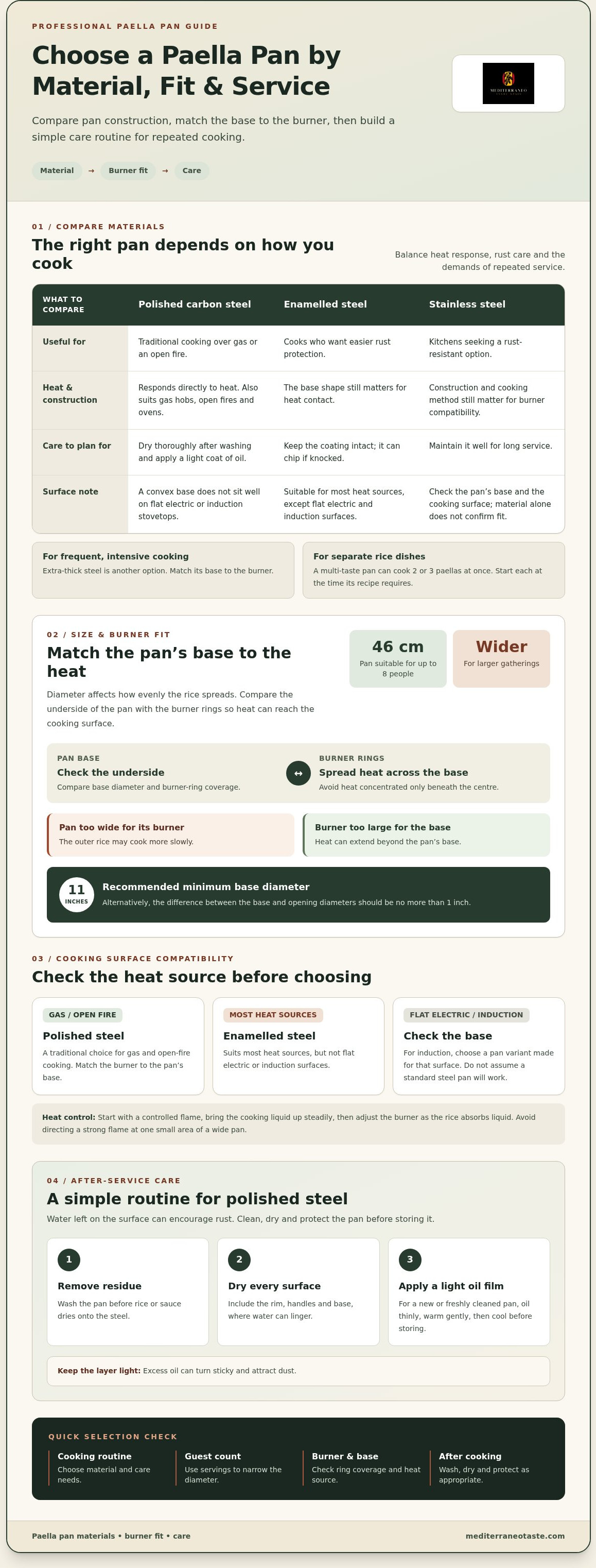
A paella pan for professional use should match the number of guests, the burner and the cooking surface. A 46 cm Valencian paella pan is suitable for up to 8 people, while larger gatherings call for a wider pan. Choose a sturdy material that suits your cooking routine and the care you’re prepared to give it.
Choosing a paella pan for professional use starts with matching its size and material to your cooking method. Diameter affects how evenly rice spreads, while construction shapes heat response, durability and care. This guide compares polished steel, enamelled steel and stainless steel, and explains how to assess pan and burner fit, choose a size and care for the pan between services.
Key Takeaways
- Choose the pan material around your cooking routine: polished steel needs rust-preventive care, while stainless steel resists rust.
- Match the pan’s diameter to the burner so heat can reach the cooking surface effectively.
- Use guest numbers to narrow your size options, then consider how much cooking space your paella needs.
- Build a simple care routine: dry the pan thoroughly after washing and apply a light coat of oil where appropriate.
- Consider enamelled steel for easier rust protection, while keeping in mind that its coating can chip if knocked.
What's the best carbon steel paella pan?
A paella pan for professional use should suit the cooking method, service pace and maintenance routine. Polished carbon steel is 100% steel and remains a traditional choice for cooks using gas or an open fire. It responds directly to heat, but needs thorough drying and a light coat of oil after use to help prevent rust.
For food safety in Spain, use cookware intended for cooking and keep the food-contact surface clean and intact. A suitable pan supports safe food preparation, but it does not replace careful handling of ingredients and cooked food.
There is no single cost for every professional paella pan. Diameter and material affect the price, so compare the size and construction your kitchen needs. Stainless steel, enamelled steel and polished steel each have different care and durability considerations.
One named model available in Spain is the Garcima 13.5 Inch Pata Negra Paella Pan, with a 13.5-inch opening. Other professional options include thicker steel pans for intensive use, stainless steel pans that resist rust, and double designs for preparing separate dishes.
For a paella pan for professional use, check the base as well as the opening. A base diameter of at least 11 inches is recommended, or the difference between base and opening diameters should be no more than 1 inch. This helps the burner distribute heat across the cooking surface instead of concentrating it beneath the centre.
A robust steel pan can suit frequent cooking, but its performance depends on construction and care. Stainless steel offers a rust-resistant alternative, while polished steel responds directly to heat and needs regular drying and oiling. Choose according to your kitchen’s priorities, including heat response, rust care and the demands of repeated service.
A multi-taste paella pan can cook 2 or 3 paellas at the same time. Since different recipes can have different cooking times, start each paella at the appropriate moment. This arrangement suits menus offering separate rice dishes, while a single polished steel pan keeps the setup straightforward for one batch.
| Pan option | Useful for | Key consideration |
|---|---|---|
| Polished carbon steel | Traditional gas or open-fire cooking | Dry thoroughly and oil after use |
| Extra-thick steel | Frequent, intensive cooking | Match its base to the burner |
| Stainless steel | Kitchens seeking rust resistance | Maintain it well for long service |
| Multi-taste pan | Cooking 2 or 3 paellas together | Time each dish to its recipe |
Choose polished steel for traditional heat and a regular care routine, thicker steel for intensive use, stainless steel for rust resistance, or a multi-taste pan for separate paellas.
What size paella pan is best?
The right diameter depends on the burner’s heated area, the pan’s base and your cooking surface. A pan holds the food; a burner supplies heat. A burner-and-pan set brings the cooking equipment together, but the components still need to suit one another.
Heat Distribution and Burner Size
Match the pan base to the burner rings so heat reaches the cooking surface without leaving broad, cool edges. Check the burner’s layout against the pan before choosing a diameter. The flame should serve the pan’s base, not concentrate beneath its centre alone.
A pan that is too wide for its burner may leave the outer rice cooking more slowly. A burner that is too large can direct heat beyond the pan’s base. Compare the underside of the pan with the burner rings, then choose a size that lets the rings distribute heat across the base.
Material also affects how a pan responds to heat. Polished steel reacts directly to the flame, so burner control helps manage cooking across its broad surface. Enamelled steel has a protective coating, but the shape of its base still affects heat contact. Consider a stainless steel pan’s construction alongside the burner and cooking method; material alone does not determine compatibility.
Manage heat carefully to limit stress on a steel pan. Start with a controlled flame, bring the cooking liquid up steadily, then adjust the burner as the rice absorbs liquid. Avoid directing a strong flame at one small area of a wide pan. This can cause uneven cooking and expose one section to a sharper temperature change than the rest.
Heat-Source Compatibility
Polished steel paella pans suit gas hobs, open fires and ovens, but convex bases do not sit well on flat electric or induction stovetops. Enamelled steel also suits most heat sources, except flat electric and induction surfaces. For induction, choose a pan variant made for that cooking surface rather than assuming a standard steel pan will work.
Professional kitchens using gas can focus on fitting the pan to the burner. Kitchens with flat electric or induction surfaces need a compatible base. Burner size affects flame coverage, while stovetop compatibility depends on the pan’s base and construction.
Before selecting equipment, compare base diameter, burner-ring coverage, material and heat source as one system. Explore paella pans and burners to consider how each component fits your cooking setup.
Pan care and rust prevention
Polished steel paella pans need a simple routine after cooking. Water left on the surface can encourage rust, so wash off rice and cooking residue, dry the pan thoroughly, then apply a light film of oil. This helps protect the surface between services and keeps the pan ready for its next use.
For a new or freshly cleaned steel pan, season the surface with a thin coat of cooking oil. Warm it gently, then let it cool before storing. Keep the oil layer light; excess oil can turn sticky and attract dust. This practical rhythm suits paella cooks in Valencia and professional kitchens alike.
- Remove food residue. After cooking, empty the pan and wash it before rice or sauce dries onto the steel.
- Dry every surface. Use a clean cloth, including around the rim, handles and base, where water can linger.
- Apply a light oil coat. Rub a small amount over the inside to help protect polished steel from rust.
- Store it dry. Keep the pan in a dry place, rather than leaving it wet or covered while moisture remains.
Stubborn residue sometimes needs more than washing. Some paella-pan manufacturers recommend simmering water with a dash of vinegar for around 10 minutes, then emptying the pan. Let the surface cool enough to handle, remove loosened food, rinse and dry it completely. Finish with a light oil coat on polished steel.
Care varies by material. Stainless steel paella pans resist rust and do not need the same oil protection as polished steel. Wash them after cooking and dry them before storage to prevent food residue from lingering and make closing tasks straightforward for kitchen staff.
Enamelled steel needs gentler handling than bare steel. If food sticks, soaking the pan for a couple of hours can soften residue before scrubbing. Avoid knocks during washing and storage: enamel helps protect against rust, but the coating can chip if bumped. Handle any chipped area carefully and avoid worsening the damage while cleaning.
For busy service, make pan care part of the workflow: clean the pan after use, dry it fully, then oil polished steel before storage. This consistent routine helps protect the steel surface. Stainless steel needs less rust-preventive care, while enamelled steel requires attention to its coating.
Choosing pan diameter for guest servings
Start with the number of portions, then compare the pan diameter with the rice layer your recipe needs. The listed capacities offer practical reference points: a 46 cm Valencian paella pan suits up to 8 people, while a 32-inch pan is listed for 20 to 40 servings. Treat these as planning guides, not interchangeable measures of every recipe.
For a four-person meal, recommendations vary with the intended cooking surface. A pan should be at least 13 inches in diameter, while a guide recommends around 15 inches for preparing four portions efficiently. A 16-inch pan is listed for 4 to 6 servings. These figures reflect different capacity guidance, so consider the rice quantity and how thinly it must spread.
Diameter affects the rice layer as well as the portion count. Paella cooks in a broad, shallow layer; a pan that’s too small can crowd rice and ingredients, while excess surface area can spread a modest quantity too thinly. For a four-person Spanish paella, use the 15-inch recommendation as a useful starting point, then match it to your recipe and heat source.
- Four servings: Compare the 13-inch minimum with the around-15-inch recommendation and the 16-inch, 4-to-6-serving listing.
- Up to 8 people: Consider the 46 cm Valencian pan as a listed capacity reference.
- 20 to 40 servings: The 32-inch pan is listed for this range, making it a reference for large-scale service.
Before choosing, estimate the portions you expect to serve and identify the recipe’s rice quantity. Select a diameter that allows the ingredients to spread in an even layer instead of piling up deeply. Include the burner or cooking surface in your decision: heat needs to reach across the pan’s base for the rice to cook evenly.
Material affects the practical choice, but does not determine the serving count. Carbon steel suits traditional gas or open-fire cooking and needs rust-preventive care after use. For induction, choose a compatible pan variant rather than assuming a standard carbon steel base will work. Consider material, base shape and diameter together.
For a professional service, plan around the largest regular batch, not an occasional peak. A 32-inch pan listed for 20 to 40 servings may suit high-volume cooking, while smaller pans can give more flexibility for separate batches. If the guest count changes often, keeping more than one diameter can help match the pan to each service.
Use any listed serving ranges as an initial guide, then make your choice based on portions, rice quantity, cooking method and heat-source compatibility. This helps align the pan size with both the menu and the way your kitchen serves paella.
Enamel coating and durability
An enamelled steel paella pan has a protective, glass-like coating over its steel body. The finish helps guard against rust, unlike polished steel, which needs oiling after use. However, enamel can chip if the pan is knocked. In a busy kitchen, careful handling matters as much as material choice.
Enamelled pans cost about 25-30% more than polished steel pans. That difference may suit kitchens seeking a rust-protective finish and a simpler storage routine. Compare it with how often the pan will be handled, stacked or moved. A pan carried between stations faces different knocks from one stored in a dedicated place.
For everyday care, soften food residue before cleaning. Soak enamelled steel for a couple of hours, then scrub. Avoid knocking the rim against a sink or scraping the coating with a hard utensil. Dry the pan before storage. These steps help preserve the finish, but cannot repair enamel that has chipped.
- Choose enamel when rust protection is a priority and the pan can be handled carefully.
- Choose polished steel when you prefer an uncoated surface and can dry and oil it after cooking.
- Inspect the coating after a knock, especially around the rim and handles.
- Store pans with care to prevent metal edges or heavy cookware from striking the enamel.
The cooking surface also affects the result. An even layer of rice and controlled heat help develop socarrat, the toasted rice prized in paella. A crisp finish depends on heat management, not simply the choice of enamel or polished steel. Avoid concentrating high heat in one area; steady cooking gives the rice time to brown without scorching.
Before service, inspect an enamelled pan for chips, loose fragments or damage near the food-contact surface. Clean it gently after each use, then store it where the coating will not rub against another pan. Polished steel needs a different closing routine: dry it thoroughly and apply a light film of oil to help prevent rust.
Choose enamel if its protective finish suits your kitchen’s handling and storage routines. Choose polished steel if you can dry and oil it regularly. With either material, a sound pan, suitable heat and careful cooking are essential. Keeping the equipment in good condition supports repeated preparation of paella with a crisp base.
Explore paella pans to find a pan suited to your cooking routine and care preferences.
Mediterraneo Taste Spain: Mediterranean Delicacies
Mediterraneo Taste Spain brings together Mediterranean Delicacies, Paella and equipment for preparing it at home or in a professional kitchen. Once you’ve chosen the pan material and diameter that suit your cooking setup, explore its paella pans and paella kits to find equipment that fits your approach. A paella kit can bring key cooking essentials together, while selecting a pan separately lets you focus on the size and style you need. For cooks building a Spanish-inspired meal, Mediterranean ingredients and paella offer a natural place to begin. Choose the equipment that suits your kitchen, then bring the flavours of Spain to the table. Visit Mediterraneo Taste online to explore its range or get in touch.
Make Your Next Paella Service Your Own
Choose equipment around the way your kitchen serves, not only the dish you plan to cook today. A pan becomes part of a working rhythm: preparation, heat control, serving and care all affect how easily your team can repeat a result. Consider how staff will handle it between services, where it will be stored and whether your menu calls for one paella or several styles.
Taking the whole workflow into account makes choosing a paella pan for professional use a practical decision about how your kitchen approaches Spanish cooking. Consider how the equipment supports service, from managing the aroma of saffron to achieving a crisp base.
Explore paella equipment and Mediterranean ingredients, and take the next step towards your ideal setup. Contact Mediterraneo Taste Spain to continue planning with confidence.
Frequently Asked Questions
Which material was best?
Carbon steel suits traditional paella cooked over gas or an open fire, particularly when staff can maintain the pan after service. Stainless steel resists rust and needs less oiling. Enamelled steel has a protective finish that calls for careful handling. Match the material to your heat source, storage routine and the way staff handle cookware.
Which are the best paella pans on the market?
There isn’t one best pan for every kitchen. A useful Spanish-market example is the Garcima 13.5 Inch Pata Negra Paella Pan, a polished-steel model with a 13.5-inch opening. Compare options by base shape, material, diameter and compatibility with your burner or stovetop. A model’s name matters less than whether its cooking surface suits your rice quantity and working setup.
Which is the best paella pan for making a perfect paella?
Choose a pan to suit your recipe and cooking method; the pan alone cannot guarantee a result. For a Valencian-style rice dish cooked over gas, consider carbon steel and a diameter that spreads the rice in a suitable layer. Plan the pan and heat source together. Ingredient quantities, even heat and cooking technique also affect the finished rice.
What is the best paella pan for stovetop use?
For a flat electric or induction stovetop, choose a pan designed for that surface. Traditional polished steel pans often have convex bases that do not sit evenly on flat stovetops. Enamelled steel is also unsuitable for flat electric or induction surfaces. For induction, choose a compatible pan; for other stovetops, check that the base sits securely and receives heat evenly.
What size paella pan is best for professional catering and restaurant use?
Size depends on the typical number of portions and the burner available in the kitchen. A 46 cm Valencian pan is listed for up to 8 people, while a 32-inch pan is listed for 20 to 40 servings. For frequent service, base your choice on regular batch sizes rather than occasional large events. Also consider whether the kitchen can store, move and heat the selected pan comfortably.
Which paella pan materials are best for professional use: carbon steel, stainless steel, or enamelled steel?
Carbon steel suits traditional gas or open-fire cooking when staff can dry and oil the pan after use. Stainless steel resists rust and suits kitchens seeking less rust-preventive care. Enamelled steel has a protective coating, but impacts can chip it. If pans are stacked frequently, handling habits matter. For induction, choose a compatible design, whatever material you consider.
What heat sources are compatible with professional paella pans, including gas, induction, and open fire?
Polished steel pans suit gas, open fires and ovens, but convex bases do not suit flat electric or induction stovetops. Enamelled steel pans suit most heat sources, except flat electric and induction surfaces. Induction requires a compatible pan variant. For gas, match the pan diameter to the burner layout so heat reaches the base; do not assume every paella pan works with every cooker.
How many servings does each common professional paella pan size produce?
Published serving guidance gives several reference points: a 16-inch pan serves 4 to 6, a 46 cm Valencian pan suits up to 8, and a 32-inch pan is listed for 20 to 40 servings. For four people, guidance ranges from at least 13 inches to around 15 inches for efficient cooking. Treat these as estimates, then adapt to your recipe and portion size.