

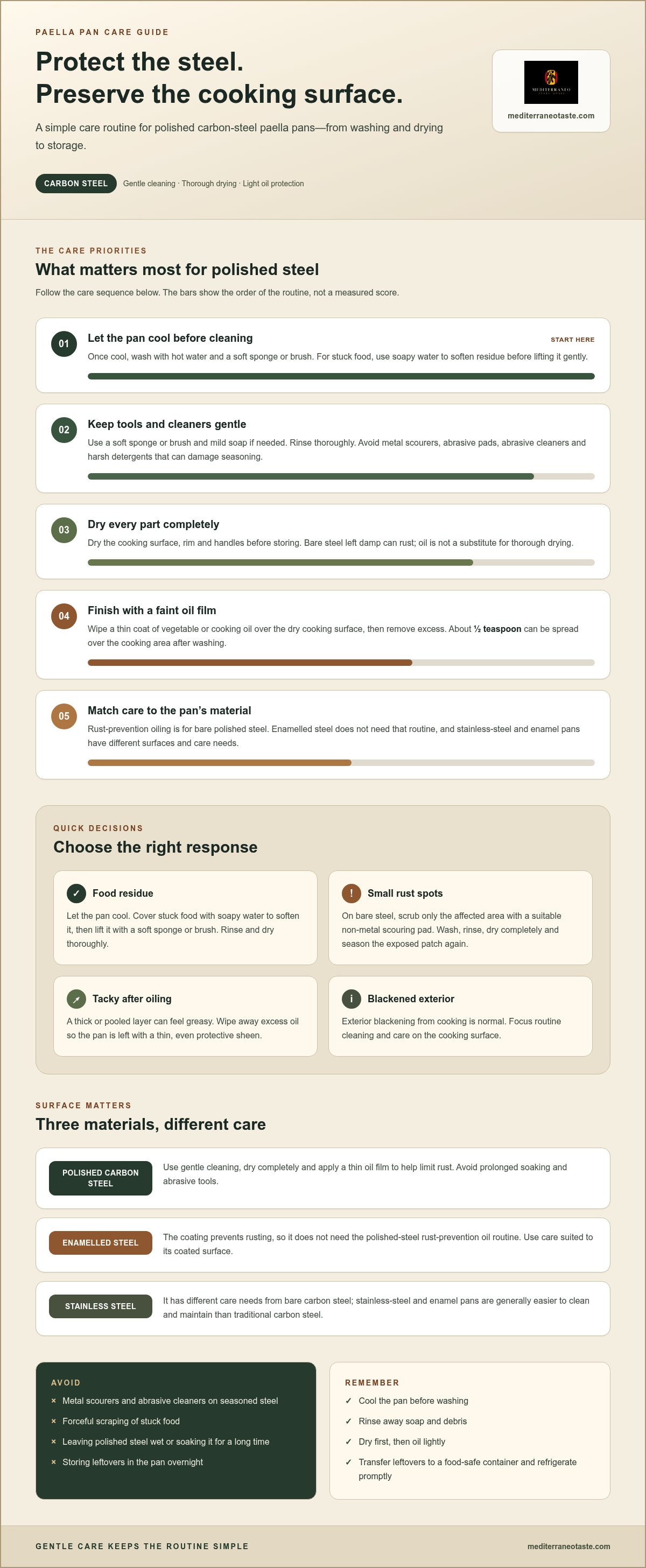
For traditional carbon-steel paella pans, let the pan cool, then clean it with hot water and a soft sponge. Dry it completely and wipe on a thin coat of vegetable oil to help protect against rust. Choosing suitable paella pan cleaning and care products matters: gentle tools protect the steel, while abrasive pads and harsh cleaners can damage its seasoned surface.
A darkened pan may look as though it needs vigorous scrubbing, but exterior blackening from cooking is normal. Care also depends on the pan’s material: enamelled and stainless-steel pans don’t need the same rust-prevention steps as polished carbon steel.
This guide covers cleaning the pan and utensils, preparing a new pan and applying a light coat of oil for storage. You’ll also find practical advice for food residue, small rust spots, a tacky finish and exterior blackening. Keep the care routine simple and suited to the pan’s surface.
Key Takeaways
- Match your cleaning routine to the pan’s material, since carbon steel needs different care from enamelled or stainless steel.
- Let a hot pan cool before cleaning, and use gentle tools to protect its cooking surface.
- Dry polished steel thoroughly and apply a thin layer of oil before storing it to help prevent rust.
- Learn how to treat rust spots or a sticky finish without stripping away more seasoning than necessary.
- Exterior blackening from cooking is normal, so focus your care on the pan’s cooking surface.
Cleaning and maintaining carbon-steel paella pans
Care depends on the pan’s material. Bare carbon steel needs gentle cleaning, thorough drying and a light oil film to help limit rust.
-
Choose Safe Cleaning Products
Choose paella pan cleaning and care products suited to bare steel: hot water, mild soap and a soft sponge or brush. Rinse thoroughly to remove all soap. Avoid metal scouring pads, abrasive cleaners, harsh detergents and abrasive sponges, which can damage the seasoning. Gentle tools lift ordinary residue without stripping the protective oil film. Enamelled and stainless-steel pans have different surfaces, so don’t assume a product suited to one finish is suitable for every pan.
-
Remove Burnt-On Food and Grease
Let the pan cool, then cover stuck food with soapy water to soften it. For polished steel, soaking for a few hours can help loosen residue, but don’t leave the pan to soak for a long time. Lift softened food with a soft sponge or brush, then rinse away soap and debris. Don’t scrape forcefully or use a metal scourer. Abrasion can damage seasoning, while prolonged soaking exposes bare steel to moisture.
-
Remove Rust from the Pan
For small rust spots on bare steel, scrub only the affected area with a non-metal scouring pad suitable for bare steel. Wash, rinse thoroughly and dry completely, then season the exposed patch again. For a rusty or grimy carbon-steel pan, fill it with vinegar and leave it overnight before scrubbing. Wash with a little soap and rinse with clean water. Boiling vinegar and salt in the pan for a few minutes can also help loosen stubborn rust.
-
Clean Steel, Stainless Steel, and Enamel
After washing carbon steel, dry it completely and spread about half a teaspoon of oil over the cooking area to season the bare steel. As the pan heats, the thin film bonds to the metal, helping limit rust and potentially reducing sticking. Heat the pan in an oven for an hour only if its maker confirms that the entire pan, including handles and coatings, is oven-safe. Enamelled steel doesn’t need this rust-prevention routine because its coating prevents rusting. Stainless-steel and enamel pans are generally easier to clean and maintain than traditional carbon steel. Tomatoes, wine and other acidic foods can wear down fresh seasoning.
Cleaning kitchen utensils before first use and after cooking
Prepare new cookware before its first use, and clean utensils promptly after cooking. The pan’s material and cooking surface determine the right care routine.
- Wash new utensils before cooking. Clean a newly purchased paella pan and kitchen utensils with liquid dishwasher detergent and water, then rinse thoroughly. This removes residue from handling and storage before food touches the surfaces. For a new polished-steel pan, follow the supplied instructions: it may have a protective layer that needs to be removed before use. Don’t assume every pan has the same preparation requirements.
- Match the pan to the heat source. Check that the pan suits the hob or flame before cooking. Traditional polished-steel paella pans are intended for gas or direct-flame cooking, while flat-based pans suit induction, electric and AGA hobs. Heat the pan gradually and control the flame or hob throughout cooking. Avoid heating a pan while empty, especially over direct heat.
- Choose utensils that suit the surface. Use metal or wooden utensils with polished steel, as the pan and handles become extremely hot during cooking. For frying pans, a wooden or heat-resistant plastic spatula helps avoid scratching the surface. Keep hot cookware away from children, and don’t cut food directly in a pan. These choices protect the surface and help you handle food safely at the stove.
- Clean tools promptly after cooking. Let a paella pan cool completely before washing it with hot water and a soft sponge or brush. A carbon-steel pan can be soaked in soapy water for around 30 minutes to loosen residue, then washed and rinsed. For a non-stick pan, culinary safety experts recommend gentle washing with warm, soapy water and a soft sponge. Don’t use abrasive tools on delicate surfaces.
- Clear the pan and store leftovers safely. Transfer cooked paella to a food-safe container and refrigerate it promptly instead of leaving it in the pan overnight. Clean utensils after use, rinse away soap and dry them before putting them away. Prompt cleaning prevents food residue from drying onto tools, while storing leftovers separately protects the pan from prolonged contact with food and moisture.
- Keep your cooking setup consistent. Before the next meal, check that each utensil suits the pan and the heat source. A wooden spoon and a suitable flat-based pan, for example, work differently from metal tools and polished steel over a flame. For a coordinated setup, explore paella cookware and accessories from Mediterraneo Taste Spain that suit your cooking style.
Oiling and storing a paella pan
For polished steel, a light oil film and dry storage help protect the surface between meals. Follow these steps after cleaning.
- Dry the pan fully before adding oil. Moisture on bare steel can lead to rust, so pay attention to the cooking surface, rim and handles. If a cloth leaves damp patches, let the pan air-dry completely before storing it. Oil provides a protective finish, but it can’t replace drying the pan first.
- Spread a thin coat of cooking or vegetable oil over the steel. Put a small amount on a clean cloth or sheet of paper, then wipe it across the cooking surface. Cover the metal evenly without leaving pools or drips. Aim for a faint protective sheen, not a wet layer that feels greasy.
- Remove excess oil with a clean part of the cloth or paper. Too much oil can leave the pan tacky instead of protected. If the finish already feels sticky, wash and scrub away the residue, dry the pan fully, then apply a thinner film. A light coating is easier to maintain and less likely to collect dust during storage.
- Store polished-steel paella pans in a cool, dry place. A plastic bag can help protect a polished-steel pan from moisture while it’s unused. Make sure the pan is dry before bagging it, and keep it away from damp conditions. Store other bare-steel pans in a dry cupboard or another sheltered place.
- Place a dry cloth or paper towel inside a stored pan to absorb moisture. If you need to stack pans, put dry paper between them to help prevent scratches. Avoid nesting pans directly together, as the upper pan can mark the surface below. Remove the separator before cooking, and replace it only when both pans are clean and dry.
- Repeat this simple routine after each use instead of fully seasoning the pan after every meal. Clean and dry the surface, then wipe on a thin coat of oil if the pan won’t be used straight away. This regular care helps protect bare steel. If the finish becomes tacky, remove the excess oil and start again with less.
If a polished-steel paella pan won’t be used straight after preparation, coat it with cooking oil and wipe off the excess. Use a sheet of paper to spread protective vegetable oil over the pan. Once clean and oiled, the pan can be hung or stored wherever convenient. Avoid putting another pan inside it, as the upper pan could damage the lower pan’s surface.
Applying a thin coat of oil
Use a controlled wipe-on method to spread oil evenly across the cooking surface. A clean sheet of paper or lint-free cloth gives you more control than pouring oil directly from the bottle.
- Prepare an applicator. Fold a clean sheet of paper into a compact pad, or use a clean cloth. Leave one corner accessible to grip, keeping your fingers clear of the pan’s edges. Set a second clean piece of paper nearby to remove any oil that gathers during application.
- Load the applicator lightly. Add a small amount of cooking oil to the paper or cloth rather than pouring it onto the pan. The applicator should feel lightly damp, not saturated. If oil drips when you lift it, fold in a dry section before touching the steel.
- Begin at the centre. Place the applicator on the cooking surface and move it outwards in smooth, overlapping strokes. Work across one area at a time, keeping each pass close to the previous one. This makes it easier to see which sections are covered and helps avoid missed strips.
- Follow the pan’s shape. For a round pan, move in broad arcs from the centre towards the rim. For a larger cooking area, divide the surface into sections and treat each in turn. Keep the applicator flat against the steel so the oil spreads evenly instead of collecting in narrow lines.
- Inspect the edge of the cooking surface. Trace the inner rim with the applicator, where a quick pass can leave a dry band. Keep the oil on the cooking surface rather than spreading it over handles or other areas. Use a clean part of the cloth for this final pass.
- Check the result under good light. Tilt the pan slightly and look across the steel. Uneven glossy patches can indicate pooled oil, while dull areas may need another light wipe. Use dry paper to remove excess oil, then inspect the surface again from another angle.
- Finish with a clean applicator. Make one gentle pass over the cooking area using a fresh, dry part of the cloth or paper. This helps pick up stray droplets without disturbing the even coverage. Leave the pan on a clear, stable surface while you finish preparing.
Blackening on the pan exterior
Blackening on the outside of a paella pan is normal after cooking. Before treating it as a problem, check where it is and what it looks like.
- Check where the dark mark sits. Blackening limited to the exterior is normal and doesn’t need thorough cleaning. Compare it with the cooking surface: exterior darkening alone isn’t a reason to assume the inside needs treatment.
- Leave ordinary exterior blackening untreated. Don’t scrub the outside to restore a polished appearance. Normal blackening doesn’t need vinegar treatment or oil polishing. The exterior can remain darkened after cooking.
- Distinguish darkening from rust spots. Rust on bare steel is different from general exterior blackening. Look for specific rust spots rather than treating every dark area as corrosion. If you find rust on the cooking surface, follow the targeted rust-removal guidance for bare steel, not an exterior-wide treatment.
- Look for food residue on the cooking surface. Stuck food inside the pan is different from exterior blackening. Identify the affected area before choosing a cleaning method. Exterior darkening doesn’t mean food is burned onto the cooking surface, and food residue doesn’t make exterior blackening abnormal.
- Don’t mistake colour changes for a damaged finish. A pan can look darker outside while remaining suitable for cooking. The exterior’s appearance alone doesn’t call for vinegar, polishing or intensive scrubbing. Check whether the change is limited to the outside or whether there’s a separate issue on the cooking surface.
- Choose treatment based on the actual mark. Normal blackening needs no special treatment. Rust spots, stuck food and a tacky cooking surface are different conditions, each with its own care method. Identify the location and type of mark first to avoid unnecessary treatment of an otherwise normally darkened exterior.
If the exterior mark is simply blackening, leave it as it is rather than turning it into a cleaning project. Blackening on the outside of a paella pan is normal and doesn’t need thorough cleaning, vinegar treatment or oil polishing. Before reaching for a cleaning product, check whether the mark is just exterior darkening. If it is, no restorative step is needed. There’s no need to pursue a brighter exterior or treat its colour as a task after every use. Keep care proportionate: leave ordinary blackening alone, and assess any distinct concern separately instead of using it as a reason to clean the whole outside. The pan can remain visibly darkened from cooking. The aim isn’t to erase normal colour, but to avoid unnecessary work when exterior blackening is the only change. Reserve cleaning for a separate mark or condition that needs attention.
Mediterraneo Taste Spain: Mediterranean Delicacies
Mediterraneo Taste Spain brings together Mediterranean Delicacies, Paella, paella pans and paella kits for home cooking. After learning how to care for your pan, explore these offerings when you’re choosing equipment or preparing to bring Spanish flavours to your table.
A suitable paella pan is part of a thoughtful setup, alongside ingredients suited to the dish you plan to cook. Whether you’re refreshing your cookware or gathering essentials for paella, Mediterraneo Taste Spain offers a natural next step from pan care to Spanish cooking.
Visit mediterraneotaste.com to explore Mediterraneo Taste Spain’s Mediterranean Delicacies, paella and paella pans.
Make Your Next Paella Gathering Your Own
Make caring for your cookware part of preparing your next meal. Choosing suitable paella pan cleaning and care products helps you build a routine around the pan you use and the way you cook. Then turn your attention to the flavours and ingredients that bring everyone to the table.
If you’re planning a new setup or looking for Spanish food inspiration, explore Mediterraneo Taste Spain’s Mediterranean Delicacies, paella and paella pans. Choose what suits your next cooking occasion, whether you’re refreshing your kitchen equipment or bringing a new dish to the table.
Contact Mediterraneo Taste Spain to take the next step towards your next paella gathering. Enjoy the process, and make room for another memorable meal.
Frequently Asked Questions
How to clean a carbon steel paella pan after cooking?
Clean the pan while it’s slightly warm but not hot. Loosen rice and browned bits with warm water and a soft sponge or wooden utensil, then rinse and dry it thoroughly with a clean cloth. If moisture remains, briefly warm the pan over low heat until it’s completely dry. Finish with a very thin coat of cooking oil across the cooking surface to help protect the steel.
Can you use dish soap on a carbon steel paella pan?
Yes. A small amount of mild dish soap is suitable for occasional cleaning, particularly when the pan has greasy residue. Use warm water and a non-abrasive sponge, then rinse well and dry the pan immediately. Avoid soaking it or using harsh cleaners and scouring pads, which can damage its protective surface. If the pan looks dry after washing, wipe on a light film of cooking oil.
How to store a paella pan to prevent rust?
Store a carbon-steel paella pan only when it’s completely dry. After cleaning, warm it briefly if needed to evaporate moisture, then apply a thin layer of oil and let the pan cool. Keep it in a dry cupboard rather than a damp utility area. If stacking pans, place a clean, dry cloth or paper towel between them to limit trapped moisture and prevent scratches.
How to clean stainless steel and enamel paella pans?
For stainless steel, wash with warm water, mild dish soap and a soft sponge. Use a non-abrasive cleaner for stubborn food, following its label. Let an enamelled pan cool before washing, and avoid metal utensils, abrasive pads and sudden temperature changes that could damage the coating. Dry either type before storing. If residue is stuck, soak the pan briefly in warm, soapy water rather than scraping forcefully.
Best paella pan cleaning brushes, scourers, and products in Spain
For traditional carbon-steel paella pans, use hot water, mild soap and a soft sponge or brush, then rinse and dry completely. Avoid metal scourers, abrasive cleaners and harsh detergents. Use a suitable non-metal scouring pad only for small rust spots on bare steel.