
A true paella is far more than a meal; it is a rhythmic performance of heat, steel, and gold-hued saffron. You might feel a touch of hesitation when facing that wide, shallow pan for the first time. It is natural to worry about the precise rice-to-liquid ratio or the nuances of managing a specialized gas burner. We understand that desire for perfection. This guide reveals exactly how to use a paella kit to transform artisanal ingredients into a sensory masterpiece that rivals the finest Mediterranean tables.
You will learn the secrets of pan preparation and the delicate balance of heat required to achieve the legendary socarrat. We provide the clarity you need to move from uncertainty to mastery. Expect a clear journey through equipment setup, ingredient timing, and the essential maintenance that turns your pan into a lifetime investment. Prepare to invite your guests into an authentic Spanish ritual that celebrates the joy of discovery and the beauty of tradition. Your journey toward a restaurant-quality experience starts with a single, shimmering layer of Bomba rice.
Key Takeaways
- Master the initial seasoning of your pan to create a natural, non-stick surface that improves with every use.
- Learn exactly how to use a paella kit to balance heat and timing for a perfect, caramelized socarrat.
- Discover the precise golden ratios for Bomba rice and stock to ensure every grain is perfectly cooked.
- Embrace the essential "no-stir" rule to allow the rice to develop its traditional texture and deep flavor.
- Protect your investment with specialized cleaning techniques that preserve your equipment for a lifetime of Mediterranean feasts.
Unboxing Your Paella Kit: The Essentials of an Authentic Experience
Unboxing a Spanish paella kit feels like opening a portal to the Mediterranean. It is not just a collection of kitchen tools; it is a curated ensemble of history and flavor designed to bring the spirit of a Spanish kitchen into your home. Every component plays a vital role in this culinary ritual. Understanding these specific elements is your first step in learning how to use a paella kit with confidence and style.
The most striking piece of the ensemble is the pan, often referred to simply as the paella. Its wide, shallow design is entirely intentional. This specific shape maximizes the surface area of the rice, allowing liquid to evaporate at exactly the right pace. This process is crucial for the rice to cook evenly and for the bottom layer to eventually caramelize into the prized socarrat. While the history of paella reveals countless regional variations, the specialized equipment remains the constant, beating heart of the dish.
Identifying the Core Components
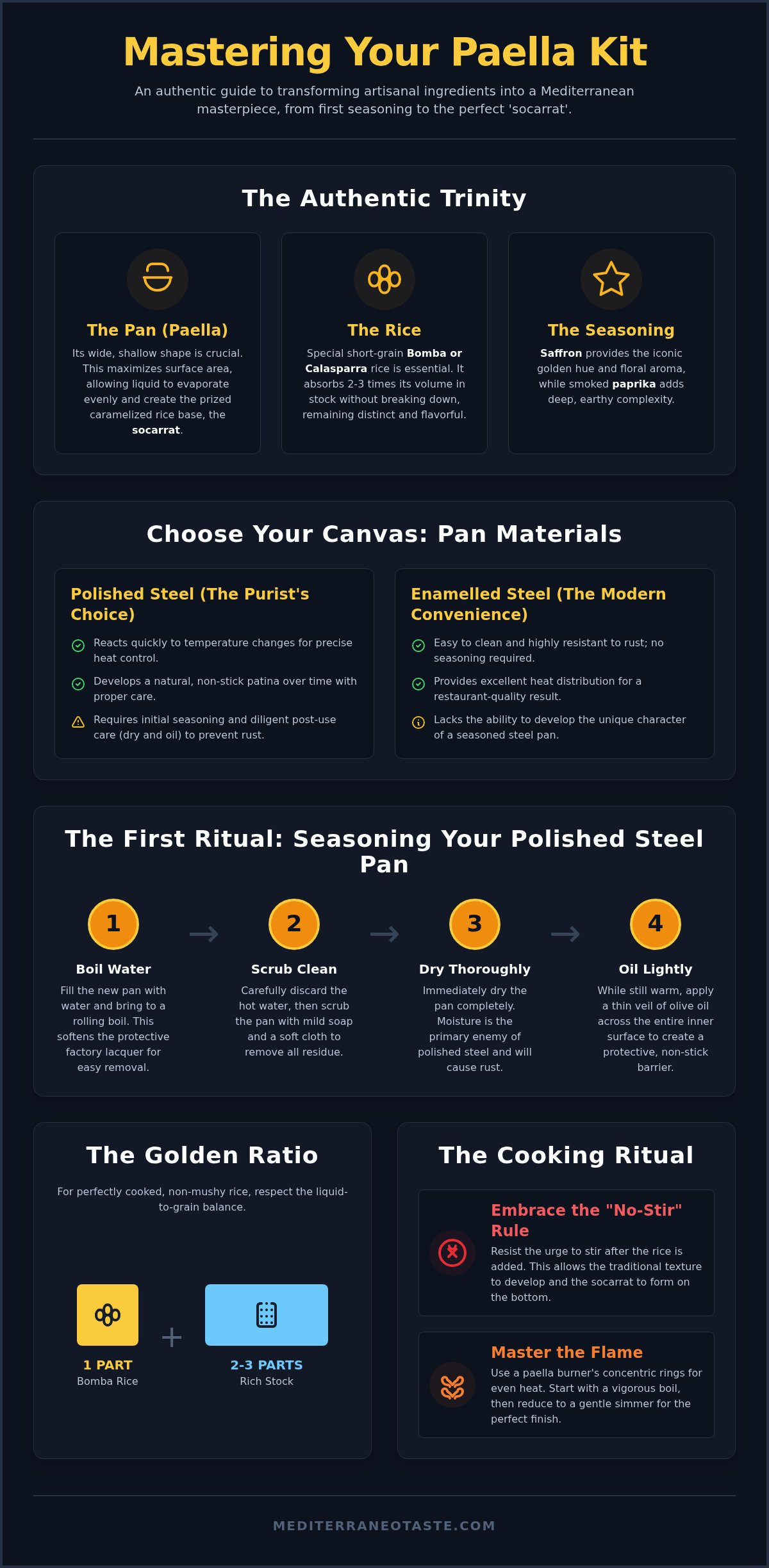
Every authentic experience relies on three pillars: the pan, the rice, and the seasoning. The pan is your canvas. Its broad diameter ensures that the rice stays in a thin layer, which is the secret to a perfect, non-mushy texture. If the pan were deeper, the rice would steam rather than fry, losing its individual character.
The rice is equally specific. You won't find standard long-grain varieties in a premium kit. Instead, you'll discover short-grain Bomba or Calasparra rice. These grains are prized for their extraordinary ability to absorb two to three times their volume in stock without breaking down. They hold the Mediterranean soul of your ingredients, remaining distinct, firm, and incredibly flavorful.
The seasoning provides the final sensory touch. Saffron offers a delicate, floral aroma and that iconic golden hue that defines the dish. Smoked paprika, or pimentón, adds a deep, earthy complexity. Together with a rich stock, they form the trinity of flavor that transforms simple grains into a celebratory feast.
The Significance of Traditional Materials
Choosing between polished steel and enamelled steel is your first step toward authenticity. Polished steel is the traditional choice for purists. It reacts quickly to temperature changes, giving you precise control over the heat. It requires a bit more care to maintain, but it develops a unique character over time, much like a well-loved cast iron skillet.
Enamelled steel offers a modern touch of convenience. It is easier to clean and resists rust, yet it still provides the excellent heat distribution needed for a restaurant-quality result. Both materials are built for high heat and artisanal performance. They are tools designed to last a lifetime. Learning how to use a paella kit starts with respecting these materials; they are the gateway to a truly premium culinary discovery.
Preparing Your Canvas: Setting Up the Pan and Heat Source
Before the first grain of rice touches the steel, you must prepare your canvas. A new pan arrives with a protective manufacturer's coating designed to prevent rust during its journey from Spain. Removing this is your first act of mastery. It's a simple yet essential ritual that ensures your Mediterranean delicacies taste exactly as intended. Mastering how to use a paella kit begins with this foundational preparation.
Seasoning Polished Steel Pans
The first seasoning of a polished steel pan is the birth of its unique culinary character.
- Fill the pan with water and bring it to a vigorous, rolling boil to soften the factory-applied lacquer.
- Carefully discard the water and scrub the pan with mild soap and a soft cloth to remove all residue.
- Dry the pan immediately and thoroughly; moisture is the primary enemy of polished steel.
- While the metal is still warm, apply a thin veil of extra virgin olive oil across the entire surface with a paper towel.
This creates a natural non-stick barrier that will deepen and improve with every feast you prepare. This seasoning process is what transforms a simple tool into a lifetime investment for your kitchen.
Mastering the Flame: Gas Burner vs. Stove
The soul of paella is the flame. For the most authentic results, using a professional paella burner provides the outdoor precision needed for large pans. These burners feature concentric rings of fire that you can control independently. This allows you to manage the vigorous boil required at the start and the gentle simmer needed for the finish. Understanding how to use a paella kit effectively requires a keen eye for this flame management.
If you are adapting to an indoor gas range, position the pan across multiple burners to cover as much surface area as possible. You will need to rotate the pan frequently to ensure every corner receives equal heat. Regardless of your heat source, the surface must be perfectly level. An uneven pan causes the stock to pool on one side, leading to some rice grains being undercooked while others become mushy and over-saturated.
Before lighting the flame, perform a quick safety check. Ensure your gas connections are tight and your tripod stands on firm, even ground. A stable pan is a safe pan. Once your equipment is secure and your steel is seasoned, you are ready to begin the alchemy of flavor. If you're still selecting your setup, exploring an authentic Spanish paella pan is the best way to ensure your equipment matches your culinary ambition.
The Alchemy of Ingredients: Saffron, Rice, and Stock
The true alchemy of the dish lies in the harmony of its ingredients. Learning how to use a paella kit effectively means respecting the proportions of the Spanish kitchen. Start with the golden ratio. For the short-grain varieties found in your kit, aim for one part rice to three parts stock. This balance ensures the rice absorbs every drop of flavor while remaining distinct and firm. Measuring by volume is often more reliable than weight; a simple cup will serve as your most trusted tool to maintain this precision.
Infusing your stock is a ritual of patience. Never rush the saffron bloom. Steep your threads in warm liquid for at least ten minutes before they meet the pan. This allows the complex, floral notes to fully emerge, tinting the stock with a deep, liquid gold. As you build your base, focus on the sofrito. Sauté your aromatics, such as grated tomatoes and garlic, slowly until they reach a rich, jam-like consistency. This concentrated base is the foundation of flavor. Finally, don't underestimate salt. It is the final key that harmonizes the earthiness of the rice with the sweetness of your chosen proteins. Taste your stock before adding the rice; it should feel slightly more seasoned than you think necessary, as the grains will mellow the intensity during the cook.
Why Bomba Rice is Non-Negotiable
Bomba rice is the undisputed king of the paella pan. Unlike Italian arborio, which releases starch to create a creamy risotto, Bomba rice for sale is designed to expand in width rather than length. It acts like a sponge, absorbing the Mediterranean soul of your stock while maintaining a firm, individual structure. This unique property is essential for the dish's signature dry finish. For a deeper look into the science of the grain, see our guide on 'Why Bomba Rice is Non-Negotiable for True Paella'.
Infusing the Soul: Saffron and Pimentón
The sensory profile of your dish depends on the quality of your spices. Toast your saffron threads gently in a dry pan for a few seconds before crushing them; this unlocks a deeper level of aroma and color. For that unmistakable earthy depth, always use pimenton de la vera smoked paprika. Its wood-fired smokiness is a hallmark of authentic Spanish flavor. Avoid the temptation of "paella coloring" or cheap substitutes. Real saffron provides a nuanced, golden elegance that artificial powders simply cannot replicate. Mastering how to use a paella kit is as much about the quality of your pantry as it is about the heat of your flame.
The Cooking Ritual: Achieving the Perfect Socarrat
The fire is lit, the steel is seasoned, and your ingredients are prepped. Now, the true performance begins. Learning how to use a paella kit culminates in this precise ritual of heat and patience. Once the rice meets the pan, your most important tool is restraint. Unlike other rice dishes, the "no-stir" rule is absolute here. Stirring releases starch and creates a creamy texture, which is the antithesis of a true Spanish paella. You want individual, distinct grains that have absorbed the broth while remaining firm to the bite.
Managing the flame is a journey of two halves. You start with a vigorous, rolling boil for the first eight to ten minutes. This high heat allows the rice to move and settle into a perfectly even layer. As the liquid evaporates and the rice begins to emerge from the broth, you must lower the flame to a gentle simmer. This transition is critical. It allows the remaining moisture to be absorbed slowly, ensuring the grains are cooked through without becoming mushy. The final five minutes of cooking are where the magic happens, as the moisture disappears and the rice begins to fry gently in the remaining oils.
Timing the Addition of Broth
Pour your infused stock gently over the back of a spoon or directly into the center, allowing it to flow outward. This prevents the rice from being displaced into clumps. Watch for the visual cue: the moment the "peaks" of the rice grains begin to break the surface of the liquid. This signals that the majority of the evaporation is complete. At this stage, you can adjust the flame to target specific areas of the pan, ensuring every corner of your Spanish paella kit receives the heat necessary for a uniform finish.
The Art of the Sizzle: Developing the Crust
The socarrat is the caramelized, toasted treasure at the bottom of the pan, and achieving it is the mark of a master. As the last of the liquid vanishes, listen closely. You will hear a distinct crackling and popping sound. This is the rice beginning to toast against the steel. It is a symphony of sizzles that tells you the crust is forming. Trust your senses. The scent should be nutty and rich, reminiscent of toasted bread. If you smell anything acrid or sharp, remove the pan from the heat immediately.
You can verify the progress by gently sliding a spoon along the bottom of the pan. You should feel a slight resistance, a firm "crust" that has gripped the steel. Once you achieve this, turn off the heat and cover the pan with a clean cloth or foil. Let it rest for exactly five minutes. This final rest allows the moisture to redistribute, making the socarrat easier to scrape away and enjoy. To ensure you have the right equipment for this delicate process, consider starting with an authentic Spanish paella pan designed for perfect heat retention.
Post-Feast Care: Preserving Your Paella Kit for a Lifetime
The final grain of socarrat has been savored, and the laughter of your guests still lingers. While the meal is complete, your relationship with your equipment is just beginning. A premium kit is an investment in future celebrations. Learning how to use a paella kit includes mastering the quiet ritual of preservation. Treat your pan with the same respect you gave the ingredients, and it will serve you for decades. Proper maintenance ensures that your tools remain as authentic and effective as the day they arrived from Spain.
Never surrender your pan to the dishwasher. The aggressive chemicals and prolonged moisture are the natural enemies of traditional steel. Instead, embrace a gentler approach. If stubborn bits of rice remain, fill the pan with warm water and let it soak for a few minutes. Use a soft sponge and mild soap to lift the residue. Avoid abrasive steel wool unless you are performing a deep restoration. Once clean, dry the pan immediately with a soft cloth. Even a few drops of water left to air-dry can invite oxidation and dull the finish of your steel.
Cleaning and Storing Carbon Steel
A well-cared-for carbon steel paella pan improves with every use, developing a dark, seasoned patina that tells the story of your culinary journeys.
After drying the pan completely, perform the oil rub. Pour a small amount of extra virgin olive oil onto a paper towel and wipe it across the entire surface, including the handles and the underside. This creates a protective barrier against the air. Place a sheet of paper towel inside the pan before storing it in a dry cupboard. This simple step prevents moisture from being trapped against the metal. If you notice small rust spots, don't worry. Gently remove them with fine steel wool, wash the area, and re-apply the oil immediately. This resilience is an essential part of knowing how to use a paella kit for the long term.
Expanding Your Mediterranean Collection
Your paella is the centerpiece, but it is only one chapter of the story. We invite you to explore our wider selection of artisan mediterranean products to complete your table. Imagine hosting a full tapas night, where your masterfully cooked rice is joined by hand-picked olives, cured meats, and regional cheeses. It's a chance to deepen your expertise as a sophisticated host and curator of fine flavors. For more inspiration on building your home collection, read our sibling article: 'Essential Mediterranean Pantry: A Curator’s Guide'. Your journey into the heart of Spanish flavor has only just begun.
Begin Your Mediterranean Culinary Journey
Mastering the art of paella is a celebration of heritage and sensory indulgence. You've uncovered the secrets of the Spanish kitchen, from the delicate alchemy of saffron to the precise management of the flame. Knowing how to use a paella kit transforms a simple meal into an evocative event that lingers in the memory of your guests. By respecting the "no-stir" rule and the unique needs of your polished steel pan, you ensure every grain of rice carries the soul of the Mediterranean. Success lies in these artisanal details.
We invite you to bring this sophisticated ritual into your home with our premium offerings. We provide authentic Spanish cookware and the finest artisanal ingredients, delivered nationwide to gourmet food lovers. Every piece in our collection is a gateway to a lifetime of culinary discovery. Explore our curated selection of authentic Spanish Paella Kits and prepare to impress with your next masterpiece. Your journey toward the perfect socarrat starts here. Embrace the tradition and let the celebration begin.
Frequently Asked Questions
Can I use my paella kit on an induction cooktop?
Yes, you can use traditional polished or enamelled steel pans on induction as they are magnetic. However, for the best results, ensure your pan has a flat base to maintain consistent contact with the surface. If you're learning how to use a paella kit on an induction range, consider a pan specifically designed for flat stovetops to avoid heat loss. This ensures your Mediterranean delicacies cook evenly across the entire surface.
Do I need to wash the paella rice before cooking?
No, you should never wash paella rice before cooking. Traditional varieties like Bomba or Calasparra are selected for their ability to absorb stock while remaining distinct. Rinsing would remove the surface starches and moisture balance necessary for that firm, individual texture. To maintain the artisanal quality of your dish, simply pour the dry grains directly into the pan once your sofrito is rich and fragrant. This preserves the grain's integrity.
What should I do if my paella pan starts to rust?
Rust is easily managed by scrubbing the affected area with fine steel wool or a scouring pad. Once the spots are gone, wash the pan with mild soap, dry it immediately with a soft cloth, and apply a thin layer of olive oil. This simple restoration preserves your authentic Spanish paella pan for a lifetime. Regular seasoning after every use is the best way to prevent oxidation and keep your equipment in peak condition.
How much water or stock do I need for a standard paella kit?
A standard ratio for a kit featuring Bomba rice is three parts stock to one part rice. This proportion allows the short-grain rice to absorb the maximum amount of flavor without breaking down into a mushy texture. Always measure by volume rather than weight for accuracy. If you find the rice is still firm after the liquid has evaporated, you can add a small amount of extra warm stock to finish.
Can I use the paella pan in the oven?
You can use a paella pan in the oven, as traditional steel is built to withstand high temperatures. While authentic recipes favor the open flame of a gas burner, the oven is an excellent tool for finishing a dish if the top layer of rice requires more heat. Ensure your pan handles are also metal. This versatility is one of the reasons why learning how to use a paella kit is so rewarding.
Why is my paella rice still hard after the liquid is gone?
Hard rice typically occurs when the liquid evaporates too quickly or the heat is uneven across the base. This often happens if the pan isn't level or if the flame is too high during the simmering stage. To fix this, add a splash of warm broth and cover the pan with a clean cloth or foil for a few minutes. The trapped steam will gently soften the grains without ruining the texture.
Is it okay to use a lid while cooking paella?
Avoid using a lid while the paella is actively cooking. The dish relies on evaporation to concentrate the flavors and create the signature dry texture. A lid would trap steam, leading to a mushy, risotto-like consistency. The only time a cover is appropriate is during the final five-minute rest after the heat is turned off. This brief period of steaming helps the rice finish perfectly and loosens the precious socarrat.
How do I know if I've successfully made the socarrat?
You know you've successfully made the socarrat when you hear a faint crackling sound and smell a rich, toasted aroma. This signals that the moisture is gone and the rice is frying gently in the remaining oils. Use a spoon to feel for resistance at the bottom of the pan. A firm, caramelized layer that requires a gentle scrape to lift is the hallmark of a masterfully prepared Mediterranean feast for your guests.