

True Spanish paella never fails because of the recipe; it fails over an ordinary domestic stove. Standard kitchen cooktops concentrate intense heat in a tight circle, leaving you with scorched rice in the center and undercooked grains at the rim. You know the quiet frustration of constantly shifting a wide pan across crowded elements, hoping for balance while rich stock evaporates unevenly. Bringing a dedicated paella gas burner with regulator into your outdoor setup transforms this unpredictable chore into an effortless culinary ritual.
Sorting through gas pressure specs, hose fittings, and burner stability shouldn't stand between you and your guests. In this guide, you'll discover how to choose the ideal paella gas burner with regulator for authentic outdoor cooking and flawless heat control. We'll break down ring sizing for your favorite pan, highlight certified regulator essentials for complete peace of mind, and reveal how graduated multi-ring flames unlock that coveted, caramelized socarrat.
Key Takeaways
- Discover why wide-format pans require dedicated edge-to-edge heat distribution, eliminating the cold perimeters and scorched centers common to indoor stovetops.
- Select the ideal paella gas burner with regulator by pairing independent concentric flame rings directly to your pan base dimensions.
- Safeguard your outdoor culinary gatherings with certified gas regulators calibrated to deliver steady pressure and total peace of mind.
- Perfect your pan-to-flame alignment to maintain an active, balanced simmer across the entire cooking surface without losing moisture at the rims.
- Master flame graduation from initial sauté to the final rest, coaxing out that iconic, deeply caramelized socarrat with absolute confidence.
Why an Outdoor Paella Gas Burner with Regulator Outperforms Kitchen Stoves
Cooking authentic Spanish rice requires an expansive surface where broth evaporates uniformly. A domestic kitchen cooktop simply isn't engineered for this geometry. Standard indoor burners fire heat straight into the pan's center, leaving you with scorched rice over the flame and cold, soggy grains around the perimeter. Attempting to balance a wide pan over multiple kitchen elements creates chaotic hot spots that ruin delicate textures. Investing in a dedicated outdoor paella gas burner with regulator solves this imbalance immediately, delivering wide, concentric rings of fire that mimic the gentle, enveloping heat of an authentic open hearth. If you're weighing your fuel options, explore our guide on gas paella burner vs charcoal for outdoor cooking insights.
Thermal Dynamics of Traditional Paella Cooking
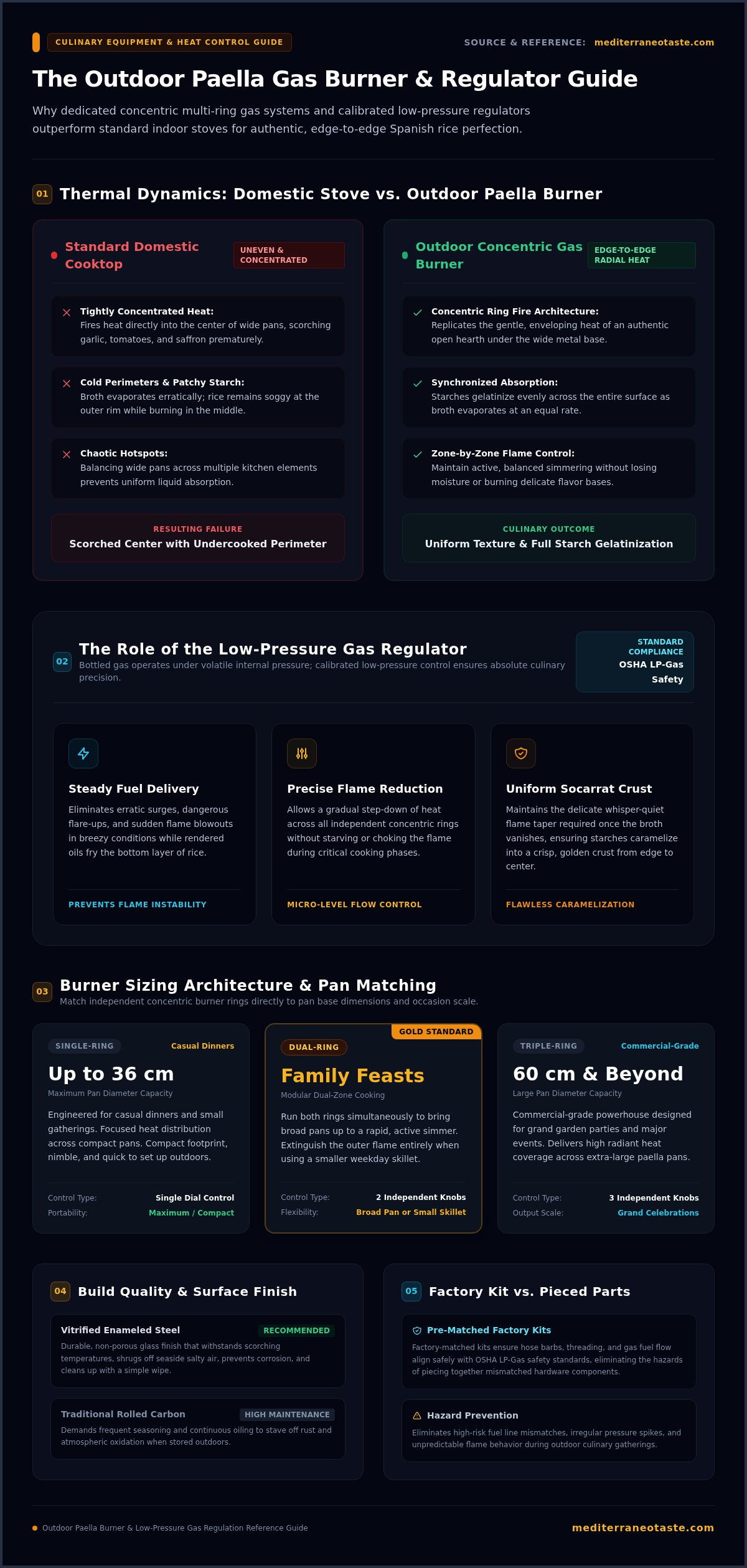
The iconic culinary heritage of Paella relies on shallow, wide pans designed for rapid, even liquid evaporation. When you build the base of your dish, uncontrolled hotspots can scorch garlic, tomatoes, and saffron long before their flavors meld. Concentric gas rings distribute balanced radiant heat under the metal base. This steady radial warmth ensures that every grain absorbs rich broth at the exact same rate. Starches gelatinize evenly across the pan, preventing the patchy texture that plagues kitchen stovetop attempts.
The Crucial Role of the Low-Pressure Gas Regulator
While multi-ring burners provide the physical coverage, the low-pressure regulator provides the actual culinary control. Bottled fuel sits at volatile, fluctuating internal pressures. An outdoor paella gas burner with regulator steps this pressure down to a steady, calibrated flow. Unregulated or mismatched gas lines risk dangerous flare-ups, sudden flame blowouts in a breeze, or wild heat spikes that ruin your meal.
Most critically, the regulator maintains micro-level fuel consistency when you begin forming the crust. Competitors often overlook how vital gas regulation is to this final step. Socarrat requires a delicate, whisper-quiet flame taper after the broth vanishes:
- Steady fuel delivery: Eliminates erratic surges while rendered oils fry the bottom layer of rice.
- Precise flame reduction: Lets you step down heat gradually across all rings without choking the flame.
- Uniform crust development: Ensures starches caramelize into a crisp, golden crust from pan edge to center.
Key Features to Evaluate in a Paella Gas Burner and Regulator Kit
Choosing the right outdoor setup comes down to matching physical design with culinary ambition. When selecting a complete paella gas burner with regulator, prioritize equipment that offers modular flame control, robust materials, and pre-matched components. Buying a factory-matched kit ensures hose barbs, threading, and fuel flow align safely with OSHA LP-Gas safety standards, saving you from the hazard of piecing together mismatched fittings from the hardware store.
Concentric Ring Architecture and Control Knobs
The true magic of dedicated outdoor rice cookery lies in concentric ring architecture. Each ring operates on its own dial, turning your pan into a responsive, multi-zone cooking station. Selecting the right setup depends directly on the pans you plan to run:
- Single-Ring Burners: Engineered for casual dinners, these burners focus heat across pans up to 36 centimeters. They are compact, nimble, and quick to set up.
- Dual-Ring Burners: The gold standard for family feasts. Run both rings simultaneously to bring broad pans up to a rapid simmer, or extinguish the outer flame entirely to use a smaller weekday skillet.
- Triple-Ring Burners: Commercial-grade powerhouses built for grand garden parties. These burners handle pans spanning 60 centimeters and beyond. Discover sizing advice in our large paella pan guide for big celebrations.
Build Quality, Flame Ports, and Surface Enameling
Beyond ring layout, examine physical craftsmanship. Traditional rolled carbon burners demand frequent oiling to stave off rust, whereas vitrified enameled steel provides a durable, non-porous glass finish. This resilient coating shrugs off seaside air, withstands scorching temperatures, and cleans up with a simple wipe after grease splatters settle.
Flame port orientation makes or breaks your cooking experience outdoors. Seek out burners with angled, side-drilled flame apertures rather than vertical holes. When broth inevitably simmers over the edge during an enthusiastic boil, angled ports prevent liquid from choking the gas outlets. Pair this with brass needle valves that deliver velvety resistance. Fine dial adjustments allow you to dial back the fire to a whisper when resting the rice. If you are preparing to elevate your weekend entertaining, pairing authentic cookware with a curated paella gas burner will give you the exacting control your guests will taste in every spoonful.
Understanding Gas Regulators, Pressure Ratings, and Safety Standards
Connecting fuel to fire should inspire excitement, not anxiety. A common mistake among outdoor cooks is assuming any backyard barbecue fitting will do. In reality, a paella gas burner with regulator must match the exact operating pressure of your cylinder and fuel type. Burners engineered in Spain typically require 30 to 37 mbar for liquefied petroleum gas, whereas certain regional systems call for 50 mbar or distinct threaded connectors. Using an uncertified or mismatched regulator starves the flame rings of proper pressure, causing sputtering yellow flames and heavy soot across the underside of your pan.
Propane vs Butane Pressure Differences
Ambient climate influences flame behavior just as much as hardware. Propane vaporizes effortlessly down to sub-zero conditions, making it the definitive choice for brisk autumn gatherings and windy seaside cookouts. Butane burns exceptionally clean and offers high thermal value, yet it falters when outdoor temperatures drop toward freezing, causing burner pressure to drop mid-cook. Always select a regulator calibrated specifically for your chosen bottle gas, as mixing incompatible fittings disrupts flow rates and compromises safety.
Essential Safe Connection Procedures
Rigorous safety checks guarantee an effortless gathering. European testing in 2026 revealed that 73% of evaluated portable gas cooking appliances failed safety and documentation benchmarks, with high-temperature vulnerabilities representing the most frequent performance defect. Establishing a reliable setup requires just three simple steps before firing your paella gas burner with regulator:
- Hand-tighten securely: Thread the regulator hand-wheel onto the cylinder valve firmly using your grip alone. Avoid harsh metal wrenches that can strip delicate brass threads and create path leaks.
- Inspect reinforced lines: Check rubber fuel hoses annually for signs of hardening, stiffness, or surface micro-cracking. Verify that connection points feature heavy-duty crimped fittings rather than loose makeshift clamps.
- Perform the bubble test: Coat every threaded junction with a balanced mix of dish soap and water. Open the cylinder valve with the burner controls closed. If expanding bubbles appear around the fittings, tighten the connection before striking a flame.
Burner and Pan Pairing Guide: Matching Diameters to Guest Servings
Achieving authentic Spanish rice comes down to depth. Traditional Valencian technique demands a thin layer of grains barely exceeding the thickness of a finger. Competitors often claim that pan edges can overhang flame rings by fifteen centimeters, but excessive overhang causes severe thermal drop-offs that leave outer rice grains chewy and wet. As a golden rule, your outer flame ring must sit within five centimeters of the pan's rim. Pairing a properly proportioned paella pan with a balanced paella gas burner with regulator ensures edge-to-edge heat across every single grain.
Matching Burners for Intimate to Mid-Sized Gatherings
For casual garden dinners, compact efficiency reigns supreme. Dual-ring burners measuring thirty to forty centimeters easily accommodate pans tailored for intimate company:
- 28 cm to 34 cm pans (2 to 4 guests): Fire only the inner ring to brown poultry or seafood, then introduce the outer ring at low output to complete the gentle simmer.
- 42 cm to 50 cm pans (6 to 12 guests): Both rings share equal duty, holding stock at an active, rolling boil without scorching the pan floor.
Elevating your setup on a stable three-leg tripod stand keeps the cooking surface level. Even a slight five-degree tilt pools broth to one flank, starving the opposite edge of moisture and creating patchy texture.
Sizing Heavy Equipment for Large Garden Feasts
When cooking for expansive celebrations, pan volume expands dramatically. Once pans cross the fifty-centimeter threshold, filled weights quickly exceed fifteen kilograms. Large-format burners spanning fifty to seventy centimeters distribute immense thermal output across wide steel surfaces, preventing thermal dead spots.
These expansive setups demand reinforced, cross-braced tripod legs designed to eliminate wobble. Independent valve controls remain indispensable here. As liquid evaporates and the grains emerge, you can extinguish the outer ring entirely while easing the inner flame down to dry the rice gently. Ready to craft authentic Spanish feasts in your backyard? Explore the curated collection of authentic Spanish paella pan and burner essentials at Mediterraneo Taste Spain to elevate your outdoor kitchen today.
How to Cook with a Paella Burner: Flame to Socarrat
True mastery over rice begins the moment sparks meet fuel. Operating an outdoor paella gas burner with regulator gives you intuitive authority over every stage of cooking, turning simple pantry staples into an unforgettable feast. Orchestrating the dish requires a disciplined, five-step flame sequence:
- Level the base: Pour your olive oil into a cold pan, adjusting the tripod legs until the golden pool rests perfectly in the dead center.
- Sauté the sofrito: Ignite only the inner ring on medium heat to slowly caramelize aromatics and sear meats without scorching.
- Engage the boil: Pour in your rich stock, ignite all outer rings, and open the valves to bring the liquid to an active, rolling boil.
- Graduate the flame: Scatter your rice evenly, boil vigorously for eight minutes, then taper the flames downward as grains swell above the liquid.
- Sear the crust: Shift the heat to low across all rings to gently fry the base layer into a toasted, nutty crust.
Leveling and Wind Protection Outdoors
Liquid seeks its own level, and paella rice follows. If your tripod tilts even slightly, broth pools along one edge while opposite grains dry out prematurely. Always use an initial oil baseline test before striking a flame. Outdoor breezes can also bend flames away from the pan floor. Employing magnetic or clip-on windscreen baffles around the frame shields the fire, maintaining crisp blue flame cones and preventing unsteady, soot-producing yellow flares.
Mastering the Final Minutes for Crisp Socarrat
Creating authentic socarrat is an exercise in auditory patience. Once broth evaporates entirely, the soft bubbling quietens into a distinct, rhythmic crackle. That sharp sizzle tells you the rendered oils are actively frying the bottom layer of starch against the metal base.
Set your paella gas burner with regulator to medium-low across all concentric rings for roughly two minutes. Trust your senses. You are seeking the fragrant, toasted aroma of caramelized starch, not the harsh bite of burning rice. Turn off the gas completely and let the pan rest undisturbed for five minutes so moisture distributes evenly through the top layers. Ready to bring this time-honored tradition to your garden? Source premium tools at Mediterraneo Taste Spain for your authentic outdoor kitchen.
Bring Authentic Spanish Fire to Your Next Gathering
Unlocking unforgettable Mediterranean flavour requires moving past the cramped limitations of indoor stovetops. When you invest in a dedicated paella gas burner with regulator, you take effortless command over every phase of outdoor cooking. Balanced concentric rings protect your delicate sofrito from scorching, maintain an active simmer across the entire pan diameter, and provide the whisper-quiet flame graduation required for that coveted, caramelized socarrat.
Cooking authentic paella isn't just about feeding a crowd; it's about the shared warmth of the ritual. Ready to elevate your outdoor cooking? Explore authentic Spanish paella equipment at Mediterraneo Taste Spain and master Mediterranean flavours at home. With a curated collection of traditional culinary tools and nationwide fulfillment connecting passionate cooks across the country, crafting restaurant-quality dishes has never been more achievable. Light the flame, gather your guests around the bubbling pan, and celebrate the vibrant pleasure of Spanish hospitality.
Frequently Asked Questions
Can I use an indoor domestic cooktop instead of a paella gas burner?
No, standard indoor cooktops lack the broad flame spread required for wide-format rice dishes. Domestic elements create sharp hot zones in the center while outer grains stay cool, preventing even evaporation. Operating an outdoor paella gas burner with regulator guarantees wide, balanced radial heat that cooks every grain at an identical pace while keeping combustion gases safely outside.
What size gas regulator do I need for an outdoor paella burner?
You need a low-pressure regulator calibrated specifically to your fuel cylinder and local pressure standards. Most authentic Spanish burners run on propane or butane between 30 and 37 mbar. Always verify the millibar rating stamped on your burner's data plate before buying to ensure smooth, unchoked gas flow across all rings.
Can I connect my paella gas burner to a household natural gas line?
No, standard outdoor burners are factory-jetted specifically for bottled LP gases like propane or butane. Natural gas operates at significantly lower delivery pressures and requires larger fuel orifices. Running bottled gas hardware on a domestic mains line produces weak, inefficient flames that cannot sustain a rolling broth boil.
How do I safely test my burner and regulator assembly for gas leaks?
Apply a mixture of equal parts liquid dish soap and water across all threaded fittings and hose crimps. Turn on the cylinder valve while leaving the appliance control knobs firmly off. If soap bubbles expand or foam appears, gas is escaping. Shut the supply valve immediately and re-tighten the joints by hand.
Why is my paella burner producing yellow flames instead of clean blue heat?
Yellow flame tips indicate incomplete fuel combustion, typically caused by incorrect gas pressure, clogged ports, or an improper air-to-fuel ratio. Check that your paella gas burner with regulator matches your cylinder gas type. Clear any spilled broth, grease, or dust obstructing the side-drilled venturis using a soft bristle brush.
Is wind protection necessary when operating a paella burner outside?
Yes, outdoor air currents blow flames off center and cool the pan floor unevenly. A gentle breeze easily doubles your broth reduction time or extinguishes lower simmer settings entirely. Fitting a wraparound metal windscreen baffle locks the flame columns directly beneath the pan base, protecting consistent heat delivery and saving valuable fuel.
How should I clean and store my paella burner and regulator after cooking?
Let the equipment cool completely, then wipe down the enameled rings with warm water, mild soap, and a non-abrasive cloth. Never soak the gas valves or hose fittings in water. Disconnect the regulator, screw on protective dust caps over threaded openings, and store the hardware inside a dry, sheltered space between gatherings.