

An award-winning bottle can be excellent and still be the wrong oil for your palate. Spanish extra virgin olive oil brands often compete for attention with medals and elegant packaging, but those details alone won’t tell you whether an oil is fresh, traceable, or right for the way you cook.
Harvest dates, olive varieties, and origin details aren’t always presented consistently, which can make comparisons difficult. A bold, peppery oil may shine on grilled vegetables but overwhelm a delicate dish. Focus on what’s in the bottle and how you plan to use it, rather than prestige alone.
This guide explains how to compare brands by freshness, traceability, flavour, and intended use. You’ll learn which label details to check, how varieties such as Picual and Arbequina can differ, and what to consider when choosing an oil for cooking or finishing. Use these steps to build a shortlist that suits both your table and your taste.
Key Takeaways
- Compare Spanish extra virgin olive oil brands by producer and product details, not medals or packaging alone.
- Check harvest and bottling information, origin, and storage details to understand how clearly a bottle’s history is presented.
- Use cultivar and flavour descriptions as a guide, then match the oil’s intensity to cooking, dressing, dipping, or tasting.
- Before buying, confirm the product’s origin, current stock, and purchase terms directly with the seller.
- Check each product’s current information against the producer’s own details before adding it to your shortlist.
How to judge Spanish extra virgin olive oil brands beyond the label
Start with the category, not the marketing. Extra virgin olive oil is oil obtained directly from olives by mechanical means that meets defined chemical and sensory standards. This classification describes the oil, but it doesn’t tell you whether one producer is more skilled or a brand is more reputable. Spain is the world's largest producer, so bottles can vary widely in origin, variety, freshness, and style.
For Spanish extra virgin olive oil brands, treat words such as premium, artisan, and early harvest as reasons to look for more information, not as proof of quality. A named producer, a clear origin, and useful date information give you more to compare than an award badge or an elaborate label.
Which label details help assess a bottle?
Look for the producer or responsible operator, the oil’s stated origin, and a lot or batch code. A harvest date, when provided, identifies the crop season, but doesn’t independently prove how the olives were handled or how the oil was stored. A best-before date indicates the period the producer expects the oil to retain its qualities under suitable conditions. It is not a harvest date. Bottling information adds context, but doesn’t replace knowing when the olives were picked.
EU marks can provide specific information. The EU organic logo indicates that the product is certified under EU organic rules. Check the accompanying control-body code and farming-origin statement. A Protected Designation of Origin (PDO) identifies a product linked to a defined place and production requirements. Neither mark tells you how an oil will taste, so consider it alongside the product’s other details.
Why does freshness matter to flavour?
Olive oil is best enjoyed as a fresh food, not aged indefinitely like wine. Over time, exposure to oxygen, heat, and light can dull its aroma and taste. Where possible, choose a bottle with a clear harvest date, then check whether it has been stored away from strong light and heat. Once opened, keep it sealed in a cool, dark cupboard.
Packaging can help protect the oil. Dark glass and tins limit light exposure, but neither guarantees that an oil is fresh or well made. Clear glass lets you see the oil’s colour, but colour alone isn’t a reliable quality test. Oils naturally vary in shade, and appearance won’t tell you whether the aroma is lively or the flavour balanced. Use the label to narrow your options, then let aroma and taste complete the assessment.
Spanish extra virgin olive oil brands to compare: a verified shortlist
A useful shortlist compares individual bottles, not just familiar names. A producer may offer oils from different cultivars, harvests, and production areas, so one general brand description can’t verify every product. Spain’s olive oil tradition is celebrated as an emblem of Spain's agri-food heritage, but heritage and reputation are starting points, not proof of what’s in a particular bottle.
Verde Esmeralda, Castillo de Canena, Oro Bailén, and Casas de Hualdo are names to investigate. Before recommending a specific oil, check the current product and producer information directly. The details available here don’t establish current bottle-level information for these brands, so it would be misleading to assign them specific origins, cultivars, certifications, harvest dates, or formats without confirmation.
What should each brand profile include?
Use the same checklist for every oil. Record the producer, stated origin, cultivar or blend, harvest information, certification if shown, and available bottle formats. Check each detail against the exact oil’s current product page or label. A cultivar named for one product shouldn’t be assumed to apply across the brand’s range. If you can’t confirm a detail, leave it out rather than filling the gap with a general brand claim.
- Verde Esmeralda: Verify the producer and the cultivar, origin, and harvest details for the specific bottle you’re considering.
- Castillo de Canena: Check each product’s own information. Don’t treat brand-wide reputation as evidence about every oil.
- Oro Bailén: Confirm the product’s stated variety or blend, origin, and current label details before comparing it.
- Casas de Hualdo: Verify the exact oil’s producer information, cultivar, harvest details, and any certification directly.
How can a roundup stay fair and useful?
Apply the same method to every entry and explain how the brands made the shortlist. Treat awards as context, not as a substitute for harvest information, traceability, or a bottle that suits the reader’s intended use. Avoid naming a universal winner. The right choice depends on the evidence available for the specific oil and the flavour the buyer wants.
Mediterraneo Taste Spain curates Spanish food products, but the available product information doesn’t establish that it produces or sells these olive oils. Don’t present the company as an oil brand or a source for a specific bottle. For broader Spanish food discovery, explore Spanish food products online and check the current catalogue for product details.
Compare Spanish olive oil brands by cultivar, flavour, and style
A cultivar offers a clue to an oil’s likely character, not a guarantee of quality or a promise that every bottle will taste the same. Harvest conditions and milling can affect the result, even among oils made from the same variety. For background on Spain’s olive oil sector, consult the Spanish Olive Oil Interprofessional, then use each producer’s current product details to assess a specific bottle.
The brand names below are candidates to compare, not endorsements of a particular oil. Product ranges and labels can change, and the available information here doesn’t confirm current bottle-level cultivar, flavour, harvest, or certification details. Check the producer’s own information and the bottle before drawing a comparison.
| Brand candidate | Cultivar and flavour | Label evidence to check | Suggested use |
|---|---|---|---|
| Verde Esmeralda | Confirm the cultivar and tasting notes for the exact bottle. | Check origin, harvest details, and any certification on the current product information. | Choose according to the confirmed flavour and your preferred intensity. |
| Castillo de Canena | Don’t assume one variety or profile applies across its range. | Verify the specific oil’s cultivar, origin, and harvest information. | Match the individual oil to cooking, dressing, or tasting. |
| Oro Bailén | Use bottle-specific variety and tasting notes, not the brand name alone. | Look for producer details, origin, harvest information, and certification if stated. | Let the oil’s described and tasted intensity guide your choice. |
| Casas de Hualdo | Confirm whether the bottle is a single-variety oil or a blend. | Check the current label and producer page for origin and harvest details. | Choose a use after checking the oil’s own flavour profile. |
How do common Spanish olive varieties differ?
As a general guide, Picual is often described as robust and peppery; Arbequina as softer and fruitier; and Hojiblanca as fresh, sometimes herbaceous, with a possible bitter finish. These are tendencies, not fixed tasting notes. A producer’s description can help you shortlist an oil, but tasting is the best way to learn whether its intensity suits you.
Which style suits cooking or finishing?
For everyday cooking, choose an oil whose flavour you enjoy and that won’t dominate the dish. A more assertive oil can bring character to roasted vegetables or bread, while a gentler one may suit a light salad. For finishing or tasting, pour a little on bread or a plain vegetable and notice its aroma, fruitiness, bitterness, and peppery finish. There’s no universal match. Compare Spanish extra virgin olive oil brands using the evidence on each bottle, then let your palate make the final call.
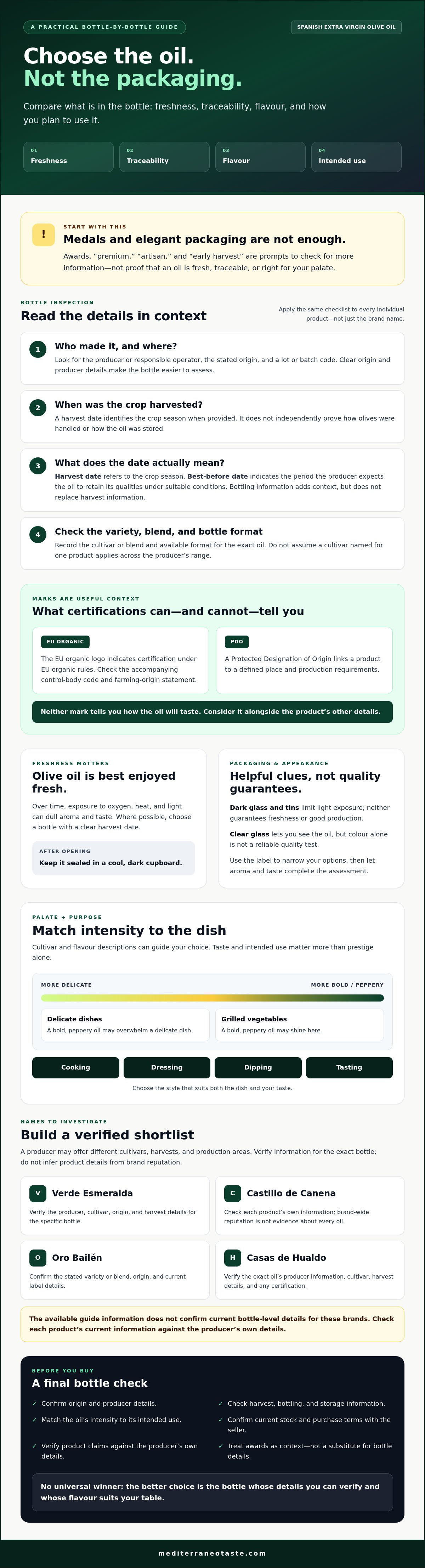
Choose a Spanish extra virgin olive oil brand for your kitchen
Start with how you plan to use the oil. A bottle used mainly for everyday cooking has a different role from one you’ll pour over a salad, serve with bread, or taste on its own. Decide whether you enjoy a bold, peppery finish or prefer something gentler and fruitier. Cultivar descriptions can point you towards a style, but taste is personal, and oils made from the same variety can differ.
What should first-time buyers prioritise?
Choose a clearly identified Spanish oil with producer and date information you can check. Let your palate lead rather than treating a medal, elaborate packaging, or the word “premium” as a shortcut. If you’re trying an unfamiliar style, a smaller format may be practical, but confirm that it’s available before relying on it.
Use this simple selection method:
- Name the use. Decide whether the bottle is mainly for cooking, dressing, dipping, or tasting.
- Choose an intensity. Use the stated cultivar and tasting notes as clues, then decide whether the described character appeals to you.
- Check the bottle evidence. Compare the producer, origin, harvest or date details, and storage information. Treat awards and brand stories as context, not a replacement for those details.
- Consider the format. Pick a quantity you expect to use while the oil is still fresh, and confirm the seller’s current formats before buying.
For cooking, a familiar, balanced flavour can work across dishes without taking centre stage. For finishing, dipping, or tasting, choose an oil whose aroma and intensity you’ll notice and enjoy. Try a small pour with plain bread or vegetables to decide whether its bitterness and peppery notes suit you. There’s no single best match for every kitchen.
How should a bottle be stored after opening?
Keep the cap closed between uses and store the oil away from heat and direct light. Follow the producer’s storage guidance if it’s provided. Rather than relying on a universal usage deadline, choose a format that suits how often you cook with olive oil and how quickly you expect to use it.
Choosing among Spanish extra virgin olive oil brands gets easier when you weigh the bottle’s traceable details, your intended use, and the flavour you enjoy. For other Spanish ingredients and kitchen staples, explore Spanish food products from Mediterraneo Taste Spain. Check the current catalogue for product details.
Where to Buy Spanish Olive Oil and What to Look For
Choose a seller that makes it easy to identify the exact oil, its producer, and its origin. A polished product page or glowing reviews can make browsing pleasant, but neither replaces clear bottle details. Before ordering, compare the listing with the producer’s own published information, then ask the seller about anything that’s missing or unclear.
How can shoppers verify a brand and seller?
Use this pre-purchase checklist for Spanish extra virgin olive oil brands:
- Producer and product: Is the producer named, and can you match the product to the producer’s current information?
- Origin and cultivar: Do the listing and label agree on where the oil comes from and, if specified, which olives it contains?
- Dates and lot details: Is harvest or best-before information shown? Is a lot or batch code visible on the bottle or available from the seller?
- Certification: If an organic or protected-origin mark is claimed, does the product information identify it clearly?
- Storage and packaging: Does the seller explain how the oil is stored, and does the packaging help protect it from light?
- Purchase terms: Is current stock confirmed? Check the purchase terms, and ask the seller to confirm the product’s origin before ordering if the listing is ambiguous.
Details should be consistent across the product page, label, and producer’s own published information. If a retailer’s listing says one cultivar but the producer’s page describes a blend, pause and ask which bottle is being sold. Customer reviews can help you understand other buyers’ experience with ordering or packaging, but they aren’t independent proof of freshness, origin, or quality.
How can Mediterraneo Taste Spain fit into the search?
Mediterraneo Taste Spain offers Spanish food products and Mediterranean delicacies for home cooks. Its product information doesn’t confirm a particular olive oil brand or product, so don’t assume its catalogue includes extra virgin olive oil. Check the current shop catalogue for available products, and confirm product details directly with the seller.
If you’re also looking for ingredients and cookware to bring Spanish and Mediterranean flavours into your kitchen, explore Mediterraneo Taste Spain’s Spanish food selection. The range includes Mediterranean delicacies, traditional Spanish food products, and specialized equipment such as paella pans. Check the current catalogue for specific products. For olive oil, base your decision on the bottle’s verifiable details, the seller’s transparency, and the flavours you want at your table.
Choose your next bottle with confidence
The best Spanish extra virgin olive oil brands for your kitchen are those that suit your taste and intended use, with bottle details you can verify. Check the producer, origin, and harvest information, then use cultivar notes as a guide rather than a guarantee of flavour. Awards and attractive packaging may catch your eye, but freshness and traceability offer more practical clues.
Start with one bottle that suits a dish you enjoy, whether you’re cooking, dressing a salad, or tasting the oil on its own. Notice what you like, then use that experience to guide your next choice. To explore other Spanish food products for your kitchen, visit Mediterraneo Taste Spain. The company specializes in Mediterranean delicacies and traditional Spanish food products, including ingredients and equipment for preparing paella at home. Explore Mediterranean delicacies and Spanish food products and find inspiration for your next meal.
Frequently Asked Questions
What are the best Spanish extra virgin olive oil brands?
There’s no single best brand for every buyer, so compare the specific bottle rather than relying on its name. Start with the producer’s current product information, then check cultivar, origin, harvest details, traceability, and flavour notes. Verde Esmeralda, Castillo de Canena, Oro Bailén, and Casas de Hualdo can be starting points for research, but verify each oil against primary information. Awards and popularity don’t guarantee freshness or a flavour you’ll enjoy.
How can I tell if Spanish olive oil is extra virgin?
Check that the product is explicitly labelled “extra virgin olive oil” and review the producer and product details. Look for origin, lot information, and date details where available, and verify any organic or protected-origin claims against the relevant certification information. Packaging and words such as “premium” aren’t proof of category or quality. For the technical classification criteria, consult current European Union and International Olive Council guidance rather than relying on marketing descriptions.
Is Spanish extra virgin olive oil better than oil from other countries?
Not automatically. Spain offers a wide range of producers and styles, but a country of origin alone can’t tell you whether a particular bottle is fresh, traceable, or suited to your palate. Compare its producer details, stated origin, cultivar, and flavour description, then consider how you’ll use it. The best choice is the individual oil that meets your expectations and tastes good in the dishes you prepare.
Which Spanish olive oil is best for cooking?
There isn’t one best bottle for every kitchen. For everyday cooking, choose an oil with a flavour you enjoy and that works across the dishes you make. A gentler profile may suit cooks who prefer the oil not to dominate, while a more pronounced style can add character. Treat cultivar and tasting notes as clues, not guarantees, and check the producer’s description for the specific oil you’re considering.
What is the difference between Picual and Arbequina olive oil?
Picual and Arbequina are different olive varieties, and oils made from them can have distinct profiles. Picual is often described as more robust, while Arbequina is commonly presented as gentler or fruitier. Those are broad tendencies, not fixed promises: growing conditions, harvest, and production can influence flavour. Compare the producer’s tasting notes for the exact bottle, and use the variety name as a starting point for choosing what to try.
Does a Spanish olive oil brand need a PDO label?
No. A PDO, or Protected Designation of Origin, identifies a product associated with a defined place and production requirements under a protected scheme. It can provide information about origin, but its absence doesn’t by itself mean a Spanish olive oil is poor quality or inauthentic. Check the exact designation and permitted use, then assess the producer, product origin, and available harvest or traceability details.
How should I store extra virgin olive oil after opening?
Keep the bottle tightly closed and store it away from heat and direct light, rather than beside a hot hob or in a sunny spot. Follow the producer’s storage instructions if they’re provided. Choose a bottle format that suits how often you use olive oil, so you can enjoy it while its aroma and flavour are still appealing. Colour and brand name alone can’t tell you whether an opened bottle is fresh.