

What matters when using saffron well in paella isn’t adding more, but choosing the right form and following the recipe. Spanish saffron threads bring a distinctive aroma, flavour and colour to rice, but it can be hard to tell what they contribute or how they differ from a seasoning blend.
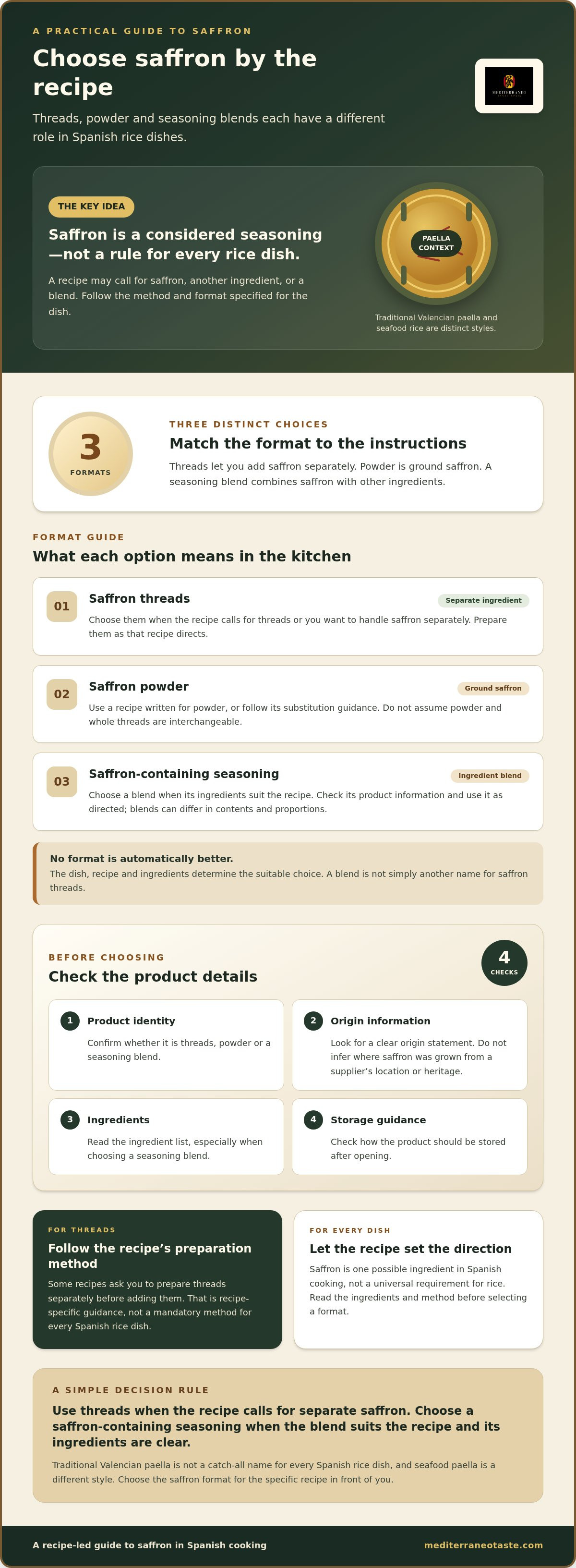
Threads, saffron powder and natural paella seasoning with saffron are distinct choices, each suited to a different approach in the kitchen. Threads let you prepare and add saffron separately, while a seasoning combines saffron with other ingredients.
This guide explains what saffron threads contribute to Spanish cooking, how to assess product information and when to choose threads over saffron-containing seasoning. You’ll also find practical guidance on preparing threads for paella and storing them carefully. With a little attention to the recipe and product details, you can choose the format that suits your cooking.
Key Takeaways
- Spanish saffron threads are one way to add saffron to paella; recipes can use the spice in different ways.
- Threads, saffron powder and saffron-containing seasoning are different formats. Choose according to the dish and the recipe you’re following.
- Check product identity, origin information, ingredients and storage guidance before choosing saffron.
- Prepare saffron threads according to the recipe, rather than treating one method as mandatory.
- Explore Antonio Sotos saffron ingredients from a La Mancha family business established in 1912.
What Spanish saffron threads contribute to paella and Spanish cooking
Saffron threads are the dried, thread-like parts of the saffron crocus flower used as a seasoning. In Spanish dishes, they offer a way to add saffron as a distinct ingredient rather than relying on a blend that contains it. Their role is to season a dish alongside its other ingredients, not to define every Spanish rice recipe.
Botanically, saffron is a spice derived from the flower of Crocus sativus, commonly known as the “saffron crocus”. The thread format lets you handle the spice separately and follow the preparation method in your recipe. Its effect depends on the dish and how it is made, so don’t treat saffron as a promise of a particular colour, aroma or result.
What are saffron threads?
The threads are the dried stigmas, the fine parts inside the flower, gathered and used as a spice. “Threads” describes their slender shape, not a grade or quality ranking. They differ from saffron powder, which is ground. Because the formats aren’t identical, follow recipe instructions for the form you have rather than assuming they can always be substituted in the same way.
Why does saffron appear in Spanish rice dishes?
Saffron is one possible ingredient in Spanish cooking, not a universal requirement for rice. A recipe may include it as part of the seasoning, while another may use different ingredients. Let the recipe guide you: adding saffron simply because a dish contains rice can shift it away from the flavour profile the recipe intends.
Spanish rice dishes also have distinct identities. Traditional Valencian paella isn’t a catch-all name for every rice dish from Spain, and seafood paella is a different style, not another name for the Valencian version. Recipes vary, so read the ingredient list and method before choosing a saffron format. This helps you see whether the recipe uses threads as a separate seasoning or already includes saffron in a blend.
Think of saffron as one considered choice within a broader recipe. Threads suit cooks who want to add the spice separately and follow a method written for that format. Powder is another option, while saffron-containing seasoning is a blend, not another name for threads. The next sections explain these differences and how to choose the format that fits your dish.
Saffron threads vs saffron seasoning: understand the difference
Threads and saffron-containing seasoning are different ingredient formats. Threads let you add saffron as a distinct ingredient; seasoning is a blend that includes saffron alongside other ingredients. Neither is automatically the better choice. The right one depends on the recipe, how you want to season the dish and whether you want to manage saffron separately.
| Format | Role in the dish | Cooking decision |
|---|---|---|
| Saffron threads | Saffron added as a separate ingredient | Choose when the recipe calls for threads or you want to handle saffron separately. |
| Saffron powder | Ground saffron, rather than whole threads | Follow a recipe written for powder, or its substitution guidance. |
| Saffron-containing seasoning | A blend that includes saffron | Check the product description and ingredients, then use it as directed by the recipe. |
A seasoning blend isn’t simply another name for threads. Its other ingredients and proportions depend on the product, so don’t assume every blend contains the same components or can replace a recipe’s saffron one-for-one. Read the ingredient list and follow the product directions.
When might saffron threads suit a dish?
Choose threads when you want saffron to be a distinct ingredient and your recipe is written for them. For example, a rice recipe may ask you to prepare threads separately before adding them. That is guidance for that recipe, not a universal method for every Spanish rice dish. If you’re considering Spanish saffron threads, check that the recipe specifies threads rather than powder or a seasoning blend.
When might saffron-containing seasoning be practical?
A blend can be convenient when a recipe calls for seasoning that combines saffron with other ingredients. Its exact contents vary, so inspect the product description before cooking and account for the blend as a whole. For a broader look at Spanish ingredients and their place in cooking, explore authentic Spanish ingredients.
Keep the dish in view. A traditional Valencian paella recipe and a seafood rice recipe may call for different ingredients or methods, so don’t choose a saffron format based on the dish name alone. Follow the recipe’s instructions, particularly if they specify a form or explain how to incorporate it.
For guidance on caring for saffron, the University of Vermont’s saffron resource offers guidance on proper storage. Storage is covered later in this guide, but it’s also worth considering when comparing formats, especially if you’ll use the ingredient over time.
The best choice depends on the dish and the cook: use threads when the recipe calls for separate saffron, or choose a saffron-containing seasoning when its blend suits the recipe and its ingredients are clear.
How to choose Spanish saffron threads with confidence
A clear label helps you choose saffron for the dish you plan to cook. Start with the product details, not assumptions based on packaging or a Spanish-sounding name. Look for enough information to identify the ingredient, understand any stated origin and know how to store it after opening.
- Product identity: Check that it’s identified as saffron threads, rather than powder or a seasoning blend.
- Origin information: Look for a clear statement of origin. Don’t infer where saffron was grown from a supplier’s location or heritage alone.
- Ingredients: Read the ingredient details to see whether the product is saffron alone or a blend with other ingredients.
- Storage guidance: Look for instructions so you know how to store the product once opened.
This check helps separate useful product information from impressions. A place name in a brand or supplier description can offer context, but it isn’t automatically evidence of the saffron’s growing origin, a quality grade or the result it will produce in your pan.
What to look for on a saffron product description
Read the full description before buying. It should make the product format clear, state origin information where provided and list ingredients in a way you can understand. When comparing Spanish saffron threads, compare threads with threads. Don’t treat powder or a saffron-containing seasoning as the same product, and don’t infer a grade, certification or organic status unless the description explicitly states it.
Storage guidance matters too. Check how the supplier recommends keeping the saffron after opening. If instructions aren’t clear, don’t guess from the packaging style or assume every format needs identical care. Specific information makes it easier to handle the ingredient thoughtfully at home.
How provenance adds context
Antonio Sotos is a family business from La Mancha, established in 1912. That is the supplier’s heritage. It gives context about the business behind the ingredients, but it shouldn’t be used to make unverified claims about the origin, grade or performance of an individual saffron product.
Antonio Sotos’ La Mancha roots and 1912 founding date describe the supplier’s heritage, not an automatic guarantee of a particular saffron origin, grade or cooking result.
Keep that distinction in mind when reading labels. A supplier’s history can help you understand who is behind an ingredient, while the product description carries the details specific to what’s in the pack. Let those stated details, along with your recipe, guide your choice. Provenance is useful context, but careful reading helps you make an informed purchase.
How to prepare and store saffron threads
Good handling begins with the recipe. Saffron threads are used in small amounts, so follow the stated quantity and method rather than estimating or borrowing directions from another dish. If a recipe specifies threads, don’t assume powder or a saffron-containing seasoning can be substituted in the same way.
A practical way to prepare threads for a recipe
- Read the method first. Check whether the recipe asks you to add the threads directly or prepare them separately. Recipes may use different approaches.
- Measure the stated amount. Use the quantity given for your recipe and the format it names. Avoid adding extra in the hope of changing the result.
- Prepare as directed. If the instructions call for crushing, soaking or infusing the threads, follow that method, including any specified liquid and timing. If they don’t, don’t assume those steps are required.
- Add them at the indicated stage. Follow the recipe’s sequence so the saffron is incorporated as intended. Don’t change other ingredients or liquid quantities to compensate unless the recipe says to.
This approach is useful when comparing recipes for Spanish saffron threads: the dish’s name alone doesn’t determine how the spice should be prepared. One rice recipe may ask for a separate preparation step, while another may give different directions. Treat each method as specific to that recipe, rather than a universal rule for Spanish cooking.
Keeping saffron threads in good condition
After using the amount you need, close the pack as its instructions direct. Follow product-specific storage guidance and avoid assuming a particular shelf life; it can’t be established from the ingredient format alone. Keep the label or packaging available so you can refer to its directions after opening.
Protect saffron from light, heat and humidity, and keep it in an airtight container when its storage guidance calls for this. These precautions help limit exposure to conditions that can affect ingredients. The University of Vermont’s saffron resource also recommends airtight storage away from light, heat and humidity, but follow the product’s own directions for its specific pack.
Keep the threads away from places where heat or moisture fluctuates, such as beside a cooking surface or near steam. Take out only what the recipe requires, then close the pack promptly. Clean, dry hands or utensils help prevent moisture or food residue from getting into the remaining saffron.
Preparation and storage needn’t be complicated. Let your recipe determine the quantity and method, then keep the remaining threads protected between uses. For saffron ingredients suited to Spanish home cooking, explore the saffron range.
Explore Spanish saffron threads and ingredients from Mediterraneo Taste
The right saffron format is the one that fits the recipe in front of you. If it calls for threads, choose threads and follow its method. If it specifies powder or a seasoning blend, use that format as directed. There’s no single option for every Spanish dish, so let the ingredient list and cooking instructions shape your choice.
Choosing between threads, powder and saffron seasoning
Mediterraneo Taste Spain offers Antonio Sotos saffron threads, saffron powder and natural paella seasoning with saffron. These are distinct formats. Threads and powder are saffron in different forms, while the seasoning is a blend. Check the product description for ingredient details, then match the format to your recipe instead of treating one as a universal substitute for another.
Use this quick check before you start cooking:
- Look at the format named in the recipe.
- Read the product description and ingredients, especially for a seasoning blend.
- Follow the recipe’s directions for preparation and when to add it.
That pause can prevent guesswork. If a recipe specifies threads, a blend may introduce other ingredients that weren’t part of its intended seasoning. If the recipe calls for a blend, using saffron alone won’t necessarily provide the same combination. Keep the dish and its instructions at the centre of the decision.
Bring Spanish ingredients into your kitchen
Mediterraneo Taste Spain brings authentic Spanish cooking ingredients to your kitchen, including saffron products from Antonio Sotos, a family business from La Mancha. The supplier’s heritage offers context, while the product description is where to check the details of each format. Choose the ingredient that fits the recipe you want to prepare, whether you’re cooking paella or exploring another Spanish dish.
If you’re planning a meal, settle on the recipe first, then choose the saffron format it calls for. Keep the product information handy as you prepare, and follow its storage guidance after opening. This is a straightforward way to bring a considered Spanish ingredient into your pantry without assuming every rice dish uses saffron in the same way.
Explore the Spanish ingredients from Mediterraneo Taste Spain, including saffron options in different formats. Choose the one that suits the dish you’re keen to make.
Bring a thoughtful touch to your next paella
Choose a recipe that interests you, gather its ingredients before you begin, and let its instructions guide how you use Spanish saffron threads. A little attention at the preparation stage can make the process feel as rewarding as sharing the finished meal.
Spanish cooking offers plenty to explore beyond one familiar rice dish. As you build confidence with saffron, try a recipe that gives the ingredient a role you’re curious about, and note the format and method you used. Those small choices can help you discover what suits your kitchen and the dishes you love to make.
Ready to choose an ingredient for your next Spanish-inspired meal? Explore Spanish ingredients for your kitchen and find the saffron format for your next dish.
Frequently Asked Questions
What do Spanish saffron threads taste like?
Saffron has a distinctive, delicate taste that’s usually used to complement other ingredients rather than dominate a dish. Its impact can vary with the amount, preparation and recipe, so avoid adding more simply to chase a stronger flavour. In paella, consider how the saffron will sit alongside the stock and other seasonings. Follow the recipe’s quantity, then adjust your approach next time if you want a different balance.
Are saffron threads better than saffron seasoning for paella?
Neither is automatically better; the recipe and your preference decide. Threads suit a recipe that names them and gives directions for using them separately. A seasoning blend may be convenient if its ingredients fit the dish, but it can bring other seasonings too. If you want control over each ingredient, threads may suit your approach. Read the recipe and product details before choosing.
How should I use saffron threads in paella?
Use them as your paella recipe directs, including its stated quantity and timing. A recipe may ask you to prepare saffron separately or add it at a particular point, but methods vary. Before cooking, measure the stated amount so you don’t have to estimate while managing the pan. If your recipe doesn’t explain how to prepare the threads, choose one with clear instructions rather than guessing at a method.
How many saffron threads should I use?
There’s no single thread count that suits every paella. Thread size, recipe quantity and the number of portions can vary, so use the amount specified by your chosen recipe. If it gives a weight, measure by weight rather than trying to convert it into a count. Don’t combine a seasoning blend with the full saffron quantity unless the recipe accounts for both.
How should saffron threads be stored?
Follow the storage instructions on the product packaging, and keep them available after opening. Close the pack promptly after measuring and return it to its usual storage place, rather than leaving it beside the hob while you cook. Avoid assuming that every product has the same shelf life. If the label gives a use-by or best-before date, use it as your guide.
Is Spanish saffron the same as saffron seasoning?
No. “Spanish saffron” refers to saffron whose stated origin is Spain, while “saffron seasoning” refers to a blend containing saffron and potentially other ingredients. They describe different things: one concerns the saffron’s stated origin, the other its format. Check the product description and ingredient list to see what’s claimed and included. A Spanish reference on the label doesn’t by itself make a blend pure saffron.