

The secret to a world-class paella isn't just the saffron or the stock; it's the precise geometry and material of the pan itself. You crave that legendary, caramelized socarrat that defines an authentic Mediterranean feast. Selecting the right paella pans & cookware shouldn't be a source of confusion. We know the frustration of a pan that's too large for the burner or the worry of maintaining traditional carbon steel.
Discover how to select a vessel that elevates your cooking from a simple meal to a sensory event. This guide will help you find a durable, Spanish-made pan that delivers the performance of a professional kitchen. You deserve a tool that honors craftsmanship while ensuring every grain of rice is cooked to perfection. It is an invitation to master a tradition that has delighted palates for centuries.
We'll explore the artisanal differences between enameled and polished steel while showing you how to size your cookware for two to 14 guests. We also address modern trends like the shift toward PFAS-free coatings and the popularity of carbon steel for its superior heat conductivity. Prepare to bring the vibrant spirit of Valencia into your home with tools designed for the ultimate crispy rice crust.
Key Takeaways
- Learn why the wide, shallow architecture of authentic pans is the only way to achieve the coveted, caramelized socarrat crust.
- Compare the sensory benefits of traditional polished steel with the effortless maintenance of enameled paella pans & cookware.
- Master the art of sizing your vessel, from intimate 18cm tapas plates to grand 50cm family-sized masterpieces.
- Understand why a dedicated gas burner is essential for even heat distribution and professional-grade results in any setting.
- Discover the simple yet vital maintenance rituals that protect your investment and ensure your Spanish cookware lasts a lifetime.
The Science of the Socarrat: Why Design Matters in Paella
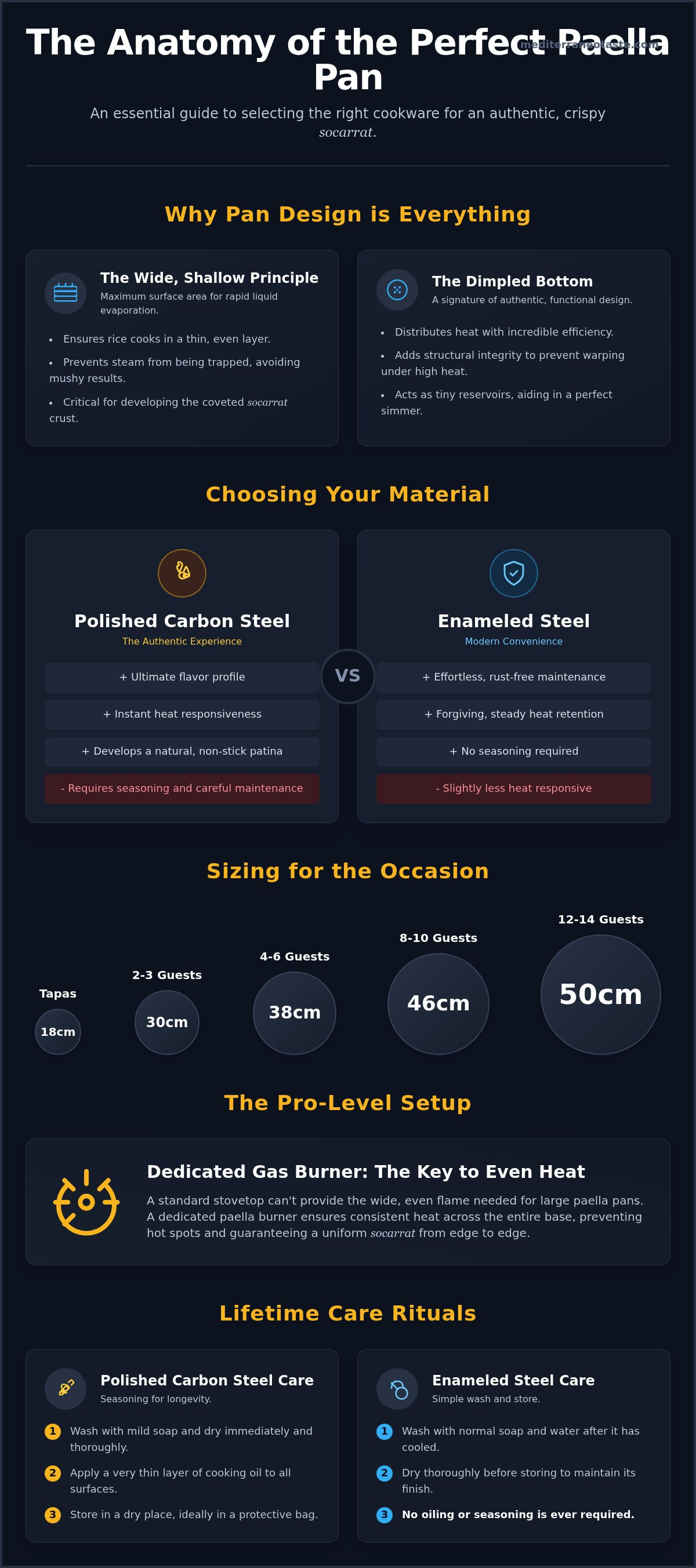
The crackle of rice against metal is the soundtrack of an authentic Spanish kitchen. This sensory delight is not accidental; it is the result of precise engineering. High-quality paella pans & cookware are designed for a single, vital purpose: the rapid and even evaporation of liquid. Unlike a standard stockpot that traps steam, the traditional paella pan prioritizes surface area over depth. This architectural choice ensures that every grain of rice cooks in a thin layer, absorbing the rich flavors of the broth without becoming mushy or over-processed.
Choosing authentic Spanish cookware is the first step toward recreating true Mediterranean Delicacies at home. The pan acts as a precision tool, managing the delicate thermal dynamics required to move from a simmering broth to a toasted finish. Without the right vessel, the heat remains trapped, and the rice loses its distinct, firm texture. You deserve a tool that honors the heritage of the dish while delivering professional results on your own flame.
Evaporation and the Shallow Pan Principle
A wide, shallow pan is the secret to non-mushy rice. In a deep pot, the weight of the water and the lack of surface area create a pressurized environment that leads to a gummy, steamed texture similar to a risotto. Paella requires the opposite. You want the liquid to disappear at a precise rate, leaving behind concentrated flavors and tender grains that remain separate. This design allows the heat to reach every part of the rice simultaneously, ensuring a uniform cook from the center to the edges.
The socarrat is the prized, caramelized layer of toasted rice that forms at the base of the pan during the final minutes of cooking.
The Dimpled Bottom: More Than Just Aesthetics
Look closely at an authentic Garcima pan and you will notice a signature pattern of small indentations. These dimples are a masterclass in functional design. They expand the surface area of the metal, which helps distribute heat with incredible efficiency across the entire base. More importantly, these indentations provide structural integrity, preventing the steel from warping under the intense heat of a gas flame or outdoor burner. This ensures your pan remains perfectly flat for years of use.
The dimples also act as tiny reservoirs. They trap small amounts of liquid during the early stages of cooking, which helps maintain a gentle simmer before the final toast begins. To truly master this technique, you must pair your pan with the right ingredients found in an essential Mediterranean pantry. Using the right paella pans & cookware transforms a simple dinner into a celebratory event, where the texture of the rice is just as important as the flavor of the saffron.
Enameled vs. Polished Steel: Choosing Your Material
The choice of material is a crossroad for every cook. It's a balance between traditional ritual and modern convenience. High-quality paella pans & cookware come in two primary forms: polished carbon steel and enameled steel. Each offers a distinct path to the perfect meal. Carbon steel is the darling of purists who value heat responsiveness. Enameled steel is the hero of the effortless host who prioritizes longevity. Both materials are engineered to conduct heat efficiently, yet they demand different levels of care and offer unique sensory benefits.
Thermal conductivity is the defining technical difference here. Polished steel reacts almost instantly to flame adjustments. This allows you to fine-tune the heat during the final, critical minutes of cooking. Enameled steel is slightly more insulated by its glaze. It holds heat with steady confidence, making it a forgiving choice for those still mastering the art of the open flame. You deserve a tool that matches your cooking style and enhances your kitchen's aesthetic.
Polished Carbon Steel: The Authentic Experience
Professional chefs and traditionalists often reach for polished carbon steel. It's the gold standard for those seeking the ultimate flavor profile. The Carbon Steel Paella Pan 34CM Polished is a classic example of this artisanal tool. Over time, these pans develop a dark patina through a process called seasoning. This natural, non-stick surface builds character and depth with every use. As renowned chef José Andrés demonstrates, mastering the craft involves understanding how your tools react to the intensity of the heat. Carbon steel demands a bit of devotion; you must dry and oil it immediately after cleaning to prevent rust. For many, this maintenance is a cherished part of the culinary ritual.
Enameled Steel: Durability and Ease of Use
If you prefer to focus on the conversation rather than the cleanup, enameled steel is your ideal companion. These pans are coated in a durable black glaze with white speckles, providing a surface that's naturally resistant to rust. The Enameled Steel Paella Pan 40cm is a versatile choice for larger family gatherings. It provides excellent heat retention and cleans easily with simple soap and water. You get the authentic Spanish experience without the need for seasoning or special oiling. It's the perfect way to enjoy Mediterranean delicacies at home without the extra maintenance. If you're ready to find your perfect match, you can explore our curated range of authentic Spanish vessels today. Your choice depends on whether you value the evolving character of seasoned steel or the pristine simplicity of enamel.
Sizing for the Occasion: From Tapas for Two to Family Feasts
Sizing your pan is an act of curation. It dictates the vital ratio of rice to surface area, which is the soul of the dish. If you have explored , you understand that the "thin layer" rule is non-negotiable for quality. Using the right paella pans & cookware ensures that every grain of rice has its moment on the hot metal. Too much rice in a small pan leads to steaming rather than toasting. It's always better to choose a pan that feels slightly too large than one that is overcrowded. This ensures the liquid evaporates at the correct rate to create that legendary crust.
Burner compatibility is the final, essential consideration. A standard kitchen stove in Spain often struggles to distribute heat to the edges of pans larger than 34cm. When your vessel exceeds the diameter of your heat source, you risk "cold spots" where the rice remains soggy. For larger gatherings, matching your pan to a dedicated gas ring is the only way to achieve professional results. It transforms your cooking from a kitchen task into a celebratory outdoor event.
Small to Medium Pans: Daily Mediterranean Cooking
The 18cm Enameled Steel Paella Pan (TAPA) is the perfect introduction to the Spanish table. It's designed for individual portions or shared tapas, offering a sense of sensory indulgence. For an intimate evening, the Carbon Steel Paella Pan 26CM Polished serves two people with elegance. It reacts quickly to your flame, allowing for precise control over the texture. If you're hosting a small family, the Enameled Steel Paella Pan 34cm is the versatile workhorse for six guests. It fits comfortably on most large domestic burners while providing enough surface area for a proper socarrat.
- 18cm: 1 person (Tapas style)
- 26cm: 2 people (Intimate dinner)
- 30cm: 4 people (Standard family size)
- 34cm: 6 people (Versatile entertaining)
Large Format Pans: The Art of Entertaining
Hosting a garden party requires a vessel with presence and power. The Enameled Steel Paella Pan 46cm comfortably caters for 12 guests, making it a favorite for weekend festivities. For those seeking the ultimate statement, the Carbon Steel Paella Pan 50CM (Polished) serves up to 14 people. At this scale, you are no longer just cooking; you are conducting a performance. The sizzle of the stock hitting the wide, hot steel creates an atmosphere of refined anticipation. Remember that for any pan over 40cm, a professional paella burner with concentric rings is essential. This setup ensures that the heat reaches the very edge of your paella pans & cookware, delivering a uniform, golden finish across the entire masterpiece.
Essential Spanish Cookware for the Ultimate Setup
The vessel is only half of the equation. To truly master the Mediterranean art, you must control the fire. While a domestic stove serves for smaller sizes, it often fails when you move to professional paella pans & cookware. The heat must reach every corner of the metal to ensure the rice cooks with uniform precision. Investing in the right accessories transforms your terrace into a vibrant Spanish plaza. It's about creating an environment where the aroma of saffron and the crackle of the flame become a shared event.
Gas Burners and Heat Control
A dedicated gas burner is the secret weapon of the serious host. These burners feature concentric rings that allow you to manage the heat across the entire surface of a 40cm or 50cm pan. You can ignite the inner ring for a gentle simmer or fire up the outer rings for that final, high-heat blast that creates the socarrat. This level of control is impossible on a standard flat-top kitchen stove, where heat is often concentrated in a single, narrow spot.
The portability of these burners invites you to take your cooking outdoors. Paired with a sturdy tripod, you create a stable, eye-level stage for your culinary performance. It's a vital part of The Art of Curating Mediterranean Delicacies at Home, where the preparation is as much a part of the experience as the meal itself. Whether in a garden or on a balcony, the open flame adds a layer of authenticity that no indoor appliance can replicate.
The Complete Paella Kit
For those beginning their journey, a Spanish paella kit takes the guesswork out of the selection process. These curated sets combine the perfect pan with a matching burner and the essential ingredients that define the dish. It's an elegant invitation to discovery, ensuring you have the right proportions from day one. A kit also makes a sophisticated gift, offering a loved one a gateway to artisanal Spanish traditions and the joy of communal dining.
Integrating authentic ingredients like saffron and Bomba rice is essential to the process. These elements are the soul of the dish, designed to work in harmony with your specialized paella pans & cookware. Bomba rice, specifically, is prized for its ability to absorb three times its volume in stock without breaking down. When these premium staples meet a Garcima pan and a precise flame, the result is a masterpiece of texture and flavor. To start your own collection of professional tools, shop our authentic Spanish paella pans and cookware today and bring the taste of Spain to your table.
Care and Maintenance: Keeping Your Pan Lifetime-Ready
A high-quality Spanish pan is more than a utensil; it is a legacy. Treat your paella pans & cookware with the respect they deserve, and they'll reward you with decades of perfect socarrat. The ritual of maintenance is the final step in your culinary journey. Whether you've chosen the rustic charm of polished steel or the sleek resilience of enamel, proper care ensures your vessel remains a centerpiece for generations. It's about protecting the craftsmanship that makes every Mediterranean feast possible. You're not just cleaning a tool; you're preserving a tradition.
The Carbon Steel Ritual
Polished carbon steel is a responsive, living material. It requires a specific set of gestures to maintain its integrity. Unlike standard kitchenware, these pans are susceptible to the elements. You must act quickly once the meal is over to ensure the metal remains pristine. Follow these steps to preserve your artisanal tool:
- Step 1: Wash the pan immediately after use. Use warm water and a mild soap. Avoid harsh chemicals that might strip the developing patina you've worked so hard to build.
- Step 2: Dry the metal thoroughly with a soft cloth. Never leave it to air dry. Moisture is the primary enemy of carbon steel and can lead to oxidation within minutes.
- Step 3: Apply a thin, even layer of vegetable oil to the entire surface before storage. Use a paper towel to buff the oil into the steel. This creates a protective seal against humidity.
If you discover a spot of rust, don't be discouraged. It's a common part of owning authentic steel. Simply use a piece of steel wool to gently scrub the area until the bright metal returns. Re-wash, dry instantly, and apply a fresh layer of oil. Your pan will be restored to its former glory, ready for the next celebration.
Enameled Steel Care
The beauty of enameled steel lies in its effortless elegance. These pans are designed for the modern host who values both performance and simplicity. While the durable glaze is technically dishwasher safe, we recommend hand washing to preserve the vibrant, speckled finish. Use a soft sponge and warm, soapy water to lift away any remnants of the feast. If you encounter stubborn, burnt-on rice, simply soak the pan in warm water for fifteen minutes. This allows the residue to soften without the need for abrasive scrubbing that could scratch the enamel.
Storage is the final touch. Keep your cookware in a dry, cool place where it won't be knocked or chipped. By following these simple rituals, you ensure your kitchen is always prepared for a spontaneous gathering. If you're ready to expand your culinary repertoire or find a gift for a fellow enthusiast, we invite you to browse our full collection of paella pans & cookware. Every piece is a gateway to the authentic flavors of Spain, crafted to last a lifetime.
Master the Art of the Spanish Table
The journey to a perfect paella begins with the right vessel. You now understand how the wide, shallow architecture of authentic paella pans & cookware creates the thermal environment necessary for a crispy, golden socarrat. Whether you choose the rustic, evolving character of polished carbon steel or the pristine, low-maintenance finish of enameled steel, your tool is a gateway to centuries of culinary tradition. Remember that sizing is a precise craft; matching your pan to your guest count and heat source ensures every grain of rice is a masterpiece.
As the universally acclaimed trailblazer in Spanish craftsmanship, Garcima remains the gold standard for authenticity. We offer direct delivery of these professional tools, providing sizes for every occasion from 18cm tapas pans to 50cm family vessels. It's time to transform your next gathering into a sensory celebration of Mediterranean life. Embrace the fire, trust the steel, and let the aromas of saffron and toasted rice fill your home. Shop the Authentic Garcima Paella Pan Collection today and begin your artisanal discovery.
Frequently Asked Questions
Do I really need a special paella pan, or can I use a frying pan?
An authentic vessel is essential for achieving the correct texture and flavor. Standard frying pans are typically too deep and narrow, which traps steam and leads to mushy rice. The wide, shallow design of specialized paella pans & cookware promotes rapid evaporation and ensures the rice stays in a thin layer. This specific geometry is the only way to create the legendary socarrat crust while keeping individual grains firm and distinct.
Which is better: enameled steel or polished carbon steel?
Your choice depends on whether you value traditional ritual or modern convenience. Polished carbon steel is the choice of purists because it conducts heat with incredible responsiveness and develops a seasoned patina over time. Enameled steel offers a resilient, rust-proof alternative that is much easier to clean and maintain. Both materials deliver excellent results, but carbon steel requires a bit more devotion to prevent oxidation after each use.
What size paella pan do I need for 4 people?
A 30cm or 34cm pan is the ideal choice for a party of four. While a 30cm pan fits the portion size, the 34cm model provides a larger surface area to ensure the rice remains in a thin, even layer. This extra space allows for better liquid evaporation and a more consistent toasted base. Choosing a slightly larger pan is a professional secret for preventing the rice from becoming overcrowded and steamed.
Can I use a paella pan on an induction cooktop?
You can use a paella pan on induction if you select a flat-bottomed model designed for magnetic surfaces. Traditional paella pans & cookware often feature a slightly convex base intended for gas flames, which may not make sufficient contact with an induction hub. Look for stainless steel or specific induction-ready Garcima pans to ensure even heat distribution. This allows you to enjoy artisanal Spanish cooking even in a sleek, modern kitchen environment.
How do I stop my carbon steel paella pan from rusting?
The golden rule is to never leave your pan to air dry. After washing with mild soap and warm water, you must dry the metal immediately and thoroughly with a soft cloth. Before storing it in your pantry, apply a very thin layer of vegetable oil to the entire surface with a paper towel. This simple ritual creates a protective barrier against humidity and preserves the craftsmanship of your vessel for years to come.
What is the best way to clean a burnt paella pan?
Soaking the pan in warm, soapy water for fifteen minutes is the most effective way to lift caramelized rice. For enameled pans, use a soft sponge to avoid scratching the delicate glaze. If you're cleaning a carbon steel pan, you can use a firmer brush or even a bit of steel wool for stubborn spots. Always remember to dry and re-oil your carbon steel pan immediately after cleaning to maintain its pristine, rust-free condition.
Why does my paella pan have dimples on the bottom?
Those signature indentations are a masterclass in functional design. The dimples expand the surface area of the metal, which helps distribute heat more efficiently across the wide base. They also provide vital structural integrity, preventing the thin steel from warping or buckling under the intense heat of a professional gas burner. This ensures your pan remains perfectly flat, allowing the stock to simmer evenly before the final toasting of the rice begins.
Can I use a paella pan in the oven?
Authentic Spanish pans are perfectly safe for oven use. Since they are constructed from durable steel with sturdy metal handles, they can easily withstand high temperatures. Many cooks use the oven to finish a paella, ensuring the top layer of ingredients is beautifully roasted while the base continues to develop its crust. It is an excellent technique for hosting large groups when your stovetop space might be limited or your burner is too small.