

Which traditional Spanish sweets online are worth seeking out, and how can you tell what they’ll taste like before they arrive? A name alone may not tell you whether a sweet is soft, crumbly, rich with almonds or associated with a particular celebration. That’s part of the pleasure of exploring Spain’s confectionery heritage, and part of the challenge of choosing with confidence.
Knowing the traditions behind familiar sweets can help you narrow your search. Turrón and polvorones, for example, are closely associated with Christmas, while torrijas are linked with Holy Week. Their ingredients, textures and regional roots help explain what makes each treat distinctive. These seasonal traditions also mean a sweet you’re curious about may not be available all year.
This guide explains how to recognise classic Spanish sweet traditions and what to check in an online listing, from ingredients and allergens to origin, freshness, storage and packaging. You’ll also learn how protected regional designations can provide provenance clues, and what to consider when choosing a treat for yourself or as a gift. Let the story guide your choice, then use the product details to assess the specific item.
Key Takeaways
- Regional ingredients, recipes and celebrations shape Spain’s traditional sweets. Textures and flavours can vary between makers.
- When exploring traditional spanish sweets online, compare product names, ingredients, origin details, allergens, packaging and storage guidance.
- Protected regional designations can offer useful provenance clues, but check the full product information rather than relying on a seal alone.
- Choose treats to suit the occasion, and review portion and allergen details before sharing or giving them as a gift.
- Mediterraneo Taste Spain focuses on Spanish food and Mediterranean delicacies. Check its current online selection to see what is available.
What Makes Traditional Spanish Sweets Distinctive?
Traditional Spanish sweets are shaped by regional culinary heritage, local ingredients, festive rituals and recipes passed between generations. Their significance can go beyond flavour: a particular preparation may bring to mind a place, a season or a family table.
That heritage is not a single, fixed recipe book. Spain’s sweet-making traditions reflect the ingredients available to cooks and the influences that have shaped food culture over time. Almonds, honey and spices feature in some preparations, each contributing its own character. The result is a broad tradition, not one flavour profile shared by every sweet.
How Spanish sweet traditions reflect place and celebration
Local customs influence what is prepared, when it is served and how it is shared. Some sweets are associated with festive periods, while others appear at family gatherings or in everyday food traditions. Their role can matter as much as their recipe: a small serving might mark a celebration, welcome guests or round off a shared meal.
Tradition also leaves room for variation. Recipes and names can differ between makers and families, even when they refer to a familiar style of sweet. One version may reflect a household’s preferred ingredients or method; another may follow a local custom. Treat those differences as part of the tradition rather than assuming there is one definitive version. For wider context, Wikipedia’s comprehensive list of Spanish desserts offers a starting point for exploring the range.
What shoppers can expect from traditional flavours and textures
Expect variety, not one signature taste. A sweet made with nuts might be finely textured or have a more pronounced crunch, depending on how it is prepared. Honey can lend a rounded sweetness, while spices may add warmth or fragrance. Some treats are soft and yielding; others are firm, crumbly or crisp. These are possibilities, not guarantees, so check the description of the specific item.
That distinction matters when searching for traditional spanish sweets online. A heritage-inspired name can spark curiosity, but the product’s ingredients and description help you understand what is actually being offered. Look for details that explain its style and character, then compare them with the occasion you have in mind. Tradition provides context; the individual recipe determines the experience.
Which Traditional Spanish Sweets Should You Know?
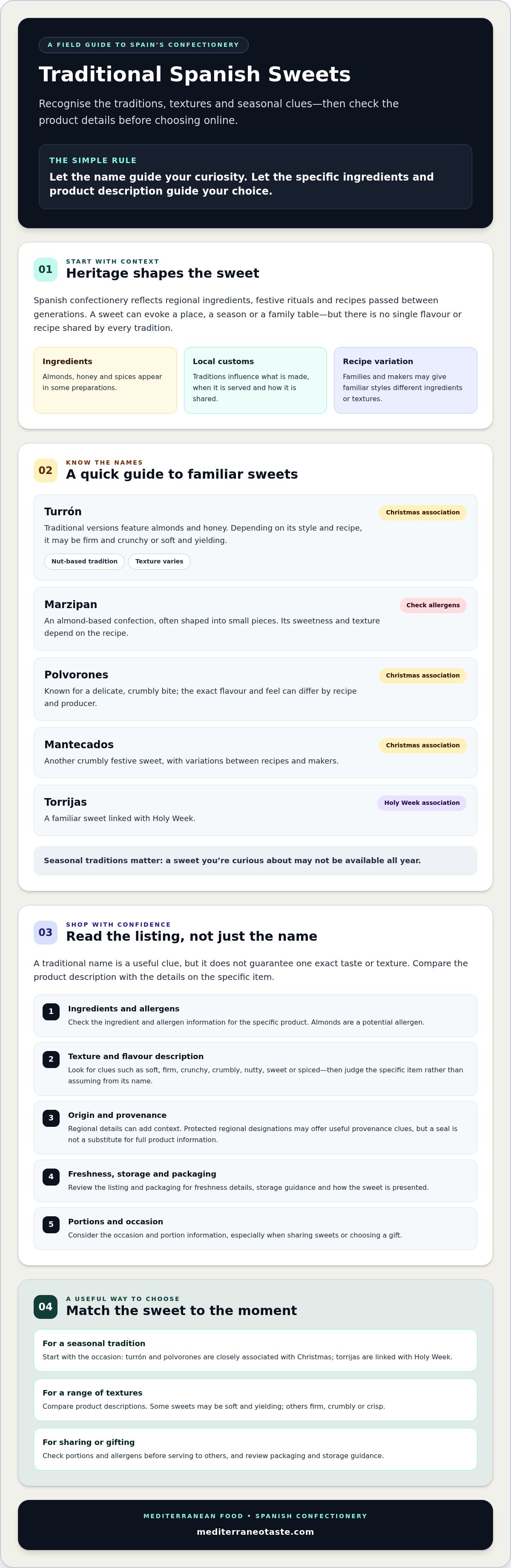
Several familiar names offer a useful starting point for exploring Spain’s confectionery heritage. Turrón, polvorones, mantecados and marzipan are associated with festive tables and long-standing food traditions, but recipes and textures can differ by maker. These are cultural examples, not a claim about what any particular retailer currently stocks. For broader context, Foods and Wines from Spain explores the history and cultural fusion behind Spanish sweets.
Turrón, marzipan, and nut-based traditions
Turrón does not have a single texture. Depending on the style and recipe, it may be firm and crunchy or softer and more yielding. Almonds and honey feature in traditional versions, though ingredients and proportions vary. Marzipan, by contrast, is an almond-based confection, often shaped into small pieces. Its sweetness and texture depend on the recipe.
Both names are useful clues, not substitutes for checking product details. Almonds are a potential allergen, so read the ingredient and allergen information on the specific listing and packaging, especially if serving others.
Polvorones, mantecados, and other crumbly sweets
Polvorones and mantecados are familiar examples of crumbly Spanish sweets, often enjoyed during the Christmas season. They can share a delicate, short texture, yet the exact flavour and feel vary with the recipe and producer. One may be especially tender and powdery; another may hold its shape more firmly. Don’t assume the names guarantee an identical taste.
- Turrón: May be crunchy or soft, depending on its style and recipe.
- Marzipan: Almond-based, with texture and sweetness shaped by the maker.
- Polvorones: Typically known for a delicate, crumbly bite.
- Mantecados: Another crumbly festive sweet, with variations between recipes.
These small sweets can be served as an occasional treat alongside coffee, or arranged on a shared table so guests can sample different textures. If you’re browsing traditional spanish sweets online, use the name to guide your curiosity, then check the listing for ingredients, allergens and a clear description of that particular version. To explore Spanish food heritage and Mediterranean delicacies more broadly, you can browse Mediterraneo Taste Spain’s online selection. Check current listings to confirm what’s available.
How Can You Assess Traditional Spanish Sweets Online?
Start with specific, verifiable listing details, not just a persuasive name or attractive photograph. Clear information helps you compare options and decide whether a sweet suits your preferences, dietary needs or occasion. A product page cannot prove authenticity by itself, so treat heritage language as a reason to look more closely.
Use this checklist before ordering:
- Product name and description: Look for enough detail to identify the style and understand its likely character.
- Ingredients and allergens: Read the ingredient list and declared allergen information. Check the individual product label too, especially when buying for someone else.
- Origin: See whether the listing names a producer, place of origin or other specific provenance detail.
- Packaging: Look for an explanation of how the product is packed and whether the packaging appears suitable for the item.
- Storage and dates: Review any storage instructions and best-before guidance. Check what date information will accompany the product when it arrives.
Which product details should an online listing explain?
A useful listing goes beyond the sweet’s name. It gives a specific description, ingredients and allergen details so you can assess what’s inside. In Spain and across the EU, mandatory food information, apart from the date of minimum durability or “use by” date, must be available before an online food purchase is completed. The required information, including the date, must be provided when the food is delivered.
Storage guidance can also help you plan how to care for the product after arrival. If an important detail is missing, unclear or doesn’t match the packaging, ask the retailer before purchasing or serving it. Don’t guess about allergens or storage.
How to assess heritage and origin claims carefully
“Spanish heritage” is a broad description. A specific origin claim should provide something more concrete, such as a named producer or place, when that information is available. Foods and Wines from Spain offers useful background on traditional Spanish confectionery, but cultural context is different from proof of where a particular product was made.
Traditional wording and decorative packaging can evoke a sense of place, but they don’t verify provenance on their own. When buying traditional spanish sweets online, compare the listing’s claims with its ingredients, origin details and label. A protected regional designation, if shown, can be a useful clue to a product’s connection to a place, but it does not replace checking the product information. Transparent details make a considered choice easier. If a key question remains unanswered, seek clarification rather than relying on appearance.
How Should You Choose, Serve, and Store Spanish Sweets?
Let the occasion guide your choice. A small tasting calls for a few pieces with distinct textures; a shared table can bring several styles together, if suitable options are available. For a gift, think beyond presentation. Consider what the recipient enjoys, whether they have dietary needs, and whether the product details give you enough information to choose with care.
Before serving guests, check the portion information, ingredients and allergens for each specific product. A traditional name doesn’t tell you everything that’s inside. If you’re unsure about an ingredient or whether a product is suitable to serve, don’t guess. Confirm the information with the retailer or check the product label before sharing.
Choosing sweets for tasting, sharing, or gifting
For a tasting, choose a modest selection with contrasting flavours or textures rather than several similar treats. For a gathering, consider how many people will be sharing and whether the listed quantity suits the table. A thoughtful gift starts with the recipient: check their preferences, dietary requirements and any ingredient concerns before ordering. If a listing doesn’t explain what’s included, seek clarification before making it part of a special occasion.
When browsing traditional spanish sweets online, treat the product description as part of the gift decision. Packaging may look elegant, but check what it contains and how the sweets should be stored. Availability can vary, so confirm current listings rather than building plans around an item you haven’t verified.
Simple serving and storage guidance
Keep the presentation simple. Arrange small portions on a plate, leaving room to notice each sweet’s appearance and texture. If you’re offering several kinds, keep their names and ingredient information available for guests. Coffee or tea can make easy companions, but let personal preference guide the pairing.
After serving, follow the product’s packaging for storage, handling and date guidance. Check the label again after opening, and don’t assume different sweets share the same storage needs or freshness window. If the instructions aren’t clear, ask the retailer for product-specific guidance rather than relying on a general rule.
For Spanish food and Mediterranean delicacies to enjoy at home or consider as a gift, explore the current online selection. Check each live listing to confirm availability and review its product details before choosing.
Where to Explore Traditional Spanish Sweets Online
A confident choice follows a simple path: first, learn about the style of sweet you’re considering; next, review the specific product details; then decide whether it suits a tasting, a shared table or a gift. This approach takes you from an unfamiliar name to a considered choice without relying on tradition-themed wording alone.
Mediterraneo Taste Spain focuses on Spanish food and Mediterranean delicacies, with an online offering for enjoying Mediterranean flavours at home. Specific sweets aren’t confirmed in the available selection, so check the retailer’s live listings before assuming a particular sweet is available. A general focus on Spanish food doesn’t guarantee that any specific product is currently listed.
What to check before placing an online order
Read the product page carefully before you buy. Confirm the product name and description, ingredient list, allergen information, origin details when stated, and any storage guidance. These details help you understand what you’re choosing and whether it suits your plans. If you’re buying for someone else, check their dietary needs rather than making assumptions based on a familiar style.
Review shipping and delivery information directly on the live retailer website. Don’t assume timing, packaging or handling arrangements based on another shop or an older listing. If a product detail or dietary question remains unanswered, contact the retailer before ordering. A clear answer can help you decide whether the item is right for the occasion.
Discover Spanish food traditions with Mediterraneo Taste Spain
Exploring traditional spanish sweets online can be one way to discover Spain’s broader food heritage. Let curiosity lead you to a style, use the product information to assess the specific item, then match your choice to the occasion. If a sweet isn’t listed, you can still explore the retailer’s focus on Spanish food and Mediterranean delicacies.
For a closer look at what’s currently available, explore Mediterraneo Taste Spain’s online selection. Check the live product pages for current availability and details, then choose at your own pace.
Choose Your Next Spanish Food Discovery
Spanish sweets are more rewarding to explore when you understand their traditions and the variety of flavours and textures behind familiar names. Before ordering traditional spanish sweets online, check the product listing for ingredients, allergens, origin details and storage guidance. Then choose with your occasion and the people you’ll share with in mind.
Mediterraneo Taste Spain specialises in Mediterranean delicacies and authentic Spanish food products, with an online offering focused on bringing Mediterranean flavours into the home. Specific sweets may not be listed, so check the current selection rather than assuming availability. Read each product page carefully, and ask the retailer if an important detail is unclear.
Explore Mediterraneo Taste Spain’s current selection and discover Spanish food traditions at your own pace. Check the live product pages for current availability and details, then choose with confidence.
Frequently Asked Questions
What are the most traditional Spanish sweets?
Familiar examples include turrón, polvorones, mantecados and marzipan. Their ingredients, textures and recipes can vary between producers and family traditions, so the name is a starting point rather than a complete description. It also doesn’t guarantee that a particular retailer stocks them. If you’re considering one, read the individual listing and product label for ingredients, allergens and details about that specific sweet before choosing.
Is turrón always made with the same ingredients?
No. Turrón comes in different styles, and its ingredients and texture can vary by recipe and producer. Some versions are associated with nuts, so don’t rely on the name alone when checking for allergens. Review the specific product’s ingredient and allergen information before buying or serving it. A clear listing should help you understand what that version contains.
How can I tell if Spanish sweets are authentic when buying online?
No single detail on a product page can prove authenticity, but specific, consistent information can help you assess a listing. Check the product description, ingredient list, producer or origin details when provided, and packaging information. Broad heritage claims or traditional-looking imagery aren’t enough to verify provenance. If the origin or ingredients matter to you and the listing doesn’t explain them, ask the retailer before ordering.
Can traditional Spanish sweets make a suitable gift?
Yes, they can be a thoughtful gift for someone who enjoys discovering food traditions. Start with the recipient’s preferences and dietary needs, then check the ingredients, allergens and packaging details on the specific listing. Confirm that the sweet you have in mind is currently available. If you’re planning around a particular date, review the retailer’s current delivery information rather than assuming timing or availability.
What is the difference between polvorones and mantecados?
Polvorones and mantecados are both traditional Spanish sweets often associated with a crumbly texture, but their recipes and characteristics can differ. The names alone won’t tell you exactly which ingredients a particular product contains or how it will taste. Compare the full descriptions when shopping, check the ingredient information, and read the product label for allergen details. This helps you choose based on the actual item, not assumptions.
How should I store traditional Spanish sweets?
Follow the storage instructions on the specific product’s packaging, since requirements depend on the sweet, its ingredients and how it’s packed. Keep any stated best-before guidance in mind, and don’t assume different sweets have the same shelf life or storage needs. If the online listing doesn’t provide guidance, check the label when the product arrives or contact the retailer for advice about that specific item.
Can I find traditional Spanish sweets online in Spain?
Availability depends on each retailer’s current selection, so check live listings rather than assuming a particular sweet is in stock. Before ordering traditional spanish sweets online, review the product description, ingredients, allergens, origin details when provided, and delivery information. Mediterraneo Taste Spain focuses on Spanish food products and Mediterranean delicacies, but specific sweets aren’t confirmed in its catalogue. Check the current selection to see what’s listed.