

You've likely been told that Bomba is the undisputed king of the paella pan, but choosing the most famous grain doesn't always guarantee the best result. It's frustrating to invest in premium saffron and fresh seafood only to end up with a texture that's either too dry or dangerously close to mush. You want that legendary socarrat and a bite that feels intentional, not accidental. In this guide to calasparra vs bomba rice, you'll discover how these two titans differ in absorption and resilience so you can select the perfect grain for your specific recipe.
We'll explore the technical DOP secrets, the critical rice-to-liquid ratios, and why the current global shortage makes understanding your alternatives more important than ever. While one grain offers unmatched consistency, the other provides a depth of flavor that can transform a simple meal into a sensory event. By the end of this journey, you'll have the confidence to master any paella type with professional precision. Prepare to elevate your kitchen to the heights of an artisanal Spanish workshop and experience the joy of a perfectly executed grain.
Key Takeaways
- Uncover the significance of Denominación de Origen status and how the unique starch structure of these grains defines the soul of Mediterranean cuisine.
- Explore why Bomba rice is revered as the resilient king for its ability to resist overcooking while maintaining a beautifully distinct texture.
- Learn how the mountain climate and cold river irrigation of Calasparra produce a grain capable of absorbing extraordinary amounts of rich, flavorful broth.
- Compare the technical performance of calasparra vs bomba rice to choose between a firm, separate bite or a more tender, flavor-infused experience.
- Identify which specific paella styles pair best with each variety to ensure you achieve the perfect socarrat and professional results at home.
Understanding the Heritage of Spanish Short-Grain Rice
Spanish rice isn't just an ingredient; it's the structural foundation of a cultural masterpiece. At the heart of this tradition lies the "Perla" variety. These short, rounded grains possess a unique starch structure that sets them apart from every other rice in the world. While long-grain varieties remain aloof and risotto rices surrender to creaminess, Spanish grains are designed for absorption and independence. This is the starting point for the legendary calasparra vs bomba rice debate. Both varieties are protected by the Denominación de Origen (DOP), a prestigious certification that guarantees the rice was grown in specific regions using centuries-old artisanal techniques.
Consider the difference between a Spanish paella and an Italian risotto. In Italy, the goal is a velvety, starch-rich sauce. In Spain, we celebrate the individual grain. Each pearl should be a separate, flavor-packed jewel that has fully surrendered to the broth without losing its physical integrity. You aren't aiming for a unified mass; you're creating a mosaic of textures. A perfectly cooked grain feels tender on the tongue but offers a subtle, sophisticated resistance at its core.
The Science of Absorption: Why Regular Rice Fails
The magic happens at a molecular level. High-quality Spanish grains contain a specific balance of amylose, a starch that prevents them from sticking together. While standard rice expands in length, Bomba rice and its relatives expand in width. They act as miniature sponges, soaking up two to three times their volume in liquid. This creates the famous "pearl" center. Even after absorbing a rich, saffron-infused stock, that tiny white heart remains firm. It provides the essential "al dente" bite that distinguishes a professional paella from a home-cooked disappointment.
A Legacy of the Mediterranean Landscape
The character of the rice is a direct reflection of the Spanish soil. Traditional irrigation methods use mineral-rich waters to flood the fields, infusing the crop with the essence of the landscape. This environment encourages the rice to develop a robust flavor profile that tastes of the earth and the sun. In the comparison of calasparra vs bomba rice, the specific altitude and water temperature dictate the final culinary personality. Artisanal harvesting processes further preserve this integrity. By carefully managing the grain from field to pantry, producers ensure that each kernel is strong enough to withstand the intense heat of a traditional paella pan.
Bomba Rice: The Resilient King of the Paella Pan
Bomba rice is a physical marvel, a tiny vessel of potential that transforms under heat. These short, pearly grains are celebrated for a unique characteristic: they expand in width like an accordion rather than splitting lengthwise. This structural integrity is why many enthusiasts consider it the gold standard in the calasparra vs bomba rice debate. It is a grain defined by resilience. It offers a "forgiveness factor" that home cooks treasure. If the heat fluctuates or you lose track of time for a minute, Bomba holds its shape. It refuses to turn into a unified mass of mush.
The secret to this performance lies in a meticulous dehydration process. By aging the rice, producers ensure it can absorb up to three times its volume in liquid. This is significantly higher than standard varieties. As it drinks in the saffron-infused stock, it captures the very essence of your ingredients. You'll find that the correct rice is key to success because it allows each bite to be a concentrated burst of flavor. Texture is everything. Bomba delivers a bite that is firm, clean, and profoundly satisfying.
The 3:1 Ratio: Mastering Liquid Absorption
To achieve perfection, you must respect the ratio. While most rices require a simple 2:1 liquid-to-grain balance, Bomba demands a more generous 3:1. This extra hydration doesn't lead to sogginess. Instead, it results in a plump kernel that remains "al dente" even after long simmering. Watch the clock carefully. Typically, eighteen to twenty minutes of active cooking followed by a brief rest will yield the ideal result. Each grain should stand proud and distinct. It won't fail you.
Consistency and the Quest for Socarrat
Professional chefs rely on Bomba for its predictable behavior. Its low-starch surface is essential for creating the socarrat, that prized, caramelized crust at the bottom of the dish. Without the excess surface starch that plagues lesser rices, the bottom layer can toast beautifully without burning. To maximize this effect, always use an authentic Spanish paella pan. The wide, shallow surface ensures even heat distribution, allowing the grains to crisp uniformly. If you're ready to start your journey, consider exploring a Spanish paella kit to ensure you have the right foundation for your next feast.
Calasparra Rice: The High-Altitude Artisan Choice
While Bomba is the king of the plains, Calasparra is the undisputed artisan of the mountains. Nestled in a unique microclimate, this Denominación de Origen (DOP) relies on the icy, fast-flowing waters of the Segura and Mundo rivers. This isn't just a picturesque detail; it's a geological advantage that defines the crop. The cold irrigation significantly slows the growth cycle, forcing the grain to develop a more complex and durable internal structure. When exploring calasparra vs bomba rice, you must realize that Calasparra is a region, not a single variety. It cultivates both Bomba rice and the resilient Balilla x Sollana cross, both benefiting from this rigorous mountain upbringing.
Choosing Calasparra marks you as a curator of flavor. It's a boutique selection for those who want their paella to reflect the rugged beauty of the Spanish highlands. The result is a grain that feels more intimate and integrated with your broth. It's the choice for a host who values the journey of the ingredient as much as the final presentation. It invites your guests to experience a rare, artisanal tradition that has remained unchanged for generations.
Slow Growth, Deep Flavor: The Mountain Advantage
The extended maturation period makes these grains remarkably nutrient-dense. Because they grow in cooler conditions, they don't rush to reach maturity. This patience translates into a kernel with a distinct sensory profile that standard commercial rices simply can't replicate. You'll notice a slightly more tender bite compared to the rigid resilience of standard Bomba. It's a sophisticated balance that offers a softer, more luxurious mouthfeel. It doesn't surrender to mushiness. Instead, it maintains a gentle resistance that feels intentional and refined. This makes it the preferred choice for mountain-style paellas where earthy, robust flavors dominate.
Flavor Infusion: The Calasparra Absorption Profile
Absorption is where the calasparra vs bomba rice distinction becomes a practical tool for your kitchen. The Balilla x Sollana variety typically demands a 2.5:1 liquid-to-rice ratio. Its ability to "drink" the broth is nothing short of legendary. It creates a unified flavor profile where the grain and stock become one. This slightly higher starch content is actually your secret weapon for a world-class socarrat. It provides the essential sugars needed to create a caramelized, golden crust that clings beautifully to the bottom of your pan. To master this, resist the urge to stir. Let the heat work its magic. You'll be rewarded with a crisp, toasted base that contrasts perfectly with the tender, fragrant grains above.
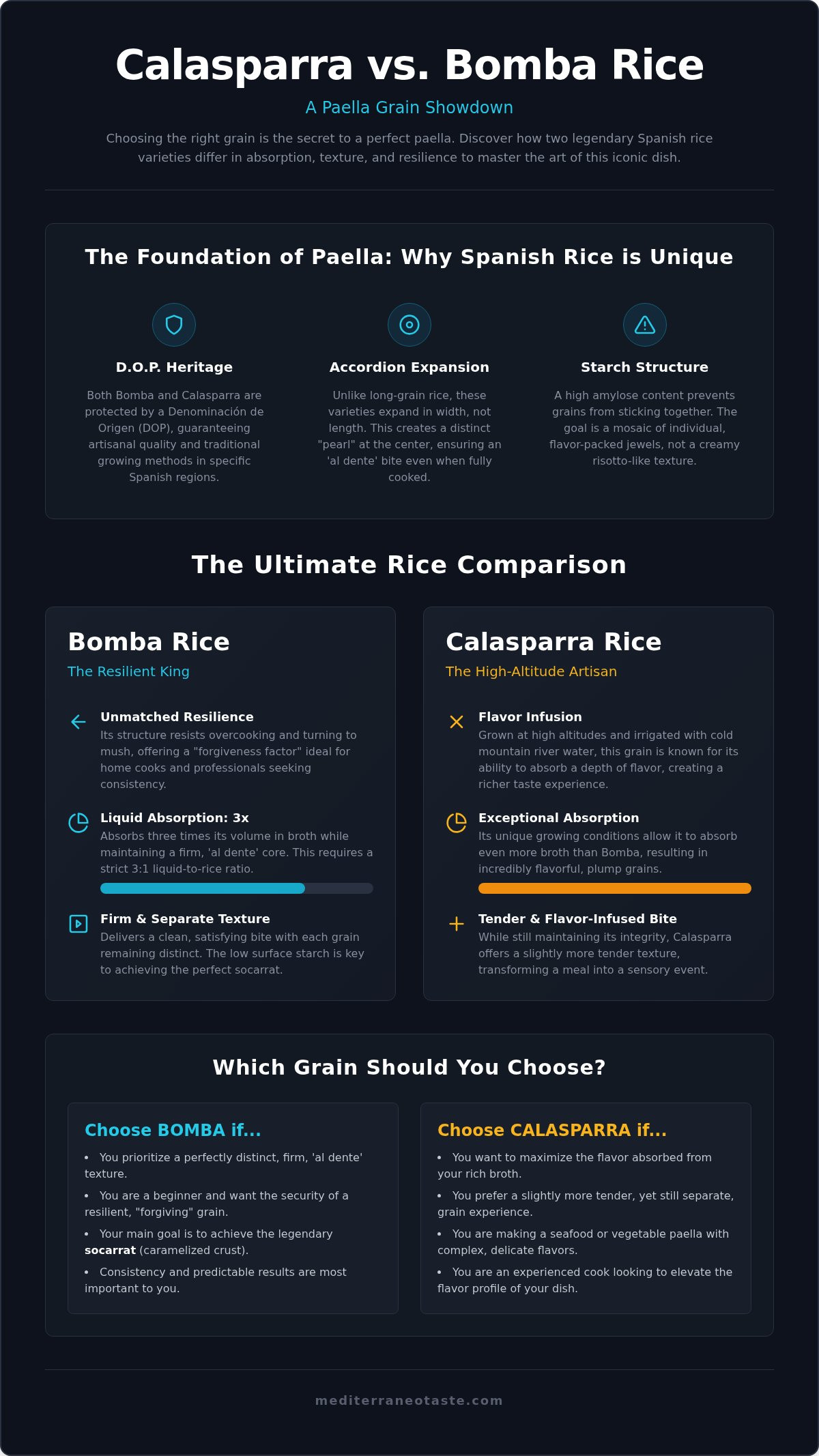
The Ultimate Comparison: Calasparra vs Bomba Rice
Choosing between these two legendary grains is a matter of culinary intent. Bomba is the architect of structure. Its grains remain distinct, firm, and separate, even under the pressure of intense heat. Calasparra, by contrast, is the poet of flavor. It offers a more tender, infused bite that feels deeply connected to the broth. In the calasparra vs bomba rice debate, the "forgiveness factor" often tips the scale for many. Bomba can survive an extra minute of heat without losing its integrity, making it the safer choice for those still mastering their timing. Calasparra demands a watchful eye but rewards the patient cook with a richness that standard varieties simply cannot match.
Visually, the difference is striking once the liquid evaporates. Bomba grains appear robust and slightly curved, standing proud in the pan. Calasparra grains look plump and glistening, having surrendered more fully to the surrounding flavors. While these premium DOP grains represent a higher investment, the value lies in the sensory experience. You aren't just buying rice; you're securing the authenticity of a Mediterranean heritage that has been perfected over centuries. It's a commitment to quality that your guests will notice from the first bite.
Liquid Ratios and Cooking Times
Precision is the difference between a masterpiece and a mistake. For Bomba, maintain a strict 3:1 liquid-to-rice ratio to satisfy its thirsty nature. It typically requires eighteen to twenty minutes to reach its peak. Calasparra Sénia varieties are more efficient, generally needing a 2.5:1 ratio and finishing in about fifteen to eighteen minutes. The "Pearl" effect in Spanish rice is the key to its 2026 culinary status. This firm center ensures that even as the exterior softens, the grain retains its character and provides that essential al dente resistance.
The Socarrat Factor: Which Grains Toast Best?
The toasted crust, or socarrat, is the ultimate prize of any paella. Bomba's low surface starch makes it remarkably easy to toast. You can push the heat in the final minutes with confidence, knowing the grains won't turn into a sticky paste. Calasparra requires more finesse. Its higher starch content creates a more sugary, deeply caramelized crust, but you must lower the flame slightly to prevent scorching. To find the perfect companions for these grains, explore our Essential Mediterranean Pantry for curated pairing suggestions. Ready to test your skills? Explore our authentic Spanish paella pan collection to ensure your chosen grain has the perfect stage to shine.
Selecting Your Grain: A Curator’s Final Recommendation
The journey through the nuanced world of calasparra vs bomba rice concludes with a simple truth: your choice defines the spirit of your table. If you're a beginner or planning a delicate seafood feast, Bomba is your most reliable ally. Its legendary resistance to overcooking provides a safety net while you balance the heat of your burner. For those crafting a robust mountain paella with rabbit or spicy chorizo, Calasparra offers a more intimate, flavor-forward experience. It drinks the rich fats and juices of the meat, creating a unified masterpiece that feels deeply rooted in tradition.
To preserve the moisture-absorbing magic of these premium grains, treat them with the respect they deserve. Store your rice in a cool, dark pantry, ideally in an airtight glass jar. Exposure to humidity can compromise the grain's ability to expand, robbing you of that perfect al dente center. The ultimate decision in the calasparra vs bomba rice comparison is yours to make through the lens of your own palate. We invite you to embrace the curiosity of a host and the precision of a curator as you bring these artisanal rices into your home.
Pairing Rice with Your Paella Type
Delicate ingredients like prawns and mussels require a grain that stays out of the way. Bomba's clean, distinct texture allows the sweetness of the sea to shine through. When you use authentic Spanish saffron, the rice acts as a canvas for those floral, honeyed notes. Calasparra, with its slightly more tender bite, is the perfect partner for hearty mountain styles where a more integrated, succulent texture is the goal. By matching the grain to your ingredients, you create a balanced dish that celebrates every layer of flavor.
The Complete Paella Experience
Achieving professional heights at home requires more than just the right grain. Investing in a Spanish paella kit ensures you have the correct pan depth and heat distribution to honor these artisanal ingredients. There's a profound joy in the ritual of the slow simmer and the anticipation of the first crackle of the socarrat. This is more than cooking; it's an invitation to experience the authenticity of the Mediterranean. Explore our curated collection of Spanish rice and start your journey today. Your kitchen is the gateway to a world of premium, sensory indulgence.
Master the Art of the Perfect Paella
You now hold the secret to transforming your home kitchen into a sanctuary of Spanish tradition. Whether you choose the structural resilience of Bomba for a delicate seafood display or the deep, mountain-infused character of Calasparra for a robust meat feast, you're no longer guessing. You're curating an experience. Understanding the nuances of calasparra vs bomba rice allows you to match your grain to your ingredients with the precision of a professional chef. It's about more than just a meal; it's about honoring an artisan Spanish heritage that values quality above all else.
We invite you to explore our curated selection for the home chef, featuring premium DOP certified grains and specialized equipment designed for consistent results. Every grain tells a story of the Mediterranean landscape, waiting to be unlocked in your pan. Discover Authentic Spanish Rice and Cookware at Mediterraneo Taste and begin your journey toward culinary perfection. Embrace the confidence of a master host and let the aroma of authentic saffron fill your home tonight.
Frequently Asked Questions
Can I use Arborio rice instead of Bomba or Calasparra for paella?
You should avoid using Arborio rice for an authentic paella. While it's a short grain variety, its high starch content is specifically designed to create the creamy, unified texture of risotto. Paella requires grains that remain distinct and separate after absorbing the broth. Using Arborio often results in a mushy consistency that lacks the essential al dente bite found in the calasparra vs bomba rice comparison. Stick to traditional Spanish varieties for professional results.
Why is Bomba rice so much more expensive than regular rice?
Bomba rice commands a premium price due to its exceptionally low yield and slow maturation process. It's a difficult crop to cultivate, often producing half the amount of standard rice varieties per acre. Recent production challenges, including EU pesticide regulations and environmental factors, have further reduced harvests. This rarity, combined with its unmatched ability to absorb flavor while maintaining structural integrity, makes it a prized investment for any discerning home chef seeking true quality.
Do I need to wash Spanish rice before cooking it for paella?
You don't need to wash Spanish rice before cooking your paella. Rinsing the grains removes the surface starch that is essential for achieving the perfect texture and developing a rich, caramelized socarrat. Unlike some Asian rice varieties that require washing to prevent stickiness, the natural starch profile of Bomba and Calasparra is specifically balanced to help the grains absorb broth while remaining separate. Keep the grains dry to preserve their artisanal integrity.
What is the exact liquid-to-rice ratio for Calasparra rice?
The ideal liquid-to-rice ratio for Calasparra rice depends on the specific variety you've selected. For the common Balilla x Sollana variety, use a ratio of two and a half parts liquid to one part rice. If you're using the Bomba variety grown within the Calasparra DOP, you'll need a more generous three to one ratio. These precise measurements ensure the grains fully hydrate without becoming soft, allowing for a concentrated and sophisticated infusion of flavor.
How can I tell if my Bomba rice is authentic DOP?
Authentic Bomba rice will always feature an official Denominación de Origen (DOP) seal on the packaging. Look for a numbered sticker or a specific logo from the regulatory council, such as Arroz de Valencia or Calasparra. This certification guarantees the rice was grown in its protected region using traditional methods. At Mediterraneo Taste Spain, we only source premium grains that carry these essential marks of heritage and quality for our curated collection.
Which rice is better for making a vegan vegetable paella?
Calasparra rice is often the superior choice for a vegan vegetable paella. Because vegetable broths are naturally lighter than meat-based stocks, you need a grain with a high absorption capacity to capture every nuance of flavor. The Balilla x Sollana grains grown in the Calasparra region excel at drinking the liquid, ensuring your dish remains robust and savory. This variety creates a deeply integrated taste profile that elevates simple garden ingredients to a level of gourmet indulgence.
What happens if I overcook Bomba rice?
Bomba rice is celebrated for its resilience, but even the King of Rices has its limits. If overcooked, the grains will eventually lose their signature pearl center and begin to split. However, unlike standard varieties, Bomba won't immediately turn into a mushy paste. It maintains a degree of separation for longer, giving you a wider window of success. When debating calasparra vs bomba rice, this forgiveness factor is a major advantage for home cooks.
Can I use Calasparra rice for dishes other than paella?
You can certainly use Calasparra rice for a variety of Mediterranean dishes beyond paella. It is the traditional choice for Arroz Caldoso, a soupy rice dish that relies on the grain's ability to absorb broth without falling apart. Its firm texture also makes it an excellent base for sophisticated rice salads or as a side for roasted meats. This versatility makes it a valuable addition to any pantry focused on the joy of authentic Spanish flavors.