

Saffron provides the golden glow, but the ñora pepper provides the soul. If you've ever felt the frustration of a paella that looks beautiful but tastes unexpectedly thin, you aren't alone. Many home chefs struggle with "yellow-only" rice that lacks the deep, earthy complexity found in authentic Mediterranean kitchens. The secret isn't more salt or expensive seafood; it's the humble, sun-dried ñora. This small, ruby-colored pepper is the foundation of the legendary salmorreta base that defines authentic Spanish rice.
Learning to use nora peppers for paella is the definitive way to transform your cooking into a professional-grade masterpiece. These artisanal gems offer a sweet, smoky depth that standard store-bought paprika simply cannot replicate. In this guide, you'll discover how to unlock their velvety flavor profile and master the traditional techniques to prepare them correctly. We will also guide you toward sourcing the finest premium delicacies to ensure every grain of rice reflects a genuine heritage of craftsmanship and sensory indulgence.
Key Takeaways
- Uncover the unique sensory profile of the ñora pepper, a sun-dried treasure that delivers an intense aroma and earthy sweetness with absolutely no heat.
- Learn how nora peppers for paella create the signature deep red hue and sophisticated flavor layers that define truly authentic Mediterranean rice dishes.
- Master the creation of salmorreta, the legendary concentrated flavor paste used by elite Spanish chefs to anchor their most celebrated recipes.
- Discover the expert secrets for selecting and rehydrating premium peppers, ensuring you unlock the velvety texture and artisanal quality your cooking deserves.
- Explore how to curate a professional-grade pantry that transforms your kitchen into a gateway for authentic, high-quality Mediterranean discoveries.
The Essence of the Ñora Pepper in Spanish Cuisine
Step into an authentic Spanish pantry and you'll likely find strings of small, ruby-red spheres hanging like dried jewels. This is the ñora. Unlike the common bell pepper found in every supermarket, the ñora is an artisanal rarity harvested from traditional agricultural landscapes across Spain. Botanically classified as Capsicum annuum, specifically the bola variety, it represents a specialized branch of the pepper family tree. When you source nora peppers for paella, you aren't just buying an ingredient. You're securing a piece of Mediterranean history that has been perfected over centuries.
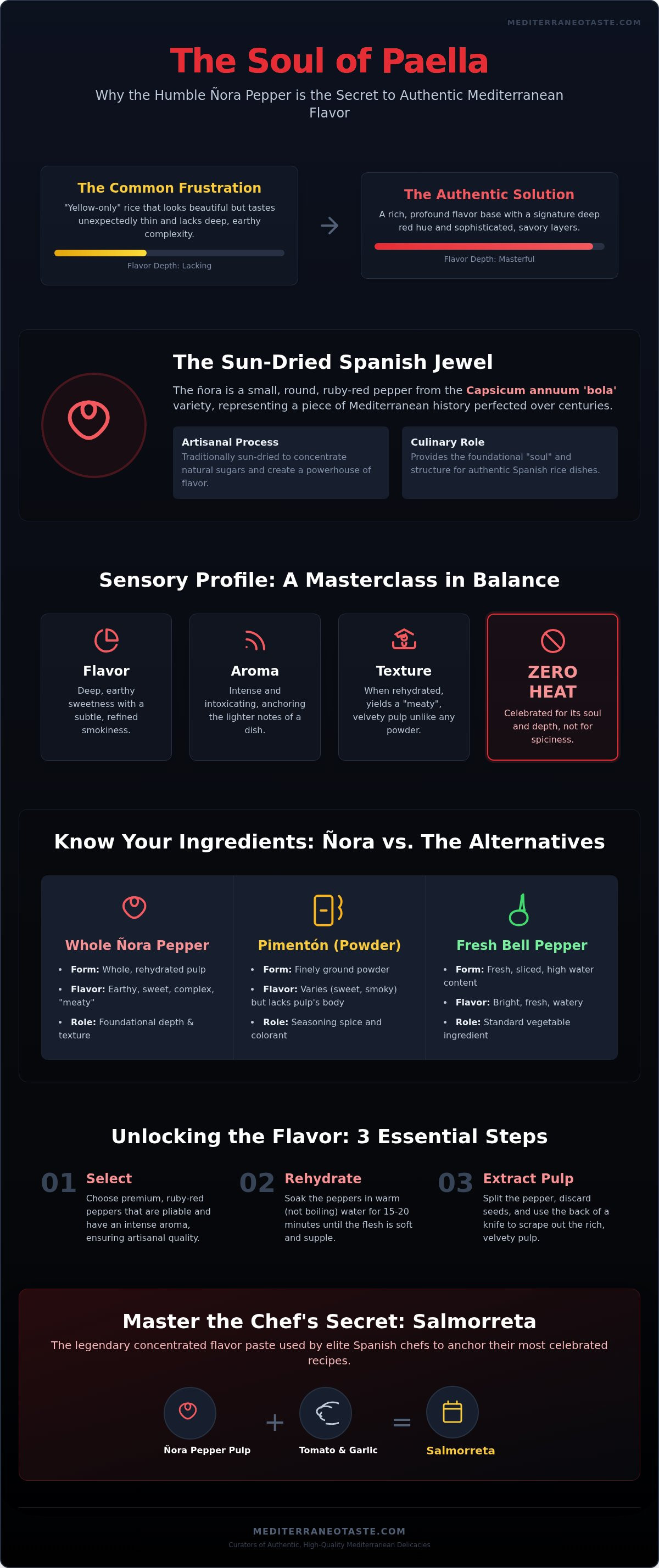
The sensory profile of this pepper is a masterclass in balance. It yields an intense, intoxicating aroma and a deep, earthy sweetness that anchors the lighter notes of a dish. Crucially, it offers zero heat. While many dried peppers are prized for their fire, the ñora is celebrated for its soul. It serves as a fundamental building block in national rice dishes, providing the structural flavor that allows expensive seafood and delicate saffron to achieve their full potential. It's the silent conductor of the paella orchestra, ensuring every other ingredient performs at its peak.
Contrast this with the standard bell pepper. While the latter is watery and bright, the ñora is concentrated and profound. It's the difference between a mass-produced item and a hand-crafted original. This rarity makes it a prized possession for any chef seeking to move beyond "yellow-only" rice and toward something truly professional. It requires a different level of care, but the rewards are found in every savory bite that hits the table.
Origins and the Sun-Drying Tradition
The transformation begins immediately after the harvest. Farmers employ a traditional sun-drying process that slowly evaporates moisture, allowing the natural sugars to caramelize and concentrate within the skin. This ancient preservation method creates a shelf-stable powerhouse of flavor that actually improves with time. It's a beautiful reflection of Spanish heritage; a practice where the environment and the artisan work in perfect harmony. This patient drying ensures that every pepper becomes a dense capsule of Mediterranean essence, ready to be awakened in your kitchen at a moment's notice.
Ñora vs. Pimentón: Understanding the Difference
Many home cooks confuse the whole pepper with its powdered relative, pimentón. While both are vital to the Spanish larder, they play vastly different roles. The whole ñora provides a unique, "meaty" depth and a velvety pulp that powders simply cannot replicate. When rehydrated, the thick flesh adds a luxurious texture to your base or rice. The ñora stands as the unprocessed ancestor of many Spanish spice blends, offering a raw and artisanal foundation for your culinary journey with Mediterraneo Taste Spain.
Why Nora Peppers are Essential for Professional-Grade Paella
Achieving the iconic, deep mahogany hue in an "arroz a banda" requires more than just heat; it requires the right culinary chemistry. While many rely on artificial colorants, true artisans use nora peppers for paella to build a natural, resonant color that speaks of genuine Mediterranean heritage. These peppers are essential in Spanish cuisine because they provide a rich, savory backbone that elevates every other ingredient in the pan. Without them, a dish often feels visually and culinarilly incomplete, lacking the professional finish found in the finest kitchens.
The flavor synergy between these peppers and premium Spanish saffron threads is where the sensory magic truly happens. Saffron brings the floral, ethereal high notes, while the ñora provides the earthy, umami-rich base. Together, they create a full-spectrum flavor profile that lingers on the palate. This dried pepper acts as a culinary bridge, binding the savory juices of seafood or meat stocks to the rice grains; it ensures that every grain is saturated with a complexity that defines world-class rice dishes.
The Earthy Sweetness of the Mediterranean
There is a subtle, smoky undertone to the ñora that mimics the traditional outdoor wood-fire cooking found throughout Spain. This isn't a harsh, artificial smoke; it's a refined whisper that perfectly balances the bright acidity of tomatoes in your base. As the rice cooks, the natural sugars from the pepper pulp migrate to the bottom of the pan. This process adds a sophisticated sweetness to the final "socarrat", the prized caramelized crust that every guest hopes to find. It transforms a simple toasted layer into a complex, sweet-and-savory masterpiece that reflects a deep commitment to craftsmanship.
Achieving the Perfect Sofrito Base
The sofrito is the heart of your paella. It's the precise moment where the ñora truly shines as a foundational element. By briefly frying the rehydrated pepper pulp in high quality spanish olive oil, you release the essential oils and lock in the flavor before the liquid is added. This step is critical; it transforms raw aromatics into a concentrated essence that perfumes the entire kitchen. If you're ready to begin this sensory journey, exploring authentic Spanish paella kits is the first step toward bringing these artisanal traditions into your home kitchen with confidence and style.
Mastering the Salmorreta: The Ultimate Paella Secret
If the sofrito is the heart of your dish, the salmorreta is its concentrated soul. This intense flavor paste is the hidden signature of top Spanish chefs; it's the element that elevates a simple meal into a professional-grade Mediterranean masterpiece. Many home cooks stop at basic aromatics, but mastering this paste is the definitive step toward culinary excellence. It creates a resonant base that anchors the lighter notes of saffron and seafood.
You only need three humble ingredients to begin: nora peppers for paella, fresh garlic, and ripe tomatoes. To achieve the perfect extraction of flavor, you must use professional-grade paella cookware. Even heat distribution is absolutely vital during this stage. It ensures the delicate sugars within the pepper pulp caramelize without scorching, preserving the artisanal quality of the ingredients. A high-quality pan provides the steady environment needed to coax out the deep, ruby essence that defines authentic coastal rice.
Don't just prepare enough for a single meal. This paste is a gateway to future artisanal discoveries in your kitchen. It can be made in generous batches and stored in the refrigerator or freezer, allowing you to summon authentic Spanish flavors at a moment's notice. Having a jar of salmorreta on hand turns the act of cooking into a celebratory event rather than a chore. It's a curated shortcut to sophistication.
Step-by-Step Salmorreta Preparation
Begin the process by gently toasting the dried ñoras in a pool of premium olive oil. Watch them with refined anticipation. They will slowly puff up and darken, signaling they're ready to release their sun-dried oils. Once toasted, combine the peppers with roasted garlic and the fresh pulp of tomatoes. Blend the mixture thoroughly until you achieve a smooth, velvet-like consistency. This transformation honors the traditional drying process that concentrated these flavors under the Spanish sun, creating a rich, thick elixir for your rice.
Integrating the Paste into Your Rice
Timing determines the success of your paella. Add the salmorreta to your pan just after the rice has been lightly pearled in oil but before you introduce the stock. Aim for a ratio of roughly one generous tablespoon per person to maintain a balanced flavor profile. As you stir the grains through the paste, you'll witness a stunning visual transformation. The rice eagerly absorbs the deep red essence, shifting from pale white to a vibrant, mahogany hue. This ensures every single grain is saturated with the smoky, earthy sweetness that only the finest ñora can provide.
How to Select and Rehydrate Your Ñora Peppers
Selection is an act of curation. When sourcing nora peppers for paella, look for a deep, wine-red skin that feels slightly supple to the touch. Avoid brittle peppers that shatter easily; this often indicates they've lost their essential oils and artisanal character. Choosing authentic Spanish ingredients ensures you're working with the highest standards of heritage. Before you begin the hydration, always remove the stems and seeds. This small step prevents unwanted bitterness from clouding the earthy sweetness of your finished rice.
The Art of Rehydration
Preparing nora peppers for paella requires a blend of patience and precision. The cold-soak method is the preferred route for traditionalists. Submerge your peppers in room-temperature water for twelve hours to allow the skin to re-soften at its own pace. If you're seeking immediate satisfaction, a quick-simmer in hot water for fifteen minutes will awaken the fibers just as effectively. Once the peppers are soft and plump, use a small spoon to gently scrape the dark "carne" or meat from the inner skin. This rich, ruby-colored pulp is the concentrated essence of the pepper. Don't discard the soaking liquid. It's a flavorful infusion that adds instant, smoky depth to your seafood or meat stock, ensuring no part of the artisanal product goes to waste.
Choosing the Right Format: Whole vs. Powder
Selecting between whole peppers, powders, or flakes depends on your desired culinary outcome. Whole peppers are the gold standard for purists seeking sophisticated excitement in their cooking. They provide the thick, velvety texture and "meaty" depth necessary for a true salmorreta. In contrast, ground ñora serves as a brilliant quick seasoning for busy evenings when you want to inject Spanish flair without the soaking time. Flakes offer a distinct sensory pop of color and texture, making them ideal for finishing tapas or garnishing seafood. Each format offers a different gateway to the same sun-dried heritage.
Ready to elevate your kitchen? Discover our curated collection of Spanish paella kits and start your journey today.
Curating Your Authentic Mediterranean Pantry
Mastering the use of nora peppers for paella is your invitation to a broader world of artisanal excellence. To recreate the deep, resonant flavors of the Spanish coast, you must look beyond individual ingredients and consider the harmony of a complete, essential Mediterranean pantry. We view the act of cooking paella as a sensory journey. It's a celebratory event that begins with the intoxicating scent of sun-dried peppers and ends with the shared joy of a perfect, mahogany-crusted meal. For those just starting this exploration, a traditional Spanish paella kit provides the curated foundation needed to achieve professional results without the guesswork.
Essential Pairings: Saffron, Bomba Rice, and Ñora
The secret to a professional masterpiece lies in what chefs call the "holy trinity" of Spanish rice: premium saffron, artisanal ñora, and bomba rice. These three components work in a sophisticated synergy that defines the Mediterranean palate. While the ñora and saffron create a complex, aromatic stock, the rice performs the critical work of preservation. Bomba rice is unique; it expands in width rather than length, absorbing up to three times its volume in liquid. This structural integrity allows it to soak up every drop of the ñora-infused essence without breaking or becoming mushy. We encourage you to experiment with these premium components. Finding your personal signature balance is a vital part of the pleasure of discovery.
The Mediterraneo Taste Difference
At Mediterraneo Taste Spain, we don't just provide ingredients. We curate experiences. Our selection is a testament to heritage and craftsmanship, specifically chosen for the discerning home chef who refuses to settle for "yellow-only" rice. By choosing our delicacies, you join a community of food lovers who value the authenticity of origin and the thrill of high-quality discovery. We remain committed to delivering these rare, artisanal gems directly to your door, ensuring your kitchen remains a gateway to the Mediterranean. Our boutique is designed for those who treat every meal as a special event. Explore our collection of authentic delicacies and specialized equipment today; your next great culinary discovery is waiting.
Elevate Your Culinary Craftsmanship
The path to a professional-grade paella begins with a single, sun-dried choice. By mastering the use of nora peppers for paella, you move beyond the surface level of simple recipes and enter the world of true Mediterranean artistry. You've discovered how the deep, earthy sweetness of the ñora creates the legendary salmorreta, providing a structural depth that saffron alone cannot match. This isn't just about cooking; it's about honoring a traditional Spanish heritage that values patience, craftsmanship, and sensory indulgence.
Your journey toward authentic flavor doesn't have to be a solitary pursuit. We invite you to explore our curated collection of authentic Spanish ingredients, where every item represents a gateway to premium, artisanal discovery. From specialized paella equipment to rare Mediterranean delicacies, we deliver the essence of Spain nationally to your doorstep. Embrace the excitement of the new and the comfort of the traditional. Your kitchen is ready for its next masterpiece. We can't wait to see what you create.
Frequently Asked Questions
Can I substitute ñora peppers with smoked paprika?
You can use pimentón in a pinch, but it won't replicate the velvety texture of the whole pepper. Smoked paprika often introduces a dominant wood-smoke flavor that can overshadow the delicate balance of your rice. The ñora provides a subtle, earthy sweetness and a meaty depth that powders simply lack. For a professional-grade result, stick to the whole dried fruit to ensure your dish maintains its artisanal integrity and complex flavor profile.
What is the difference between ñora peppers and guindilla peppers?
These two peppers sit at opposite ends of the sensory spectrum. The ñora is small, round, and prized for its sweet, earthy profile with zero heat. In contrast, the guindilla is long and slender, delivering a sharp, spicy kick that can overwhelm a traditional paella base. Choosing the right nora peppers for paella ensures a sophisticated, balanced flavor rather than a distracting heat that masks your premium seafood and saffron threads.
How long do dried ñora peppers last in the pantry?
These sun-dried treasures are remarkably resilient, lasting between twelve and twenty-four months in a cool, dark pantry. For the best sensory experience, store them in an airtight glass jar away from direct sunlight. While they remain shelf-stable for a long time, their essential oils are most vibrant within the first year. Check for a supple texture; if they become overly brittle or lose their deep wine-red color, it's time to refresh your artisanal collection.
Are ñora peppers spicy or sweet?
The ñora is purely celebrated for its earthy sweetness and intense aroma. It contains virtually no capsaicin, meaning it provides zero heat to your palate. This lack of spice makes it the perfect foundational building block for Mediterranean rice dishes. It allows the complex notes of saffron and the freshness of your seafood to shine through while providing a rich, savory background that defines the authentic coastal experience of Spain without any unwanted burn.
Can I use ñora peppers in dishes other than paella?
Absolutely. These versatile peppers are the secret behind many iconic Spanish delicacies, including the famous Romesco sauce and various hearty seafood stews. Their rich pulp adds a sophisticated depth to any Mediterranean-inspired base or marinade. We invite you to experiment with them in seafood broths or vegetable sautés to add a touch of artisanal rarity. Once you discover their sensory impact, you'll find them an essential companion for all your high-end culinary adventures.
Is it necessary to remove the skin of the ñora pepper after soaking?
Yes, removing the skin is a hallmark of refined cooking. After the rehydration process, the skin remains tough and somewhat translucent, which can disrupt the smooth, velvet-like consistency of your salmorreta. Use a small spoon to gently scrape the dark, rich meat from the inner lining. This concentrated pulp is where the true flavor resides. Discarding the outer shell ensures your final rice dish feels polished and professional on the palate during every bite.
Where can I buy authentic Spanish ñora peppers online?
When searching for nora peppers for paella, you can source premium, artisan-grade peppers directly through our online boutique at Mediterraneo Taste Spain. We specialize in curating the finest Mediterranean delicacies and delivering them nationally to your doorstep. Our selection focuses on genuine heritage and high-quality craftsmanship, ensuring you receive the same ingredients used by top Spanish chefs. Explore our full range of Spanish paella kits to find everything you need for a truly authentic home-cooking experience.
What happens if I don’t rehydrate the ñora pepper before adding it to the pan?
Skipping the rehydration step prevents the pepper from releasing its essential oils and velvety pulp. If you add a dry pepper directly to the hot oil, it risks scorching quickly, which introduces a bitter, unpleasant aftertaste to your entire dish. Rehydration is the key to unlocking the pepper's soul. It softens the fibers, allowing you to extract the rich essence that transforms a simple rice dish into a sophisticated Mediterranean masterpiece with a deep, resonant color.