

What if the secret to fragrant paella isn’t constant stirring, but knowing when to leave the rice alone? Choosing the right rice, judging the liquid, and building a crisp base can feel like a lot to manage. This paella dish recipe breaks the process into clear stages, with practical cues to follow as you cook.
Learn how to choose short-grain rice, build savoury flavour, and cook the grains in an even layer over steady heat. You don’t need a restaurant kitchen to make memorable paella at home. A broad, suitable pan and careful attention to the simmer will help you get started.
Follow the recipe from the first sizzle to the final rest. You’ll see when to add the rice, why stirring is best avoided once it’s spread across the pan, and how to tell when the liquid is being absorbed. Then comes the moment to listen for the gentle crackle of socarrat, the prized golden crust beneath the rice.
Key Takeaways
- Follow the paella dish recipe in order, from building flavour to resting the cooked rice.
- Choose short-grain paella rice and season the cooking liquid thoughtfully for tender, distinct grains.
- Adapt the heat to your home equipment, using the simmer and rice texture to spot uneven cooking.
- Rest the paella before serving, then choose simple accompaniments that keep the rice in focus.
- Match your pan to your heat source and the amount of rice you’re cooking.
What Makes a Paella Dish Recipe Distinctive?
Saffron rises in warm, fragrant steam. The rice is seasoned, tender, and distinct, ready to be shared straight from the pan. A good paella dish recipe brings flavour and texture together in a dish made for the table.
Paella is a Spanish rice dish cooked in a broad, shallow pan, where the rice absorbs seasoned liquid in an even layer. That wide surface helps the rice cook without being stirred like a risotto. The name also refers to the pan itself. Paella is one of the best-known dishes in Spanish cuisine, but it includes different styles, not one universal ingredient list.
What belongs in a traditional Valencian paella?
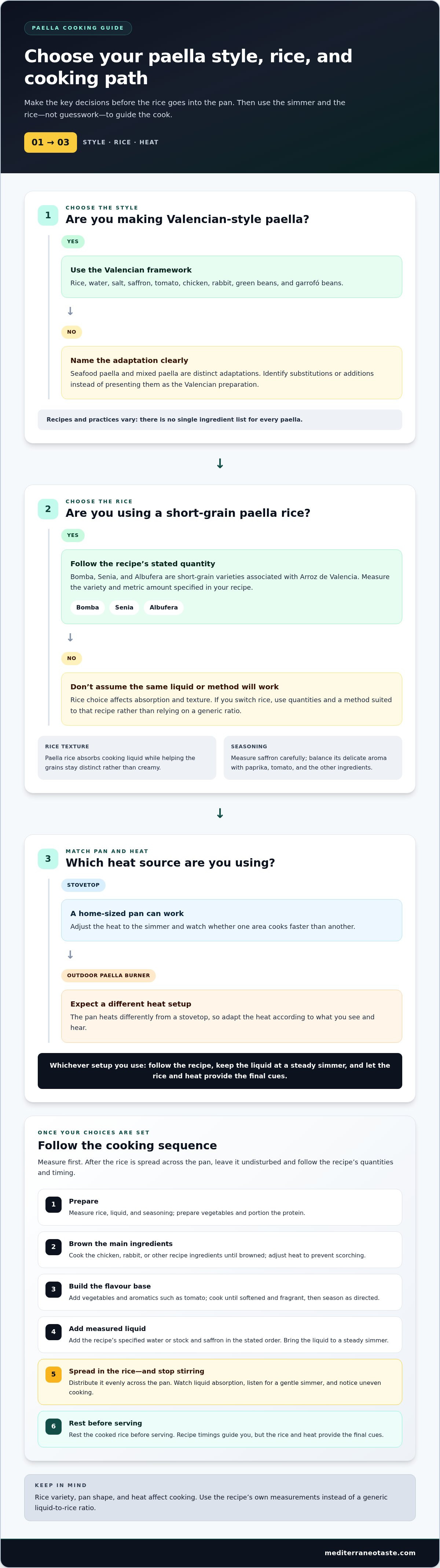
Traditional Valencian paella has a recognisable framework: rice, water, salt, saffron, tomato, chicken, rabbit, green beans, and garrofó beans. These ingredients are associated with the Valencian version, rather than a rule that every paella must follow. Recipes and practices vary, so name the style you’re making and describe its ingredients accurately.
Seafood paella and mixed paella are distinct adaptations, not interchangeable names for the Valencian preparation. Make the style clear in your recipe introduction, then identify substitutions or additions as adaptations. This gives readers useful context without turning authenticity into a rigid checklist.
Can you make paella successfully in a home kitchen?
Yes. Controlled heat and a suitable pan matter more than elaborate equipment. A stovetop can work for a home-sized pan, while outdoor cooking with a paella burner offers a different heat source and setup. Because the two methods heat the pan differently, adjust the heat according to what you see and hear.
Once the rice is spread across the pan, resist stirring. Watch how quickly the liquid is absorbed, listen for a gentle simmer, and notice whether one area cooks faster than another. Recipe timings are useful guides, but the rice and the heat provide the final cues.
Before cooking, check that your recipe gives a clear yield, preparation time, cooking time, and serving size. These details should match its ingredient quantities and method. A different pan or recipe may need different measurements or timing.
Paella Dish Recipe Ingredients: Choose Rice, Saffron, and Seasoning
The ingredients shape both the character of the paella and the way its rice cooks. For a Valencian-style version, the core ingredients are rice, water, salt, saffron, tomato, chicken, rabbit, green beans, and garrofó beans. Label seafood or other additions clearly as adaptations rather than quietly mixing styles.
Rice choice sets the texture: paella rice absorbs cooking liquid while helping the grains stay distinct rather than turning creamy. Short-grain varieties such as Bomba, Senia, and Albufera are associated with Arroz de Valencia. Use the variety and metric quantity specified in your recipe. If you switch rice, don’t assume the same liquid quantity and cooking method will give the same result.
Which rice and seasoning make a balanced paella?
Saffron brings delicate aroma and golden colour. Its flavour can be subtle, so measure it carefully rather than adding more by guesswork. Spanish paprika can contribute warmth and savoury depth; use it in balance with the saffron, tomato, and other ingredients. Season the cooking liquid thoughtfully, since the rice absorbs its flavour as it cooks.
For more ideas on Spanish pantry staples, explore the Spanish food and ingredient selection. Choose ingredients that suit the style you’re making and keep the recipe’s proportions consistent.
How should you prepare the ingredients before cooking?
Set everything out before heating the pan. This keeps the cooking sequence organised and helps prevent overcooking while you search for an ingredient.
- Rice: Weigh the recipe’s stated amount before cooking. Don’t rinse it unless the recipe specifically instructs you to.
- Vegetables: Wash and prepare the green beans and tomato as directed. Similar-sized pieces cook more evenly.
- Protein: Portion the chicken and rabbit according to the recipe, and keep raw ingredients separate from ready-to-eat foods.
- Liquid and seasoning: Measure the water, salt, saffron, and any paprika in advance. Follow the recipe’s quantities rather than estimating.
Ingredient quantities and yield should come from a recipe with a clear method, not a generic ratio. Rice type, pan shape, and heat all affect how much liquid the grains need. Keep optional swaps separate from the main ingredient list, and treat them as a variation with its own suitable method.
How to Cook Paella: Build Flavor, Add Rice, and Let It Rest
Paella rewards a steady sequence: brown the main ingredients, develop the base, add measured liquid, then give the rice room to cook. The right quantities and cooking times depend on the rice variety, pan, and recipe. Follow the recipe’s measurements instead of relying on a generic liquid-to-rice ratio.
- Prepare the pan and ingredients. Measure the rice, liquid, and seasonings first. Cut the vegetables and portion the protein so everything is ready to cook.
- Brown the main ingredients. Heat the pan, then cook the chicken, rabbit, or other recipe ingredients until browned. Adjust the heat to prevent scorching.
- Build the flavour base. Add the recipe’s vegetables and aromatics, such as tomato, and cook until softened and fragrant. Add seasonings as directed.
- Add the measured liquid. Pour in the specified amount of water or stock. Add saffron in the order your recipe gives, then bring the liquid to a steady simmer.
- Spread in the rice. Distribute it evenly across the pan. From this point, avoid stirring, which can disrupt the even layer and cooking.
- Cook, rest, and check. Maintain the heat level in the recipe. Watch the liquid recede and taste a grain near the end. Once cooked, remove the pan from the heat and rest it for the time stated in the recipe.
When should you add the rice and stock?
Build the savoury base before adding liquid, then measure the amount specified in the recipe. The order for rice and liquid can vary: some methods simmer the liquid before adding rice, while others add rice to the base first. Follow the sequence for your chosen recipe rather than combining instructions from different versions.
Once the rice is in, distribute it gently across the pan, along with any toppings. Don’t stir to move ingredients around. Look for a steady simmer and gradually disappearing liquid. If one area bubbles much harder than another, adjust the heat or carefully reposition the pan.
How do you develop socarrat without burning the paella?
Socarrat is the lightly toasted layer of rice that forms at the base of the pan. Near the end of cooking, listen for a soft crackle and notice a toasted, savoury aroma. If the rice is nearly tender and little liquid remains, a brief increase in heat may help form the crust. Stay close and reduce the heat immediately if you smell burning. Pan and heat differences affect how quickly the base toasts, so follow the recipe’s timing and sensory cues.
Rest the paella for the period specified in the recipe. This pause lets the remaining moisture settle through the rice. Serve when the grains are tender and distinct, with a golden base rather than a dark, bitter one.
Paella Troubleshooting: Fix Uneven Rice, Excess Liquid, and Uneven Heat
You can make paella at home without a dedicated outdoor burner. A stovetop can work when the pan fits the cooking surface and you manage the heat carefully. Uneven rice often points to a mismatch between pan size and burner coverage, fluctuating heat, or a change to the recipe’s rice, liquid, or timing. Use the same recipe and measurements when troubleshooting so you can identify what needs adjusting.
Why is paella rice still firm, wet, or unevenly cooked?
- Rice is firm but the liquid has mostly absorbed: The heat may have been too high, or cooking may have ended before the recipe’s doneness cue. Next time, keep the simmer steady and follow the timing, checking the rice near the end.
- Liquid remains: The heat may have been too low, or the pan and burner may not be distributing heat effectively. Don’t add more liquid or sharply raise the heat by guesswork. Follow the recipe’s doneness guidance, and next time measure the liquid precisely and check that your pan suits the burner.
- Some rice is tender while other areas are firm: The burner may heat only the centre of a wide pan, or the pan may sit unevenly. Choose a pan that better matches the heat source, and adjust its position during cooking only if it’s safe to do so.
These adjustments apply to the cooking method, not every paella style. Keep the measured liquid and timing for Valencian-style paella tied to its recipe. Seafood, mixed, and other adaptations can use different ingredients and cooking sequences, so don’t transfer changes between versions without considering the recipe.
Do you need a special paella pan or burner?
A broad paella pan gives the rice room to cook in a shallow, even layer. It’s useful, but outdoor equipment isn’t essential: a suitable pan on a home stovetop can work. The key is how well the pan’s base meets the heat source. If the burner covers only a small central area, the centre may cook faster than the edges. Watch the simmer and use the recipe’s cues rather than assuming the heat is uniform.
Outdoor cooking and stovetop cooking produce different heat patterns. An outdoor burner can distribute heat across a wider area, while a domestic hob may concentrate it. Either way, monitor the pan as the rice cooks. Read about the care and cooking characteristics of enamelled steel paella pans and carbon steel paella pans as you consider what suits your setup.
Choose from paella pans and cooking equipment that suit your heat source and cooking setup. Then follow the recipe’s measured quantities and sensory cues.
Serve Your Paella and Choose the Right Spanish Cooking Essentials
Once the rice is cooked, follow the recipe’s resting time, then serve promptly. Resting helps the finished dish settle, while serving soon afterwards preserves the contrast between tender grains and a lightly toasted base. Use the timing for your recipe rather than assuming every paella needs the same rest.
What should you serve alongside paella?
Keep the table simple. A crisp green salad dressed with olive oil and vinegar brings freshness without competing with the rice. Lemon wedges offer a bright finish for guests who enjoy them. These options work with many meat-based, seafood, and vegetarian versions; choose a side that suits the ingredients rather than adding another rich or rice-heavy dish.
Bring the pan to the table on a heat-safe surface and serve carefully around the hot pan. Sharing directly from the pan suits paella’s sociable spirit, while individual plates can make serving easier for a larger gathering. A well-chosen paella pan and Spanish ingredients support the way you cook and serve, while the recipe’s method and quantities guide the cooking.
How should you store and reheat leftover paella?
Don’t leave cooked rice sitting at room temperature. The Spanish Agency for Food Safety and Nutrition (AESAN) advises handling cooked rice carefully because bacteria can produce toxins if rice is stored improperly. Refrigerate leftovers promptly in a covered, shallow container, and keep the fridge at or below 5°C. For rice dishes, aim to eat refrigerated leftovers within 24 hours, following AESAN’s specific guidance for cooked rice.
Reheat only the portion you plan to eat, until it is steaming hot throughout, and avoid reheating the same leftovers more than once. A microwave or pan can work; add a small splash of water if needed to loosen the rice, and heat it evenly. The grains may soften and the crisp base may not return, so expect a different texture from freshly cooked paella.
A paella dish recipe comes together best when the ingredients and equipment suit the cooking method. Choose Spanish pantry staples and a pan that works with your heat source, then let the measured recipe guide the rest. Explore Spanish food and paella essentials for inspiration for your next pan.
Bring Your Paella Skills to the Table
A memorable paella starts with rice suited to the recipe, measured seasoning, and a pan with enough room for an even layer. Build flavour before adding the rice, then keep the heat steady and resist stirring. Watch the simmer and aroma as well as the clock, especially when cooking on a home hob.
With this paella dish recipe, you can approach each stage with more confidence, from choosing ingredients to recognising when the rice is ready to rest. Small adjustments to heat and pan placement can help you refine your next batch while keeping to the style of paella you’re making.
Mediterraneo Taste Spain specialises in Spanish food products and Mediterranean delicacies, including paella pans and specialised cooking equipment for home cooks. Explore Spanish food and paella essentials for inspiration for your next meal. Gather your ingredients, trust the cooking cues, and enjoy sharing the result.
Frequently Asked Questions
What is the best rice for a paella dish recipe?
Short-grain paella rice is a reliable choice because it absorbs flavourful liquid while helping the grains stay distinct. Bomba, Senia, and Albufera are varieties associated with Arroz de Valencia. Each can behave differently, so use the variety specified in your recipe and follow its measured liquid quantity and cooking time. Changing rice types without adjusting the method can affect the finished texture.
Can I make paella without a paella pan?
Yes. A wide, shallow frying pan can work if it holds the rice in an even layer and sits securely on your hob. Avoid crowding the rice into a deep pot, which can change how it cooks. Check how much of the pan your burner heats; a small burner beneath a broad pan may leave the outer area cooler. Adjust the pan position only when safe.
Do you stir paella while it cooks?
No, avoid stirring after you spread the rice across the pan. Stirring can disturb the even layer and affect how the grains cook. Before adding the rice, stir the other ingredients as needed to build flavour. Once the rice is in, distribute it gently, keep the simmer steady, and watch the liquid recede. Follow the recipe’s cues rather than moving the rice around.
How much liquid does paella rice need?
Use the liquid quantity specified for your recipe, rice variety, pan, and heat source. There isn’t one dependable ratio for every paella: Bomba, Senia, and other rice varieties can absorb liquid differently, while a wide pan loses moisture differently from a narrower one. Measure carefully, and don’t add extra liquid automatically if the rice looks firm. Check the recipe’s doneness cues first.
What is socarrat in paella?
Socarrat is the lightly toasted layer of rice that forms on the base of the pan. It adds a prized, savoury crispness beneath the tender grains. As the liquid disappears near the end of cooking, listen for a gentle crackle and notice a toasted aroma. Stay close: if the smell turns burnt or bitter, the base may be scorching rather than forming a delicate crust.
Can I make a vegetarian paella?
Yes. Make a vegetarian version by building flavour with vegetables such as artichokes, mushrooms, or green beans, then use vegetable stock if the recipe calls for stock. Treat it as its own variation rather than assuming it follows the Valencian-style ingredient framework. Keep the rice quantity and liquid method suited to your chosen recipe, and add vegetables in the order their cooking times require.
Why is my paella rice mushy?
Mushy rice can result from too much liquid, cooking it for too long, using a rice variety that behaves differently from the one specified, or stirring after adding the rice. For your next paella, measure the liquid and rice carefully, follow the recipe’s timing, and keep the grains in an even layer. Also check that your pan and heat source suit the amount you’re cooking.
How long should paella rest before serving?
Rest the paella for the time stated in the recipe you’re following. Resting allows the finished rice to settle before serving, but the precise duration depends on the recipe and its method. Keep the pan covered only if the instructions say to do so, since trapping steam can change the texture. Serve soon after resting to enjoy the grains and toasted base at their best.