

The secret to a world-class paella isn't just the saffron or the rice; it is the reactive, living surface of a traditional carbon steel paella pan from Spain. This humble piece of cookware is the only tool capable of conducting heat with the precision required to create the socarrat, that prized, caramelized crust at the base of the dish. You likely understand the frustration of inconsistent results or the fear that a raw steel pan is too high-maintenance for a modern kitchen. It is a common hurdle for those seeking the true taste of Spain.
This guide from Mediterraneo Taste Spain transforms that uncertainty into the quiet confidence of a master. You will learn to choose, season, and maintain your pan, turning it into a cherished heirloom that improves with every use. We will explore the ritual of the first seasoning and the specific techniques used to achieve professional-grade results on your own stove. Prepare to unlock the full potential of your ingredients and bring the authentic spirit of Spanish craftsmanship to your table.
Key Takeaways
- Master the art of the perfect socarrat by understanding the superior thermal conductivity of authentic polished steel.
- Learn why selecting a larger carbon steel paella pan spain allows for the thin rice layer essential for traditional texture.
- Discover the essential "Boil and Scrub" ritual to safely remove protective shipping lacquers before your first cook.
- Achieve professional results by pairing your pan with specialized burners designed for uniform heat distribution.
- Preserve your pan for a lifetime of use with simple cleaning habits that protect its natural seasoning and prevent rust.
Why Carbon Steel is the Authentic Choice for Spanish Paella
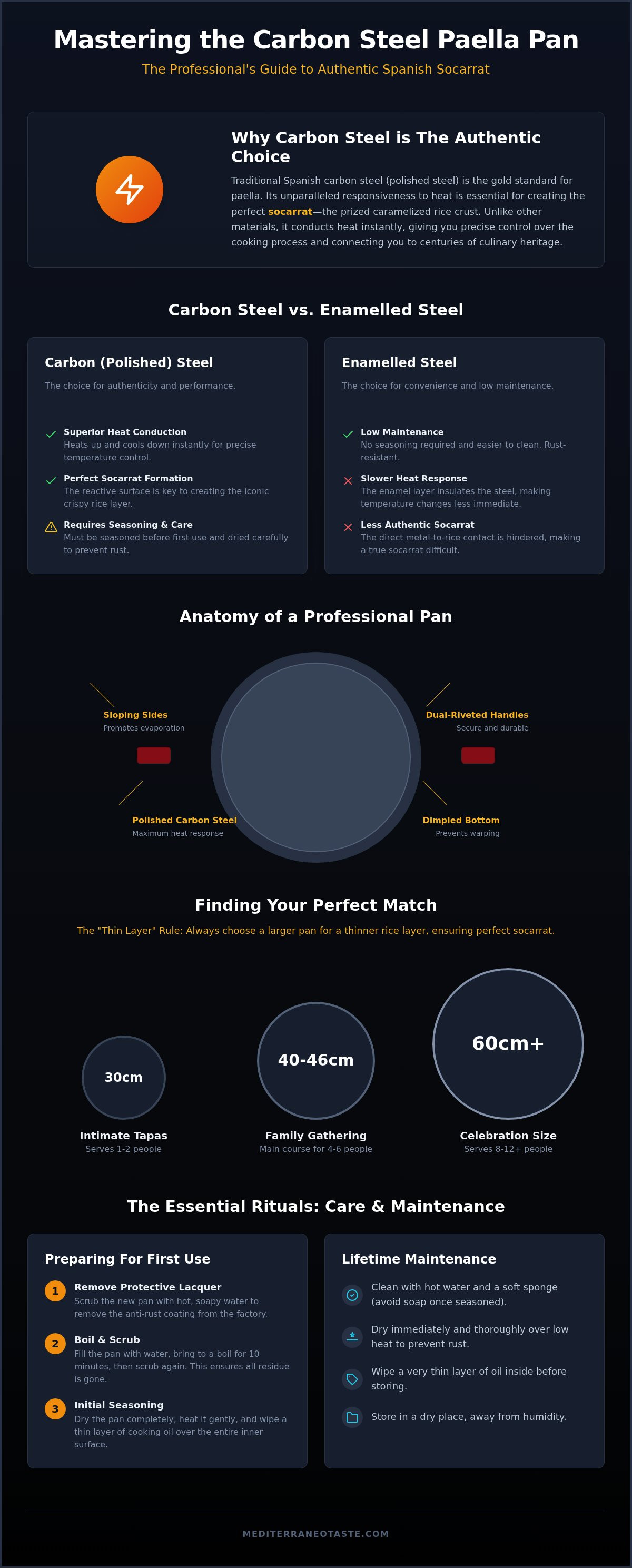
In the vibrant kitchens of Valencia and across the Iberian Peninsula, the carbon steel paella pan spain is more than a tool; it is a cultural icon. This specific material, often referred to as polished steel, remains the gold standard in Spanish households for its unparalleled responsiveness to heat. It is a reactive metal that breathes with the flame. Unlike the sluggish nature of stainless steel or the insulating properties of non-stick coatings, carbon steel transmits energy instantly. This allows you to fine-tune the simmer with the precision of a seasoned maestro.
The very identity of the dish is tied to this vessel. Historically, the name of the meal derives from the Latin patella, which is the word for a frying pan. Choosing carbon steel is an invitation to participate in a centuries-old heritage of craftsmanship. It is the only material that develops a deep, dark patina over time, becoming a living record of every feast you prepare. For the discerning cook, this pan is the essential gateway to achieving the textures and aromas that define the Mediterranean experience.
Carbon Steel vs. Enamelled Steel: Making the Right Choice
While professional chefs favor the raw responsiveness of a carbon steel paella pan spain, beginners often weigh their options. Raw steel requires a commitment to seasoning and careful drying to prevent rust. In exchange, it rewards you with a natural non-stick surface that improves with age. If you prefer a lower-maintenance path, you might explore The Ultimate Guide to the Enamelled Steel Paella Pan. However, for those chasing the most authentic sensory results, the raw steel’s ability to interact directly with the rice is unmatched. It creates a connection between the heat and the grain that enamel simply cannot replicate.
The Science of the Socarrat
The ultimate goal of any paella is the socarrat. This is the thin, caramelized layer of rice that toasts against the bottom of the pan. Achieving this requires the specific thermal profile of thin carbon steel. The metal’s high conductivity triggers the Maillard reaction, transforming starches into a savory, crispy crust. The wide, shallow shape of the pan encourages rapid moisture evaporation, ensuring the rice remains distinct and firm rather than mushy. When you use a traditional valencian paella kit, the pan works in harmony with the ingredients to capture that elusive, smoky crunch that signifies a masterpiece.
Finding Your Perfect Match: Sizing and Design Features
Selecting the right vessel is an act of curation. In the world of Spanish cookware, we measure pans using the rim-to-rim standard. This means the diameter is calculated from the top edge to the opposite top edge, excluding the handles. When you choose a carbon steel paella pan spain, this measurement is your guide to heat management. It dictates how the rice will interact with the base and the air. A pan that is too small for your guest count results in rice that is too deep, leading to a steamed texture rather than the desired fry.
The "Thin Layer" rule is the golden principle of paella mastery. Authentic paella should be a vibrant, thin carpet of grain, never more than a centimeter or two deep. For this reason, a larger pan is often superior even for smaller groups. If you're cooking a main course for four people, a pan rated for six or eight servings provides the surface area needed for perfect evaporation. This extra space ensures every grain has its moment against the steel, inviting the creation of a flawless socarrat. The hammered dimpled bottom isn't merely decorative; these small indentations strengthen the metal against warping and help trap small pockets of flavorful liquid during the final toast.
The Serving Guide: Rice Depth vs. Guest Count
Your choice of diameter depends on the occasion. A 30cm pan is ideal for an intimate tapa for two. For a family gathering, a 40cm pan serves as a generous centerpiece. When the guest list grows, a 60cm pan becomes the heart of the celebration. To truly elevate the experience, ensure you know How to Spot Truly Authentic Spanish Ingredients to fill that perfectly sized vessel. Overcrowding is the enemy of excellence. Give your rice the room it deserves to breathe and crisp.
Anatomy of a Professional Pan
The sloping sides of a traditional carbon steel paella pan spain are engineered for even cooking. They allow the liquid to evaporate at a controlled rate while making it easy to reach every corner with your spoon. Durability is found in the details, such as the dual-riveted handles that provide a sturdy, confident grip when moving the pan from the flame. Because these materials are reactive, they require specific care to remain effective and safe. You can learn more about general Cookware Safety to understand why raw metals like carbon steel are favored for high-heat applications. For the best results, consider starting with an authentic Spanish paella pan designed for a lifetime of service.
The Seasoning Ritual: Preparing Your New Pan for its First Use
Your carbon steel paella pan spain arrives with a shimmering, transparent shield. This food-safe lacquer protects the raw metal from the elements during its journey from the forge to your kitchen. To ignore this layer is to invite acrid smoke into your home. This first cleaning is a vital, sensory transition. It prepares the metal to receive the oils that will eventually define its character and performance for years to come.
Start by filling the vessel with water and bringing it to a rolling boil. This heat loosens the protective film. Drain the water and immediately scrub the surface with a firm sponge and a touch of soap. You are stripping the pan back to its most honest state. Once the steel feels slightly textured and completely matte, it is ready. This is the only time in the pan's life that it will ever require such vigorous scrubbing.
The first paella you prepare acts as the final stage of this initiation. While experts often debate the best paella pans on the market, they all agree that the initial cook sets the foundation for the pan's lifespan. This first interaction between the heat, the fat, and the metal begins the creation of a natural non-stick surface. It is the moment the pan stops being a factory product and starts becoming a kitchen heirloom.
Step-by-Step: The First-Time Seasoning Process
Seasoning is the chemical bonding of fat to metal at high temperatures to create a durable, protective polymer layer.
Choose an oil with a high smoke point, such as grapeseed or sunflower oil, rather than extra virgin olive oil for this specific task. Apply a drop of oil and wipe it across the surface with a paper towel until it seems to vanish. Heat the pan until it begins to smoke. You'll see the silver surface shift into a spectrum of deep blues and sunset golds. This transformation is the visual signal that the metal is becoming seasoned and protected.
Common First-Time Mistakes to Avoid
Avoid the temptation to rush. Placing a new carbon steel paella pan spain directly on the flame without removing the lacquer will permanently bake the coating into the steel. If the surface feels sticky after seasoning, you've used too much oil. Wipe the pan down while it is still warm to ensure the layer remains microscopic. A properly seasoned pan shouldn't feel greasy; it should feel like smooth, dark glass that is ready for the intense heat of a traditional burner.
Mastering the Flame: How to Cook with Carbon Steel
Mastering the flame is an act of refined anticipation. Your carbon steel paella pan spain acts as a conductor for the heat, responding with a speed that thick-bottomed pans can't match. This sensitivity is a double-edged sword. It allows for the precision needed for a perfect rice texture, but it also demands your full attention. While a standard kitchen hob can work, the secret of the Valencian masters lies in the professional paella burner. These specialized tools offer multiple rings of flame, ensuring that every grain of rice, from the center to the rim, receives the same focused energy.
If you're restricted to a single indoor burner, do not despair. You must become the engine of distribution. The "Move and Rotate" technique is your best ally. By shifting the pan every few minutes, you prevent the center from scorching while the edges remain undercooked. It's a rhythmic process that keeps you connected to the dish. You'll begin to hear the transformation before you see it. The soft, wet bubbling of the broth eventually gives way to a distinct, rhythmic crackle. This is the sound of the socarrat in the making.
Heat Source Compatibility and Solutions
Indoor gas stoves often produce a concentrated pillar of heat. A flame diffuser is a simple yet effective tool to help spread this energy across the wide base of your pan. For those who seek the peak of tradition, nothing compares to the ancestral ritual of cooking over Leña. The open wood fire adds a subtle, smoky dimension that's the hallmark of a true outdoor feast. If your home features a modern cooktop, consider reading The Connoisseur’s Guide to Buying the Perfect Induction Paella Pan to understand how different materials interact with magnetic heat.
The Final Minutes: Timing the Socarrat
The final stage of cooking is a test of the senses. As the last of the liquid evaporates, the aroma in your kitchen will change. It shifts from the scent of steaming broth to a rich, toasted perfume. This is the Maillard reaction at work. To be certain, perform the "Spoon Test." Slide a spoon along the bottom of the pan. If you feel a firm, slightly crunchy resistance rather than soft grains, you've achieved the perfect crust. To ensure your next cook is just as successful, invest in a professional paella burner for total heat control.
Lifetime Maintenance: Cleaning and Storing Your Pan
Caring for an authentic carbon steel paella pan spain is a ritual of preservation. This is not a disposable piece of kitchenware; it is a reactive tool that evolves with every feast. The soul of the pan lies in its patina, that dark, seasoned layer you have worked so hard to build. Protecting this investment requires a departure from modern cleaning habits. You must embrace a more artisanal approach to maintenance to ensure the metal remains a faithful companion for decades to come.
The Golden Rule of maintenance is absolute: never allow your pan to see the inside of a dishwasher. The harsh detergents and prolonged moisture will strip the seasoning and invite immediate oxidation. Similarly, avoid excessive use of soap during daily cleaning. While a drop of mild liquid is acceptable for removing grease, the goal is to clean the surface without erasing its history. Your pan is a living record of your culinary journey; treat it with the respect an heirloom deserves.
The Post-Paella Cleanup Routine
Begin your cleanup while the pan still holds a whisper of warmth. Use warm water and a soft brush to gently lift away any remaining grains of rice. If the socarrat has left behind stubborn, caramelized remnants, do not reach for a metal scourer. Instead, try a salt-and-oil scrub. Pour a handful of coarse sea salt and a splash of vegetable oil into the pan, then buff the surface with a paper towel. This abrasive yet gentle method lifts debris without damaging the delicate polymer layer you've established. Immediate hand-drying is non-negotiable for carbon steel. Even a few minutes of air-drying can trigger the first signs of rust.
Long-Term Storage and Care
Once the pan is bone-dry, apply the "Dry and Oil" routine. Wipe a microscopic film of neutral oil over the entire surface, including the handles and the bottom. This creates a barrier against humidity, which is especially vital in coastal climates. You may notice a faint black residue on your towel during this process. This is not dirt; it is a harmless mixture of carbon and seasoned oil. A well-used pan should look dark and mottled, not silver and shiny. Store your vessel in a dry cupboard, perhaps separated from other pans by a sheet of paper to prevent the oil from being rubbed away.
If you discover a patch of orange rust on a neglected pan, don't despair. Rust is a surface condition, not a terminal illness. Use a bit of steel wool or a stiff brush to scrub the affected area back to the bare metal. Once the rust is gone, simply repeat the seasoning process described in previous sections. Your carbon steel paella pan spain is remarkably resilient. With a little attention, it will recover its dark, non-stick glory and be ready for your next Mediterranean celebration.
Elevate Your Culinary Ritual
Embracing a traditional carbon steel paella pan spain is a commitment to the sensory richness of Mediterranean life. You now understand that the secret to a perfect socarrat lies in the reactive nature of the metal and the precision of the flame. By mastering the seasoning ritual and respecting the simple maintenance routines, you transform a functional tool into a cherished kitchen heirloom. This journey is about more than just a meal. It is about the rhythmic crackle of the rice and the deep, dark patina that records every shared celebration at your table.
We invite you to discover our curated selection of authentic carbon steel paella pans from Spain. Each vessel is sourced directly from traditional Spanish manufacturers and is trusted by professional chefs and home enthusiasts alike. We provide expert advice on seasoning and care with every purchase to ensure your success from the very first cook. Begin your own tradition today and bring the vibrant soul of the Spanish coast into your home. Your masterpiece is waiting.
Frequently Asked Questions
Does a carbon steel paella pan rust easily?
Carbon steel is highly reactive and will oxidize if left in a damp environment. However, this is easily managed by drying the pan immediately after washing and applying a thin layer of oil. This simple habit creates a protective barrier against humidity. Think of it as a living tool that rewards your care with a lifetime of service rather than a fragile item that breaks easily.
Can I use a carbon steel paella pan on an induction cooktop?
Yes, carbon steel is naturally magnetic and works on induction surfaces. You must be careful to heat the pan gradually to avoid warping the thin metal. Because these pans are often wider than standard induction zones, using a diffuser or a pan specifically designed for induction can help distribute heat more evenly. This ensures your carbon steel paella pan spain performs beautifully in a modern kitchen setting.
What is the best way to clean a burnt paella pan?
Use a salt scrub or a brief soak in warm water to lift stubborn, burnt rice. Avoid harsh chemical cleaners or metal scourers that strip away your hard-earned seasoning. A mixture of coarse salt and a little oil acts as a gentle abrasive. Simply buff the surface with a paper towel until the residue lifts. This method preserves the pan's integrity while restoring its smooth, ready-to-cook surface.
Why is my paella pan turning black?
Turning black is a sign of a well-seasoned and healthy pan. This dark color is the result of polymerized oils creating a natural, non-stick patina. It is a badge of honor for any home chef, indicating that the metal is becoming more resilient and better at releasing food. Embrace this shift from shiny silver to deep charcoal. It is the visual proof of your pan's evolving character and professional quality.
Do I need to season my carbon steel pan every time I use it?
No, you only need to perform a full seasoning ritual when the pan is new or if the patina has been stripped. For daily use, a simple "dry and oil" routine is sufficient. After cleaning, dry the metal thoroughly on a warm hob and wipe it with a microscopic layer of neutral oil. This keeps the seasoning intact and prevents oxidation without the need for high-heat polymerizing after every single meal.
What size paella pan do I need for 4 people?
A 40cm or 42cm pan is the ideal choice for serving four people as a main course. While a smaller 34cm pan might technically fit the rice, it often leads to a layer that is too thick. To achieve the authentic thinness required for a perfect socarrat, you need the extra surface area. Choosing a slightly larger carbon steel paella pan spain ensures every guest enjoys the best texture and the most flavorful results.
Can I use a carbon steel pan in the oven?
Yes, traditional carbon steel pans are entirely oven-safe because they lack plastic or wooden components. This makes them versatile tools for finishing a dish or keeping it warm before serving. Just remember that the handles will become extremely hot. Always use thick oven mitts or traditional cloths when handling the pan. It is a robust vessel that can easily withstand the high temperatures of a domestic oven.
How do I remove rust from my Spanish paella pan?
Scrub the rusted area with steel wool or a stiff brush until the silver metal is visible again. Once the oxidation is removed, wash the pan with mild soap and dry it immediately. You must then re-season the affected area by applying oil and heating it until it smokes. This process restores the protective barrier. It proves that even a neglected pan can always be brought back to its former glory.