

The best Spanish vinegar for your kitchen isn’t necessarily the oldest or most elegantly packaged. A premium Spanish vinegar selection is easier to judge when you look beyond broad quality claims and consider provenance, grape style, ageing and acidity, then match those details to the dishes you cook.
Labels can be difficult to compare. Jerez, Montilla-Moriles and Condado de Huelva each have protected origins, while terms such as Reserva and Gran Reserva refer to defined ageing requirements. But age alone won’t tell you whether a vinegar will bring dry, savoury depth to a dressing or a sweeter note to a sauce.
This guide explains useful label cues and how Spanish vinegar styles can differ in flavour and culinary purpose. You’ll also learn how the criaderas y solera ageing system builds complexity and why acidity affects a vinegar’s impact in the kitchen. Use these details to choose a bottle for the way you cook, not just for the story on its label.
Key Takeaways
- Build a premium Spanish vinegar selection around clear provenance, ingredients and production details, not packaging or vague quality claims.
- Compare Spanish vinegar styles by their base ingredients and maturation to understand how aroma, depth and finish may differ.
- Match acidity and flavour intensity to the dish, from delicate salad dressings to bold sauces and finishing touches.
- Use label details as useful evidence, then taste the vinegar to see how it works with your ingredients.
- Choose one versatile style or contrasting bottles based on what you cook most often and the flavours you want to bring forward.
Why choose a premium Spanish vinegar for your kitchen?
Vinegar can do more than sharpen a dish. Its origin, base wine, maturation and flavour offer useful clues about how it may work in a recipe. The word “premium”, however, isn’t a vinegar style in itself. Treat it as a positioning term, then look for concrete details that help you understand what’s in the bottle and whether its character suits your cooking.
Protected origin labels can provide more specific evidence than general descriptions. For example, Vinagre de Jerez D.O.P. must be produced and aged in its defined area in Cádiz, and has a minimum acidity of 7 degrees. Its label can also identify an ageing category, such as Reserva or Gran Reserva. These details give you a basis for comparison, but they don’t dictate which flavour you’ll enjoy most.
What makes a Spanish vinegar worth considering?
A premium Spanish vinegar is one whose origin, ingredients, production or ageing details and flavour can be assessed, rather than inferred from packaging or broad quality claims. Words such as “artisan” and “premium” may set expectations, but they don’t explain a vinegar’s style on their own. Look for named provenance, the base ingredient and any stated maturation. Then consider whether the described character suits a dish you actually make.
For a closer look at the production and culinary background of Sherry vinegar, its overview can help put the style in context. Use general background alongside the bottle’s own label, especially when assessing claims about a particular producer, origin or ageing method.
When can a distinctive vinegar make a difference?
Aroma reaches you before the first taste. A vinegar may suggest fruit, wine or wood, while its acidity and finish can make a dressing feel bright, rounded or persistent. These qualities matter most when vinegar is a noticeable part of the dish, rather than a quiet seasoning.
In a simple salad, a fragrant vinegar can shape the impression of the whole dressing. In a sauce, a more assertive flavour may stand up to rich or savoury ingredients. For everyday seasoning, a straightforward vinegar may be all you need. Neither choice is automatically better. The useful question is whether the vinegar brings the balance and intensity you want.
Think of this as a tasting decision, not a ranking. A defined origin or maturation gives you helpful context, but personal preference still matters. To build a considered premium Spanish vinegar selection, first identify the style, then assess the label details and match the bottle to its intended use. This simple process turns broad claims into practical choices and helps you decide whether a vinegar belongs in your Spanish-inspired pantry.
Spanish vinegar styles and label cues: what should you compare?
Spanish wine vinegar covers a range of flavours and production approaches. Sherry vinegar is one recognised style, but it isn’t a template for every Spanish bottle. Grape variety, production choices and maturation can all contribute to differences in aroma, depth and finish. Start with the style name, then read the rest of the label to build a clearer picture.
How the vinegar base can shape flavour
Wine-based vinegars begin with wine, so the grape and the way the vinegar is made may influence the finished character. Other vinegar styles use different bases and can bring their own aromatic notes. Maturation may soften or deepen a vinegar’s impression, though age alone can’t predict exactly how it will taste. Two bottles with similar style descriptions may still differ, so use the label to form an expectation, not a promise.
Compare like with like where possible. Note the stated base, grape variety or method, then consider whether the description suggests a profile you’d enjoy. If tasting notes mention fruit, wood or a rounded finish, treat them as sensory signposts. They can help narrow your choice, but tasting is the best way to decide whether the vinegar suits your cooking.
Which details on a Spanish vinegar label matter?
Start with specific information: vinegar type, producer, stated origin, ingredients and any protected designation wording. A protected designation is more meaningful when the label identifies the recognised name clearly. If a bottle uses broad terms such as “aged” or “traditional”, look for supporting information, such as a named method, category or production detail. Without that context, the words alone reveal little about the vinegar’s character.
For Spanish pantry choices beyond vinegar, the guide to authentic Spanish ingredients offers useful ways to assess provenance and product information. Apply the same habit here: separate verifiable details from evocative language, and compare the facts across bottles before deciding what to taste.
Keep a few notes as you explore. Record the style, ingredients and production details alongside your impressions of aroma and finish. This makes future comparisons more useful than relying on packaging or memory. As your preferences take shape, you can explore Spanish pantry ingredients for more ideas for home cooking.
Spanish vinegar compared: match flavour and acidity to your needs
Use comparisons to narrow the field, not to crown a universal winner. Sherry vinegar is one distinctive Spanish wine vinegar; other protected-origin vinegars and Spanish wine vinegars can differ in grape profiles, maturation and finish. The right fit depends on the dish and how noticeable you want the vinegar to be.
Vinegar base and maturation can shape aroma, depth and finish, but the flavour depends on the particular ingredients and production.
Sherry vinegar and other Spanish wine vinegars
Vinagre de Jerez D.O.P. has a defined origin and production rules, while Vinagre de Montilla-Moriles and Vinagre del Condado de Huelva have their own protected specifications. A matured vinegar may suggest greater depth, while a younger or less mature wine vinegar may seem fresher or lighter. These are possibilities, not guarantees. Compare the stated base and ageing information rather than assuming that all Spanish wine vinegars taste alike.
| Style | Base and flavour impression | Likely culinary role | Label evidence to look for |
|---|---|---|---|
| Vinagre de Jerez D.O.P. | Wine vinegar; style can vary by grape and ageing, from dry to sweeter expressions. | Consider for dishes where a distinct wine-vinegar character is welcome. | D.O.P. wording, grape or style, and any ageing category. |
| Vinagre de Montilla-Moriles D.O.P. | Made from wines protected under its designation; may be dry or sweetened with grape must. | Choose according to whether you want a dry or sweeter profile. | D.O.P. wording, ingredients and stated ageing category. |
| Vinagre del Condado de Huelva D.O.P. | Made from wines protected under its designation; aged versions may develop more depth. | Consider for recipes that can accommodate a more pronounced vinegar character. | D.O.P. wording and any “Vinagre Viejo” category. |
| Other Spanish wine vinegar | Grape variety and production differ; the result may be lighter, fruitier or more direct. | A flexible option when you want wine-vinegar character without a particular protected-origin profile. | Vinegar type, producer, stated origin and ingredients. |
What acidity and tasting notes can tell you
An acidity percentage describes the concentration of acetic acid, the component responsible for vinegar’s characteristic sharpness. It can help you compare strength, but it doesn’t describe the whole flavour, aroma, sweetness, balance or finish. A higher figure alone doesn’t prove greater quality.
Read tasting terms as practical clues. “Sharp” suggests a more immediate acidic impression; “rounded” points to a softer-feeling balance. “Fruity” hints at aromatic notes, while “complex” suggests several layers of flavour. Treat these words as a guide, then taste if you can. For a premium Spanish vinegar selection, compare acidity alongside provenance, ingredients and the character you want in the dish.
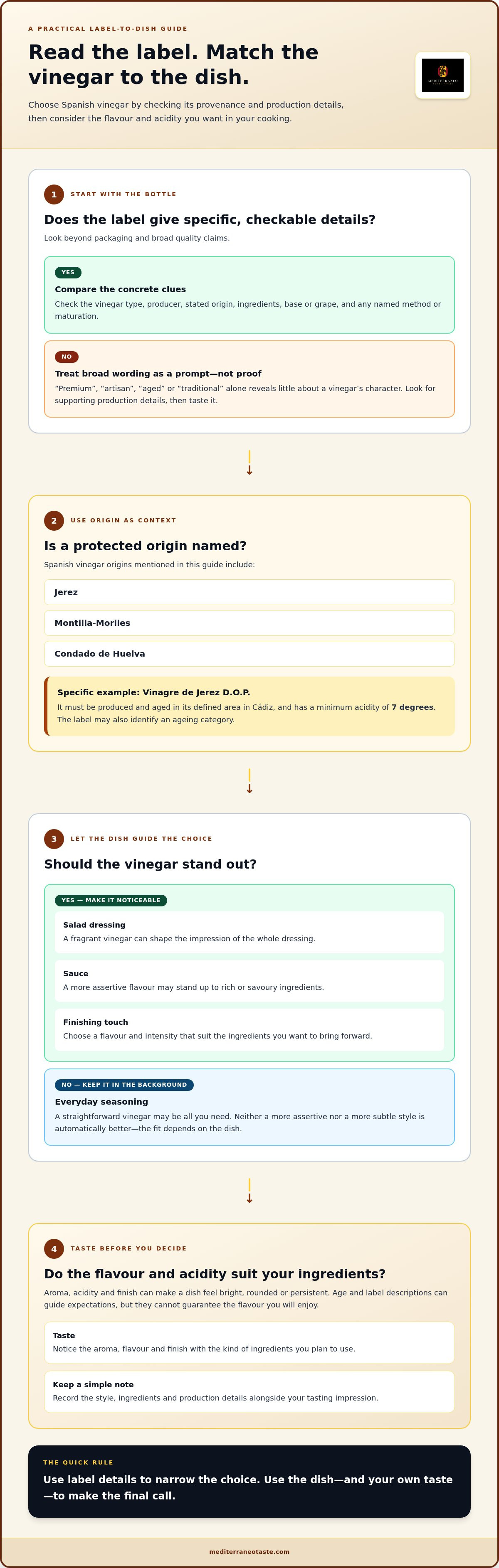
How to choose Spanish vinegar for salads, sauces and finishing
Let the dish lead. A delicate salad, savoury marinade and rich sauce each call for a different balance of acidity and flavour. Use this sequence to choose a Spanish vinegar, then adjust it to suit the ingredients in front of you.
- Identify the dish. Decide whether the vinegar will form part of a dressing, season a marinade, brighten a sauce or finish a dish at the table.
- Choose the acidity you want. Consider how much lift the ingredients need. Rich or oily components may welcome a sharper contrast; already-tangy ingredients may need a gentler touch.
- Assess flavour intensity. A lighter profile can sit comfortably beside tender vegetables or mild leaves. A more robust, aromatic vinegar is more likely to hold its character alongside grilled vegetables, strong herbs or savoury ingredients.
- Taste and adjust. Add a little, mix well and taste the whole dish. Increase gradually; it’s easier to add brightness than to soften an over-acidic result.
Choose vinegar for the dish, not the label
For a delicate salad dressing, start with a vinegar whose flavour won’t overshadow the leaves or vegetables. For roasted or grilled vegetables, a more pronounced wine-vinegar character may complement their savoury notes. In a marinade, consider how the vinegar will sit alongside oil, herbs and other seasonings. In a sauce, add it carefully so acidity supports rather than dominates the other flavours. These are starting points, not fixed rules. Ingredient intensity and your own taste should guide the final choice.
Rule of thumb: Use acidity to cut through richness, soften its edge with sweetness, and add it carefully when salt is already prominent.
When should you cook with vinegar or add it at the end?
Cooking can soften vinegar’s sharper impression, while adding it near the end may preserve more of its aroma. Choose based on the effect you want. A small amount stirred into a sauce during cooking can blend into the other ingredients; a finishing splash over cooked vegetables can leave a clearer aromatic lift.
You don’t need to commit the whole dish at once. Taste before serving, especially if the sauce has reduced or the other ingredients are already salty, sweet or acidic. If you’re building a premium Spanish vinegar selection, consider whether you want one adaptable bottle or distinct styles for dressing, cooking and finishing. Explore Spanish pantry ingredients for more inspiration as you shape a thoughtful collection for home cooking.
Build a considered premium Spanish vinegar selection
A thoughtful pantry doesn’t need a shelf full of bottles. It needs choices you understand and will reach for. Use the checklist below to compare Spanish vinegars by useful evidence, then decide whether one adaptable style suits your cooking or contrasting profiles would bring more flexibility.
A simple checklist for comparing bottles
- Style: Identify the vinegar type, such as wine vinegar or a named regional style.
- Ingredients: Read the ingredient information to understand the base and any additions.
- Provenance: Look for a stated producer and origin. Treat protected designation wording as a specific claim, not decorative language.
- Production: Note any stated maturation method or category. Broad terms such as “traditional” offer limited guidance without supporting details.
- Use: Compare tasting descriptions with the salads, vegetables, marinades and sauces you make regularly. Consider acidity as one clue, alongside aroma and flavour.
This turns label reading into a practical comparison rather than a contest of impressive-sounding words. Keep the details together, even as simple notes on your phone. After tasting, add your own impressions: whether the vinegar feels bright or rounded, how persistent its finish is, and which foods bring out its character.
Choose a bottle that earns its place in your pantry
If you’re just beginning, choose a versatile style that fits several familiar dishes. Use it in a simple dressing, then try a small amount with cooked vegetables or in a sauce. One bottle can be a sensible starting point if you mainly want a dependable kind of acidity.
Contrasting styles may make more sense if you cook a wide range of dishes or want vinegar to contribute distinct aromas and finishes. You might prefer a lighter profile for delicate ingredients and a more pronounced one for robust flavours. Let your own tasting notes guide that decision, rather than a label’s prestige alone.
Pantry curation is about creating a set of ingredients that work together and suit the way you cook. Consider how vinegar sits alongside oils, spices and other staples, and add a new style when it brings a quality your current bottle doesn’t. For wider inspiration, explore the Mediterranean pantry essentials as you shape a Spanish-inspired kitchen.
Build your premium Spanish vinegar selection bottle by bottle, guided by provenance, ingredients and the flavours you enjoy. When you’re ready to broaden your Spanish-inspired pantry, explore Mediterranean delicacies from Mediterraneo Taste Spain.
Let your next meal shape your pantry
The most rewarding pantry choices are the ones that inspire you to cook, taste and return to a favourite ingredient. Let your regular meals show you what belongs: perhaps a dependable companion for weeknight cooking, or a more distinctive bottle saved for dishes where its character can shine. A considered choice is more personal than a crowded shelf.
Mediterraneo Taste Spain brings together Mediterranean delicacies and traditional Spanish food products for home cooks seeking quality ingredients. As you shape a Spanish-inspired kitchen, look beyond one ingredient and consider the flavours you’d love to bring to your table next.
Start your premium Spanish vinegar selection journey with curiosity, and let each bottle earn its place through the pleasure it brings to your cooking. Explore Mediterranean delicacies for your Spanish-inspired kitchen and find fresh inspiration for your next meal.
Frequently Asked Questions
Is sherry vinegar the same as sherry wine?
No. Sherry wine is a fortified wine, while sherry vinegar is made by fermenting wine into vinegar. They share a connection to wine, but behave differently in cooking: wine contributes alcoholic and grape flavours, while vinegar brings pronounced acidity. Don’t substitute one for the other in equal amounts. If a recipe calls for sherry vinegar, sherry wine won’t provide the same sharpness or balance.
Can Spanish vinegar be used in place of other wine vinegar?
Usually, yes, but expect a change in character. A Spanish wine vinegar can add a different aroma, intensity or finish from the vinegar named in a recipe. For a first substitution, use a little less than the stated amount if the Spanish vinegar tastes especially assertive, then adjust after tasting. This is particularly helpful in a dressing or sauce where acidity is prominent.
What does the acidity percentage on a vinegar label mean?
It indicates the concentration of acetic acid, the substance that gives vinegar its characteristic tang. A higher percentage can suggest a stronger acidic impact, but it doesn’t describe sweetness, aroma or how the vinegar will taste with food. Two vinegars with the same stated acidity may still feel different in a dressing. Use the figure as one comparison point, then consider the ingredients and taste.
How do I choose Spanish vinegar for a salad dressing?
Pair the vinegar’s intensity with the salad. Mild leaves, cucumber and tender vegetables can be overwhelmed by a forceful vinegar, while bitter leaves or robust ingredients may suit a more pronounced flavour. Mix a small amount of dressing separately and taste it with a leaf, rather than judging it alone. This gives you a more useful sense of the finished balance and helps guide a premium Spanish vinegar selection.
Does aged Spanish vinegar always taste better?
No. Ageing can change a vinegar’s aroma, depth and finish, but “better” depends on the dish and your preference. A pronounced aged style may be enjoyable where you want the vinegar to stand out, yet feel too dominant in a delicate dressing. Choose by tasting it with the food you plan to serve, not by the ageing term alone.
Are all Spanish vinegars protected by a designation of origin?
No. Spain has vinegars with protected designations, including Vinagre de Jerez, Vinagre de Montilla-Moriles and Vinagre del Condado de Huelva, but not every Spanish vinegar carries one. A designation identifies a product governed by specific origin and production rules. If the label makes no protected-origin claim, assess its stated type, producer, ingredients and origin details without assuming a designation applies.
Should Spanish vinegar be refrigerated after opening?
Vinegar generally doesn’t need refrigeration after opening. Keep the bottle tightly closed and store it in a cool, dark place away from heat and direct sunlight. Always follow any storage instructions on the label, as these are specific to that product. If the vinegar’s appearance, aroma or flavour changes unexpectedly, avoid using it until you’ve assessed whether it remains suitable.