

The secret to a world-class paella isn't found in the saffron alone; it lives in the precise diameter of your cookware. You've likely felt the frustration of rice that turns out more like a soggy risotto than a shimmering, shallow masterpiece. It's a common hurdle for the home chef. You crave that legendary, caramelized socarrat for an intimate dinner, yet most pans are either too deep for a small portion or too wide for a standard stovetop. Selecting the right small paella pan for two is the first step toward transforming a simple meal into a curated Mediterranean experience.
We understand the desire for authenticity without the complexity of professional hardware. This guide helps you navigate the choice between traditional polished steel and modern enamelled finishes. You'll learn why a 30cm pan marketed for four people is actually your best friend for a dinner for two. We'll demystify the "rule of halves" and provide the exact specifications to ensure your rice stays under the critical 1.5cm depth required for a flawless crust. Prepare to bring the vibrant spirit of Spanish tradition to your table with confidence and style.
Key Takeaways
- Discover why a shallow pan is the non-negotiable secret to achieving the prized, caramelized socarrat crust in every bite.
- Learn how to decode Spanish sizing labels to select a small paella pan for two that fits perfectly on your home stovetop.
- Compare the authentic heat conductivity of traditional polished steel against the modern, rust-resistant convenience of enamelled finishes.
- Master the simple yet vital care rituals required to protect your pan’s artisanal finish and ensure it lasts for a lifetime of shared meals.
- Explore how to pair your cookware with premium ingredients like Bomba rice to elevate your intimate dinner into a true Mediterranean discovery.
Why the Right Size is the Secret to Authentic Socarrat
Paella is more than a recipe; it's a sensory performance. At the heart of this experience lies the socarrat. This prized, caramelized toasted rice layer forms at the bottom of the pan, offering a smoky crunch that contrasts with the tender grains above. Developing this crust is the ultimate mark of a master cook. It requires a delicate balance of heat, timing, and the right equipment.
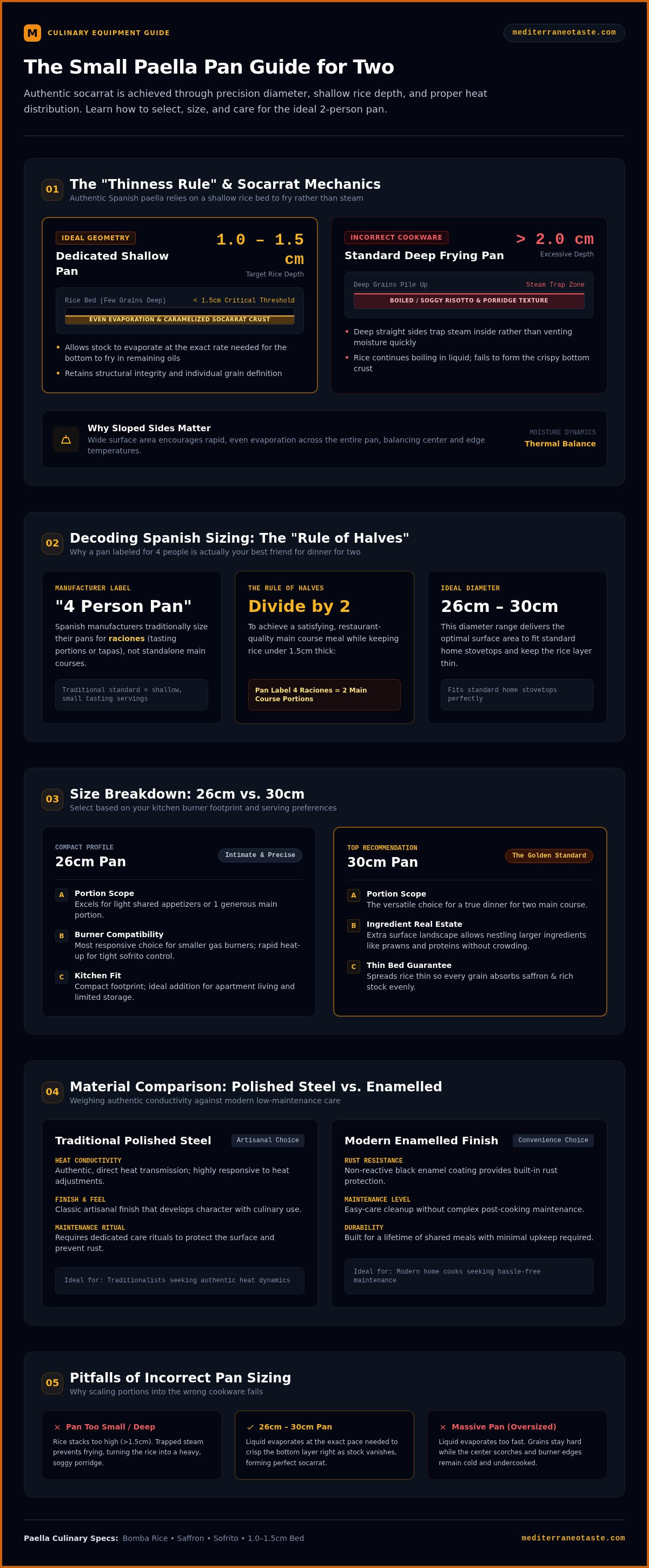
Many home chefs attempt this in a standard deep frying pan, only to find the results disappointing. Deep pans trap steam. Instead of frying in the remaining oils, the rice continues to boil, resulting in a texture closer to a heavy porridge than a traditional Spanish paella. To achieve the perfect result, you must embrace the "Thinness Rule." Authentic rice should never be more than a few grains deep. For an intimate meal, using a dedicated small paella pan for two ensures the rice bed stays within the ideal 1.0cm to 1.5cm thickness. This shallow depth allows liquid to evaporate at the exact rate needed to fry the bottom layer just as the stock disappears. Without this specific environment, the rice lacks the structural integrity and individual grain definition that defines the dish.
The Mechanics of Heat and Surface Area
The iconic sloped sides of a Spanish pan aren't just for aesthetics. They serve a vital purpose in moisture control. As the stock simmers, the wide surface area encourages rapid, even evaporation across the entire dish. In a small paella pan for two, this geometry is scaled perfectly for a standard home stovetop. The heat spreads from the center to the edges without losing intensity, ensuring every grain of rice absorbs the broth at the same speed. This precise thermal balance prevents the center from burning while the edges remain undercooked. It creates a consistent environment where the sofrito and stock can meld into a rich, concentrated flavor profile.
Small Pan vs. Large Pan: The Culinary Difference
You might think using a massive pan for a small portion is a clever shortcut. It isn't. When you scale down a recipe in a pan that's too large, the liquid evaporates too quickly. The rice stays hard while the bottom begins to scorch, leaving you with a dry, uneven dish. There's also an undeniable artisanal joy in using tools designed for a specific purpose. Serving a perfectly proportioned 30cm pan directly to the table creates a sense of curated luxury. It signals that the meal is a special event, crafted with the same care and precision as the heritage rices and spices it contains. Using a pan that matches your portion size is the first step in respecting the tradition of the craft.
Deciphering Dimensions: Finding Your Perfect 26cm to 30cm Pan
Selecting the right dimensions is about more than just numbers; it's about the physics of the perfect crust. Most people feel confused when they see a pan labeled for four people that looks barely large enough for two. This is because Spanish manufacturers traditionally size their pans for raciones, which are smaller tasting portions. To secure a small paella pan for two that delivers a satisfying main course, you should look for a diameter between 26cm and 30cm. This range ensures the rice stays at that critical, thin depth while allowing the broth to evaporate evenly.
The shallow paellera pan design is engineered to maximize surface contact. When the pan is too small, the rice piles up and steams. When it's too large for your burner, the edges stay cold and the center burns. Understanding how these dimensions interact with your home kitchen is the secret to a professional result that mirrors the quality of a high-end bistro.
The 26cm Pan: Intimate and Precise
A 26cm pan is a specialized tool for those who appreciate precision. It excels during intimate lunches where the focus is on a light, shared appetizer or a single, generous main portion. Because of its compact footprint, it's the most responsive choice for smaller gas burners. It heats up rapidly, giving you total control over the sofrito's caramelization. This size is a beautiful addition for apartment living or kitchens where storage is at a premium. If you're venturing into this artisanal craft for the first time, consider starting with a traditional Spanish paella kit to ensure your first attempt is a triumph.
The 30cm Pan: The Versatile Choice for Two
The 30cm pan is widely regarded as the golden standard for a dinner for two. It provides the necessary landscape to spread your rice thin, ensuring that every grain absorbs the flavor of the saffron and stock. This extra surface area is a luxury when adding larger ingredients. You can nestle prawns, clams, or artichokes into the rice without creating "cold spots" or overcrowding the pan. For a small paella pan for two, the 30cm model offers the most versatility for different recipes.
Most standard home burners measure between 18cm and 22cm in diameter. Since a 30cm pan has sloping sides, its base contact area is usually around 24cm. This overlap is manageable on most modern hobs, allowing for consistent heat without needing a professional gas ring. Before you begin your next culinary adventure, browse our curated selection of authentic Spanish paella pans to find the foundation for your next masterpiece.
Polished Steel vs. Enamelled: Choosing Your Culinary Signature
While the diameter of your small paella pan for two dictates the geometry of the rice, the material you choose defines your relationship with the flame. For the purist, polished carbon steel offers a raw, tactile connection to Spanish heritage. For the modern host, enamelled steel provides a sophisticated balance of performance and practicality. Both materials excel in a compact kitchen, yet they offer distinct sensory paths to the same golden result. Your choice is a reflection of your culinary lifestyle and how you intend to curate your shared dining experiences.
The Authentic Ritual of Polished Steel
Polished carbon steel is the traditional choice for those who view cooking as a ritual. This material is highly responsive to temperature shifts, allowing you to fine-tune the heat with surgical precision. This agility is vital for the technique for achieving authentic socarrat, as it lets you ramp up the flame in the final minutes to toast the rice without scorching the core. Over time, these pans undergo a beautiful transformation. They develop a dark, naturally non-stick patina that many chefs believe adds a subtle, smoky depth to the dish. If you embrace the ritual of hand-washing and oiling your equipment, explore our guide to the carbon steel paella pan spain to master its lifelong care and heritage.
The Sophisticated Ease of Enamelled Steel
If your style leans toward effortless elegance, enamelled steel is an exquisite alternative. These pans feature a core of carbon steel coated in a durable, vitreous porcelain enamel. You get the thermal benefits of steel without the worry of oxidation or the need for a seasoning ritual. They're perfect for the occasional host who wants to focus on the conversation rather than the maintenance. Because the surface is non-reactive, you can even leave a finished dish in the pan for serving without affecting the flavor of the delicate saffron. To understand how this material blends tradition with modern convenience, read more about the enamelled steel paella pan and its versatile benefits.
In a small kitchen, durability is paramount. While polished steel is nearly indestructible if kept dry, enamel can chip if handled roughly. However, for most home cooks using a small paella pan for two, the choice often comes down to the sensory experience. Do you crave the tactile, evolving nature of raw steel, or the pristine, ready-to-use gloss of enamel? Both paths lead to a spectacular meal, provided you respect the artisanal craftsmanship of the tool itself. If you're ready to select your next culinary companion, explore our collection of authentic Spanish paella pans today.
Essential Care: Keeping Your Pan Lifetime-Ready
Your cookware is a silent partner in every meal you create. To ensure your small paella pan for two remains a reliable foundation for years, you must embrace a few simple, artisanal care rituals. These steps aren't just chores; they're an extension of the cooking process that preserves the material's integrity and enhances its performance over time. Treat your tools with respect, and they'll reward you with a perfect socarrat every time you light the flame.
Seasoning Your Polished Steel Pan
Polished steel requires a warm, intentional welcome to your kitchen. Before its debut, you must remove the manufacturer's protective film. Fill the pan with water and a dash of vinegar, then bring it to a boil for several minutes. Once finished, wash it with mild soap and dry it immediately with a soft cloth. This isn't the end of the ritual. Place the pan over a low heat to ensure every molecule of moisture evaporates, then rub a thin film of neutral oil over the entire surface with a paper towel.
The first cook is a special event in the pan’s life, initiating the dark, shimmering patina that defines a seasoned tool. This layer of carbonization acts as a natural non-stick surface that improves with every use. A well-cared-for pan is a heritage piece that tells the story of every intimate dinner you've shared.
Routine Maintenance for Every Material
Whether you've chosen the traditional polished steel or the sophisticated enamelled version, consistency is the key to longevity. Never place your pan in a dishwasher. The harsh chemicals and aggressive cycles strip the seasoning from polished steel and can dull the artisanal finish of enamel. Instead, hand-wash with a soft sponge and mild detergent. If you find stubborn bits of rice stuck to the bottom, soak the pan in warm water for fifteen minutes rather than using metal scourers that might scratch the surface.
Immediate drying is the most critical step in your routine. Moisture is the precursor to oxidation. After towel-drying, give the pan a brief moment on a warm stovetop to be absolutely certain it's bone-dry. In compact kitchens, store your pan in a dry, ventilated spot. If you're using polished steel, that final light coat of oil before storage is your shield against the air. If you ever spot a small patch of rust, don't worry; simply scrub it away with a little steel wool and re-season the area. It's a resilient, living tool designed for a lifetime of discovery. To begin your journey with the right equipment, explore our authentic Spanish paella pans and find your perfect match.
Elevate Your Evening: Curating the Ultimate Paella Experience
Owning a small paella pan for two is an invitation to slow down and savor the artisanal details of Spanish cuisine. While the pan provides the essential geometry for that perfect socarrat, the ingredients you choose are what breathe life into the dish. To truly transport your senses to the Mediterranean, you must look beyond the cookware. Every grain of rice and every strand of spice should reflect the same commitment to quality as the steel pan itself. This is where your culinary discovery evolves from a simple meal into a sophisticated event.
The Host’s Pantry: Beyond the Rice
Authenticity begins with the foundation. Standard rice varieties often fail because they lack the structural integrity to absorb broth without becoming mushy. This is why sourcing bomba rice for sale is a non-negotiable step for the discerning cook. Bomba rice can expand to three times its volume while remaining al dente, capturing the essence of your stock in every bite. When cooking for two, you have the luxury of focusing on these premium, small-batch ingredients that might be overlooked in larger, communal gatherings.
The visual allure of your paella depends on the legendary golden hue that only spanish saffron threads can provide. Unlike generic seasonings, authentic saffron offers a complex, floral aroma that permeates the steam as it rises from the pan. Pair this with a high-quality pimentón and a robust extra virgin olive oil to create a sofrito with incredible depth. These artisanal choices transform your kitchen into a gateway for sensory exploration, making the act of consumption a celebration of origin and craftsmanship.
Your Next Steps to Authentic Flavor
As you prepare for your next intimate dinner, consider how you want to build your collection. You might choose a standalone pan to match your existing tools, or perhaps a complete small paella pan for two kit that includes the essential delicacies needed to start. Buying from a dedicated curator ensures that every item in your pantry meets the highest standards of Spanish tradition. At Mediterraneo Taste, we pride ourselves on being your guide to these regional specialties, offering only the most authentic tools and ingredients for your home.
The journey to the perfect paella is a personal one. It requires patience, the right equipment, and a passion for discovery. Whether you're hosting a quiet date night or a weekend lunch, the combination of artisanal cookware and heritage ingredients ensures a result that is both personal and professional. Take the final step in your culinary evolution and Discover our authentic paella pans at Mediterraneo Taste. Your table is ready for something extraordinary.
Begin Your Journey to the Perfect Socarrat
The path to an authentic Spanish experience starts with the right foundation. You've discovered that thinness is the secret to the legendary socarrat, and that a 30cm diameter provides the ideal landscape for an intimate meal. Whether you prefer the evolving patina of polished steel or the effortless elegance of enamel, your choice of cookware defines your culinary signature. Selecting a high-quality small paella pan for two isn't just about utility; it's about embracing a heritage of craftsmanship that transforms a simple dinner into a sensory event.
Every intimate gathering deserves the precision of authentic Spanish-made cookware. By combining traditional materials with our expert-curated delicacies, you're not just cooking; you're hosting a celebration of origin. It's time to bring the vibrant spirit of the Mediterranean into your home with tools designed for professional results. Browse our curated collection of authentic Spanish paella pans and start your next discovery. Your table is waiting for the golden glow of a masterfully prepared dish.
Frequently Asked Questions
What is the best size paella pan for two people?
A 30cm pan is the golden standard for a generous main course for two people. While a 26cm pan works for light appetizers or a single portion, the 30cm diameter allows you to spread the rice in a thin, authentic layer. This extra surface area is essential for moisture evaporation and the development of a consistent crust. It ensures your meal feels like a curated event rather than a cramped compromise.
Can I use a small paella pan on an induction hob?
Traditional carbon steel pans often feature a slightly convex bottom that won't activate induction sensors. You must select a specialized flat-bottomed model designed for induction surfaces to ensure a constant magnetic connection across the entire base. This stability is vital for even heat distribution. It allows you to achieve a professional result on a modern stovetop without the need for traditional gas rings or outdoor burners.
How do I stop my small paella pan from rusting?
Oxidation is the only enemy of a polished steel pan. To prevent rust, never leave your pan to air dry or soak in the sink. Hand-wash it immediately after use, dry it with a soft cloth, and place it over a low flame for a minute to remove lingering moisture. Apply a light film of neutral oil before storage. This simple ritual protects the artisanal finish and preserves your pan for a lifetime.
Is a 30cm paella pan too big for a standard gas stove?
A 30cm pan fits beautifully on a standard residential gas burner. While the top diameter is 30cm, the base contact area typically measures around 24cm, which aligns well with large home hobs. The sloped sides allow heat to rise and circulate, ensuring even cooking without the need for professional outdoor hardware. It is the ideal small paella pan for two for most urban apartment kitchens.
Do I need to season an enamelled paella pan?
Enamelled steel pans don't require seasoning or a complex first-use ritual. The vitreous porcelain coating provides a naturally non-reactive surface that is ready for your first culinary discovery immediately. You skip the oil-rubbing process required for polished steel. This makes enamel a sophisticated choice for the occasional host who values ease of maintenance alongside high-quality performance and the authentic Spanish aesthetic for serving guests.
Why is my paella sticking to the bottom of the pan?
Sticking often occurs if you stir the rice after the initial spread. Stirring releases starches that create a sticky texture instead of distinct grains. Ensure you use enough olive oil in your sofrito to create a protective barrier. If the heat is too intense before the liquid has fully absorbed, the rice may scorch. Patience is the key to a flawless, toasted socarrat rather than a burnt base.
What is the difference between a tapas pan and a small paella pan?
The difference lies in the intended portion and the required rice depth. A tapas pan is designed for small, shared snacks, often measuring 26cm or less. A small paella pan for two intended for a main course should be 30cm. This larger diameter provides the necessary landscape to keep the rice thin, which is the defining characteristic of an authentic Valencian dish compared to a simple rice appetizer.
Can I put my small paella pan in the oven?
Most authentic Spanish pans are entirely oven-safe. Since they are constructed from steel with integrated metal handles, they can easily withstand the high temperatures of a domestic oven. This versatility is perfect for finishing a dish or keeping it warm before serving. Always use protective mitts when handling the pan; the artisanal steel conducts heat across the entire structure, ensuring your meal stays at the perfect temperature for the table.