

That dusty jar of generic red powder in your pantry isn't just a spice; it's a missed opportunity for true sensory indulgence. Most home cooks have experienced the disappointment of adding paprika to a dish only to find it offers plenty of color but absolutely no soul. It's frustrating to follow a traditional recipe and end up with a flat, one-dimensional result because your ingredients lacked the necessary craftsmanship. You deserve more than a flavorless supermarket imitation that risks turning bitter the moment it hits the pan.
Discover the transformative power of authentic Spanish pimentón and elevate your cooking to an artisanal standard. This guide reveals how to identify prestigious Protected Designation of Origin seals and why the oak-smoked tradition of La Vera is a world apart from sun-dried Murcian varieties. You'll learn exactly when to reach for dulce, agridulce, or picante to achieve the perfect balance of heat and sweetness. We'll also share professional secrets for protecting its vibrant pigments, such as avoiding the 140°C burning threshold that turns sweetness into acrolein bitterness. Your journey to a more sophisticated kitchen begins here.
Key Takeaways
- Discover the unique sensory profiles of sweet, hot, and smoked varieties to perfectly match the spice to your specific dish.
- Authenticate your selection by identifying official Protected Designation of Origin seals and the hallmarks of traditional stone-grinding.
- Master the professional toasting technique for paprika to release deep aromas while avoiding the common mistake of burning the spice.
- Learn why artisanal metal tins are essential for preserving the rarity, freshness, and vibrant color of high-quality Mediterranean delicacies.
- Curate a purposeful spice collection that transforms your home cooking with the authentic depth and soul of Spanish heritage.
The Soul of the Mediterranean: Why Paprika Defines Spanish Flavor
Imagine the vibrant crimson hue of a freshly opened tin. This isn't just a spice; it's the "red gold" that anchors Spanish gastronomy. While its ancestors crossed the Atlantic centuries ago, it was the Spanish hearth that refined its character into the paprika we celebrate today. It is the heartbeat of an essential Mediterranean pantry, offering a sensory depth that mass-market alternatives simply cannot replicate. Authentic varieties provide a curated experience for the senses:
- Aroma: A heady, evocative mix of earthiness and woodsmoke.
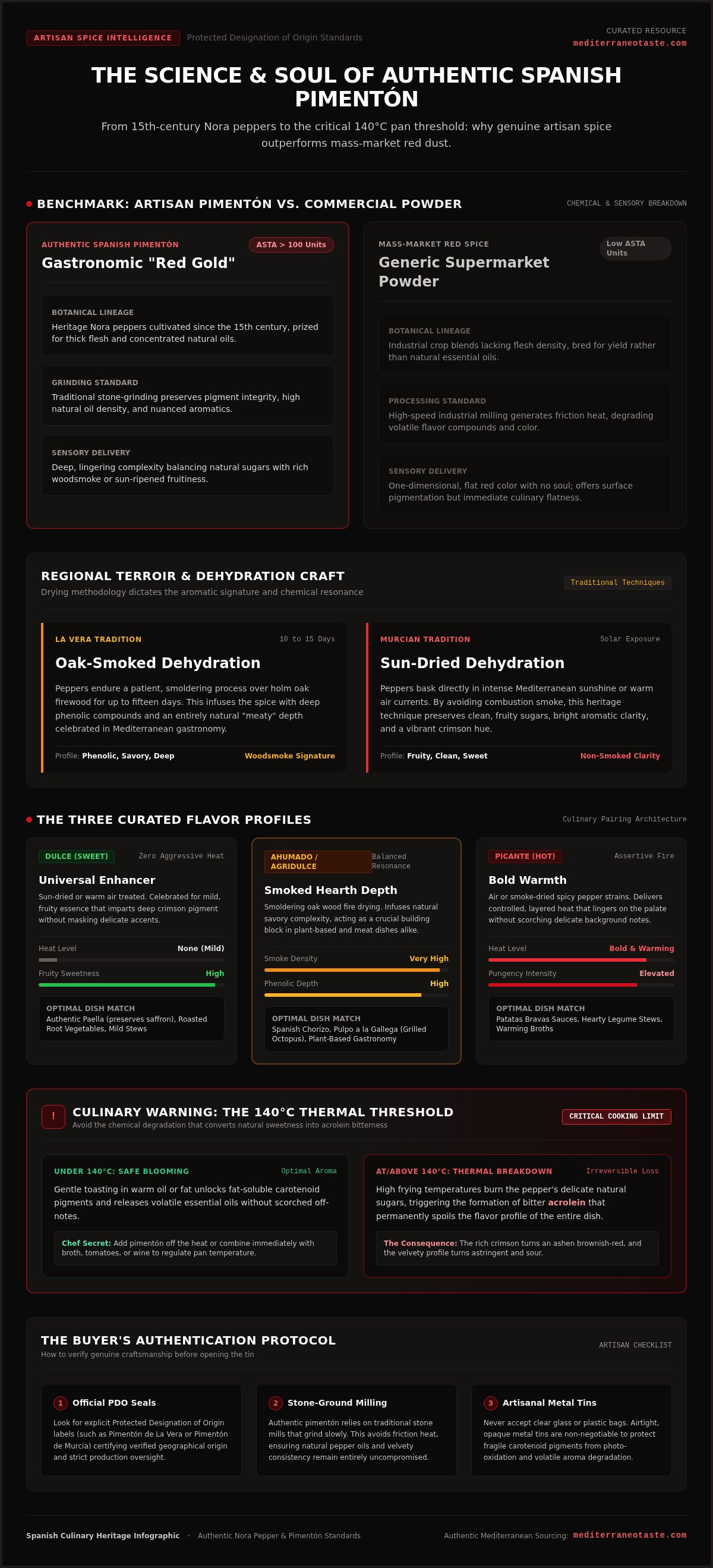
- Color: Intense, deep crimson with high ASTA values often exceeding 100 units.
- Depth: A lingering complexity that balances natural sugars with a sophisticated warmth.
The Heritage of the Nora Pepper
The story begins with the small, round Nora pepper. Unlike industrial varieties, the Nora is prized for its thick flesh and sweet, earthy undertones. Artisans in the Spanish countryside still favor traditional cultivation methods. They harvest these peppers at peak ripeness to ensure a high concentration of natural oils and pigments. When you choose whole-dried peppers or stone-ground powders over mass-produced alternatives, you're embracing a legacy of craftsmanship that dates back to the 15th century. This variety is the backbone of traditional Spanish paprika, providing a rich, non-smoked base for iconic sauces and stews.
Paprika vs. Pimentón: Understanding the Distinction
While the global market uses the generic term "paprika," in Spain, the word is pimentón. This distinction matters deeply. It represents a commitment to regional heritage and specific drying techniques that define the final profile. Some varieties bask in the intense Mediterranean sun to develop a bright, fruity sweetness. Others endure a patient, two-week smoke-drying process over holm oak wood. This meticulous attention to detail is why spotting truly authentic ingredients is the first step for any discerning home chef. Authentic pimentón offers a complexity that lingers on the palate, transforming a simple dish into a curated event. It isn't just about heat; it's about the soul of the origin.
Sweet, Hot, or Smoked? A Comparative Guide to Pimentón Varieties
Choosing the right tin is an act of curation. While Central European styles like Zitava focus on a specific, bright sweetness, Spanish varieties offer a broader spectrum of intensity. Understanding the production and flavor properties of paprika is essential for any discerning host. Unlike generic options, authentic Spanish pimentón is categorized by its precise balance of heat and smoke. The drying process is the defining moment; sun-dried peppers offer a bright, fruity clarity, while smoke-dried varieties provide a deep, phenolic resonance that lingers on the palate.
- Dulce (Sweet): Sun-dried or warm air. Mild, fruity, and vibrant. Best for paella and roasted roots.
- Ahumado (Smoked): Smoldering oak fire. Deep, phenolic, and savory. Best for chorizo and grilled octopus.
- Picante (Hot): Air or smoke-dried. Warming, bold, and complex. Best for patatas bravas and hearty stews.
Sweet Paprika (Dulce): The Universal Flavor Enhancer
Open a tin of Dulce and you'll find a color that is a revelation. This variety is celebrated for its mild, fruity essence and complete lack of aggressive heat. It is the indispensable foundation for an authentic paella. It provides a rich crimson base without overwhelming the delicate floral notes of saffron. If you're beginning your journey into Mediterranean flavors, start here. Use it generously on roasted vegetables or mild stews to add a layer of sophisticated sweetness that mass-market powders simply can't match. It's an elegant invitation to better cooking.
Smoked Paprika (Ahumado): The Secret to Depth
This variety is the soul of the Spanish hearth. Artisans use a traditional oak-smoke drying method, exposing peppers to smoldering firewood for up to fifteen days. This patient process infuses the spice with a "meaty" depth that is entirely natural. It's a bold innovator in plant-based gastronomy, providing the savory, phenolic profile usually reserved for cured meats. Don't just save it for chorizo. Try it with grilled octopus or legume soups to experience a curated sensory event that transforms the ordinary into the extraordinary.
Hot Paprika (Picante): Adding Refined Heat
Picante isn't about searing fire; it's about refined warmth and complexity. Utilizing the spicy Jeromín variety, this paprika delivers a heat that builds gracefully rather than attacking the palate. It offers a Mediterranean kick that balances beautifully with earthy legumes and rich meats. It's the perfect choice for those who crave a bolder, more adventurous profile in their traditional stews. We invite you to discover these artisanal profiles within our curated collection of Spanish delicacies.
The Artisan Standard: How to Identify Authentic Spanish Pimentón
Open your pantry and examine your current selection. If your paprika appears dull, dusty, or brownish, it has likely lost its aromatic soul. Authentic pimentón should be a vibrant, deep crimson that promises a sensory explosion. This brilliance is achieved through traditional stone-milling. Artisans use slow-moving granite stones to pulverize dried pods, a technique that prevents frictional heat from scorching the delicate spice oils. By preserving these volatile resins, stone-grinding ensures a superior texture and maximum flavor retention. High-grade Spanish selections typically measure between 100 and 140+ ASTA units, while mass-market commodity powders often struggle to reach 85.
The Pimentón de la Vera Distinction
The Protected Designation of Origin (D.O.P.) seal is more than a logo; it's a promise of origin. Specifically, the Pimentón de la Vera seal guarantees a centuries-old smoke-drying process. In this region, peppers are dried over smoldering holm oak firewood in traditional two-story smokehouses for 10 to 15 days. This method is legally mandated. Artificial liquid smoke is strictly prohibited. This artisanal rigor makes the variety an essential cornerstone for an authentic paella dish. The smoke doesn't just add flavor; it serves as a natural preservative, locking in the rich, phenolic depth that characterizes true Spanish soul.
Reading the Label Like a Connoisseur
Become a discerning buyer by reading beyond the front of the tin. Look for a numbered, serialized back-seal issued by the regulatory council. This "contraetiqueta" ensures the product meets strict EU food safety and quality thresholds. Avoid generic "paprika-style" seasonings. These products often rely on artificial dyes or fillers to mimic the intensity of the real thing. Instead, seek out markers of 100% Spanish origin and check for a recent harvest year. Freshness is paramount. While an unopened metal tin protects against photolytic degradation for up to two years, the oils are most potent within the first six months of opening. This guide to smoked and sweet paprika varieties can help you navigate the nuances between regional classifications. Embrace the joy of artisanal discovery and demand the craftsmanship your cooking deserves.
Culinary Technique: Mastering the Art of Cooking with Paprika
The Golden Rule of pimentón is absolute: never let it burn. Because high-quality paprika is rich in natural sugars and volatile aromatic resins, it scorches quickly at temperatures above 140°C. Once burnt, the vibrant sweetness transforms into an unpalatable acrolein bitterness that can ruin an entire dish. To master this spice, embrace the traditional Spanish technique of the sofrito. Toast the spice in warm oil for only 5 to 10 seconds. This brief window is enough to awaken the oils without risking carbonization. Immediately quench the pan with liquid, such as grated tomatoes, wine, or broth, to lock in the flavor profile.
Preservation is equally vital to your culinary success. Store your collection in opaque metal tins rather than clear glass jars. Direct ultraviolet light breaks down the capsanthin carotenoid bonds, causing the color to fade and the aroma to dull. When stored correctly in a cool, dark place, the volatile oils remain potent for up to nine months. We invite you to explore how these techniques elevate your next authentic Spanish tapas night by providing the foundation for iconic dishes like patatas bravas or gambas al ajillo.
The Saffron and Paprika Synergy
In the world of Mediterranean delicacies, saffron and pimentón are the ultimate power couple. They work in a delicate, red-hued synergy within the paella pan. While the paprika provides a deep, earthy foundation and phenolic resonance, the saffron contributes ethereal, floral top notes. To achieve a perfectly balanced profile, use a ratio that allows the saffron to breathe. Too much smoked pimentón can mask the expensive floral character of the threads. Aim for a harmonious blend where the smoke supports the floral, creating a curated sensory experience that feels both grounded and elevated.
Beyond the Paella Pan: Creative Uses
Don't limit your artisanal selection to traditional rice dishes. The versatility of pimentón allows for bold innovation in every corner of your kitchen. Consider these curated applications:
- Infused Oils: Gently warm extra virgin olive oil with smoked pimentón to create a vibrant finishing oil for salads or crusty bread.
- Gourmet Conservas: Use a light dusting of hot pimentón to finish tinned mussels or sardines, adding a refined warmth to premium seafood.
- Artisanal Rubs: Apply sweet pimentón to lamb or poultry before roasting to develop a deeply caramelized, vibrant crust.
Ready to transform your pantry? Discover our curated shop collection of Spanish delicacies and bring the soul of the Mediterranean to your home.
Curating Your Collection: Premium Spanish Paprika for the Home Chef
Stop reaching for a single "all-purpose" spice. A discerning host knows that a truly evocative kitchen requires a curated palette. At Mediterraneo Taste, we source artisanal Spanish delicacies that prioritize rarity, freshness, and sensory indulgence. Having all three primary varieties—Sweet, Hot, and Smoked—on hand is not a luxury; it is the standard for anyone seeking to replicate the depth and color of authentic Mediterranean cooking. Each variety serves a distinct purpose, ensuring your pantry is ready for any culinary event. We invite you to move beyond generic powders and discover the "red gold" that defines a heritage kitchen.
Standout Selections for Your Pantry
Building a sophisticated collection begins with understanding the specific role of each paprika variety. Our curated approach ensures you have the right tool for every sensory discovery:
- The Essential Sweet Paprika: This is your daily companion. It provides the vibrant crimson hue and fruity clarity required for classic rice dishes and roasted roots. It is the inviting foundation of a well-stocked pantry.
- The Artisan Smoked Paprika: Seek the true soul of Spain with this oak-smoked masterpiece. It offers a phenolic resonance and savory depth that transforms simple ingredients into artisanal events.
- The Gourmet Hot Paprika: Choose this for a sophisticated, balanced heat. It delivers a refined warmth that lingers without overwhelming, perfect for those who appreciate a bold innovator's touch in their hearty stews.
Elevate Your Kitchen Today
High-quality pimentón is a modest investment that yields immense flavor returns. It is the secret to moving beyond standard home cooking toward a premium, artisanal experience. We encourage you to pair these exceptional spices with our authentic paella pans and kits to ensure every element of your meal reflects traditional craftsmanship. Using the right equipment alongside heritage ingredients creates a sense of movement and energy in your cooking. Your journey toward a more sophisticated table is just a discovery away. We invite you to explore our curated collection and find the perfect culinary match for your next sensory event. Experience the quiet confidence that comes from using the world's finest Mediterranean delicacies.
Begin Your Artisanal Culinary Journey
The journey from a generic spice rack to an artisanal pantry begins with a single, vibrant tin. You now possess the knowledge to distinguish between sun-dried sweetness and the deep, phenolic resonance of oak-smoked varieties. Remember that the true soul of paprika lies in its Protected Designation of Origin status and the careful craftsmanship of traditional stone-milling. By mastering the delicate balance of heat and the precision of the sofrito, you aren't just following a recipe; you're curating a sensory event for your guests. Every dish becomes a bold innovation when built on a foundation of heritage and quality.
We invite you to explore our curated collection of authentic Spanish Paprika. Our dedication to authentic Spanish heritage and artisan quality sourcing ensures your kitchen is always stocked with premium Mediterranean delicacies. Don't settle for flavorless imitations when the rarity and freshness of Spain's finest pimentón are within reach. Embrace these evocative flavors today and let your home cooking reach its full, vibrant potential.
Frequently Asked Questions
What is the difference between Spanish pimentón and regular paprika?
Spanish pimentón is a Protected Designation of Origin product defined by regional heritage and specific drying methods. Regular supermarket paprika is often a commodity blend of various pepper pods with no specific origin or traditional processing. Pimentón offers complex flavor profiles, ranging from sun-dried sweetness to oak-smoked depth. Generic versions often provide color without the necessary aromatic soul required for truly authentic Mediterranean cooking and sensory indulgence.
Can I substitute smoked paprika for sweet paprika in a recipe?
You can substitute them, but the flavor profile of your dish will change significantly. Smoked pimentón introduces a deep, phenolic resonance that can overwhelm delicate ingredients intended for a bright, fruity sweet variety. If a recipe calls for sweet pimentón and you only have the smoked variety, use half the amount to avoid masking other flavors. For the most sophisticated results, maintain a curated collection that includes both varieties.
Why does my paprika taste bitter when I cook with it?
Bitterness usually occurs because the spice has scorched during the cooking process. High-quality paprika contains natural sugars and volatile oils that burn quickly when exposed to high heat above 140°C. To prevent this unpalatable bitterness, toast the spice in warm oil for only 5 to 10 seconds before immediately adding liquid components like broth or tomatoes. This technique preserves the vibrant crimson color and ensures a smooth, complex finish.
How long does Spanish paprika stay fresh in the pantry?
Spanish pimentón remains at peak potency for approximately 6 to 9 months once the container is opened. While an unopened metal tin can protect the contents for up to two years, the volatile oils and aromatic resins begin to dissipate after exposure to air. To ensure you're using a premium product, check the harvest year on the label. Discard any powder that appears brownish or has lost its characteristic earthy aroma.
Which variety of paprika is best for an authentic paella?
The most authentic choice for paella is a high-quality sweet (dulce) pimentón, often combined with a touch of smoked variety for depth. This combination creates a rich, earthy foundation that complements the floral notes of Spanish saffron without overpowering the seafood or meat. Ensure you're using a variety with a high ASTA color value to achieve that iconic, deep red brilliance across the rice in your authentic Spanish paella pan.
Is Spanish paprika spicy?
Spanish pimentón is categorized into three distinct heat levels, so it's only spicy if you choose the Picante variety. Dulce is entirely mild and fruity, while Agridulce offers a balanced, bittersweet warmth. Picante utilizes the Jeromín pepper to provide a refined heat that builds gracefully on the palate. Most traditional Mediterranean delicacies rely on the sweet or smoked versions, allowing you to control the level of fire in your kitchen.
How can I tell if my paprika is authentic Pimentón de la Vera?
Look for the official Protected Designation of Origin (D.O.P.) seal and a numbered, serialized back-label on the packaging. This certification guarantees the peppers were grown in a specific region and dried over smoldering holm oak firewood for at least 10 days. Authentic tins will never list artificial smoke flavorings or dyes. This artisanal rigor is what separates a true heritage product from generic seasonings that lack geographic traceability and the soul of Spain.
Should I buy paprika in tins or glass jars?
Always prioritize opaque metal tins over glass jars to protect the spice from photolytic degradation. Direct light breaks down the capsanthin carotenoids, causing the vibrant red color to fade and the flavor to flatten. Tins provide a superior barrier against light and air, preserving the rarity and freshness of the artisanal oils. This packaging is a hallmark of premium Mediterranean delicacies and ensures your investment in quality remains protected within your home pantry.