

That bottle of generic oil in your cabinet is likely the only thing standing between a standard Tuesday dinner and a sensory escape to the Spanish coast. A true kitchen sanctuary isn't built on supermarket substitutes. It's built on origin-protected treasures. You've likely felt the frustration of a paella that lacks depth or a sauce that feels thin, despite following every instruction. Mastering the right mediterranean pantry essentials is the secret to moving beyond these common kitchen hurdles.
We believe your home should be ready for spontaneous, gourmet entertaining at a moment's notice. This guide reveals the definitive ingredients you need to transform your cooking from functional to artisanal. You'll learn to identify premium extra virgin oils under the latest 2026 EU standards and discover why specific rice varieties are non-negotiable for authentic results. We've curated a list of the professional tools and rare delicacies that define Mediterranean heritage. Prepare to stock your shelves with confidence and bring the vibrant spirit of Spain into your kitchen.
Key Takeaways
- Identify premium extra virgin olive oil by understanding the latest 2026 standards and the crucial role of acidity in balancing flavors.
- Master the art of texture by selecting the specific heritage grains and pulses that form the structural foundation of authentic Spanish cooking.
- Discover how whole threads and artisanal spices act as the sensory soul of your kitchen, completing your collection of mediterranean pantry essentials.
- Redefine your larder with gourmet conservas, turning premium jarred and tinned seafood into an immediate, high-end dining experience for any occasion.
- Understand why professional-grade cookware, such as an authentic paella pan, is essential for achieving the perfect socarrat and depth of flavor.
The Foundation: Liquid Gold and the Art of Acidity
In every Spanish kitchen, the air carries a faint, grassy perfume. This is the scent of liquid gold. Curating your mediterranean pantry essentials begins with the most fundamental element: Extra Virgin Olive Oil (EVOO). It isn't just a cooking fat; it's a living ingredient that brings soul to a dish. As a pillar of Mediterranean cuisine, high-quality fats and vinegars define the very structure of a meal. They provide the richness that satisfies and the sharpness that excites. In Spain, olive oil is a cultural heritage, a legacy of sun-drenched groves and centuries of craftsmanship.
Acidity acts as the bright counterpoint to this richness. It awakens the palate and cuts through the weight of oils and fats. Without it, even the finest ingredients can feel flat. Mastering the balance between these two forces is the mark of a sophisticated host. You don't need a hundred ingredients to create a masterpiece. You only need the right foundation. Keep a robust, reliable oil for your daily cooking, but always reserve a bottle of premium, cold-pressed oil for the final touch. One drizzle can change everything.
Premium Spanish Extra Virgin Olive Oil
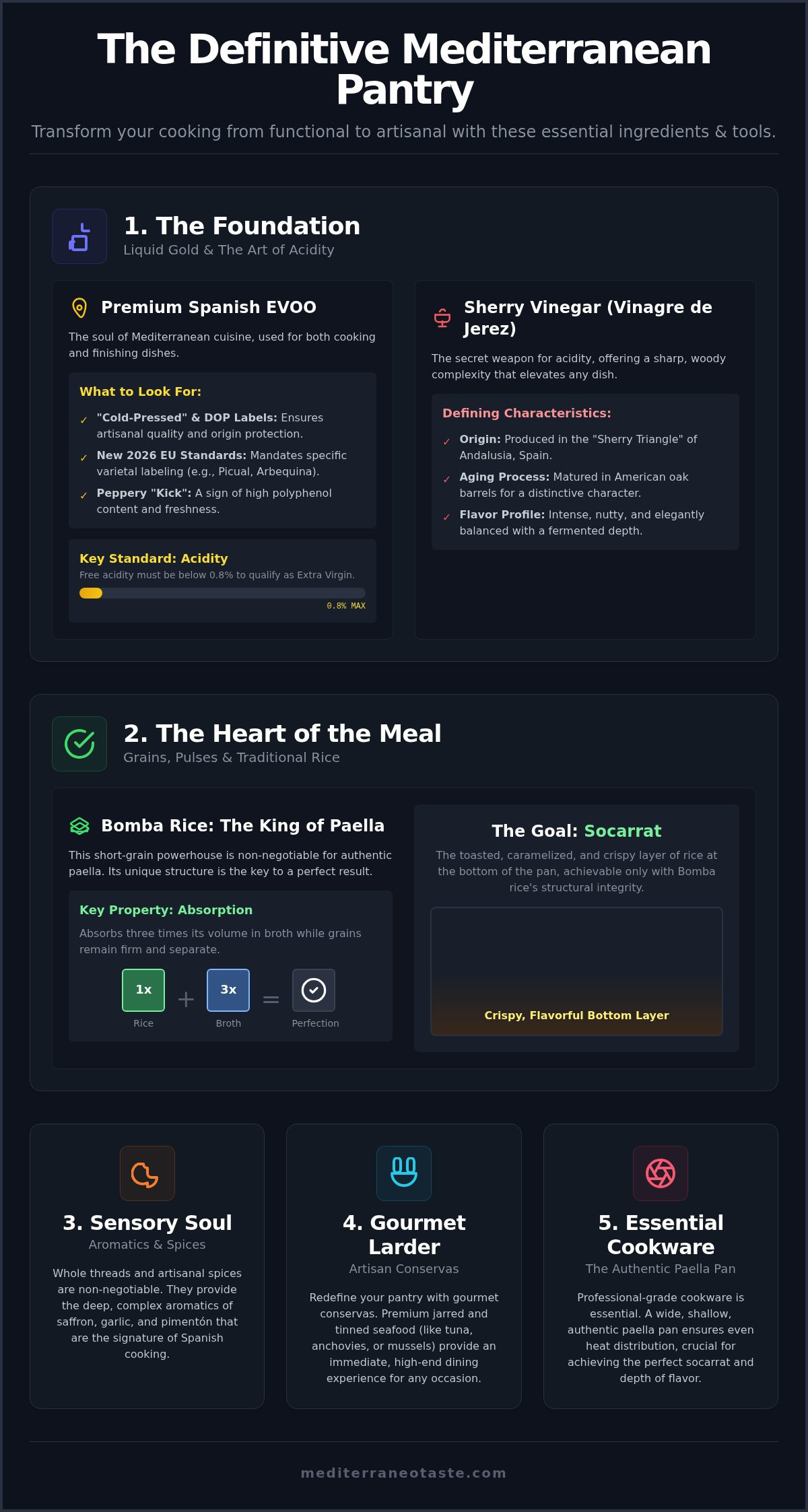
True quality is found in the details of the harvest. Look for "cold-pressed" and origin-protected (DOP) labels to ensure you're experiencing an artisanal product rather than a mass-produced blend. New EU marketing standards effective October 1, 2026, now mandate specific varietal labeling for oils. This means you can choose a peppery Picual or a buttery Arbequina with total certainty. Authentic EVOO must maintain a free acidity level of no more than 0.8% to meet international standards. When you taste it, look for a vibrant, peppery finish at the back of your throat. This "kick" is the sign of high polyphenol content and absolute freshness. With production slumps caused by extreme heat across Europe in 2026, every drop of this artisanal oil has become a rare luxury. Protect your investment by storing it in dark glass, far from the heat of the stove or the glare of the sun.
Sherry Vinegar and the Depth of Acidity
Vinagre de Jerez is the hidden secret of the gourmet larder. It offers a sharp, woody complexity that makes generic apple cider or white vinegars feel one-dimensional. Just a few drops will elevate a simple tomato salad or a slow-cooked stew into something extraordinary. It brings a nutty, fermented depth that lingers on the tongue. Sherry Vinegar gains its distinctive character through a patient aging process in American oak barrels within the legendary Sherry Triangle of Andalusia. This tradition ensures a flavor profile that is both intense and elegantly balanced. Invite this rare acidity into your kitchen and watch your flavors bloom.
The Heart of the Meal: Grains, Pulses, and Traditional Rice
The grains and legumes in your larder aren't mere fillers. They're the structural heartbeat of every authentic meal. While fats and acids provide the highlights, these staples offer the substance. According to Harvard on the Mediterranean Diet, a focus on plant-based foundations like these is what makes the region's eating habits so enduringly healthy and satisfying. In a curated collection of mediterranean pantry essentials, the quality of your grains determines the success of your final dish. They act as a neutral yet receptive canvas, absorbing the complex aromatics of saffron, garlic, and pimentón.
Texture is the defining characteristic here. A Mediterranean cook doesn't just look for softness. They look for bite. Whether it's the creaminess of a jarred white bean or the distinct separation of rice grains, the mouthfeel tells the story of the origin. For those seeking the most authentic results, choosing the right Mediterranean delicacies ensures your kitchen is stocked with heritage varieties that perform exactly as intended. High-quality grains provide the reliable base needed for spontaneous, gourmet entertaining.
Bomba Rice: The King of Paella
Authentic paella demands Bomba rice. Unlike standard long-grain varieties that become fluffy or sticky, Bomba is a short-grain powerhouse. It can absorb up to three times its volume in broth while remaining firm and individual. This unique structural integrity is what allows for the creation of the socarrat, the toasted, caramelized layer at the bottom of the pan. To maintain this moisture-absorbing magic, store your rice in a cool, airtight environment. Even a small amount of humidity can degrade its ability to soak up the rich flavors of your stock.
Artisan Legumes and Pulses
Jarred Spanish legumes are a revelation in convenience and luxury. These aren't the mushy canned versions found in generic supermarkets. Artisan pulses, like the buttery Garbanzo de Fuentesaúco or tender Alubias, are cooked to perfection before being jarred in simple salt and water. They're creamy, delicate, and ready for an immediate gourmet salad or a quick, warming stew. Keeping a variety of dried lentils and jarred chickpeas allows you to pivot from a light lunch to a high-protein feast without effort. They provide the earthy depth that makes Spanish cooking feel both rustic and refined.
Aromatics and Spices: The Sensory Soul of Spanish Cooking
Spices are the vibrant pigments of your kitchen. They transform the neutral foundations of grains and oils into vivid, sensory experiences that linger long after the meal is over. When you curate your mediterranean pantry essentials, you're building a library of flavor. Don't settle for pre-ground powders that have lost their volatile oils and spirit. Authentic Spanish cooking relies on the intensity of whole spices and threads. These ingredients provide more than just taste; they offer an olfactory journey that begins the moment you open the jar. It's the difference between a functional meal and a celebratory event.
Texture plays a silent but vital role in this aromatic landscape. Beyond the heat and the floral notes, the finish of a dish defines its character. Sea salt flakes are a non-negotiable requirement for the discerning host. Unlike standard table salt, these delicate crystals provide a clean mineral finish and a satisfying crunch. They don't just season; they elevate the texture of grilled meats and fresh vegetables alike. By choosing high-quality aromatics, you ensure your kitchen is always ready for spontaneous, gourmet entertaining.
Spanish Saffron: The Golden Standard
Authentic Spanish saffron is a luxury of patience and tradition. Look for threads with a deep crimson color and a slightly flared tip. This is the mark of a premium harvest. To release its full potential, you must engage in the sensory ritual of blooming. Gently crush the threads and steep them in a small amount of warm water or broth before adding them to your pan. Saffron is the most prized aromatic in the Mediterranean because of its labor-intensive hand-harvesting and the inimitable, honeyed floral depth it imparts to every dish. It's the ingredient that turns a simple rice base into a masterpiece of liquid gold.
Pimentón de la Vera: Smoked Paprika
Pimentón de la Vera is the secret to the rustic, earthy soul of Spanish cuisine. These peppers are dried over slow-burning oak fires in the Vera region, resulting in a distinct smoky depth that cannot be replicated. You'll need to choose the right intensity for your palate. Dulce offers a mild, sweet warmth; agridulce provides a complex bittersweet tang; and picante delivers a refined heat. This spice is a powerful tool for the modern cook. You can use it to add a robust "chorizo" soul to vegetarian stews or to give roasted vegetables a deep, flame-licked character. It's an essential pillar of the artisanal pantry.
The Gourmet Larder: Artisan Conservas and Jarred Treasures
Forget everything you know about standard canned goods. In a sophisticated kitchen, the larder isn't a place for backups; it's a gallery of artisanal discoveries. Conservas represent the pinnacle of Spanish food preservation. These are world-class seafood items, hand-packed at their peak of freshness and aged in tins to develop a complex, buttery profile. They are the ultimate mediterranean pantry essentials for the host who values both time and taste. Within moments, you can transition from a quiet evening to a curated seacuterie experience that rivals the finest tapas bars in Madrid.
The global canned seafood market is reflecting this shift in perception. It is projected to reach a value of approximately €35.5 billion by 2026. This growth is driven by a new appreciation for these jarred and tinned treasures as gourmet staples rather than emergency supplies. They offer more than just convenience. They offer a direct connection to the coast. Whether you're hosting an impromptu gathering or seeking a high-protein, artisanal lunch, these delicacies provide a level of refinement that few other shelf-stable items can match.
Premium Canned Seafood (Conservas)
Spanish conservas are celebrated by elite chefs for their unparalleled quality and texture. Start your collection with Ventresca de Atún, the prized tuna belly known for its delicate, silken flakes. Mussels in escabeche provide a tangy, vinegar-based punch, while sardines in olive oil offer a rich, mineral depth. For a chic, effortless presentation, serve these tins directly on a wooden board with a side of crusty bread. There's no need for elaborate plating. The tin itself is a mark of authenticity and craftsmanship. Let the quality of the seafood speak for itself.
Piquillo Peppers and Jarred Delights
Authentic Piquillo peppers from Lodosa are the jewels of the Spanish larder. These small, beak-shaped peppers are hand-picked and roasted over open flames, resulting in a sweet, slightly smoky profile that is entirely unique. They pair perfectly with white asparagus or jarred artichoke hearts to create an instant gourmet plate. Don't discard the packing oils or brines. These liquids are infused with the essence of the vegetables and act as incredible flavor starters for sauces or vinaigrettes. You can explore our full range of Mediterranean delicacies to find these rare, jarred treasures for your own kitchen.
Equipping the Mediterranean Kitchen: From Pantry to Pan
A perfectly stocked larder is only half the journey toward authentic flavor. To translate your collection of mediterranean pantry essentials into a culinary masterpiece, you need the right conduit for heat. Mediterranean cooking, particularly the heritage traditions of Spain, is defined by the intimate interaction between the flame and the metal. The right cookware isn't just a vessel. It's a heat conductor that determines the texture and soul of your dish. Investing in professional-grade tools ensures your kitchen ages with character, turning every meal into a celebratory event.
Transitioning from a curator of ingredients to a master of the kitchen requires a shift in perspective. You aren't just looking for functionality; you're looking for craftsmanship. High-quality tools like a traditional mortar and pestle or a hand-forged pan become heirlooms that carry the seasoned memories of every feast. These items allow you to move with the confidence of a sophisticated host, ready for spontaneous, gourmet entertaining at a moment's notice. When your tools match the quality of your ingredients, the results are consistently extraordinary.
Selecting the Perfect Paella Pan
The specific design of a paella pan is a marvel of culinary engineering. It is intentionally wide and shallow to maximize the surface area of the rice. This shape allows the broth to evaporate at an exact, even rate, which is the only way to create the socarrat. This toasted, caramelized layer at the bottom of the pan is the hallmark of a professional result. For those who enjoy the ritual of tradition, a polished carbon steel pan offers unmatched heat responsiveness. It requires a simple care ritual: wash by hand, dry immediately, and apply a thin veil of oil to protect the metal. If you prefer a lower-maintenance option, enamelled steel provides a durable, rust-resistant alternative that still delivers incredible depth of flavor.
Assembling Your Mediterranean Toolkit
A few specialized tools complete your artisanal sanctuary. A heavy stone or ceramic mortar and pestle is essential for hand-grinding saffron threads and garlic into a potent, aromatic paste. Long-handled stainless steel spoons allow you to distribute ingredients with precision without disturbing the rice once the simmering begins. For the home cook in Spain, a dedicated paella burner is often the secret to achieving professional heat distribution that a standard domestic stove cannot replicate. It ensures the flame reaches the very edges of your pan, cooking every grain to perfection. Ready to elevate your culinary game? Discover the professional-grade paella pans and ingredients at Mediterraneo Taste Spain and begin your journey toward authentic mastery.
Transform Your Kitchen into a Spanish Sanctuary
Mastering the art of Mediterranean flavor is a journey of sensory discovery. You now understand that the heartbeat of the kitchen lies in the quality of your foundation, from the peppery finish of cold-pressed oils to the structural integrity of heritage rice. By curating these specific mediterranean pantry essentials, you move beyond mere cooking and into the realm of artisanal craftsmanship. Every tin of smoked pimentón and every jar of creamy white beans is an invitation to explore the rich heritage of Spain from your own home.
The final step is ensuring your tools match the caliber of your ingredients. Whether you are seeking professional-grade paella pans for the home chef or artisan delicacies curated by experts, the right selection makes gourmet entertaining effortless. We offer an authentic Spanish origin guarantee for every item, ensuring your kitchen is equipped with the very best of regional tradition. Curate your own authentic Mediterranean pantry at Mediterraneo Taste Spain and experience the joy of true craftsmanship. Your next masterpiece is waiting to be discovered.
Frequently Asked Questions
What are the most essential spices for a Mediterranean pantry?
Pimentón de la Vera, Spanish saffron threads, and flaky sea salt are the most critical mediterranean pantry essentials for authentic results. These spices provide the foundational color and depth required for regional stews and rice dishes. Always prioritize whole threads and artisan-milled powders over generic supermarket versions. High-quality aromatics ensure your kitchen is ready for spontaneous, gourmet entertaining at a moment's notice.
Is there a difference between Spanish saffron and other varieties?
Yes, Spanish saffron is prized for its intense aroma and deep crimson color. Look for threads with slightly flared tips, which indicate a premium hand-harvested crop. This variety offers a honeyed, floral depth that is more refined than many mass-produced alternatives. It remains the most sought-after aromatic in the region because of the labor-intensive tradition required to produce even a single gram of these potent threads.
Can I use a regular frying pan instead of a paella pan?
No, a regular frying pan cannot replicate the results of an authentic paella pan. The specific wide, shallow design is essential for allowing liquid to evaporate at a precise rate. This process is the only way to achieve the socarrat, the prized caramelized crust at the base of the rice. Using the correct tool ensures your heritage ingredients perform exactly as intended for a professional finish.
What makes Spanish canned seafood (conservas) different from regular canned fish?
Spanish conservas are redefined as luxury items rather than simple pantry backups. These delicacies are hand-packed at the peak of freshness and often aged in premium olive oil to develop a silken, buttery texture. Chefs worldwide value them for their complexity and artisanal craftsmanship. Within moments, you can transform a single tin into a sophisticated seacuterie board that rivals the finest tapas bars in Spain.
How long do Mediterranean pantry essentials like olive oil and saffron last?
Extra virgin olive oil is best consumed within 12 to 18 months of its harvest date to maintain its vibrant peppery finish. Spanish saffron threads can last up to three years if you store them in a cool, dark environment away from direct light. Once opened, artisan vinegars and honeys remain stable for several years. Always check for the sensory signs of freshness, such as a bright aroma and clear color.
Which rice is best for making authentic Spanish paella?
Bomba rice is the undisputed king of the paella pan. This short-grain variety is unique because it can absorb up to three times its volume in broth without becoming sticky or losing its shape. This structural integrity allows each grain to remain individual while soaking up the complex flavors of your stock. Using any other rice often results in a mushy texture that lacks the traditional bite.
What is Pimentón de la Vera and how do I use it?
Pimentón de la Vera is a smoked paprika produced by drying peppers over slow-burning oak fires in the Vera region. It provides a deep, earthy soul to dishes that generic paprika cannot match. You can use the dulce variety for a mild warmth or picante for a refined heat. It is a powerful tool for adding a robust, flame-licked character to stews, roasted meats, and even vegetarian plates.
Do I need to refrigerate my olive oil or honey?
You should not refrigerate your olive oil or honey. Cold temperatures cause olive oil to become cloudy and solidify, while honey will crystallize much faster in the fridge. Instead, keep these staples in a cool, dark cupboard away from the heat of your stove. This storage method preserves the silken texture and aromatic profile of your premium delicacies for much longer.