

What makes a snack a good fit for your table? With gourmet Spanish nuts and snacks, the answer often comes down to what you enjoy: gentle sweetness, a deep toasted flavour, a crisp bite or a savoury edge. Product descriptions can make these differences hard to judge, especially when origin and preparation are described separately. The occasion matters too: a snack for aperitivo may call for a different flavour and format from a treat to share or give.
You don’t need to rely on elegant packaging or grand claims to choose well. This guide compares common nut and snack styles, explains what to look for in product descriptions and labels, and offers practical ideas for building a Spanish-inspired selection. Start with flavour and texture, then consider how each preparation suits the moment. For more Spanish and Mediterranean food inspiration, explore the delicacies and traditional Spanish products at Mediterraneo Taste Spain.
Key Takeaways
- Compare plain, roasted, salted, seasoned and sweet-coated styles by their flavour and texture, not by premium wording alone.
- Use a simple buying framework for gourmet Spanish nuts and snacks: start with the occasion, then weigh flavour, preparation, ingredients and format.
- Distinguish details about a product’s origin from descriptions of how it is prepared.
- Build an aperitivo, sharing spread or food gift with contrasting textures and flavours suited to the moment.
- Explore Spanish and Mediterranean food traditions to inspire a more thoughtful selection for your table.
What makes gourmet Spanish nuts and snacks worth choosing?
A Spanish-inspired snack selection can bring together three broad kinds of food: nuts, savoury bites and sweet treats. A handful of almonds, a crisp seasoned bite or a small chocolate-coated morsel each offers a different way to enjoy flavour and texture, whether served on its own or set out for guests.
Gourmet Spanish nuts and snacks are nuts and ready-to-eat bites chosen with attention to ingredients, preparation and enjoyment. Spanish culinary identity is worth considering separately from the origin of each ingredient. The word “gourmet” can suggest care, but it doesn’t guarantee a particular standard. Look for specific product details so you can judge what you’re buying.
Which foods belong in a Spanish nuts and snacks selection?
These categories are a useful starting point when deciding what to serve:
- Nuts: almonds or other nuts, served plain, roasted or with seasoning.
- Savoury bites: items such as crisps or roasted chickpeas, with a crisp or hearty bite. The wider Tapas, a cornerstone of Spanish snacking culture tradition also offers context for how small savoury foods can be enjoyed and shared.
- Sweet treats: snack-sized confections or nuts with a sweet coating, offering a contrast to salty and toasted flavours.
It’s also useful to distinguish a snack from a cooking ingredient. Nuts eaten by the handful are ready to serve; nuts intended for a dish may need chopping, soaking or toasting as part of a recipe. Product descriptions can clarify the intended use, although the same ingredient may work for both.
What does gourmet mean when you’re comparing snacks?
Start with specifics. An ingredient list tells you what the snack contains; preparation details such as roasted, salted or coated explain how it has been made. Sensory words can help you picture the result: a crisp bite, gentle sweetness or toasted, savoury finish. Together, these clues make it easier to compare products by what you’re likely to taste.
Then separate culinary identity from provenance. A Spanish-style flavour or a connection to Spanish food traditions doesn’t, by itself, establish where every ingredient was grown or where the product was made. Look for clear origin information, and treat packaging, premium wording and decorative references as presentation rather than proof. That same thoughtful approach can guide the discovery of Mediterranean delicacies at home, where different flavours can find a place at your table.
Choose with curiosity, not assumptions. Read the description, consider how the snack will be served, and let its ingredients and preparation guide your expectations. A selection feels considered when it suits your palate and occasion, not simply because it carries an impressive label.
Spanish nut and snack styles: compare flavour, texture and preparation
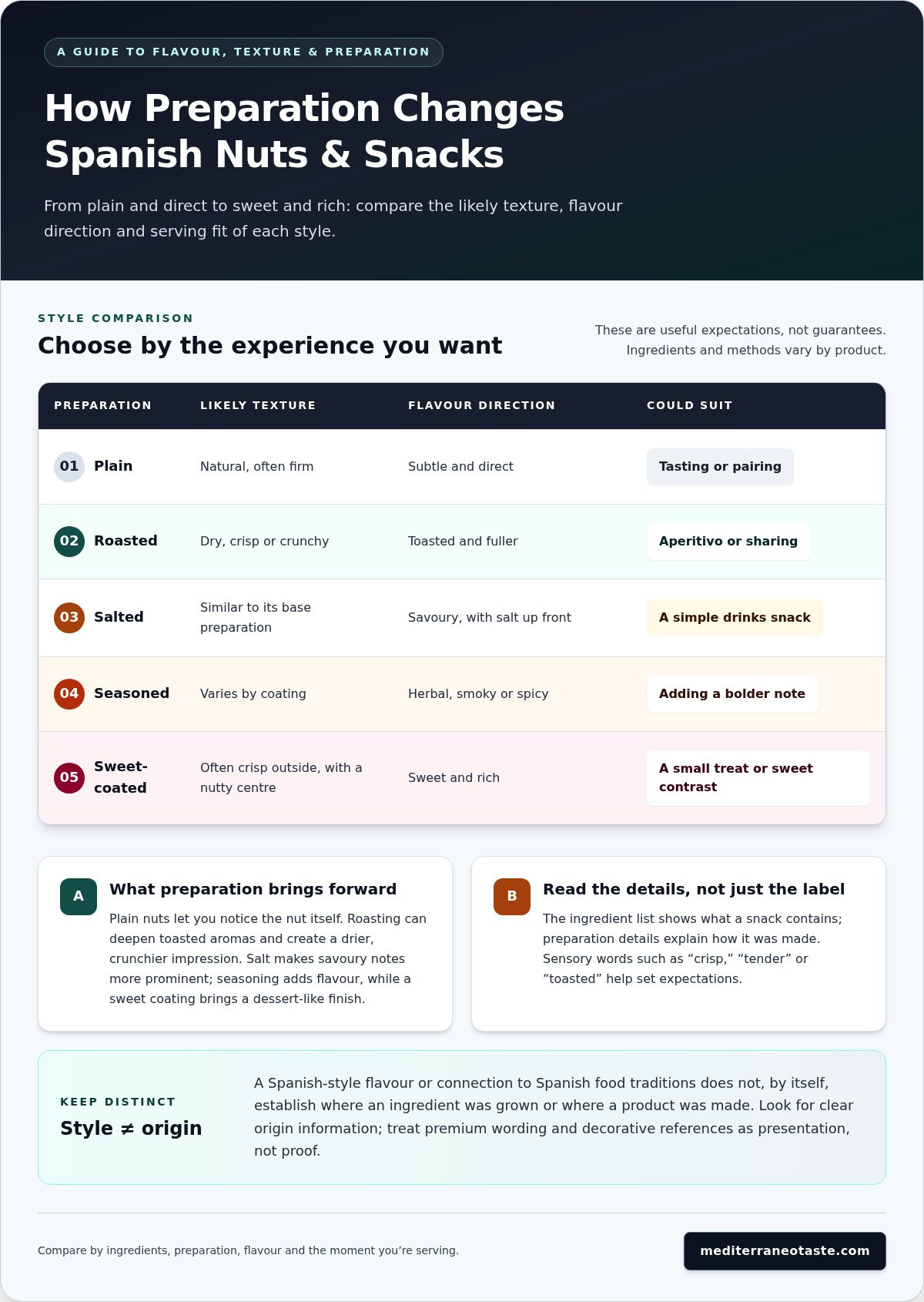
Preparation changes what you notice first. A plain nut gives you its natural taste, roasting adds a more pronounced toasted character, salt sharpens savoury notes, seasoning introduces extra flavour, and a sweet coating brings a dessert-like finish. Texture shifts too, from a firm bite to a crisp surface or tender centre. These are useful expectations, not guarantees, since ingredients and methods vary by product.
Use this comparison to decide what might suit your palate and occasion. Descriptions such as “crisp” or “tender” are most helpful when they appear in the product details.
Preparation
Likely texture
Flavour direction
Could suit
Plain
Natural, often firm
Subtle and direct
Tasting or pairing
Roasted
Dry, crisp or crunchy
Toasted and fuller
Aperitivo or sharing
Salted
Similar to its base preparation
Savoury, with salt up front
A simple drinks snack
Seasoned
Varies by coating
Herbal, smoky or spicy
Adding a bolder note
Sweet-coated
Often crisp outside, with a nutty centre
Sweet and rich
A small treat or sweet contrast
How do plain, roasted and seasoned nuts differ?
Plain nuts make a useful starting point. Their flavour is less shaped by added ingredients, so you can notice the nut itself and see how it pairs with other foods. Roasting can deepen toasted aromas and create a drier, crunchier impression, while salt makes savoury notes more prominent. Neither preparation is automatically better; choose according to the contrast or intensity you want.
Seasonings can add anything from gentle herbs to a more pronounced spice. Read the ingredient list to see what contributes the flavour, rather than relying on a short front-of-pack description. For background on the range of nuts associated with Spain, explore Spanish nut production and varieties.
How can you compare sweet and savoury Spanish snack styles?
Savoury snacks bring salt, spice or toasted notes; sweet styles lean towards sugar, chocolate or other coatings. A mixed selection can bridge the two, giving guests a choice and making each flavour feel more distinct. For a shared spread, combine a crisp bite with something more substantial, and explore ideas for Spanish-inspired appetizers and Mediterranean delicacies as you plan the table.
Choose based on the experience you want, not a fixed ranking. A delicate plain nut may work beside strongly flavoured food, while a seasoned bite can bring more character to a simple spread. For further inspiration on serving savoury snacks together, see authentic Spanish appetizers and tapas at home.
How to compare gourmet Spanish nuts and snacks before buying
A product page is most useful when you read it in a set order. For gourmet Spanish nuts and snacks, compare like with like: a plain nut and a heavily seasoned mix may suit different tastes, even if both appear in the same category. Use this five-step method to narrow your choices.
- 1. Set the occasion. Decide whether you’re choosing a snack for yourself, something to share or a small food gift.
- 2. Choose a flavour direction. Decide if you want a mild, toasted, salty, spiced or sweet profile.
- 3. Compare preparation. Check whether the item is plain, roasted, seasoned, coated or otherwise prepared.
- 4. Read ingredients and allergen information. Look beyond the front label, especially if particular ingredients matter to you or your guests.
- 5. Select a suitable format. Compare the stated pack size with how many people will enjoy it and how you plan to serve it.
Quick checklist: compare the stated origin, ingredients, preparation, allergen information, pack format and storage directions. Don’t assume details that the seller hasn’t provided.
Which label details help you make a fair comparison?
Look for named ingredients, a clear description of preparation and specific origin wording. These details answer different questions: an origin statement identifies what the seller says about where a product or ingredient comes from, while “roasted” or “seasoned” describes how it has been prepared. Keep each claim within its stated scope. If a page names a country of origin, don’t extend that into an assumption about a particular farm, producer or region.
Compare ingredient lists across similar items. A seasoning may include several ingredients, while a simpler preparation may list fewer. Review the allergen statement as well, and pay attention to ingredients relevant to your dietary needs. Product pages may present this information in different places, so scan the full description rather than relying on a short title or image.
How should pack size and freshness affect your choice?
Match the pack format to the occasion. A smaller amount may suit individual tasting; a larger format may make more sense for a group, provided it will be enjoyed in good time. Don’t guess how long a product will stay at its best after opening. Use the packaging’s storage directions and any stated date information to guide how you store and serve it.
Once you know the flavour, preparation and format you’re seeking, explore Mediterranean delicacies as part of a considered selection for your table. The aim isn’t to find the most elaborate description. It’s to choose a snack whose stated details fit your preferences, needs and plans.
Match Spanish nuts and snacks to aperitivo, sharing or gifting
The right snack depends on the moment. A pre-dinner aperitivo calls for small bites that invite a first taste; a relaxed gathering benefits from easy-to-serve variety; a food gift feels more personal when its flavours reflect the recipient’s preferences. Use nuts and snacks as accents within a broader spread, choosing contrasts rather than trying to build a rigid menu around them.
What makes a balanced Spanish-inspired aperitivo spread?
For aperitivo, keep the selection considered and easy to sample. Pair a crisp or crunchy bite with a contrasting savoury or sweet option, such as a simply prepared nut alongside a seasoned snack or small sweet treat. Offer modest portions so guests can try more than one flavour without filling the table with oversized servings.
Give each item its own small dish, and keep strongly flavoured choices distinct from milder ones. That makes the contrasts easy to notice and helps guests serve themselves. A broader pantry can add context to the occasion too. For inspiration on how Mediterranean ingredients and staples can work together at home, explore Mediterranean pantry ideas.
How can you choose snacks for sharing or gifting?
For relaxed sharing, prioritise easy-to-serve formats and a mix of familiar flavour directions. One mild, crunchy choice and one more savoury or sweet option can give guests variety without overwhelming the spread. Think about who’ll be eating: a small gathering may call for fewer choices, while a larger group may appreciate a broader selection. Keep the snacks alongside the rest of the food rather than treating them as the whole menu.
A considered food gift starts with the recipient, not the packaging. Think about whether they prefer sweet or savoury flavours, and review the ingredient and allergen information for anything they may avoid. Clear product details also make it easier to understand what the gift contains and how each item is prepared. Choose a presentation based on what the product page actually describes.
For any occasion, let contrast do the work. A toasted, savoury bite beside a sweeter one creates a different experience from a spread built around similar flavours. Texture can add another layer: pair a crisp option with something described as tender, or keep the selection uniformly crunchy if that’s what your guests enjoy. These are flexible cues, not rules. Choose gourmet Spanish nuts and snacks that suit the people at your table, then adjust the range and serving style to the occasion.
Ready to shape a Spanish-inspired spread around your own tastes? Explore Mediterranean delicacies for your table and let the wider food tradition spark ideas for sharing.
Discover gourmet Spanish nuts and snacks for your next table
Choosing with confidence doesn’t require a complicated formula. Start with the occasion, decide which flavours and textures you enjoy, then compare preparation, label details and format. That sequence helps you find gourmet Spanish nuts and snacks that fit your table, whether you’re planning a quiet aperitivo, gathering friends or choosing a thoughtful food gift. Let your own preferences lead, and treat clear product information as a practical guide rather than relying on grand language alone.
A simple final checklist before choosing
Before settling on a snack, pause for a quick sense check:
- Occasion: Does the style suit aperitivo, relaxed sharing, a solo snack or gifting?
- Flavour: Will its savoury, sweet, mild or more pronounced character work for the people who’ll enjoy it?
- Preparation: Does the product description explain whether it’s plain, roasted, seasoned or coated?
- Label clarity: Can you identify the stated ingredients, origin details and allergen information you need?
- Format: Does the pack size make sense for the intended use, and are storage directions available?
Keep claims in proportion to what’s written. A preparation description tells you how a snack is made; an origin statement tells you only what it specifically says. If a detail isn’t given, don’t fill the gap with an assumption. A clear, simple comparison is often more useful than a product description filled with enticing but unspecific phrases.
Make your next Spanish snack discovery
Think of choosing as part of a wider exploration of Spanish food traditions. A small change in preparation can shift the feel of a spread, while a contrast between savoury and sweet can make a familiar table more intriguing. There’s no single perfect combination. Choose a style you’re curious to taste, then build around what you and your guests genuinely enjoy.
Mediterraneo Taste Spain brings together Mediterranean delicacies and traditional Spanish food for enjoying at home. Explore Spanish ingredients and Mediterranean flavours, keeping your occasion, preferences and label checklist in mind. You’ll be better equipped to recognise which details matter to you and make a selection that feels considered, welcoming and suited to your table.
Explore Mediterranean delicacies and find inspiration for your next Spanish-inspired table.
Bring a taste of Spain to your next gathering
Let your next snack choice begin with a moment you want to create: a relaxed pause, a lively table or a small gesture for someone who loves good food. With gourmet Spanish nuts and snacks, curiosity is part of the pleasure. Try a flavour or preparation you haven’t chosen before, and let your own palate guide what earns a place on the table.
Mediterraneo Taste Spain brings together Mediterranean delicacies and traditional Spanish food for enjoying at home. Explore with an open mind, take time to discover the ingredients and traditions behind each find, and choose what feels right for your occasion. A thoughtful selection doesn’t need to be elaborate to feel memorable. Sometimes one appealing new taste is enough to inspire the next gathering.
Explore Mediterranean delicacies and Spanish food, and find inspiration for your next table.
Frequently Asked Questions
Are Spanish nuts different from other nuts?
Some Spanish-grown varieties have distinctive characteristics, but “Spanish nuts” covers different types and origins rather than one uniform flavour. For example, Marcona almonds are often described as rounder, softer and sweeter than common California almonds. Variety, growing conditions and preparation all affect the result, so check the product’s stated origin and type rather than assuming every nut associated with Spanish cuisine was grown in Spain.
How should I store gourmet nuts and snacks after opening?
Follow the storage directions on the packaging, as they’re specific to the product. In general, reseal the original pack or transfer the contents to a clean, airtight container, then keep it in a cool, dry place away from heat and moisture. If the snack has a coating or seasoning, avoid mixing it with other foods in storage, as flavours and textures can transfer. Use any date guidance on the label.
Can I serve Spanish nuts and snacks with drinks?
Yes. Savoury or lightly seasoned bites can complement drinks at an aperitivo, while a sweet snack can offer a pleasant contrast. For example, set out a mild option beside a more pronounced one so guests can choose what suits their drink. Serve a modest amount at a time and replenish if needed; this keeps the snacks fresh on the table and leaves room for other food.
What should I check for nut allergies when serving snacks?
Read the full ingredient and allergen information on each product, including any warning about traces or cross-contact. If someone has a serious allergy, don’t assume a snack is safe because nuts aren’t visible or because a product is described as a mix. Ask guests about their needs before serving, keep foods and serving utensils separate, and choose an alternative only when its label information is suitable for them.
Are roasted or raw nuts better for a Spanish snack board?
Neither is universally better; choose according to the rest of the spread and the flavour you want. Raw nuts can offer a milder counterpoint to strongly flavoured foods, while roasted ones may bring a more pronounced toasted note. If the board already includes rich or salty bites, a simpler nut can provide a quieter pause. For a lighter spread, roasting may add character without extra accompaniments.
How do I keep a Spanish snack selection balanced?
Think about variety across flavour, texture and intensity, then leave space for other foods on the table. A useful starting point is one familiar savoury choice, one contrasting flavour and one option for guests who prefer something milder. Keep allergens in mind, and offer serving spoons or separate dishes where appropriate. A balanced selection isn’t about having the most items; it’s about making each choice easy to enjoy.