

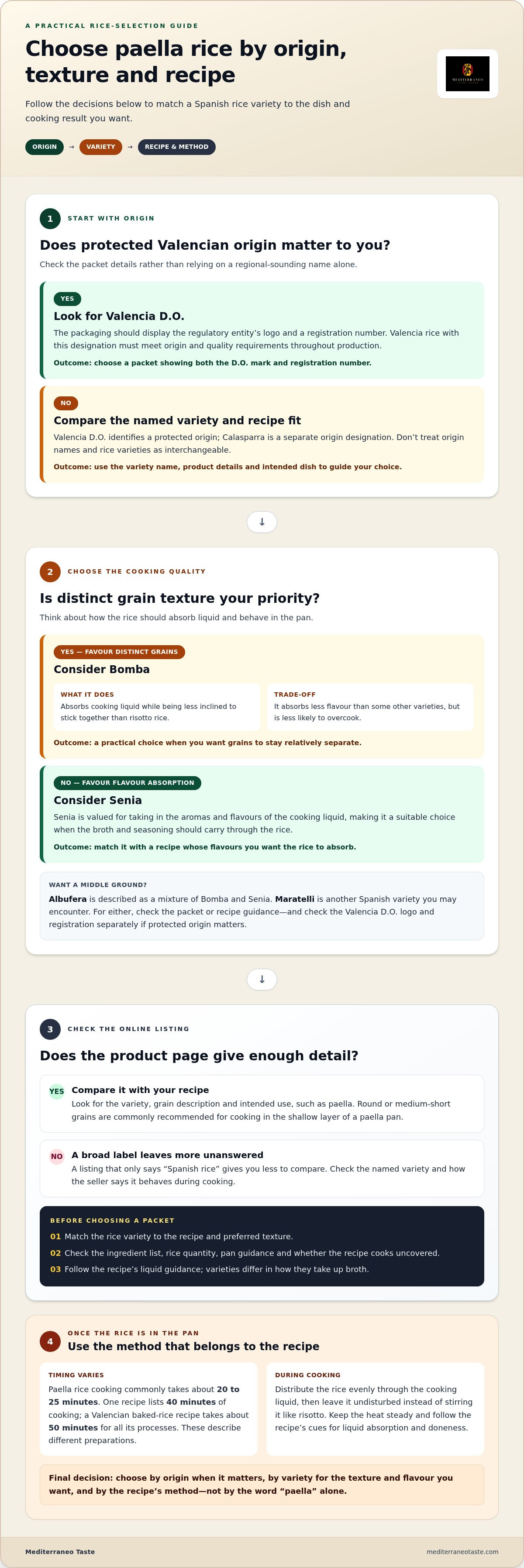
Choose traditional Spanish paella rice online by checking the variety and, if protected Valencian origin matters to you, the Denomination of Origin label. Valencia rice with this designation must meet origin and quality requirements throughout production, and its packaging displays the regulatory entity’s logo and registration number. Bomba, Senia and Albufera each bring different qualities to the pan.
It’s easy to focus on the word “paella” and miss the details that shape the dish: where the rice comes from, how it absorbs cooking liquid and which variety suits your recipe. This guide explains the Valencia designation, compares rice varieties for different paellas and shows what to look for when buying Spanish rice online in Spain. You’ll be better placed to choose a grain that suits both your dish and the meal you want to create.
Key Takeaways
- Look for the Valencia Denomination of Origin logo and registration number when protected origin matters to you.
- Compare Senia, Bomba and Maratelli by how each suits your preferred texture and cooking style.
- Choose rice with characteristics suited to paella, then match the variety to the dish you plan to make.
- Before ordering online, assess the product details and packaging information to make a more informed choice.
- Pair carefully chosen rice with suitable paella equipment for a more considered cooking experience.
WHAT DOES VALENCIA RICE WITH DENOMINATION OF ORIGIN MEAN?
- Look for the Denomination of Origin, or D.O., mark when Valencian provenance matters. Valencia rice carrying this designation must meet origin and quality requirements at every stage of production. The packaging displays the regulatory entity’s logo and a registration number. These details distinguish protected Valencia rice from a packet that simply uses “Valencia” as a regional description.
- Read the variety name as well as the origin label. Bomba, Calasparra and Valencia are names you may encounter when choosing Spanish rice for paella, but they don’t all mean the same thing. Valencia D.O. identifies a protected origin; Calasparra is a separate origin designation. Check the designation and variety printed on the packet rather than treating the names as interchangeable.
- Choose round-grain rice for the characteristic texture of paella. Its rounded shape and ivory-white colour are useful visual clues, but the variety also affects how the grains behave in the pan. Bomba is a familiar choice for traditional paella: it absorbs cooking liquid and is less inclined to stick together than risotto rice. That makes it a practical option when you want distinct grains.
- Consider Senia when absorbing flavour is a priority. Senia is valued for taking in the aromas and flavours of the cooking liquid, adding depth to the finished dish. Bomba may be a practical choice if you want rice that is less prone to overcooking, though varieties can differ in how much flavour they absorb. Choose according to the texture and flavour you want, not just the name on the packet.
- Compare Albufera and Maratelli by their variety names and the cooking guidance on the packet. Albufera is described as a mixture of Bomba and Senia, combining two varieties with different cooking qualities. Maratelli is another variety to recognise when comparing traditional Spanish rice. Don’t assume every named variety carries Valencia D.O.; check for the logo and registration separately. When buying traditional Spanish paella rice online, use both the variety and origin details to guide your choice.
WHERE TO BUY RICE FOR PAELLA ONLINE?
- Start with the product description, not the photograph. Look for a named rice variety, a grain description and an intended use, such as paella. Round or medium-short grains are commonly recommended for cooking in the shallow layer of a paella pan. A listing that only says “Spanish rice” gives you less to compare. Note whether it’s Bomba, Senia or another variety, then match it to your recipe and preferred texture.
- Check whether the seller explains how the rice behaves during cooking. Bomba, for example, can absorb cooking liquid while keeping the grains relatively separate. That matters in seafood paella, where broth and ingredients contribute flavour. A recipe should name its rice variety or explain suitable substitutions. Don’t assume every rice cooks identically: grain type, pan shape, heat distribution and liquid all affect the result.
- Use a recipe or cooking tutorial that matches your dish. A seafood paella recipe may account for liquid released by seafood, while Valencian paella follows a different ingredient tradition. Check the ingredient list, rice quantity, pan guidance and whether the recipe expects the rice to cook uncovered. These details help you choose a packet that suits the method, rather than adapting the recipe after cooking has begun.
- Plan around the stated cooking time, but distinguish rice cooking from the whole recipe. Paella rice cooking commonly takes about 20 to 25 minutes. One recipe lists 40 minutes of cooking, while a Valencian baked-rice recipe takes about 50 minutes for all its processes. Those figures describe different preparations. Follow the timing for your chosen recipe, and observe the rice near the end rather than relying on a timer alone.
- Follow the recipe once the rice enters the pan. Distribute the rice evenly through the cooking liquid, then leave it undisturbed instead of stirring it like risotto. Stirring can release starch and change the texture. Keep the heat steady and follow the recipe’s cues for liquid absorption and doneness. If it adds seafood later, follow that sequence; timing depends on both the rice and the seafood.
Rice varieties for different paella dishes
- Start with the dish, then choose its rice. Traditional Valencian paella is distinct from seafood paella and other Spanish rice dishes. A Valencian version may include chicken, rabbit, green beans, carob, tomato, olive oil, saffron and sweet paprika. Bomba is among the varieties used for traditional paella. For a seafood recipe, follow its stated variety and method rather than assuming every paella uses the same grain.
- Choose Bomba when you want a more forgiving cooking experience. Its grains absorb cooking liquid without sticking together like risotto rice. Bomba is also less likely to overcook, which can help newer cooks manage the final texture. There is a trade-off: it absorbs less flavour than some other varieties. In a richly seasoned recipe, that may matter less than keeping the grains distinct.
- Choose Senia when the recipe’s aromas and broth are central to the finished dish. Senia is valued for absorbing flavours and aromas, making it a suitable choice when you want the rice to carry the seasoning through each bite. Follow the recipe’s liquid guidance, since rice varieties differ in how they take up broth. Keep the pan’s heat even and avoid stirring once the rice cooks.
- Consider Albufera when you want a variety described as a blend of Bomba and Senia. This brings together two named rice types with different qualities. Use the instructions supplied with the recipe or packet to guide cooking. Maratelli is another Spanish variety you may encounter. Treat its name as a useful selection detail, then match it with a recipe that specifically recommends it.
- Compare the variety and origin label as separate details. Valencia and Calasparra refer to rice origins or designations, while Bomba, Senia and Maratelli identify varieties. A packet can therefore tell you more than one thing. For example, check whether it names Bomba and carries a protected-origin mark. This distinction helps you choose rice for a particular dish without confusing its variety with its provenance.
- Avoid Arborio and long-grain rice as substitutes when a recipe calls for Spanish paella rice. Their cooking characteristics differ from those of the round-grain rice commonly chosen for paella. If your recipe names Bomba, Senia or Albufera, use that variety when possible. If it names another grain, follow its guidance rather than making a direct swap. Start with the dish’s ingredients and intended texture.
Buying Spanish paella rice online
- Match the product listing to your planned paella recipe. Look for the rice variety, grain type, pack weight and origin details. A listing for Bomba rice, for example, gives you a clearer starting point than a generic “paella rice” label. If the recipe names Senia or another variety, compare that name directly with the product description. This helps you avoid choosing rice based only on attractive packaging or broad claims of authenticity.
- Compare pack sizes with how you cook. Spanish rice listings may use formats such as 500 g or 1 kg, so consider how much rice your recipes need and how often you prepare them. A smaller pack can suit occasional paella nights; a larger pack may make sense when rice dishes appear regularly on your menu. Check whether the pack can be resealed after opening, then store it closed in a cool, dry cupboard.
- Assess freshness by checking the information on the packet and the condition of the packaging. Before ordering, look for a clearly printed best-before date and intact, sealed packaging. When your parcel arrives, check that the bag hasn’t split or become damp. Rice should remain dry and free-flowing. Keep the date visible in your cupboard and use older opened packs before newer ones.
- Read the origin and variety details separately. A named Spanish region describes provenance, while Bomba or Senia identifies the rice variety. If protected Valencia origin matters, look for its designated logo and registration details on the packet. Then compare the rice with your recipe. Valencian paella with saffron, garlic and paprika has a different tradition from seafood paella, so choose rice for the dish you plan to cook.
- Use the seller’s cooking guidance to judge whether a listing suits your kitchen. Check whether it explains liquid absorption, cooking method and suggested uses, then compare those notes with your recipe. Bomba is described as absorbing up to three times its volume in water without becoming soggy, but results still depend on the recipe and pan method. Keep the variety consistent when repeating a successful dish. Record the packet name and your cooking notes for next time.
How can I check whether paella rice sold online is authentic and fresh?
- Read the product title and full description before ordering. Look for a named variety, such as Bomba, Senia or Maratelli, rather than relying on a broad label like “paella rice”. Check that the description identifies rice from Spain and gives the pack size. A clear listing lets you compare the grain and origin details with your recipe instead of relying on a styled photograph.
- Check the packaging details shown in the listing. For Valencia rice with Denomination of Origin, look for the regulatory entity’s logo and registration number. The designation means the rice must meet origin and quality requirements throughout production. Treat the origin mark and variety name as separate clues: a Bomba variety name alone doesn’t establish protected Valencia origin.
- Inspect the date and seal when the parcel arrives. Find the best-before date on the packet, then check that the packaging is intact, dry and free from tears. A split or damp bag can affect storage quality. Once opened, transfer the rice to a clean, dry, airtight container and keep the date visible. Use older opened rice before newer purchases to rotate your cupboard stock.
- Examine the grains before cooking. A dry, free-flowing appearance is a useful first check; clumping, dampness or an unusual smell can signal a storage problem. Compare the grains with the product description, such as round Bomba rice or medium-short grains. Appearance can help you assess the packet, but it can’t prove protected origin on its own. Keep the label until you’ve cooked the rice.
- Test the rice in a recipe that identifies its variety. Follow the packet’s cooking guidance and note how the grains absorb broth, hold their shape and finish in the pan. For example, record whether Bomba stays distinct in your chosen paella recipe. Keep the variety, pack date and cooking notes together. This simple record helps you compare future purchases and recognise consistent results.
Once you’ve chosen your rice, explore Spanish paella essentials to complete your cooking setup.
When comparing options, make sure the listing describes the pack you expect to receive, rather than relying on a product image or a general category label. Arroz Bomba Extra is sold in a resealable 1 kg pack. Check that the listing identifies this product and pack size, and compare those details with the information on the parcel when it arrives. If the listing leaves a detail unclear, resolve that before ordering so you can assess the item against the description you chose. Keeping the rice package available also makes it easier to retain its variety and storage information after opening.
If you are buying broth for the same meal, check its listing and packaging separately from the rice. The fish paella broth is sold in a 1-litre carton. Confirm that the carton delivered matches the product and quantity shown in the listing, and check its condition when it arrives. Keeping the rice and broth details distinct helps you track what you used in a particular preparation, rather than assuming the ingredients share the same storage or packaging information. Use the label on each item as your reference when planning how to store and use it.
Mediterraneo Taste Spain: Mediterranean Delicacies
Mediterraneo Taste Spain offers Mediterranean delicacies and essentials for enjoying paella at home. Once you’ve chosen rice for your recipe, the right pan can help you prepare the dish using its intended method. Explore a paella pan for cooking, or consider a complete paella kit option if you’re assembling key items for your setup. These products help home cooks build a Spanish-inspired meal around carefully selected rice and ingredients.
When you’re ready to move from choosing rice to preparing paella at home, explore the range at Mediterraneo Taste Spain and choose what suits your cooking plans.
Visit Mediterraneo Taste Spain to explore the selection and buy traditional Spanish paella rice online.
Bring your next paella to the table
Turn your rice choice into a meal worth sharing. As you browse traditional Spanish paella rice online, consider the dish you want to make and the kind of cooking experience you want. Let that guide your next step, from planning the recipe to setting the table.
Good paella begins with a thoughtful choice and comes together through the pleasure of cooking and sharing. Make your next meal an invitation to explore Spanish flavours at home.
Contact Mediterraneo Taste Spain and take the next step towards your Spanish-inspired meal.
Frequently Asked Questions
What rice varieties are traditionally used for Spanish paella?
Bomba and Senia are familiar varieties, while Albufera and Maratelli also appear in Spanish rice selections. Choose according to the recipe’s intended texture and cooking method. A recipe naming Bomba, for example, gives you a clear starting point for traditional paella; a dish focused on absorbing broth aromas may suit Senia. Keep the variety consistent when repeating a recipe so you can compare results.
Where can I buy authentic paella rice online in Spain?
Choose an online food retailer serving Spain that identifies the rice variety, growing origin and pack format on its product page. If protected origin matters, look for the relevant designation and packaging marks rather than relying on a general “Spanish rice” description. Compare these details with your recipe before ordering. Once delivered, inspect the seal and date, then store the rice dry and closed.
Which Spanish brands sell traditional paella rice online?
Spanish rice is sold under producer and retail brands, with product ranges often organised by variety, such as Bomba or Calasparra rice. The brand name alone doesn’t establish the rice’s variety or protected origin. Read the product label for those details, along with the pack size and cooking guidance. This makes it easier to compare listings and select rice that fits your recipe.
How much does paella rice cost online in Spain per kilogram?
The per-kilogram cost depends on the variety, pack size, origin designation and seller. Compare the listed pack price with its weight to work out the unit cost, especially when comparing smaller and larger packets. Treat delivery charges separately, since they affect the total order rather than the rice’s unit cost. Check the final basket total before placing your order.
How do paella rice varieties such as Bomba, Senia, and Calasparra compare?
Bomba and Senia are variety names, while Calasparra refers to a protected rice origin. Bomba is often selected for distinct grains; Senia is valued for absorbing cooking aromas. Calasparra rice may be sold in different varieties, so read beyond the origin name. For seafood paella, follow the recipe’s named rice and cooking instructions rather than assuming origin alone determines how the grain behaves.
What is the difference between DOP-certified Calasparra rice and other paella rice?
DOP identifies a protected designation of origin, linking a product to a defined region and its production requirements. Calasparra DOP is distinct from Valencia rice carrying its own Denomination of Origin. Other paella rice may still be Spanish and suitable for a recipe, but it doesn’t carry the same protected-origin designation. Check the packet for the DOP mark and stated origin.
How much rice should I use per person for paella?
Allow about one-third of a cup, or 60 g, of rice per person as a practical recipe starting point. For a shared meal, multiply that amount by the number of diners, then check the recipe’s quantities and pan dimensions. A seafood recipe may include ingredients that add substance, while a rice-focused dish may call for a more generous portion. Measure the dry rice before cooking.
How much liquid does traditional Spanish paella rice absorb?
Liquid needs depend on the rice variety and recipe. A commonly used guide is one cup of rice to three cups of liquid, while one recipe recommends two cups of liquid per cup for medium-grain rice. These are recipe ratios, not a universal absorption guarantee. Seafood can release extra liquid, so follow a seafood recipe’s adjusted quantities rather than applying a general ratio unchanged.