

The best Valencian paella starts with ingredients chosen for the dish, not simply labelled “gourmet”. A gourmet paella ingredients shop should make it easier to find products suited to Spanish rice dishes, where each ingredient contributes to the finished flavour. Start with the recipe you plan to cook, then choose ingredients that match its style rather than building a basket around appealing labels alone.
A premium-looking package does not automatically mean a product is right for your recipe. What matters is how each ingredient fits the dish. A considered selection can bring the preparation together and let the flavours come through without unnecessary additions.
This guide explains how to compare ingredient labels, brands and products for Valencian paella. It also distinguishes this style from other Spanish rice dishes, helping you shop for the meal you want to prepare. Use these pointers to build a focused pantry and make your next paella with confidence.
Key Takeaways
- Choose rice and seasonings with the cooking style in mind, especially when preparing traditional Valencian paella.
- Learn what saffron, ñoras, pimentón and paella colourant each contribute before selecting ingredients.
- Use ingredient labels to compare origin, type and suitability rather than relying on premium-sounding packaging.
- Keep the defining ingredients of Valencian paella distinct from those used in seafood and other regional rice dishes.
- Consider how a suitable paella pan and a thoughtfully chosen ingredient kit can make preparation more straightforward.
Rice, olive oil, saffron, ñoras, spices and paella colorant
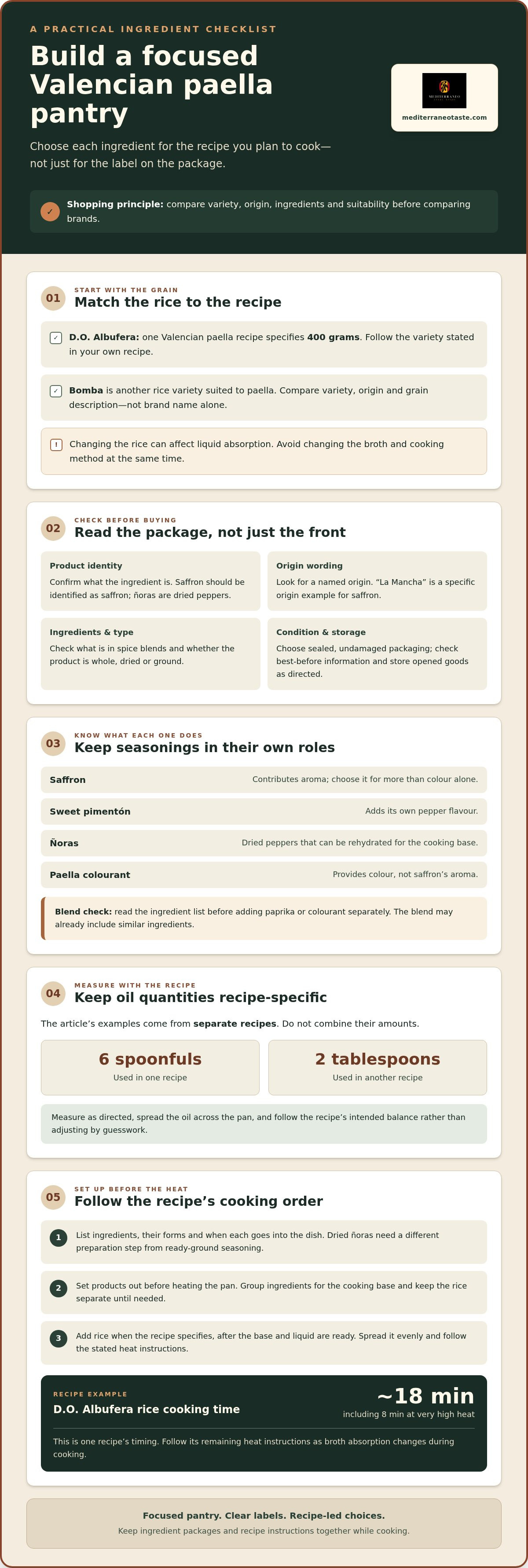
- Match the rice to the result your recipe describes. D.O. Albufera rice appears in a Valencian paella recipe using 400 grams, while Bomba is another variety suited to paella. Compare the variety, origin and grain description on each package rather than choosing by brand name alone. For a new recipe, follow its specified variety first. Changing rice can affect how the grains take up liquid, so avoid changing the broth and cooking method at the same time.
D.O. Albufera and Bomba are strong choices for paella. Their cost depends on variety, origin and package size, so compare products on those details.
- Check the label and packaging for product identity, ingredients, stated origin and best-before information. Saffron should be clearly identified as saffron; ñoras should be sold as dried peppers, not mistaken for powdered seasoning. Choose sealed, undamaged packaging and store opened products as directed. For Spanish provenance, look for a specific origin statement instead of relying on Spanish imagery or broad terms such as “traditional”.
La Mancha, for example, is a named origin for saffron. Clear origin wording gives you a useful basis for comparing products.
- Measure olive oil according to the recipe you’re following. One recipe uses six spoonfuls, while another uses two tablespoons. Those instructions belong to separate recipes, so don’t combine the amounts. Spread the oil across the pan before cooking the ingredients. This helps the cooking base develop evenly and lets you follow the recipe’s intended balance rather than adjusting by guesswork.
- Give each seasoning a distinct role. Saffron contributes aroma, while sweet pimentón adds its own pepper flavour. Rehydrated ñoras can be prepared for the cooking base, but they are not interchangeable with paprika. Paella colourant provides colour, not saffron’s aroma. Read the ingredients in a spice blend before adding paprika or colourant separately, as the blend may already include similar ingredients.
- Add the rice at the stage specified by your recipe, after the cooking base and liquid are ready. Spread it evenly through the pan so the grains cook in a consistent layer, then follow the recipe’s heat instructions. A D.O. Albufera recipe gives rice a cooking time of about 18 minutes, including eight minutes at very high heat. Use the remaining instructions to judge the final heat, since broth absorption changes as cooking progresses.
Keep the recipe and ingredient packages together while cooking. This makes it easier to match the rice and seasonings to the method, and to remember which ingredient you might adjust next time.
D.O. Albufera and Bomba are strong choices for paella. Their cost varies with variety, origin and package size, so compare those details when shopping.
Paella made with ingredients from Spain
- Plan your recipe before choosing Spanish ingredients. List the products you need, their forms and when they go into the dish. For instance, a recipe using dried ñoras needs a different preparation step from one using ready-ground seasoning. A specific list helps you compare similar products and avoid buying extras that do not belong in the paella you plan to cook.
- Spanish delicatessens, specialist food shops, market stalls and online retailers focused on Spanish products are places to look for paella ingredients. Selection varies, so compare product descriptions and labels rather than assuming every shop carries the same range. A retailer listing rice, olive oil and seasonings separately can suit a recipe that calls for specific quantities.
- Check whether the product’s origin is clearly described. A Spanish flag on the package does not identify where an ingredient was produced. Look for a named origin or region, then compare it with your recipe’s requirements. “La Mancha”, for example, is more specific than a general Spanish-style description. Keep the package details or note them so you can find the product again.
- Ask whether Spanish online food shops deliver nationwide or internationally by reviewing the destinations each seller serves. Delivery coverage varies by shop, destination and product type. Dry pantry goods and fresh ingredients may have different delivery arrangements, so consider what your basket contains. For an order containing rice, spices and fresh produce, read each product’s details and the shop’s delivery information before choosing the basket.
- Assess dry goods by checking the best-before information, seal and package condition. For fresh produce, choose items that look sound and suit the day you plan to cook. Keep rice and spices sealed after opening, and store them according to the label. An organised pantry also helps distinguish similar products, such as whole dried peppers and ground seasoning.
- Prepare ingredients in the order your recipe requires. Set out the products before heating the pan, then group them by cooking stage. For example, place the ingredients for the base together and keep the rice separate until it is needed. This avoids pausing to open packages as you cook. Note the product names afterwards if you plan to repeat the recipe.
Herbs and spices
- Read each spice label before choosing a blend. A Valenciana spice pack may combine seasonings for paella, while separate jars let you adjust each flavour individually. Check whether the listed ingredients include paprika, saffron or colourant, especially if your recipe already calls for them. Adding extra paprika without checking the blend, for example, can make the seasoning dominate the rice.
- Choose saffron for aroma, not simply colour. La Mancha saffron is one Spanish option, and a small paella ingredient set may include 0.5 grams. That package quantity describes the set, not a universal recipe measure. Saffron threads should be recognisable in the pack. Use the quantity specified by your recipe, and let the threads infuse in warm cooking liquid before distributing them through the paella.
- Compare sweet pimentón with paprika by reading the ingredient name and origin. One small paella ingredient set includes 75 grams of sweet pimentón. Another recipe specifies one teaspoon of La Vera paprika, while a different recipe uses one teaspoon of paprika. Treat those as separate recipe instructions, not amounts to combine. Add paprika carefully to the sofrito, where it can flavour the oil and vegetables.
- Use a Valenciana spice blend as a guide, not a reason to skip the recipe. A set may include one pack of Valenciana spices, but blend composition can differ. Read the ingredients and compare them with your recipe’s seasonings. If the recipe already includes paprika or saffron, adjust the rest of the seasoning accordingly. This keeps the finished flavour balanced and makes the role of each ingredient easier to judge.
- Keep ñoras separate from dried herbs and powdered spices. These dried peppers have their own flavour and need preparation before they are added to the sofrito, the cooking base. Rehydrate them, remove the flesh from the skin and work the flesh into the base. Follow your recipe for the amount. Their peppery depth differs from pimentón, so do not treat the two as interchangeable.
- Protect the aroma of spices after opening. Transfer them to clean, tightly sealed containers and store them away from heat, sunlight and dampness. Label each container with the ingredient name and opening date. This helps you identify saffron, pimentón and Valenciana spice blends when you next cook. Smell the seasoning before use, as a faded aroma may contribute less character.
The Large Size Paella Kit includes 1,5 grams of saffron from La Mancha. Treat that as the kit’s supplied quantity, rather than an instruction to use it all in the dish. Let your recipe determine how much saffron to add, and keep any remainder sealed for later use. When preparing the threads, give them time to infuse in warm cooking liquid so their aroma can spread through the rice. Taste the cooking liquid before adding further seasoning, especially if the recipe already includes a Valenciana blend. This keeps the saffron’s aroma distinct and helps prevent the combined seasonings from overwhelming the paella.
Paella ingredient brands
- Compare retailers by the product information they provide. Specialty food shops, Spanish delicatessens, market stalls and online Spanish food retailers may carry paella ingredients. Look for descriptions that name the variety, origin, ingredients and pack size. “Paprika” alone gives less guidance than a description that specifies its style and origin. Clear details help you judge whether a product suits your recipe.
- Spanish specialty shops and online stores are practical places to find paella ingredients. Spanish delicatessens and specialist spice retailers may also carry relevant products. A gourmet paella ingredients shop can bring several categories together, while a spice specialist may offer a narrower selection. Compare the product details with your recipe and choose the ingredients that fit.
- Assess brands by the information on the package, not its presentation alone. For rice, compare the named variety and origin. For saffron, check whether it is threads or powder. For paprika, look for a named style, such as sweet pimentón or La Vera paprika. A brand name helps you find a product again, while the label tells you what you are buying.
- For saffron, Spanish paprika and paella stock, look at Spanish food shops and delicatessens. Specialist spice retailers are another place to find saffron and paprika. Stock may be available as prepared broth, or you can choose ingredients to make it from scratch. Read the product details and consider how the stock’s flavour and seasoning will work with your recipe.
- Compare like with like before choosing between brands. Review the net quantity, ingredient list, origin and storage instructions. For saffron, compare its form, stated origin and pack size rather than judging the package design. For paella stock, read the ingredient and seasoning details. A strongly seasoned broth can shape the dish’s flavour, so account for it when selecting other seasonings.
- Use a gourmet paella ingredients shop to build a consistent pantry, not as a reason to buy every specialty product. Choose ingredients for one planned recipe, then note their brand names and your impressions after cooking. Changing several products at once makes it harder to tell which affected the result. Change one ingredient next time and compare.
- Store ingredients according to their package instructions. Keep opened spice jars sealed, and return rice and other dry goods to a cool, dry cupboard. Follow the label’s directions for stock, as storage depends on whether it is unopened, opened or freshly prepared. Keep packages identifiable so you can distinguish similar products and repeat a recipe with the same ingredients.
Look at Spanish delicatessens, specialist spice retailers, Spanish-focused food shops, market stalls and online Spanish food retailers. Compare descriptions for variety, origin, ingredients and pack size.
Traditional Valencian paella ingredients
- Build the dish around its defining ingredients, not a generic paella mix. A Valencian paella recipe for four people uses 1 kilogram of chopped chicken, 500 grams of chopped rabbit, 200 grams of green beans and 100 grams of butter beans. These quantities give you a practical shopping list and keep the recipe distinct from seafood paella. Treat the listed amounts as a complete starting point, not an invitation to add every available topping.
- Prepare the chicken and rabbit before heating the pan. Cut them into suitable pieces and check the quantities against your recipe. Browning the meat in the paella pan builds a savoury base before the vegetables and liquid go in. Keep the ingredients ready beside the pan so you can add each one in sequence without interrupting the cooking.
- Add green beans and butter beans as the recipe directs. Their roles differ: green beans cook into the base, while butter beans bring a softer, creamy texture. The recipe uses 200 grams of green beans and 100 grams of butter beans. It can also include 4 or 5 artichokes, an optional addition rather than a requirement. Keep optional vegetables measured and deliberate.
- Make the cooking liquid from the browned ingredients and the recipe’s seasonings. Allow the paella broth to boil for approximately 20 minutes before adding rice. This stage gives the chicken, rabbit and vegetables time to flavour the liquid. Taste the broth before the rice goes in, then adjust the seasoning while changes remain possible. Once rice is added, the cooking process needs closer attention.
- Spread the rice evenly through the pan and follow the recipe’s heat sequence. The D.O. Albufera recipe gives the rice a cooking time of about 18 minutes, with very high heat for the first 8 minutes. If little or no broth remains near the end, cook for 4 minutes at very low heat. If plenty remains, use medium heat for those final 4 minutes. Rest the paella for 5 minutes after removing it from the heat.
- Keep the final plate recognisably Valencian. Chicken, rabbit, green beans and butter beans form the core of this four-person recipe; artichokes remain optional. Seafood additions change the dish’s style, so prepare them as a separate regional variation. For the right cooking surface, explore an authentic Spanish paella pan suited to preparing paella at home.
The recipe is for Valencian paella for 4 people. Before cooking, check that the chicken, rabbit, green beans and butter beans are ready in the quantities already planned, and keep the optional artichokes separate until you decide whether to use them. This makes it easier to preserve the recipe’s intended balance without turning the ingredient list into a collection of extras. Arrange the ingredients beside the pan in the order they will be added, and keep the rice apart until the broth has had its cooking time. With the ingredients prepared in advance, attention can stay on the pan, the liquid and the change in heat rather than on last-minute chopping or searching.
Mediterraneo Taste Spain: Mediterranean Delicacies
Mediterraneo Taste Spain brings together Mediterranean Delicacies and Paella for cooks choosing ingredients and equipment for a Spanish-inspired meal. If you’ve settled on a Valencian recipe, a paella kit can help organise key elements around your cooking plans, while a suitable paella pan gives the rice room to cook in an even layer. Choose the option that matches your recipe and the way you like to prepare paella. The focus is practical: bring carefully selected food and the right cooking surface together, then follow your chosen method. Explore the range to find a fitting next step for your kitchen. Visit Mediterraneo Taste Spain online to explore the selection or contact Mediterraneo Taste Spain with your enquiry.
Make your next paella your own
Use your next paella to refine your approach. Choose a recipe, gather the ingredients it calls for and note what you might adjust next time. A well-chosen gourmet paella ingredients shop can help you find products for that plan, while your tasting notes guide future choices. Try a different rice variety or seasoning when you are ready to compare the results. Deliberate changes make it easier to find a balance you enjoy.
For a considered next step, explore Mediterraneo Taste Spain and its Mediterranean food and paella selection. If you’d like to discuss your plans, contact Mediterraneo Taste Spain. Bring your curiosity to the kitchen, follow your chosen recipe, and enjoy making the dish your own.
Frequently Asked Questions
What ingredients are essential for authentic paella valenciana?
A traditional Valencian-style recipe centres on rice, chicken, rabbit, green beans and butter beans, cooked with olive oil and seasoned with saffron and paprika. Artichokes are optional. To follow this Valencian ingredient profile, leave out seafood such as prawns or mussels, which belongs to a different paella style. Before shopping, compare your recipe’s ingredient list with product labels, especially those for blended seasonings.
What premium rice varieties are best for paella, and what do they cost?
D.O. Their cost varies with variety, origin and package size, so compare those details when shopping.
How do gourmet paella ingredient shops compare on price, quality, and delivery?
Compare shops by product details, origin information and delivery coverage, which varies by seller, destination and product type.