

What makes pimenton de la vera smoked paprika different from any spice with a smoky note? It’s not just the flavour. Pimentón de la Vera is tied to a specific Spanish growing region and a traditional drying method that gives the peppers their distinctive aroma and colour.
If the names and styles seem confusing, you’re not alone. Sweet, bittersweet and hot describe different flavour profiles, while “smoked paprika” is a broader category. Knowing the difference makes it easier to choose a paprika for your dish and use it without letting the smoke take over.
This guide explains what defines Pimentón de la Vera, how its styles taste and what to look for when identifying the protected designation. It also covers practical ways to use paprika, from stirring it into a sauce to seasoning a dish over gentle heat. Start with a modest amount, then taste and adjust to bring warmth, colour and depth without overwhelming the other ingredients.
Key Takeaways
- Learn why pimenton de la vera smoked paprika is defined by its regional origin, not simply by a smoky flavour.
- See how sweet, bittersweet and hot styles differ, so you can match a paprika’s flavour and heat to your dish.
- Use a light hand and add paprika thoughtfully to bring depth to stews, marinades and rice dishes.
- Explore smoked sweet and smoked hot paprika in Mediterraneo Taste’s Antonio Sotos range to discover Spanish paprika styles.
What Is Pimentón de la Vera Smoked Paprika?
Pimentón de la Vera is paprika made from dried peppers and associated with La Vera, an area in Extremadura, Spain. The name identifies a regional product; it isn’t simply another way to describe any paprika with a smoky taste. This distinction explains the phrase pimenton de la vera smoked paprika: it combines a regional product name with a description of its characteristic flavour.
Paprika is made by drying and grinding peppers into a fine red powder. In Spanish, pimentón means paprika. The finished spice varies in sweetness and heat, while its aroma and colour depend on the peppers and how they’re processed. When comparing pimenton de la vera smoked paprika with another smoked paprika, consider the product name and origin as well as the flavour description.
What does “Pimentón de la Vera” mean?
The words offer a simple clue: pimentón means paprika, and La Vera is a place name. La Vera is in Extremadura, in western Spain. The name therefore points to a regional product, not just a flavour profile.
Pimentón de la Vera is protected under a DOP, or Denominación de Origen Protegida. In English, this means Protected Designation of Origin. The designation links the product to its recognised production area and requirements. Its defined area includes La Vera and other designated parts of Cáceres province, so the name refers to a protected origin rather than every paprika produced in Extremadura.
How is it different from generic smoked paprika?
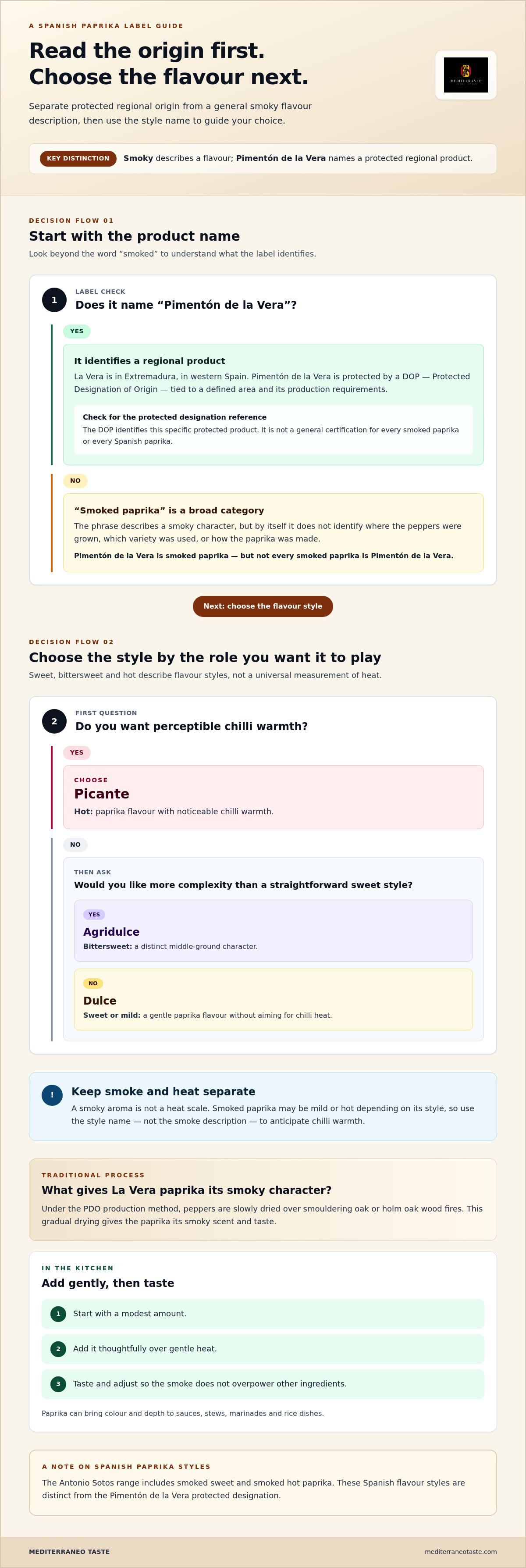
“Smoked paprika” describes a broad ingredient category. The term suggests smoky character, but it doesn’t identify where the peppers were grown, which variety was used or how the paprika was made. Those details can vary between producers and regions.
By contrast, Pimentón de la Vera names a specific origin protected by the DOP. Its identity is tied to that place and the designation’s requirements, not merely to the presence of smoke. Pimentón de la Vera is a type of smoked paprika, but not every smoked paprika is Pimentón de la Vera.
When reading a label, look beyond the word “smoked”. A named origin and the DOP designation help distinguish a protected regional product from a general flavour description. Then check the style, such as sweet or hot, to understand what it may bring to your dish. For a wider guide to reading provenance and authenticity cues, see How to Spot Truly Authentic Spanish Ingredients.
How La Vera Origin and Smoking Shape the Paprika
La Vera’s identity comes from more than a place name. The protected production rules connect the peppers, their growing area and the way they’re processed. Pepper variety helps shape the powder’s colour and flavour, while smoking adds another layer and lends it a distinctive aroma. Together, these elements give pimenton de la vera smoked paprika a character rooted in a specific regional tradition.
La Vera’s peppers gain their characteristic savoury aroma through a traditional smoking process tied to the region’s protected origin. That aroma can suggest warmth and depth, but it doesn’t tell you whether the paprika is sweet or hot. Those are separate qualities.
What role does smoking play in its aroma?
Under the PDO production method, peppers are slowly dried over smouldering oak or holm oak wood fires. This gradual drying gives the paprika its smoky scent and taste. The result is often described as warm, savoury and rounded, though the balance can vary with the peppers and finished product.
Smoke is an aroma cue, not a heat scale. A smoky paprika may be mild or hot, depending on its style. Nor should every product labelled “smoked paprika” be assumed to use the same wood, drying process or source. Those details depend on the particular product and its production rules.
What should a DOP reference tell a buyer?
A DOP, or Protected Designation of Origin, ties a named food to a defined place and its applicable production requirements. The Protected Designation of Origin (PDO) status for Pimentón de la Vera identifies the specific protected product. It isn’t a general certification for smoked paprika, nor does it apply to every Spanish paprika.
Read the claim in context. If a label names Pimentón de la Vera and refers to its protected designation, that wording relates to that particular product. A label that says only “smoked paprika” describes a flavour category, not La Vera origin. Mediterraneo Taste’s Antonio Sotos range includes smoked sweet and smoked hot paprika, offering Spanish flavour styles distinct from the Pimentón de la Vera designation. Explore them among the Spanish ingredients at Mediterraneo Taste.
Sweet, Bittersweet or Hot: Choosing a Pimentón Style
The words on a paprika label help you anticipate its flavour, but they aren’t a precise heat scale. In Pimentón de la Vera, the recognised styles are dulce, agridulce and picante. Each offers a different balance. Think about the role you want the spice to play: gentle colour, a more rounded flavour or noticeable chilli warmth.
| Style | Plain meaning | Good starting point |
|---|---|---|
| Dulce | Sweet or mild | Choose it for colour and gentle paprika flavour without aiming for chilli heat. |
| Agridulce | Bittersweet | Try it for a distinct middle-ground character when you want more complexity than a straightforward sweet style. |
| Picante | Hot | Reach for it when you want perceptible chilli warmth as well as paprika flavour. |
What do dulce, agridulce and picante mean?
Dulce translates as sweet, agridulce as bittersweet, and picante as hot. These are flavour-style labels, not universal measurements of heat. Agridulce isn’t a fixed point on a chilli scale, and the precise flavour can vary with the pepper and producer. Use the label as a guide, then let the recipe and your own palate make the final call.
For Pimentón de la Vera, the DOP’s recognised styles are associated with different pepper varieties: dulce with Bola and Jaranda, agridulce with Jaranda and Jariza, and picante with Jeromín, Jariza and Jaranda. That background helps explain why the styles differ, but it doesn’t provide a guaranteed heat level for every jar. For more on the varieties and how the styles fit into the product’s identity, explore the history and smoking process of Pimentón de la Vera.
Which style suits your cooking?
Choose dulce when a recipe needs red colour and a gentle paprika note. It can season a dish without making chilli warmth its defining feature. Pick picante when you want that warmth to register. Agridulce offers a different direction, with a bittersweet character that shouldn’t be treated as a standard or predictable heat rating.
Choose dulce for gentle flavour and colour, agridulce for a bittersweet middle ground, and picante when you want noticeable chilli warmth. If you’re new to a style, begin with a modest amount and taste before adding more. Smoked sweet and smoked hot paprika from Antonio Sotos offer further Spanish flavour styles in the Spanish ingredient range. These styles are distinct from Pimentón de la Vera.
How to Use Smoked Paprika Without Overpowering a Dish
Smoked paprika can add colour and a savoury note, but its aroma is easiest to appreciate when it complements the other ingredients. Treat pimenton de la vera smoked paprika as a seasoning to build into a dish, not a flavour that needs to dominate it. The right amount depends on the recipe, the paprika style and how pronounced you want the smoky character to be.
Use this simple sequence to keep the flavour in balance:
- Choose a style. Select sweet for gentle flavour, bittersweet for a more complex note, or hot when chilli warmth is welcome.
- Measure modestly. Start with less than you think you need, especially if the paprika is unfamiliar or the recipe already includes assertive seasonings.
- Add it thoughtfully. Follow the recipe’s method, mixing paprika with aromatics, oil, liquid or a marinade rather than leaving it exposed to prolonged high heat.
- Taste and adjust. Let the flavours come together, then add a little more only if the dish needs it.
When should paprika go into a recipe?
Recipes often add paprika alongside aromatics in oil or blend it into a marinade. Either approach helps distribute the spice through the dish. Take care with direct heat: prolonged or intense heat can scorch paprika and turn its flavour harsh, masking the warm aroma you want. Follow the recipe’s sequence. If the pan is very hot, add liquid or other ingredients promptly rather than letting the powder fry unattended.
How can you balance its flavour?
Match smoked paprika to the ingredients already in the recipe. It can deepen a stew, bring savoury character to a marinade or season a rice dish. Use it with restraint alongside other bold flavours, then taste before adding more. Rice dishes vary across Spain: traditional Valencian paella has its own defining ingredients and method, and shouldn’t be used as a catch-all name for seafood rice or other Spanish rice recipes.
For complementary ideas, look to pantry ingredients that suit the dish, such as garlic, olive oil, legumes or rice. The right pairing depends on the recipe, rather than adding every Mediterranean staple at once. A useful next read is Essential Mediterranean Pantry: A Curator’s Guide to Authentic Flavor, which explores how pantry choices can shape a meal’s character.
With an unfamiliar paprika, keep the first addition small and let the dish guide you. A stew can take time to develop, while a marinade can be tasted before it reaches the food. Adjust gradually, and remember that extra paprika adds more than smoke: its colour and overall flavour build too.
Explore Spanish paprika and ingredients to find smoked sweet and smoked hot styles for your kitchen.
Explore Spanish Paprika Styles with Mediterraneo Taste
A protected regional designation and a broader selection of Spanish ingredients serve different purposes. Mediterraneo Taste Spain offers Spanish ingredients for home cooks, including paprika from Antonio Sotos. Pimentón de la Vera, by contrast, refers to a specific protected product. Keep the product’s name and origin in mind when a recipe calls for a particular designation.
How does the paprika range relate to this designation?
Use the distinction as a guide to what you’re buying, rather than assuming all Spanish paprika represents the same place or production tradition. The Spanish ingredient range offers related flavours to explore, while the La Vera designation refers to a particular product identity. Let the recipe’s needs guide your choice, and use the full label as context when provenance matters.
What else belongs in an authentic Spanish pantry?
Build a pantry around the meals you like to prepare. Start with ingredients you reach for often, then add flavours that complement them instead of collecting items without a clear use. This makes it easier to experiment: a familiar recipe gives you a steady starting point, while one new ingredient can shift its aroma or depth.
For ideas to shape that collection, explore The Art of Curating Mediterranean Delicacies at Home. A well-chosen pantry grows through curiosity and thoughtful cooking. Explore Spanish ingredients for your kitchen and find inspiration for your next meal.
Make Smoky Spanish Flavours Your Own
As you experiment with paprika, consider how its aroma can shape a dish from the start, not just as a finishing touch. A restrained addition gives you a starting point; tasting as you go helps you decide whether the smoky note should stay subtle or take a more prominent place.
Keep exploring beyond one recipe. Try a different paprika style in a familiar dish, or choose a Spanish ingredient that complements what’s already in your pantry. Each small change can bring a new combination of colour, aroma and flavour. The name pimenton de la vera smoked paprika points to a particular regional tradition, while other Spanish ingredients offer their own ways to add depth to everyday cooking.
Ready to try a new Spanish flavour? Explore Mediterraneo Taste’s Spanish ingredients for your next meal.
Frequently Asked Questions
Is Pimentón de la Vera the same as paprika?
Yes. Pimentón is the Spanish term for paprika, and Pimentón de la Vera is a specific Spanish paprika. In a Spanish recipe, “pimentón” may appear without the regional name, so check the recipe’s context before choosing a jar. If the recipe specifies an origin, compare the complete product name and label details with the ingredient it calls for.
Is Pimentón de la Vera always spicy?
No. The product is available in sweet, bittersweet and hot styles. For a meal shared with people who prefer different heat levels, use a sweet style in the main dish and offer chilli separately at the table. This lets diners adjust their own serving without changing the flavour balance for everyone. Check the style on the label before buying.
Can I substitute smoked paprika for Pimentón de la Vera?
Yes, if the recipe mainly needs a smoky flavour rather than a specific regional product. The result may differ, so consider the dish’s other seasonings before substituting. In a simple bean soup, for example, the smoky note may be prominent; in a richly seasoned marinade, it may blend into the background. Choose a style that suits the recipe and follow its instructions.
How much smoked paprika should I use in a recipe?
Start with the quantity specified by the recipe, adjusting it if you’re changing the number of servings. If no amount is given, use a small measure for the first batch and note what you add, so you can reproduce the balance next time. For a shared dish, taste a spoonful with the other ingredients before serving, rather than judging the spice on its own.
How should I store smoked paprika after opening?
Keep the paprika in a tightly closed container in a cool, dry cupboard, away from direct sunlight and the cooker’s heat. Use a dry spoon, and avoid sprinkling it over a steaming pot, as moisture can enter the container. If the product came in a resealable pack, close it carefully after use. Follow any storage instructions on its label.
Can smoked paprika be used in vegetarian cooking?
Yes. It can season dishes such as lentil soup, chickpeas, roasted aubergine or vegetable-based rice. To test a pairing, add paprika to a small portion of cooked vegetables before seasoning the whole tray. This lets you judge how its smoky character works with the other flavours, including herbs, garlic or lemon, before using it across the dish.
Does a DOP label mean every paprika from Spain is Pimentón de la Vera?
No. To check a jar for this designation, look for the full product name and the relevant certification mark on its packaging. Spanish imagery or general wording on a shelf label doesn’t establish certification. This check is especially useful when buying ingredients for a recipe that specifies a protected product, rather than simply asking for paprika.