

The most convenient paella pack isn’t always the right one for your kitchen. A vegetarian paella ingredients pack should make its contents clear, so you can check the seasoning and decide whether it suits your dietary needs. Rice, olive oil and saffron or other spices help build the flavour base, while fresh vegetables add colour, texture and character.
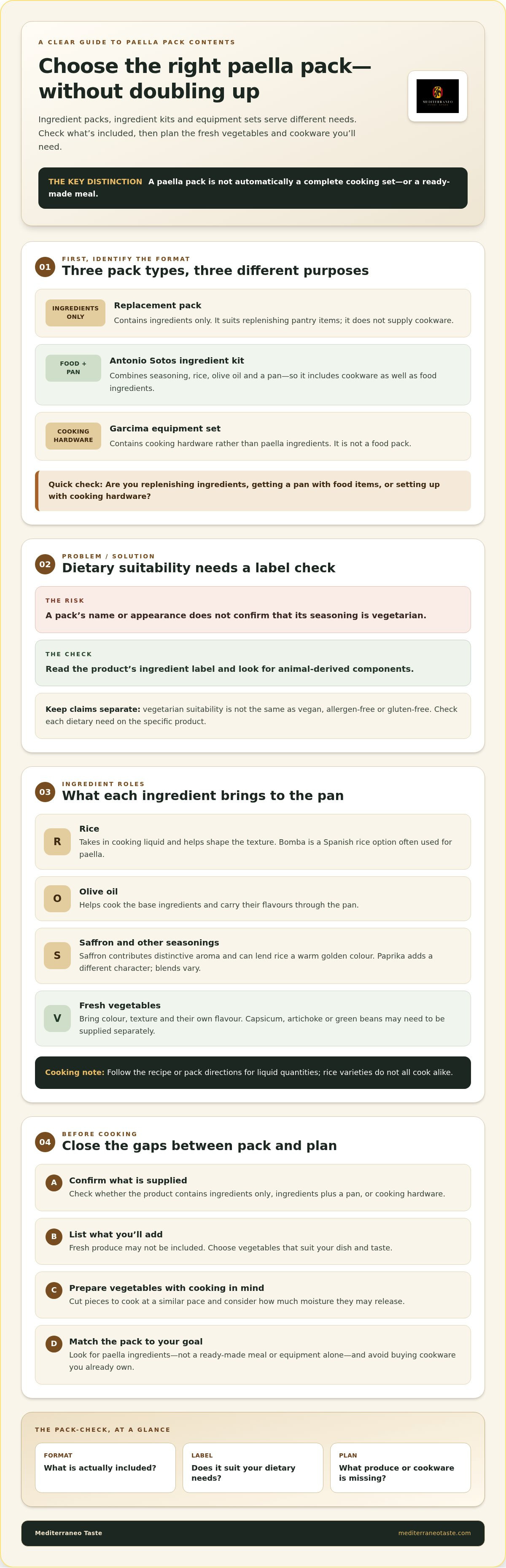
It’s easy to confuse ingredient packs with complete paella kits or equipment sets. Antonio Sotos ingredient kits combine seasoning, rice, olive oil and a pan; replacement packs contain ingredients only. Garcima equipment sets are cooking hardware, not food ingredients. Knowing the difference helps you choose what you need without doubling up on gear. This guide explains what each core ingredient contributes, how to compare pack contents, and what to check on labels before cooking. You’ll also learn how to match a pack to your equipment and plan a satisfying meat-free paella with vegetables you enjoy.
Key Takeaways
- Choose a vegetarian paella ingredients pack by checking its contents, dietary information and fit with the equipment you already own.
- Rice, olive oil and seasoning each help shape the dish. Saffron adds aroma and colour, while fresh vegetables bring their own character.
- Ingredient kits and replacement packs differ: an ingredient kit includes a pan, while a replacement pack contains ingredients only.
- Read labels for vegetarian suitability rather than relying on a pack’s name or appearance.
- Prepare fresh vegetables and organise your ingredients before cooking for a more relaxed start.
What a vegetarian paella ingredients pack should help you do
A vegetarian paella ingredients pack brings together ingredients for preparing paella, but it isn’t automatically a complete cooking set. It can make shopping for the pantry foundations easier, while leaving you free to choose fresh vegetables to suit your recipe and preferences.
Keep the purpose clear. A pack isn’t a finished paella meal, and it may not supply every fresh ingredient or include a recipe with all the cooking steps. Check the contents, then plan any vegetables or other additions you want to use. Paella has distinct regional styles and interpretations; Paella - Wikipedia offers an overview of these variations and their traditional context.
Ingredient pack, full kit, or equipment set?
Read the product description before choosing. A replacement pack contains ingredients only. Antonio Sotos ingredient kits combine seasoning, rice, olive oil and a pan, so they include cookware as well as food ingredients. Garcima equipment sets, by contrast, contain cooking hardware rather than paella ingredients. These formats serve different needs: check whether you’re replenishing pantry items or setting up to cook.
What a vegetarian cook should check first
Don’t assume a seasoning is vegetarian based on its name or appearance. Read the ingredient label and look for animal-derived components. Vegetarian suitability is a separate question from whether a product is vegan, allergen-free or gluten-free; each claim needs its own careful label check. If you’re cooking for someone with a dietary restriction, assess the information on the specific product rather than making assumptions about a whole pack.
Fresh vegetables can complete your plan, but don’t assume they’re included. Depending on your recipe, you might prepare capsicum, artichoke or green beans separately. Choose produce that suits your dish and check the pack contents to see what you’ll need to supply yourself.
A simple check before buying can prevent confusion:
- Identify the format: ingredients only, an ingredient kit with a pan, or a hardware set.
- Read every label: assess vegetarian suitability and any other dietary needs separately.
- Plan your additions: note which fresh vegetables and other ingredients you’ll bring to the kitchen.
- Match the contents to your goal: look for paella ingredients, not a ready-made meal or equipment alone.
This small pause makes it easier to choose a pack that fits the way you cook. Explore the Mediterraneo Taste range of Spanish ingredients and paella equipment, then compare the contents with what you already have at home.
How rice, saffron, seasoning, and olive oil shape vegetarian paella
Each ingredient has a distinct role. Rice takes in the cooking liquid, olive oil helps carry flavour through the cooking base, and seasonings bring aroma and colour. Fresh vegetables add their own sweetness, savouriness and texture. Understanding these roles makes it easier to assess a vegetarian paella ingredients pack and decide what you’d like to add.
A seasoning blend brings complementary aromas and savoury notes to vegetarian paella, while the rice, vegetables and cooking liquid complete the dish. The balance depends on the blend and the ingredients you choose alongside it.
Rice and olive oil as the foundation
Rice choice affects how the grains absorb cooking liquid and hold their shape. Bomba is a Spanish rice option often used for paella. Its ability to absorb liquid makes it worth considering when comparing pack contents. Follow the recipe or pack directions for liquid quantities rather than assuming all rice varieties cook alike.
Olive oil is a cooking ingredient, not a promise of a particular result. It can help cook the base ingredients and carry their flavours through the pan. Check whether a pack includes it, and consider how much you’ll need for the quantity of rice and vegetables you plan to cook.
Building savoury depth with Spanish seasonings
Saffron contributes a distinctive aroma and can lend the rice a warm golden colour. Its intensity depends on how much is used and how it’s prepared. Paprika adds a different character, often gently sweet or smoky depending on the type. A paella seasoning blend may combine spices and other ingredients for convenience, but formulas vary.
Don’t assume every blend is vegetarian or contains the same ingredients. Read the label if you avoid animal-derived components or have another dietary requirement. For a plant-focused example featuring vegetables and traditional spices, see the National Kidney Foundation’s Vegetable Spanish Paella recipe.
Vegetables do more than add colour. Green beans, artichokes, capsicum, mushrooms and peas each bring a different texture and flavour, so choose a combination that suits your taste. Cut vegetables into pieces that cook at a similar pace, and consider how much moisture they may release. This helps you plan the balance of the dish without expecting fresh produce to be part of a pantry pack.
As you compare ingredients, look for Spanish rice, olive oil and clearly described seasonings, then plan your vegetables separately. Explore Spanish paella ingredients to see how these pantry staples can form the starting point for your own version.
How to compare vegetarian paella ingredient packs without guesswork
Compare what’s actually supplied, not just the words “paella kit” on the packaging. Products can differ in ingredients, dietary information and cookware. A quick contents check helps you spot what you’ll need to add and avoid buying equipment you already own. Treat serving estimates and preparation times as specific to the product or recipe that states them, not as standard features of every pack.
Use this simple comparison before choosing:
| What to compare | What to look for | Why it matters |
|---|---|---|
| Ingredient contents | Named items such as rice, olive oil and seasoning, rather than a general description alone | You can identify what is supplied and plan any additions. |
| Dietary-label clarity | A full ingredient list that you can assess for your vegetarian needs | A product name alone doesn’t establish dietary suitability. |
| Equipment included | A clear statement about whether a pan or other cooking hardware is supplied | You can match the pack to the equipment in your kitchen. |
Compare ingredient contents and dietary information
“Seasoning” or “spice blend” describes a category, not a complete ingredient list. Look for the named components and read the label to check whether they suit your vegetarian preferences. Don’t infer allergen-free status, organic production or dietary certification unless the product information explicitly supports that claim. Keep serving quantities and preparation instructions tied to the specific pack or recipe you’re considering.
Match the pack to the equipment you already own
A replacement pack contains ingredients only. Antonio Sotos ingredient kits combine seasoning, rice, olive oil and a pan. A burner-and-pan equipment set is different again: Garcima equipment sets contain cooking hardware, not food ingredients. “Paella kit” can describe different combinations, so check the listed contents rather than assuming every kit includes the same food or hardware.
This distinction also helps prevent false comparisons. A product with a pan included isn’t automatically a better choice than an ingredient-only pack; it depends on whether you need the cookware. Likewise, don’t apply one kit’s stated servings or cooking time to another. Pan size, ingredients and instructions may vary, and fresh vegetables you add can affect what you need to prepare.
For a vegetarian paella ingredients pack, compare the ingredient list, dietary information and equipment details as separate questions. Then make a short shopping note: what the pack provides, what your kitchen already has, and which fresh ingredients you’ll supply. That gives you a practical basis for choosing without relying on vague packaging language or assuming all paella kits are alike.
How to prepare your kitchen for a vegetarian paella pack
A little preparation keeps the cooking session calm and helps you spot gaps before the pan is hot. Start with the pack information, then check your cookware and heat source, prepare fresh additions and arrange everything within easy reach. Pack contents and cooking requirements vary by product, so follow the instructions for the specific ingredients and equipment you’re using.
Set out ingredients and check the label
Read the ingredient list and compare it with your vegetarian requirements. Set aside the pack’s ingredients, then note what you’ll supply separately. Fresh vegetables such as capsicum, green beans or artichokes may complement the dish, but don’t assume they come in the pack. If you plan to add a finishing ingredient, such as lemon, include it on your shopping list too.
- Read the pack details. Check the ingredient list, cooking directions and any dietary information on the specific product. Make sure the ingredients suit your preferences before opening or combining them.
- Check your pan and heat source. Confirm which pan you’ll use and whether it’s suitable for your cooktop or outdoor setup. Requirements can differ by pan and heat source, so use the relevant product guidance rather than assuming every setup works the same way.
- Prepare fresh vegetables. Wash, trim and cut your chosen produce before cooking. Keep pieces a similar size where practical, and place them in separate bowls if you want to add them at different stages.
- Organise the ingredients. Arrange the rice, seasonings, oil, prepared vegetables and utensils near your cooking area. Keep the packaging or instructions handy so you can refer to quantities and directions without searching mid-cook.
Choose suitable cookware for your cooking setup
Your cookware choice depends on both the heat source and the particular pan. Don’t assume a pan designed for one setup suits another. Check the product’s use guidance and consider whether your cooking area can accommodate the pan comfortably. If you’re weighing up pan styles, a traditional paella pan guide can help clarify what to consider, but use the exact pan’s instructions for your setup.
This preparation isn’t a recipe; it’s a practical way to make sure your ingredients, cookware and cooking area are ready to work together. If your pack includes a pan, account for it before bringing out other cookware. If it doesn’t, select a suitable pan you already own or explore paella pans and cookware for your kitchen.
Choosing a vegetarian paella ingredients pack from Mediterraneo Taste
Choosing a pack starts with your kitchen, not a promise on the label. Decide whether you need pantry ingredients only or cookware as well, then compare the listed contents with your dietary preferences and the fresh vegetables you plan to add. Mediterraneo Taste Spain offers Spanish ingredients including saffron, paella seasoning, rice, olive oil, paprika, salt and spice blends. These give you several ways to build a paella pantry, but vegetarian suitability depends on the specific product’s ingredient label.
Explore Spanish ingredients with clear expectations
Antonio Sotos is a family business from La Mancha established in 1912. Its ingredient kits combine seasoning, rice, olive oil and a pan, while replacement packs contain ingredients only. That distinction helps you identify whether a format also supplies cookware. It doesn’t, by itself, establish that a pack is vegetarian.
For a vegetarian paella ingredients pack, examine the seasoning ingredients as carefully as the rice and oil. A seasoning blend may include several components, so use the product label to assess whether it matches your dietary needs. Then consider which ingredients you want to choose separately, such as paprika or extra vegetables. This lets you build a useful Spanish pantry without assuming every pack has identical contents or dietary attributes.
Think of the pack as a starting point, not a complete menu. Check what is specified, note anything you already have at home, and plan fresh additions separately. If you’re exploring the wider Mediterranean pantry, choose ingredients according to how you cook and the flavours you enjoy, rather than adding items simply because they’re associated with paella.
Take the next step with the right pack format
Your choice comes down to two practical questions: do you need ingredients only, or would a kit that includes a pan suit your setup? A replacement pack replenishes ingredients without adding cookware. An Antonio Sotos ingredient kit combines seasoning, rice, olive oil and a pan. Keep those food-and-cookware combinations distinct from Garcima equipment sets, which contain cooking hardware rather than food ingredients.
Before selecting a format, compare the exact contents with your equipment and dietary checklist. If you already own a suitable pan, an ingredients-only replacement pack may fit your needs. If you need cookware too, choose a kit whose contents state that a pan is included. In either case, read the ingredient label and plan any fresh vegetables separately.
Explore the Spanish ingredients and paella range from Mediterraneo Taste Spain to compare ingredient categories and pack formats, then choose according to what your kitchen needs.
Make your next paella your own
Let your first choice become the beginning of a style that feels personal. A well-chosen vegetarian paella ingredients pack gives you a starting point, while the vegetables and finishing touches you select can shift the dish with the season or occasion. Keep a note of the combinations you enjoy, and your next paella can build on what worked without following the same formula every time.
For a relaxed start, choose a pack that suits your kitchen and cooking plans, then leave room for your own ideas. A mix of vegetables, a hint of citrus at the table or a different balance of seasoning can give the meal a fresh character. Small choices make cooking feel considered, not complicated.
Ready to plan your next pan? Explore Spanish ingredients and paella products and choose the pack format that suits your kitchen.
Frequently Asked Questions
Is paella seasoning always vegetarian?
No. The name alone doesn’t confirm that a seasoning is vegetarian. Check its ingredient list for animal-derived ingredients, including any stock or flavouring components, and assess the specific product rather than assuming blends are alike. If you’re choosing a vegetarian paella ingredients pack, verify the seasoning label before cooking. For strict dietary needs, rely on the package information and choose a blend whose listed ingredients suit you.
Can I make vegetarian paella without saffron?
Yes. You can leave saffron out and still make a satisfying rice dish. Build flavour with your chosen vegetables, olive oil and seasonings instead. Paprika or turmeric may add colour, but neither has saffron’s distinctive aroma, so treat them as different ingredients rather than direct replacements. If you’re using a pack that contains saffron, you can reserve it for another dish and follow the remaining product directions as appropriate.
What vegetables work well in vegetarian paella?
Choose vegetables that bring contrasting flavours and textures. Zucchini offers a tender, mild note, while broad beans add a firmer bite; asparagus brings a fresh, green flavour when in season. You could use one as a feature or combine a few, keeping the overall mix balanced. Before adding watery vegetables, consider how their moisture might affect the rice and follow the cooking directions for your chosen recipe.
Can I use a different type of rice if I cannot find bomba rice?
Yes, but choose a rice intended to absorb cooking liquid, and expect its texture and cooking behaviour to differ. Short- or medium-grain rice may work in a suitable paella recipe. Don’t automatically use the same liquid quantity or cooking time as you would for bomba rice; follow the instructions for the rice you have. Long-grain rice can produce a different result, so use a recipe designed for that variety.
How should I store opened saffron and paella seasoning?
Keep both products sealed in their original packaging, or transfer them to clean, airtight containers if needed. Store them in a cool, dry cupboard away from direct light, steam and the heat of the stove. Use a dry spoon when measuring seasoning, and avoid leaving saffron exposed while you cook. Check the package for storage directions and use-by information, since product guidance can vary.
Does an ingredient replacement pack include a paella pan?
No. An ingredient replacement pack contains food ingredients only, so you’ll need a suitable pan of your own. Check the product contents before ordering, especially if you’re buying a pack for someone else or replenishing supplies for a planned meal. An Antonio Sotos ingredient kit combines food ingredients with a pan, but the listed contents are what matter. Don’t assume the word “kit” means the same combination of items across products.
Can I make vegetarian paella ahead of time?
For the best rice texture, paella is generally best served soon after cooking. You can make preparation easier by washing and cutting vegetables, measuring dry ingredients and setting out cookware in advance, then cooking the rice close to serving. If you have leftovers, cool and refrigerate them promptly in a covered container, then reheat until steaming hot throughout. Avoid leaving cooked rice at room temperature for extended periods.