

The soul of an authentic paella isn't just in the saffron; it's in the toasted, caramelized crust known as the socarrat. Achieving this golden treasure on a standard home range often feels like a gamble against uneven heat and warping metal. You've likely felt the frustration of a center that burns while the edges remain pale. Finding the perfect paella pan for gas stove use is the first step in mastering this culinary art.
It's true that heat management on a gas burner requires a specific dance between the flame and the steel. We promise to reveal the secrets of choosing a pan that responds to every nuance of your stove. You'll discover how to select between traditional polished steel and low-maintenance enamelled options to ensure your rice absorbs every drop of flavor.
This guide walks you through sizing your cookware for home burners and the techniques needed for a flawless finish. Prepare to host with the quiet confidence of a seasoned curator as we explore the essential tools for your next Mediterranean masterpiece.
Key Takeaways
- Learn why selecting the right material is the first step toward achieving that elusive, caramelized rice crust.
- Match your burner's reach to a paella pan for gas stove sized for home kitchens to avoid cold spots and uneven cooking.
- Master the art of pan rotation to bring the flame's warmth to every grain of rice for a perfect finish.
- Opt for authentic Spanish heritage pans that offer the durability and artisanal quality required for high-heat gas cooking.
- Move beyond the frustration of warped pans by choosing tools designed specifically for the intense, direct heat of a gas flame.
Why the Right Pan Matters for Gas Stove Cooking
A true paella begins long before the first grain of rice touches the oil. The pan is more than a simple vessel; it is the very foundation of the meal. In its native Valencia, the word refers to both the recipe and the steel itself. Understanding the history of paella reveals a deep connection between the wide, shallow surface and the communal spirit of the dish. When you choose a paella pan for gas stove cooking, you are selecting a tool designed to harness raw flame into a culinary masterpiece. It's an invitation to explore a tradition that rewards patience and the right equipment.
Standard kitchen pans fail because they are too deep and retain too much moisture. Rice needs to breathe and expand in a thin layer, ideally no thicker than a finger's width. This shallow environment allows liquid to evaporate at a precise rate, concentrating the rich flavors of the stock. It's the only way to achieve the socarrat, that prized, golden crust at the base that defines a truly exceptional result. Without this specific geometry, you're simply making a rice stew rather than an authentic delicacy.
The Anatomy of an Authentic Paella Pan
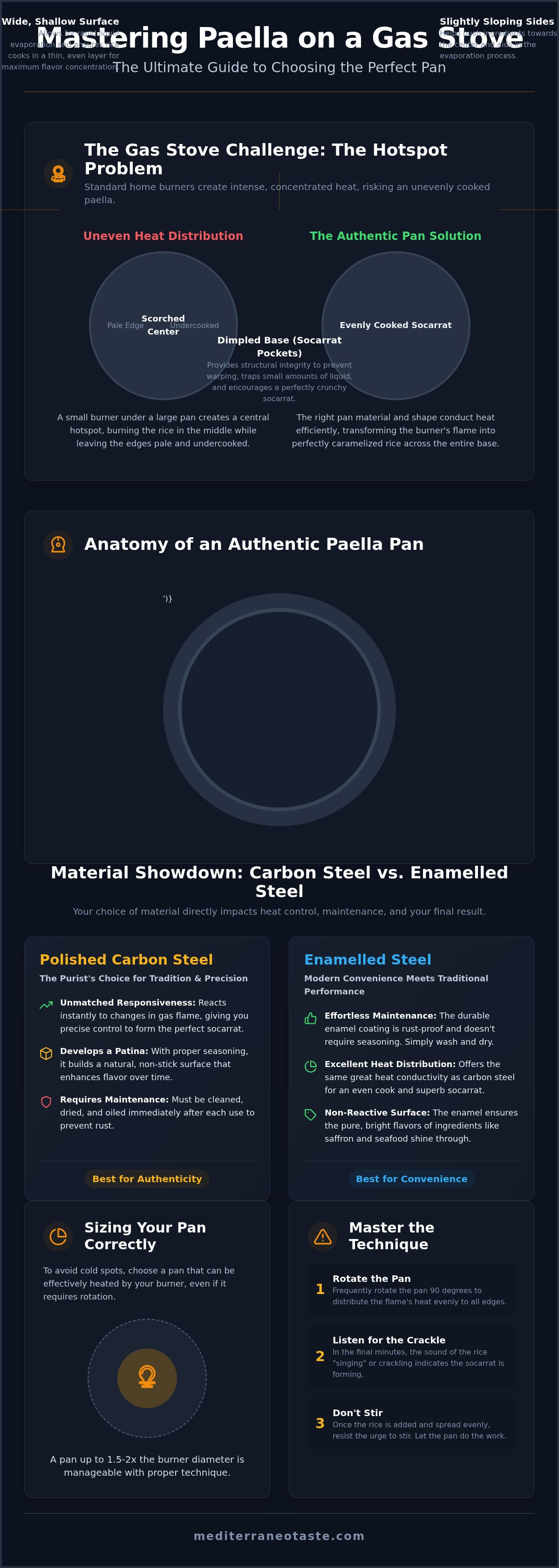
Authentic pans feature a distinct, wide diameter and slightly sloping sides. This geometry ensures every grain of premium rice receives equal attention from the heat. You'll notice small indentations, or dimples, across the bottom of traditional steel pans. These serve several vital purposes:
- They provide structural integrity, preventing the metal from warping under the stress of intense heat.
- They help trap small amounts of liquid, ensuring even hydration across the entire surface.
- The dimples create a slightly textured surface that encourages the formation of the crunchy socarrat.
Gas Range Challenges: The Hotspot Problem
Cooking on a home range presents a unique hurdle: the concentrated ring of fire. Most domestic burners are significantly smaller than a professional paella pan for gas stove, creating an intense hotspot in the center. This often leads to scorched rice in the middle while the outer edges remain undercooked and pale. Managing this requires a pan that conducts heat with agility. High-quality carbon or enamelled steel responds instantly to your dial, allowing you to bridge the gap between the flame and the pan's edge with technique and the right material choice. It transforms a simple burner into a precision tool for artisanal discovery.
Material Science: Carbon Steel vs. Enamelled Steel on Gas
The relationship between a gas flame and metal is both intimate and immediate. Unlike induction, which relies on magnetic fields, or charcoal, which offers a slow, ambient glow, gas provides a direct and intense energy. Your choice of paella pan for gas stove cooking determines how that intensity is managed. The right material acts as a conductor, translating the raw heat of the burner into a gentle simmer that coaxes the best from your ingredients. Whether you seek the rustic charm of tradition or the polished ease of modern design, the metal you choose is the silent partner in your culinary success.
Polished Carbon Steel: The Purist's Choice
The purist often gravitates toward polished carbon steel. It's the most traditional choice, offering an evocative connection to the heritage of Spanish cooking. This material is remarkably responsive. When you adjust your gas dial, the pan reacts almost instantly, giving you the precision needed to manage the delicate final minutes of the cook. It's during this stage that the socarrat forms, and carbon steel's ability to transmit heat quickly is a distinct advantage. This metal requires a simple seasoning ritual after each use to build a natural, protective patina that deepens with every meal. You can dive deeper into this tradition with The Ultimate Guide to the Carbon Steel Paella Pan.
Enamelled Steel: Tradition Meets Elegance
For those who value sophisticated ease, enamelled steel is a compelling alternative. These pans feature a durable, speckled coating that prevents rust and eliminates the need for oiling after use. They offer the same excellent heat distribution as carbon steel but with a refined finish that simplifies cleanup after a long evening of entertaining. It's an ideal option for the curator who wants an authentic experience without the maintenance requirements of raw metal. The enamel is non-reactive, ensuring the vibrant flavors of your saffron and seafood remain pure and bright. Discover the benefits of this modern classic in The Ultimate Guide to the Enamelled Steel Paella Pan.
Choosing between these materials often comes down to your personal rhythm in the kitchen. Carbon steel invites you into a lifelong partnership of seasoning and care, while enamelled steel offers immediate, effortless beauty. Both materials excel on a gas range, provided they are sized correctly to your burner. If you're ready to start your journey, you might enjoy exploring our authentic Spanish paella pan collection to find the perfect match for your home stove.
Sizing Your Pan to Match Your Gas Burner
Precision in sizing is the secret to a professional result. The golden rule of the kitchen is simple: your burner's reach must match your pan's diameter. If you place a massive pan on a small flame, you'll create a ring of undercooked, crunchy rice around the edges while the center burns. For most domestic kitchens, a 30cm to 34cm paella pan for gas stove use is the absolute sweet spot. This size allows the heat to radiate evenly to the very edge, ensuring every grain of rice transforms into a tender, flavorful morsel. It's the perfect balance for a family of four, providing enough surface area without overwhelming your cooktop.
Measuring for Success
Measure your largest burner before you commit to a purchase. You aren't just measuring the metal grate; you're measuring the actual spread of the flame at its highest setting. A pan that over-hangs the heat source by more than a few centimeters will suffer from cold zones. This leads to uneven evaporation, which is the enemy of a consistent socarrat. If you're planning a grander event that requires a larger vessel, you might consider our Large Paella Pan Guide to understand how to manage bigger surfaces. For these larger vessels, the 'Two-Burner Strategy', straddling the pan across two stove eyes, can save the day. This requires constant vigilance and frequent rotation to ensure the heat reaches every corner of the steel.
Yield vs. Burner Size
Authentic paella is defined by its thinness. In Valencia, the ideal layer of rice is about the thickness of one finger. This allows the rice to absorb the broth and fry simultaneously, creating that signature texture. A general rule is to use 100 grams of rice per person. Consider these general yields for home stoves:
- 30cm pan: Ideal for 2 to 3 people.
- 34cm pan: The perfect fit for a family of four.
- 40cm+ pan: Best reserved for outdoor burners or the two-burner strategy.
If you crowd a small pan with too much rice, you'll end up with a boiled, mushy consistency rather than the crisp, artisanal finish we desire. Bomba rice is particularly thirsty. It needs space to expand and drink in the saffron-infused stock. By respecting the pan's capacity, you ensure that the heat remains the master of the rice, not the other way around. This focus on surface area is what separates a true curator of Spanish cuisine from a casual cook.
How to Cook the Perfect Paella on a Home Gas Range
Cooking on a domestic range requires a deliberate touch. You aren't just heating food; you're conducting a symphony of evaporation and caramelization. While professional burners offer concentric rings of flame, your home range likely provides a single, intense circle. Mastering your paella pan for gas stove means learning to work with this limitation, turning it into a tool for precision. It's a dance of heat and timing that rewards the observant cook with unparalleled flavor and texture.
The Essential Heat Stages
Success follows a rhythm of rising and falling temperatures. Begin with a high-heat sauté to brown your proteins and develop a rich sofrito. This stage creates the aromatic foundation that the rice will eventually inherit. Once you've added the stock and distributed the rice, drop the heat to a steady simmer. You want a gentle, even bubble across the surface, not a violent boil. In the final minutes, when the liquid has almost vanished, push the flame higher for a brief, controlled blast. This intense finish is what coaxes the rice into forming that legendary, toasted socarrat.
The Home Cook's Rotation Technique
Since your burner is often smaller than the pan, you must move the heat to the rice. Rotate your pan 90 degrees every few minutes during the simmering stage. This simple movement ensures the outer edges receive the same attention as the center, preventing a raw perimeter. If your stove's lowest setting is still too aggressive for a gentle simmer, consider using a diffuser plate to soften the flame. This simple addition allows for the delicate, low-heat environment required for premium rice varieties. You can find more advanced tips in our guide to Mastering the Home Paella.
Listen closely as the liquid disappears. The sound will shift from a wet, rhythmic bubble to a distinct, sharp crackle. This is the rice beginning to fry in the remaining oil and fats. It's the unmistakable sound of the socarrat forming. Once you smell a hint of toasted aroma, turn off the flame immediately. Cover the pan with a clean kitchen towel and let it rest for five minutes. This final pause is vital; it allows the residual steam to redistribute, ensuring every grain is perfectly tender and easy to release from the steel. It's the quiet confidence of a host who knows the best things are worth the wait.
Ready to transform your home cooking into a Mediterranean event? Discover the perfect authentic Spanish paella pan for your kitchen and start your journey toward the perfect crust today.
Elevating Your Experience with Authentic Spanish Cookware
Choosing a paella pan for gas stove cooking is an investment in a lifetime of sensory discovery. While mass-market pans might resemble the real thing, they often lack the thermal mass and artisanal soul of a tool born in Valencia. A genuine Spanish pan is crafted to endure, responding to the flame with a grace that thinner, cheaper metals simply cannot replicate. It's the difference between a functional object and a piece of culinary heritage that deepens in character with every use. You'll feel the difference in the weight of the handles and the way the steel sings as it reaches temperature.
The Curator's Advantage
There's a quiet joy in using tools that carry a story. By sourcing your cookware from the heart of Spain's metalworking tradition, you aren't just buying a pan; you're preserving a legacy. These artisanal tools provide the perfect foundation for the premium ingredients that define the dish. Understanding how to spot authentic Spanish ingredients is the next logical step for any discerning host. When your kitchen infrastructure matches the quality of your saffron and seafood, the results are consistently extraordinary. It transforms the act of cooking into a celebratory event that honors the authenticity of the origin.
Beyond the Pan: Completing the Kit
Mastering the home gas range is only the beginning of your journey. As your confidence grows, you might find yourself drawn to the specialized power of a dedicated burner for larger outdoor gatherings. This evolution allows you to explore even greater diameters while maintaining the edge-to-edge perfection we've discussed in previous sections. To protect the performance of your steel, pair it with the right partners. Bomba rice and authentic Pimentón aren't just about flavor; they interact with the pan's surface to create the ideal environment for that elusive socarrat. These ingredients are the soul of the experience, ensuring that your pan produces a masterpiece every time it touches the flame.
Treat your kitchen as a curated gallery of high-quality experiences. Every meal is an opportunity to celebrate the joy of consumption with those you love. We invite you to explore the Mediterraneo Taste collection. Here, you'll find the authentic Spanish tools and delicacies needed to turn every dinner into a sophisticated, artisanal discovery. Start your journey today and discover the true potential of your home stove.
Begin Your Culinary Legacy
Success on a home range is a delicate harmony between material and movement. By selecting a pan that responds to your touch and sizing it correctly to your burner, you unlock the door to professional-grade results. You've learned how to manage the flame, rotate with precision, and listen for the rhythmic crackle of a perfect crust. Finding the right paella pan for gas stove use is the essential foundation of this artisanal journey. It transforms a simple dinner into a celebratory event of flavor and heritage.
Every masterpiece deserves a tool with a story. Our pans are directly imported from artisanal Spanish makers, offering lifetime-ready carbon and enamelled steel options for the discerning host. These tools are designed to deliver professional results in the comfort of your home kitchen. Discover our curated collection of authentic Spanish Paella Pans and bring the soul of Valencia to your own table. The flame is yours to master. Embrace the sizzle and start your discovery today.
Frequently Asked Questions
Can I use a regular frying pan instead of a paella pan on my gas stove?
A standard frying pan cannot replicate the results of an authentic vessel. Its deep sides trap moisture, leading to a boiled texture rather than the desired fried finish. An authentic paella pan for gas stove features a wide, shallow design that encourages rapid evaporation. This geometry is essential for creating a thin layer of rice. Without this specific surface area, you'll struggle to achieve the artisanal quality of a true Mediterranean masterpiece.
How do I stop my paella pan from burning in the middle on a gas burner?
Preventing a scorched center requires a combination of pan rotation and heat control. Since domestic gas burners focus energy in a central ring, you should rotate your pan 90 degrees every few minutes. This movement brings the flame's warmth to the outer edges of the rice. Using a heat diffuser can also help soften the intensity. These simple actions ensure even cooking and protect your delicate socarrat from burning too quickly.
Do I need to season my paella pan before using it for the first time?
Polished carbon steel requires a simple seasoning ritual to protect its surface and build a natural patina. Before your first use, boil water in the pan, then wash and dry it thoroughly. Apply a very thin layer of neutral oil to the entire surface. This process prevents rust and improves performance over time. If you prefer a low-maintenance option, enamelled steel pans are ready for use immediately and require no seasoning at all.
What is the best size paella pan for a standard 4-burner gas stove?
The 30cm to 34cm range is the most effective size for a standard domestic gas stove. This diameter allows the flame to reach the edges of the pan without creating significant cold zones. It comfortably serves three to four people while remaining manageable on a single large burner. Choosing a paella pan for gas stove larger than 36cm often leads to uneven cooking on a home range, as the heat cannot radiate far enough.
Is carbon steel or stainless steel better for gas range paella?
Carbon steel is the superior choice for gas cooking because of its exceptional thermal responsiveness. It reacts immediately to any adjustment of your gas dial, giving you precise control over the temperature. Stainless steel, while beautiful, often suffers from uneven heat distribution and can lead to hotspots. Most artisanal Spanish makers prefer carbon or enamelled steel. These materials are specifically designed to harness the direct energy of a flame for a perfect, traditional result.
How do I get the socarrat crust without burning the rice on gas?
Achieving the perfect crust involves careful listening and a final burst of heat. Once the liquid has vanished, you'll hear the sound shift from a gentle bubble to a sharp crackle. This is the rice beginning to fry. Increase the flame for about sixty seconds, then turn it off the moment you smell a nutty, toasted aroma. Resting the pan for five minutes under a kitchen towel ensures the socarrat releases perfectly from the steel.
Can I use a paella pan on a gas BBQ or outdoor grill?
You can certainly use your paella pan on a gas BBQ or outdoor grill. These heat sources often provide the high, direct energy that these pans were designed to handle. The open space of a grill allows you to manage larger pans more effectively than a crowded indoor cooktop. Just ensure the pan remains level so the stock distributes evenly. It's a wonderful way to embrace the celebratory spirit of outdoor cooking and artisanal discovery.
How do I clean an enamelled paella pan after cooking on gas?
Cleaning an enamelled pan is a simple and refined process. Use warm, soapy water and a soft cloth to remove any residue. If the socarrat is particularly stubborn, let the pan soak for ten minutes before gently wiping it away. Avoid using harsh steel wool or abrasive cleaners, as these can dull the protective glaze. Since enamel is naturally rust-resistant, you don't need to apply oil after drying, making it an elegant, low-maintenance choice for the modern curator.