

What if the depth of a paella’s flavour depends as much on the pan as on the ingredients? Searching for spanish kitchenware online spain can raise practical questions: carbon steel or enamel, what size paella pan, and how should you care for terracotta? Choosing tools that suit your cooking makes Spanish dishes feel less like guesswork and more like a ritual.
Traditional cookware can bring something special to the table, but materials aren’t interchangeable. A paella pan needs to suit your heat source and the number of people you usually serve, while terracotta calls for careful handling. This guide explains how to choose essential Spanish kitchen tools, compare steel and enamel pans, and care for traditional materials.
Explore the cookware and ingredients that shape a Mediterranean kitchen, including paella pans, burners and Spanish saffron. You’ll find practical guidance for choosing pieces that bring the warmth, aroma and pleasure of Spanish cooking into your home.
Key Takeaways
- Learn how terracotta cookware suits gentle, steady cooking and why it needs thoughtful handling.
- Choose a paella pan by comparing its material and size with your cooking habits and heat source.
- See how a ham stand can help make slicing cured meats part of a relaxed tapas gathering.
- Follow basic seasoning and care steps to protect a carbon steel paella pan and build its cooking surface.
- Use practical details about materials, use and care when exploring spanish kitchenware online spain.
The Core Infrastructure: Traditional Spanish Cookware Essentials
A Spanish kitchen is more than a place to prepare dinner. It’s where slow-simmered aromas, lively tapas and recipes shaped by tradition bring people together. The right cookware supports those moments: a terracotta cazuela for gentle, sustained cooking, or a broad paella pan that lets rice cook in a shallow layer. Choose each piece for the food you plan to make, rather than adding cookware just for its appearance.
The Versatility of Terracotta Cazuelas
A cazuela’s clay body holds and radiates heat, making it well suited to dishes that benefit from steady cooking. Use one for bubbling beans, baked vegetables or a rich sauce, then serve the dish in the same vessel if it is suitable for table use. Check the maker’s instructions before using it on a particular heat source: terracotta isn’t automatically suitable for every stovetop. Avoid sudden temperature changes, which can damage the vessel.
Essential Stainless and Carbon Steel Foundations
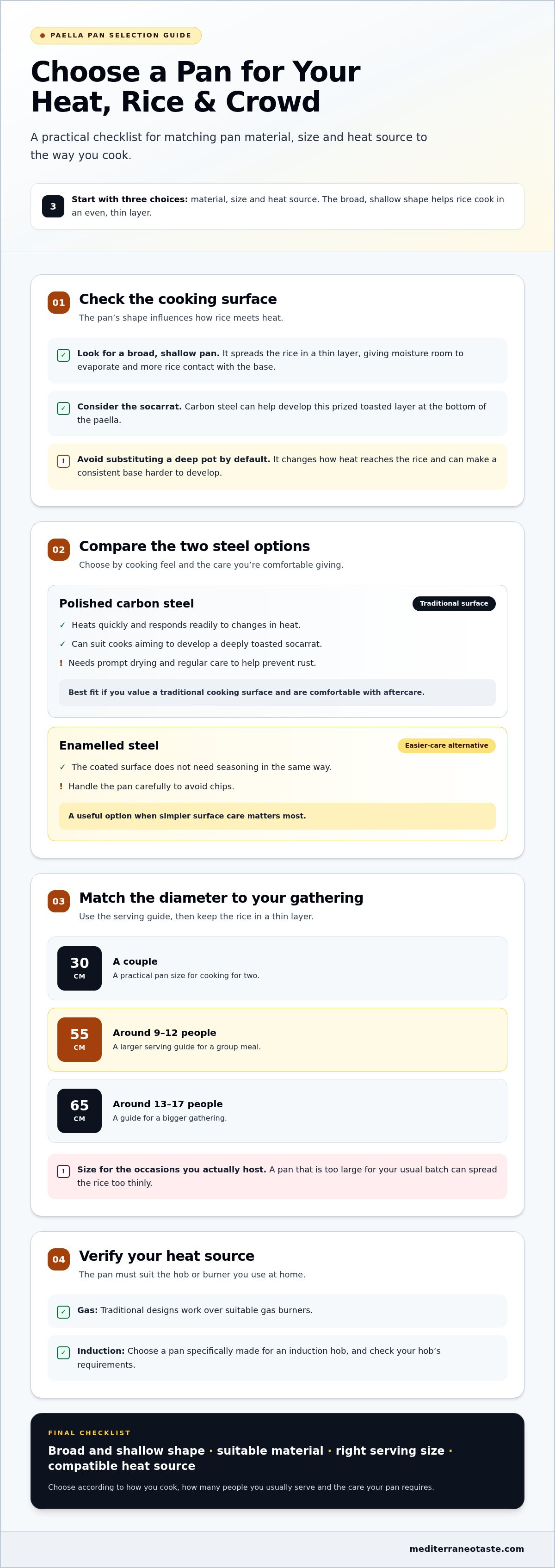
Choose cookware to suit the dish. Carbon steel is a traditional choice for paella because its broad cooking surface lets rice cook in a shallow layer and can help develop the prized socarrat, the toasted layer at the bottom. A non-stick pan may be convenient, but its coating and care requirements differ from those of a traditional steel pan. Stainless steel is a practical, non-coated option for everyday sautéing and simmering.
Shape matters, too. A shallow, wide paella pan spreads rice in a thin layer, giving moisture room to evaporate and more rice contact with the base. That design suits the way paella is cooked. For context on the dish and its pan, explore this overview of the history of the paella pan.
Build your collection around the food you enjoy making instead of buying a large assortment at once. When shopping for Spanish kitchenware online in Spain, compare material, shape and the cooking method each piece supports. A well-chosen paella pan and considered ingredients, such as saffron, can bring the aromas and rituals of Mediterranean cooking into your kitchen. Mediterraneo Taste Spain offers Spanish paella pans, burners and Mediterranean delicacies for home cooking.
Selecting the Perfect Paella Pan for Your Home
A paella pan is the centrepiece of a Spanish cooking setup. Its broad, shallow shape helps rice cook in an even layer, supporting the texture paella is known for. A deep pot or large frying pan may hold the ingredients, but it changes how heat reaches the rice and can make it harder to develop a consistent base. Britannica’s overview of traditional paella cooking explains the dish’s connection to the flat, round pan in which it is cooked.
Choose a pan by considering three things: material, size and heat source. The right option is the one that suits the way you cook, the number of people you usually serve and the hob or burner you use at home.
Polished Carbon Steel vs. Enamelled Steel
Polished carbon steel heats quickly and responds readily to changes in heat. It suits cooks who want to develop a deeply toasted socarrat, but it needs prompt drying and regular care to help prevent rust. Choose it if you value a traditional cooking surface and are comfortable with the aftercare.
Enamelled steel offers an easier-care alternative. Its coated surface doesn’t need seasoning in the same way, but handle the pan carefully to avoid chips. Compare the care and cooking qualities of enamelled steel paella pans to decide which style fits your kitchen.
Sizing Your Pan for the Perfect Crowd
Choose a diameter based on the number of servings, then spread the rice in a thin layer rather than filling the pan like a deep pot. As a practical guide, a 30 cm pan suits a couple, a 55 cm pan serves around 9–12 people, and a 65 cm pan can serve 13–17. For larger gatherings, explore guidance on large paella pans for events. A pan that’s too large for your usual batch can spread the rice too thinly, so match its capacity to the occasions you actually host.
Heat source matters just as much. Traditional designs work over suitable gas burners, while induction cooking requires a pan specifically made for an induction hob. An induction-ready pan lets you use the familiar wide, shallow shape with a modern hob. Review the considerations for induction paella pans, and check your hob’s requirements before choosing.
When comparing Spanish kitchenware online in Spain, let your cooking habits guide your choice, not size alone. Explore authentic Spanish paella cookware and consider how a suitable burner can support your setup.
Specialized Tools for Authentic Tapas and Charcuterie
Tapas can turn a meal into an occasion. A few carefully chosen bites, a drink poured and a spread arranged for sharing invite guests to linger. The tools shape both preparation and presentation, from a secure ham stand for carving to small dishes that bring colour and variety to the table.
The Ritual of the Ham Stand and Slicing
A jamonero, or ham stand, holds a cured ham steady as it’s carved. Its practical purpose is important: stability helps the carver guide each slice with control. Pair the stand with a long, flexible, very sharp ham knife. Its blade can follow the contours of the ham to create thin slices and let the texture and aroma shine. Handle the knife with care, and secure the ham firmly before carving. For ideas on building a shareable spread, explore this guide to Spanish appetizers.
Olive Wood and Artisan Tableware
Olive wood brings natural grain and warmth to a serving board, making it an appealing backdrop for bread, cheese and cured meats. It still benefits from gentle cleaning and thorough drying. Avoid leaving it to soak in water, and follow the maker’s care instructions to preserve the finish.
Hand-painted ceramics add colour to the table. Use a mix of small plates and bowls to separate olives, sauces and other bites, then keep the food as the focus. Try combining a patterned piece with simpler serving surfaces, varying shapes and heights without overcrowding the table.
For tortilla española, a specialised double-sided pan can make flipping the thick omelette more manageable. The paired sections help contain the tortilla during the turn and make it easier to cook both sides. Choose a size that suits your usual portion, and check that the handle and locking mechanism feel secure before use.
As you explore Spanish kitchenware online in Spain, consider how each piece supports preparation and hosting, not just how it looks. Combine useful serving tools with dishes that invite guests to reach in and share. For a food-focused starting point, browse Mediterranean delicacies for sharing.
Caring for Your Artisan Kitchenware: Longevity and Performance
Traditional cookware rewards attentive care. Carbon steel develops a darkened surface through use, while terracotta and olive wood need gentle handling. Clean and store each material thoughtfully to keep it ready for future meals. For more detail on the care and character of carbon steel paella pans, follow the maker’s instructions.
Seasoning and Cleaning Carbon Steel
Seasoning means heating a thin layer of oil on the pan’s surface to create a protective coating that helps resist rust and release food more easily.
For a new or freshly cleaned pan, use this simple oil-and-heat routine unless its care instructions say otherwise:
- Clean and dry: Wash off residue, then dry the pan thoroughly with a cloth.
- Apply a very thin coat of oil: Wipe it over the cooking surface, removing visible excess to avoid a sticky finish.
- Heat carefully: Warm the pan until the oil sets and begins to smoke lightly. Use good ventilation and follow the pan’s guidance for your heat source.
- Cool and repeat if needed: Let the pan cool before storing it or applying another thin layer.
After cooking, clean carbon steel promptly and dry it straight away. Don’t leave a traditional pan to air-dry, because lingering moisture can lead to rust. Briefly warming it over low heat helps remove remaining dampness. Once the pan has cooled, wipe on a trace of oil before storing it.
Maintaining Your Terracotta and Wood
Terracotta is vulnerable to sudden temperature changes. Don’t move a cold cazuela straight onto high heat or place a hot one on a cold, wet surface. For a new unglazed cazuela, follow the maker’s first-use directions. Some vessels need soaking before cooking. Let the cazuela warm gradually and cool naturally, then dry it fully before putting it away.
Hand-wash olive wood with mild soap and warm water, then dry it promptly. Don’t soak it or put it in the dishwasher, as prolonged moisture and heat can encourage cracking or warping. Store boards and clay pieces in a dry, well-ventilated cupboard, leaving space between fragile items to prevent knocks and trapped moisture.
“Buy once, care forever” is a useful approach to artisan tools: choose pieces for the cooking you enjoy, then give each material the care it needs. Make aftercare part of your choice when shopping for Spanish kitchenware online in Spain. Explore authentic paella cookware and choose a traditional pan for your kitchen.
Building Your Collection: Sourcing Spanish Kitchenware Online in Spain
A useful collection grows from a few dependable essentials, not a cupboard full of cookware. A specialist Mediterranean retailer brings paella pans, burners and ingredients together, making it easier to plan a complete setup. When shopping for Spanish kitchenware online in Spain, look for clear product details rather than relying on heritage styling alone.
Curated Sets vs. Individual Pieces
A Spanish paella kit can be a practical starting point for beginners because it brings key elements of paella preparation together. Before choosing a set, compare what it contains with your kitchen setup and the dishes you want to cook. You can also build a collection one piece at a time: start with a pan, then add a burner or ingredients to suit the way you cook.
Take a moment to assess each product description. Look for the stated material, dimensions, compatible heat source and care guidance. These details help you decide whether the cookware will suit your cooking habits and make it easier to compare a traditional pan with an easier-care alternative.
Authentic Flavors Delivered Nationwide
Useful signs of heritage include specific information about where an item is made or sourced, what it’s made from and how it’s traditionally used. Treat vague claims of “authentic” as a reason to read the product details carefully. Choosing ingredients alongside cookware also helps connect the tool with the flavours it’s intended to prepare.
Online shopping makes it simple to explore a paella setup in one place, from a pan and gas burner to Spanish saffron. For heavy cookware or fragile items, review the delivery and packaging details shown with your order. Choose pieces that suit your space and cooking style, then build your collection gradually.
Let each addition earn its place. A carefully chosen pan, a suitable heat source and quality ingredients can turn a familiar meal into a generous Mediterranean gathering. Start with Spanish paella cookware and ingredients.
Bring Spanish Culinary Tradition Into Your Kitchen
Build your Mediterranean kitchen one thoughtful choice at a time. Match your paella pan’s material and size to your cooking style and heat source, then care for carbon steel, terracotta and wood according to their needs. Those decisions help you cook with confidence and keep your tools ready for future meals.
From cookware to ingredients, useful additions bring practical purpose and Spanish character to everyday meals. When shopping for Spanish kitchenware online in Spain, look for clear product details that help you choose pieces suited to your table. A thoughtfully assembled selection makes it easier to bring cookware and ingredients together, with delivery available nationwide across Spain.
Explore Mediterraneo Taste Spain’s Spanish paella cookware and Mediterranean delicacies to find the tools and flavours for your next meal.
Frequently Asked Questions
What is the best material for a paella pan for a beginner?
Enamelled steel is a convenient starting point if you want a paella pan that needs less upkeep than carbon steel. Its coated surface doesn’t require seasoning, though you should handle it carefully to avoid chips. Choose carbon steel if you value a traditional cooking surface and are happy to dry and oil the pan after use. Either way, match the pan to your heat source and follow its care instructions.
Can I use a traditional paella pan on an induction stove?
Only if the pan is specifically compatible with induction. Many traditional polished steel pans won’t work on an induction hob unless they have a suitable magnetic base, so check the manufacturer’s specifications before buying. An induction-ready paella pan lets you use the traditional wide, shallow shape on a modern hob. Make sure the pan’s base also suits the hob’s cooking zone for effective heating.
Why do I need a special ham stand for Spanish jamón?
A ham stand holds cured ham securely while you carve, giving you better control and helping you cut thin, even slices. Stability matters because carving involves a long, sharp knife. Pair the stand with a flexible ham knife and keep your hands clear of the blade’s path. A stand also makes carving part of the table-side ritual, so you can serve freshly cut slices to guests.
How do I stop my carbon steel paella pan from rusting?
Dry the pan immediately after washing, then apply a very thin coat of cooking oil before storing it. Don’t leave it to air-dry, since lingering moisture can lead to rust. If the pan needs seasoning, clean and dry it, wipe on a thin film of oil, then heat it carefully according to the maker’s directions. Store it somewhere dry, and avoid leaving food or water in it after cooking.
What is a cazuela and how do I use it in the oven?
A cazuela is a traditional earthenware cooking vessel used for dishes such as baked vegetables, beans and tapas. Check the maker’s instructions to confirm that your cazuela is oven-safe and whether it needs preparation before first use. Avoid sudden temperature changes: don’t put a cold vessel straight into a hot oven or set a hot one on a cold, wet surface. Let it warm and cool gradually.
Is olive wood better than bamboo for serving Mediterranean food?
Neither is automatically better; choose based on the look, feel and care you prefer. Olive wood has distinctive grain and a warm, natural appearance that suits bread, cheese and cured meats. Bamboo is another lightweight serving-board option. For either material, follow the maker’s care guidance, wash by hand and dry promptly. Avoid soaking wooden boards or putting them in a dishwasher, as excess moisture and heat can damage them.
Do I need a gas burner to cook paella at home in Spain?
No, you don’t necessarily need a gas burner. You can cook paella on a suitable hob, provided the pan matches the heat source and receives even heat across its base. A wide paella pan may extend beyond a standard burner, so consider how your hob distributes heat and choose a compatible pan. A dedicated gas burner is another option if you want a separate setup for preparing paella.
What size paella pan should I buy for a family of four?
Choose a pan that fits four portions in a thin layer of rice, rather than selecting a deep pot that holds more food. As a reference, a 30 cm pan is suitable for a couple, while a 55 cm pan can serve 9–12 people, so either may be a poor fit for a regular family meal. Check the maker’s serving guidance and consider whether you want leftovers or room for guests.
When comparing Spanish kitchenware online in Spain, review each pan’s material, size, heat-source compatibility and care guidance before choosing.