

The perfect paella isn't just a recipe; it's a sensory performance that begins the moment flame meets metal. You've likely sourced the finest saffron and short-grain rice, yet you still wonder if your cookware can deliver that elusive, caramelized socarrat. Selecting the right paella cooking pan is the most critical decision in your culinary journey. It's the difference between a simple meal and an authentic Spanish masterpiece that commands the center of your table.
We understand the hesitation that comes with choosing traditional materials. You might worry about seasoning carbon steel or feel uncertain if a pan will work on your specific cooktop. These hurdles often stop passionate home chefs from achieving the professional results they desire. This guide promises to clear that confusion by offering a curated comparison of the finest vessels available today.
Discover the essential differences between carbon steel, enamelled, and professional-grade options to find your ideal match. We'll explore how to size your pan for any guest list and share maintenance secrets to keep your cookware in pristine condition. Prepare to own a piece of authentic Spanish heritage that brings the vibrant spirit of the Mediterranean directly to your kitchen.
Key Takeaways
- Master the shallow, flared design that turns simple rice into the legendary, caramelized socarrat.
- Select the right material by comparing the classic responsiveness of a carbon steel paella cooking pan with the ease of enamelled steel.
- Ensure a flawless connection between your heat source and your vessel, whether you cook over an open flame or induction.
- Learn the essential rituals of seasoning and care to protect your artisanal cookware for years to come.
- Elevate your culinary results with the specific Spanish ingredients that bring your new pan to life.
The Anatomy of an Authentic Paella Cooking Pan
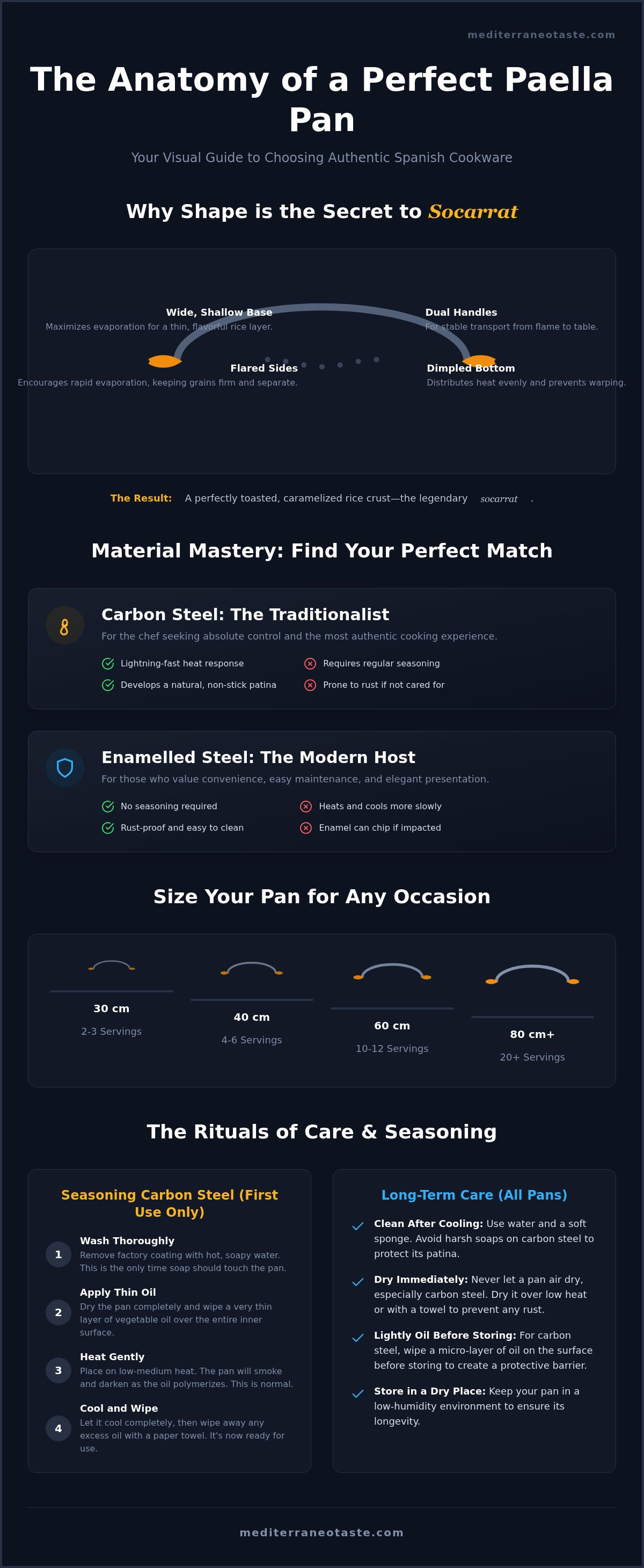
The dish we adore takes its very identity from the vessel that cradles it. In its land of origin, the name is simply the word for a frying pan in its native tongue, reflecting a deep-seated bond between the tool and the result. Unlike a standard kitchen pot that traps steam, an authentic paella cooking pan is designed as a wide, shallow stage. This specific geometry ensures that every grain of rice has its moment in the sun, absorbing rich broth without becoming a mushy stew. Depth is the enemy here; you want a thin, even layer that encourages the liquid to vanish into the air, leaving behind only concentrated flavor.
The science is simple yet profound. A standard frying pan focuses on heat retention, but a paella cooking pan focuses on heat release. By maximizing the surface area exposed to the air, you allow the stock to reduce at the exact pace the rice requires to reach its peak. This balance prevents the rice from overcooking. It ensures that by the time the liquid is gone, the bottom layer begins to toast against the steel, creating that legendary toasted crust known as the socarrat.
Why Shape Matters for Rice Texture
Authenticity demands a specific ratio of surface area to volume. When you use a specialized pan, the flared sides serve a vital purpose beyond aesthetics. They invite rapid evaporation, which is the secret to achieving that distinct, separate grain texture. In a deep pot, bottom layers soften under the weight of moisture; in a true pan, the rice stays firm and toasted. It creates a culinary landscape where the ingredients don't just cook, they transform into a sensory experience.
Traditional vs. Modern Pan Aesthetics
Look closely at the base of a traditional pan and you'll notice a pattern of small dimples. These aren't merely decorative. They help the metal expand and contract without warping while ensuring heat distributes evenly across the wide surface. This design facilitates the creation of the socarrat, that prized, crunchy crust that marks a successful cook. The dual handles aren't just for stability; they frame the dish, turning your kitchen creation into a sophisticated centerpiece ready for the table.
Choosing a pan from Mediterraneo Taste Spain means inviting a piece of artisanal history into your home. These pans are crafted to be seen. The wide diameter and low profile make it a generous serving vessel, allowing guests to admire the vibrant colors of saffron-infused rice and fresh seafood before the first bite. It's a celebratory tool that honors the origin of the dish while serving as a bold innovator in your modern kitchen.
Material Mastery: Carbon Steel vs. Enamelled vs. Stainless Steel
Choosing your paella cooking pan is an intimate choice of character. While the geometry defines the texture of the rice, the metal dictates the very rhythm of your cooking. Each material offers a distinct relationship with the flame and the ingredients. Understanding the nuances of Paella pan materials allows you to select a vessel that perfectly aligns with your style as a host and a chef. It's about finding the balance between tradition, performance, and the simple joy of the process.
Carbon Steel: The Heart of Spanish Tradition
This is the path of the traditionalist. Carbon steel is celebrated for its incredible heat responsiveness. It heats with lightning speed and cools just as quickly, granting you absolute control over the sizzle. These pans are living tools. With every use, they develop a dark, natural patina that creates a non-stick surface over time. The ritual of seasoning is a beautiful connection to Spanish heritage, a way of bonding with your cookware. For those ready to embrace this classic craft, we've detailed the journey in our guide to Mastering the Carbon Steel Paella Pan.
Enamelled Steel: Convenience Without Compromise
For the modern host who values elegance alongside effortless maintenance, enamelled steel is the ideal partner. These pans feature a durable, non-reactive glaze that protects the steel from rust and eliminates the need for seasoning. You achieve authentic results and a stunning toasted base without the upkeep of raw metal. It's a sophisticated choice that transitions beautifully from the burner to the center of your table. You can explore why this material is a favorite for home entertaining in The Ultimate Guide to the Enamelled Steel Paella Pan.
Serious chefs often turn to Pata Negra pans for their professional-grade resilience. These double-gauge steel vessels are built to withstand intense heat without warping, making them the choice for those who cook frequently and demand endurance. If your vision includes a luminous aesthetic that stays bright for years, stainless steel offers a premium, mirror-like finish. It’s a durable, high-end option that doubles as a striking piece of artisanal serving ware. Whether you prefer the living patina of tradition or the polished ease of enamel, you can browse our curated collection of authentic pans to find the one that speaks to your culinary soul.
Matching Your Pan to Your Heat Source
The dance between the flame and the metal determines the soul of your dish. To achieve the perfect result, you must Use the right pan for your specific heat source. While the ingredients provide the flavor, the interaction at the base of your paella cooking pan provides the texture. Whether you cook over an open outdoor flame or a modern glass cooktop, the contact between heat and steel must be intentional and precise.
Gas remains the preferred choice for many aficionados because it mirrors the traditional wood-fired methods of the past. The visible flame allows for immediate adjustments, letting you dial in the heat for the final sizzle. For those using gas, the traditional curved-bottom pan is a versatile partner. The flames wrap around the flared sides, distributing warmth with an artisanal touch. If you step outside to use a high-output gas burner, consider the Pata Negra series. These double-gauge steel pans offer a significant advantage in high-heat resilience. They prevent the warping that can plague thinner materials during long, celebratory cooks.
Induction Cooking Solutions
Modern kitchens require modern engineering. Induction cooktops rely on magnetic friction. This makes a flat-bottomed vessel non-negotiable for consistent contact. Standard curved pans will fail to engage the magnetic field effectively. To avoid the frustration of uneven cooking or heat-induced warping, look for a specialized base with extra thickness. You'll find more detail on selecting the right specs in our guide to Buying the Perfect Induction Paella Pan.
Outdoor and Event Sizing
Scale is essential for a successful gathering. A common mistake is choosing a pan that dwarfs the heat source. This leaves the outer edges of your rice cold and neglected. Ensure your burner's rings cover at least two-thirds of the pan's base for even absorption. Whether you host an intimate dinner for two or a grand event for twelve, our Large Paella Pan Guide for Events helps you match your guest list to the perfect diameter. Your paella cooking pan should be the star of the show, not a struggle to manage.
Beyond the stovetop, these pans are remarkably adaptable. Most authentic steel pans transition seamlessly into the oven for a final finishing touch or a slow-roasted crust. They also perform beautifully on a charcoal grill, where the wide surface captures a smoky, rustic aroma that complements the saffron. Just ensure your handles are rated for the temperature. This keeps the experience sophisticated and safe.
Caring for Your Paella Pan: From Seasoning to Storage
Owning an authentic paella cooking pan is an investment in a lifetime of shared memories. It isn't just a tool; it's a heritage piece that evolves with every feast you host. Proper care ensures your vessel remains a reliable partner in your culinary journey. This begins with the first-use ceremony. Most traditional pans arrive with a thin, protective coating from the manufacturer to prevent rust during transit. To remove this, simply boil water in the pan for several minutes, then wash it once with mild soap and a soft sponge. It's a quick but essential ritual that prepares the metal for its first encounter with olive oil and rice.
After this initial ritual, the integrity of the steel relies on your touch. Avoid harsh chemicals or abrasive metal scourers that can strip away the developing character of the metal. Instead, use warm water and a gentle brush. If rice remains stubborn, a short soak in water will loosen it without compromise. Always dry your pan immediately with a soft cloth. Never leave it to air dry, as moisture is the silent catalyst for oxidation. For carbon steel, this drying step is the most critical part of the process, ensuring the metal stays pristine for the next celebration.
The Art of Seasoning Carbon Steel
Seasoning is where the magic happens. By applying a very thin layer of neutral oil to the warm, dry surface, you create a barrier against the elements. Over time, this oil polymerizes, forming a dark, glossy patina. This isn't dirt; it's a natural non-stick coating that tells the story of every meal you've shared. A well-used pan becomes a map of previous gatherings, with each layer of seasoning adding depth to the metal's performance. If you notice orange spots of rust, don't panic. Simply scrub them away with a bit of steel wool, dry the area, and re-apply a fresh layer of oil. It's a forgiving process that rewards your attention and builds a bond between the chef and the cookware.
Maintenance for Enamelled and Stainless Options
While these materials offer a more relaxed approach, they still deserve a sophisticated touch. Enamelled surfaces are prized for their glass-like finish, so avoid metal utensils that might cause chips. For stainless steel, a quick polish with a specialized cleaner keeps it gallery-ready for your next event. Following a simple routine preserves the artisanal quality of your paella cooking pan for years to come.
- Dry immediately after washing to prevent water spots and mineral buildup.
- Store in a dry, cool place away from humidity to maintain the surface integrity.
- For carbon steel, always check for a light oil sheen before stacking your pans.
- Use paper towels between stacked pans to prevent scratches and absorb any stray moisture.
A well-cared-for pan is a sign of a true connoisseur who respects the origin of the craft. If you're ready to start your own tradition, explore our range of authentic Spanish paella pans and choose a vessel that will age as beautifully as your recipes.
Beyond the Pan: Curating the Ultimate Spanish Culinary Experience
Your new paella cooking pan is a magnificent stage, but a stage is nothing without its star performers. To achieve a result that truly honors traditional heritage, you must look beyond the metal. The synergy between your vessel and your ingredients is what creates that unforgettable, sensory depth. It's about curating an ecosystem where every element, from the grain of rice to the thread of saffron, works in harmony to stir curiosity and delight in your guests.
Bomba rice is the non-negotiable partner for any authentic cook. Unlike standard long-grain varieties, Bomba can absorb up to three times its volume in broth without losing its structural integrity. This allows it to drink in the rich flavors of your stock while the wide surface area of your paella cooking pan facilitates the perfect reduction. The result is a grain that is plump, separate, and deeply infused with the essence of the Mediterranean. It's a culinary rarity that turns a simple meal into a sophisticated event.
Authentic Spanish saffron threads are the golden secret to that iconic, sun-drenched hue and floral aroma. As the liquid evaporates, the scent fills your home, building a sense of refined anticipation. Invite your guests to gather round for the final ritual: the celebratory socarrat check. Use a spoon to gently feel the bottom of the pan. That rhythmic, crackling sound is the signal that your masterpiece is ready to be shared. It’s a moment of quiet confidence that marks you as a true host.
The Essential Paella Pantry
Building a pantry of Mediterranean delicacies is a journey of discovery. You'll need Pimentón de la Vera to introduce a smoky, artisanal depth that echoes traditional wood-fired cooking methods. Choose a robust, high-quality olive oil that can withstand high-heat searing while adding its own fruity character to the dish. For a deeper dive into these treasures, consult our Essential Mediterranean Pantry Guide. These ingredients are the building blocks of authenticity.
Complete Your Kitchen Infrastructure
True culinary mastery often requires the right supporting tools. From specialized gas burners to artisanal serving ware, expanding your kitchen infrastructure allows you to host with elegance and ease. We've curated a selection that brings the vibrant spirit of Spain directly to your door. The joy of home delivery means your pantry is always stocked with the rarity and freshness your guests deserve. Explore the full Mediterraneo Taste Spain collection to find everything you need for your next celebratory culinary journey.
Embark on Your Authentic Mediterranean Celebration
The journey to a perfect paella ends where the craftsmanship of your vessel begins. You now understand that the shallow, flared geometry of an authentic paella cooking pan is the essential stage for creating the legendary socarrat. Whether you choose the living patina of carbon steel or the elegant ease of enamelled steel, your choice reflects a commitment to genuine Spanish heritage. By matching your pan to your heat source and curating a pantry of premium ingredients, you'll transform a simple meal into a sensory event.
We invite you to bring this artisanal experience into your home. Our selection focuses on quality and origin, offering premium carbon and enamelled steel options for the discerning cook. With national delivery available for culinary connoisseurs, the vibrant spirit of Spain is closer than ever. Discover our curated collection of authentic Spanish paella pans and prepare to impress your guests with a masterpiece that honors tradition.
Step into your kitchen with confidence. The aroma of saffron and the rhythmic sizzle of the rice are ready to reward your curiosity.
Frequently Asked Questions
What is the best material for a paella cooking pan?
Carbon steel is the traditional gold standard for its incredible heat responsiveness. It allows you to control the sizzle and creates the most authentic socarrat. Enamelled steel is an excellent alternative for those who prefer easier maintenance without sacrificing quality. If you want a vessel that develops a natural patina over time, choose carbon steel. If you value a rust-resistant finish that stays gallery-ready, enamelled steel is your ideal partner.
Can I use a regular frying pan instead of a paella pan?
A regular frying pan lacks the specific geometry needed for this artisanal dish. Authentic paella requires a wide, shallow surface to encourage rapid evaporation of the broth. Standard pans are too deep and trap steam, which results in mushy rice. By using a dedicated paella cooking pan, you ensure the rice stays in a thin layer. This design is the only way to achieve the separate, toasted grains and that prized caramelized base.
How do I choose the right size paella pan for 4 people?
Select a pan with a diameter of 30cm to 34cm for a group of four. This size allows you to spread the rice in the traditional thin layer. If you use a pan that's too small, the rice will be too thick and won't cook evenly. For a more generous presentation or if you enjoy plenty of socarrat, opting for a 36cm pan provides extra surface area for a truly celebratory meal.
Do I need to season my paella pan before the first use?
Carbon steel pans require a simple seasoning ritual to prepare them for your kitchen. First, boil water to remove the protective coating applied by the manufacturer. Dry the vessel thoroughly and rub a thin layer of neutral oil over the surface. This creates a barrier against moisture. Enamelled steel pans are different. They don't require seasoning and are ready for your first cook after a quick wash with mild soap and warm water.
Why is my carbon steel paella pan turning black?
Darkening is a sign of a maturing carbon steel pan. This change represents the development of a natural patina, which is a thin layer of polymerized oil. It acts as a non-stick coating and protects the steel from the elements. Don't try to scrub it off. A dark pan is the hallmark of a seasoned chef. It shows your vessel has lived through many shared meals and is becoming more effective with every use.
Can a traditional paella pan be used on an induction cooktop?
Traditional curved pans won't work on induction because they lack flat contact with the surface. You must use a flat-bottomed pan made of magnetic steel. These specialized designs ensure the induction coil can engage with the metal effectively. It's essential to choose a pan with a thick base to prevent warping under the intense, direct heat of induction. This ensures your paella cooking pan stays stable and provides even heat across the entire surface.
What is the difference between a paella pan and a paella pot?
The difference lies in the height of the walls. A traditional pan is purposefully shallow to encourage liquid to evaporate quickly. This process concentrates the flavors and toasts the rice grains. A pot has high sides that trap moisture, leading to a stew-like consistency. To achieve the authentic, dry texture of a Valencian masterpiece, you must use the wide, flared design of a pan rather than the deep, enclosed space of a pot.
How do I prevent my paella pan from rusting?
Moisture is the enemy of raw steel. To prevent rust, always dry your pan immediately after washing. Never leave it in the sink or let it air dry on a rack. Once it's dry, apply a light rub of olive or vegetable oil to the entire surface before storing it. If you prefer to avoid this maintenance, an enamelled paella cooking pan is a perfect alternative. Its protective glaze provides a permanent barrier against oxidation.