

The secret to a legendary paella isn't found just in the rice or the saffron; it lives in how you command the fire beneath the pan. You likely crave that deep, smoky aroma that only a traditional fire provides. Yet, you've probably felt the frustration of a scorched center or a soggy edge when the wind shifts. Balancing the soul of tradition with the need for a perfect crust is the ultimate challenge for any discerning host.
When weighing the merits of a gas paella burner vs charcoal, you're choosing between two distinct culinary paths. We promise to help you discover whether the precision of a professional gas burner or the evocative, smoky tradition of charcoal better suits your journey toward the perfect socarrat. This exploration covers heat control, setup ease, and the sensory rewards of each method. You'll gain the confidence to serve ten or more guests with consistent, artisanal results that feel both professional and deeply authentic. Prepare to transform your outdoor entertaining into a celebrated event of sensory indulgence.
Key Takeaways
- Master the art of heat control to ensure your rice achieves the perfect texture without the risk of uneven cooking.
- Evaluate the gas paella burner vs charcoal debate to find the ideal balance between modern precision and the untamed soul of tradition.
- Discover how concentric ring technology allows you to manage different heat zones for consistent results when hosting large groups.
- Embrace the sensory indulgence of charcoal rituals to infuse your dishes with authentic, smoky aromas that define the Spanish experience.
- Identify the essential cookware combinations, like carbon steel pans, that elevate your setup to a professional, artisanal standard.
The Great Debate: Gas Paella Burner vs Charcoal for Authentic Results
The choice between a gas paella burner vs charcoal isn't just about fuel; it's about how you invite heat into your pan. Atmospheric gas heat provides a steady, invisible embrace, wrapping the base of the pan in a consistent temperature. In contrast, radiant charcoal heat offers an intense, flickering energy that penetrates the steel with a fierce, direct warmth. Both paths lead to a spectacular meal, yet they demand different skills from the chef. The single most vital element in this journey is heat control. Without it, the rice remains a simple grain rather than the star of a celebrated feast.
Success culminates in the socarrat. This thin, caramelized crust of toasted rice at the bottom of the pan is the hallmark of mastery. While charcoal creates this through high-intensity radiant energy, a professional gas burner achieves it through precise, adjustable flames. Your decision hinges on whether you prioritize the evocative ritual of the fire or the consistent precision of modern engineering. It's a balance of culinary goals and the logistical ease you desire for your next gathering.
The Role of Heat in Spanish Tradition
Centuries ago, the traditional paella was born in the Valencian countryside, cooked over open wood fires of orange and pine. These early cooks relied on the unpredictable nature of the wind and wood quality to create their masterpieces. This history infuses every bite with a sense of place and time. Modern professional burners aim to replicate these traditional heat patterns using concentric rings of fire. This sensory appeal isn't just about flavor; it's about the theater of the cook. It's the sound of the sizzle and the anticipation of guests gathered around a glowing hearth, waiting for the first taste of an artisanal discovery.
Why 2026 Home Chefs are Choosing Dedicated Equipment
In 2026, the shift toward curated, artisanal home dining has never been stronger. Discerning hosts are moving away from makeshift setups in favor of gear that guarantees excellence. A standard kitchen stove simply cannot support authentic paella pans because they lack the necessary diameter and even heat distribution. If you're cooking for ten or more guests, a dedicated burner ensures every grain of rice receives equal attention. This consistency is what transforms a casual dinner into a professional-grade experience. It's about having the right infrastructure to let your ingredients shine, ensuring your role as a sophisticated host is both effortless and deeply rewarding.
Gas Paella Burners: Precision, Control, and Modern Consistency
Imagine the quiet hiss of a steady blue flame as it dances beneath your pan. This is the sound of absolute control. When you navigate the choice of a gas paella burner vs charcoal, you are choosing between the unpredictability of nature and the surgical accuracy of modern engineering. A professional gas burner offers a level of reliability that charcoal simply cannot match, especially when hosting an event where failure isn't an option. These burners utilize flat-tube technology to ensure an even flame distribution across the entire surface of the steel. Unlike round-tube alternatives, flat tubes provide a wider, more consistent heat profile that eliminates cold spots, ensuring every grain of rice absorbs the broth at the same rate.
Safety and responsiveness are the hallmarks of this setup. The "instant-off" capability allows you to halt the cooking process the moment you achieve the perfect texture. You don't have to wait for embers to fade or worry about residual heat overcooking your delicate seafood. This immediate temperature adjustment is your greatest ally in the pursuit of the socarrat. While some enthusiasts enjoy the challenge of paella on the grill, a dedicated gas burner provides the high-BTU output required to maintain a vigorous simmer even on a breezy afternoon in 2026.
Mastering the Flame: Multi-Ring Control
Precision cooking relies on independent ring control. You might use the inner rings to gently sauté aromatics, then ignite the outer rings to sear your proteins with intense heat. This zone-based cooking is essential when managing a large paella pan for events, where the volume of liquid requires a massive, uniform energy source. During the final stage of cooking, you can dial the flames to a whisper to allow the rice to swell, then finish with a brief, high-heat burst to caramelize the base. It's a sophisticated dance of heat that guarantees a professional result every time.
The Professional Setup: Burners and Tripods
A flawless paella requires a perfectly level cooking surface. If your pan tilts even slightly, the broth will pool on one side, leaving half your rice dry and the other half mushy. Professional tripods provide the stability needed to transform any outdoor terrace or garden into a high-end Spanish kitchen. A professional paella burner is defined as a high-BTU gas ring specifically designed for wide-diameter pans. These robust sets are remarkably portable, allowing you to bring an artisanal culinary experience to any national location. You can explore our curated burner sets to find the infrastructure that matches your ambition as a host.
The Charcoal Ritual: Smoky Aromas and Traditional Soul
There is a primitive allure to the crackle of embers that captures the heart of every outdoor cook. For many, the choice of a gas paella burner vs charcoal is decided the moment the first wisp of smoke rises into the air. This is the path of the purist. It's a journey that values the evocative ritual of the fire over the streamlined efficiency of modern gas. While gas offers surgical precision, charcoal provides a traditional soul that connects you to the ancient Valencian countryside. It is an artisanal challenge where the chef must read the flames and anticipate the heat, turning a simple meal into a celebrated performance of fire and steel.
The romance of the process is undeniable. You aren't just adjusting a dial; you're tending a living energy that demands your full attention. This method requires patience and a willingness to embrace the unpredictable nature of open flames. It's about the slow build of anticipation as the coals reach their peak glow. For those who prioritize the sensory experience of the journey, the extra effort is a small price to pay for a deep connection to culinary history and the joy of a handcrafted feast.
The Flavor Profile of Open-Fire Cooking
Smoke is the invisible ingredient that gas simply cannot replicate. As the coals glow, they release a complex bouquet of wood scents that permeate the rice as it simmers. This smoke interacts beautifully with artisan extra virgin olive oil, creating a depth of flavor that feels both rustic and refined. Purists insist that this subtle infusion is the only way to achieve a "true" Spanish profile. The rice absorbs these earthy notes, resulting in a dish that tells a story of wood, earth, and the raw power of fire.
Challenges of the Charcoal Method
Choosing tradition comes with distinct technical hurdles that require a steady hand and a watchful eye. Maintaining a wide, flat heat bed across a large pan is an exercise in constant vigilance. Charcoal naturally creates "hot spots" where the energy is more intense, which can lead to uneven cooking or burnt centers if the pan isn't frequently rotated. Steel pans are particularly sensitive to these fluctuations, requiring the chef to master the art of ember management to ensure a consistent simmer.
Adjusting the temperature during the crucial "drying" phase is difficult. Unlike the instant response of a gas ring, charcoal requires you to physically move embers or adjust the height of the pan to prevent scorching. The prep time and subsequent cleanup are also significantly more demanding. You'll spend more time managing ash and scrubbing soot than you would with a clean gas setup. It is a labor of love, suited for those who find joy in the craftsmanship of the fire itself and the quiet satisfaction of a task well done.
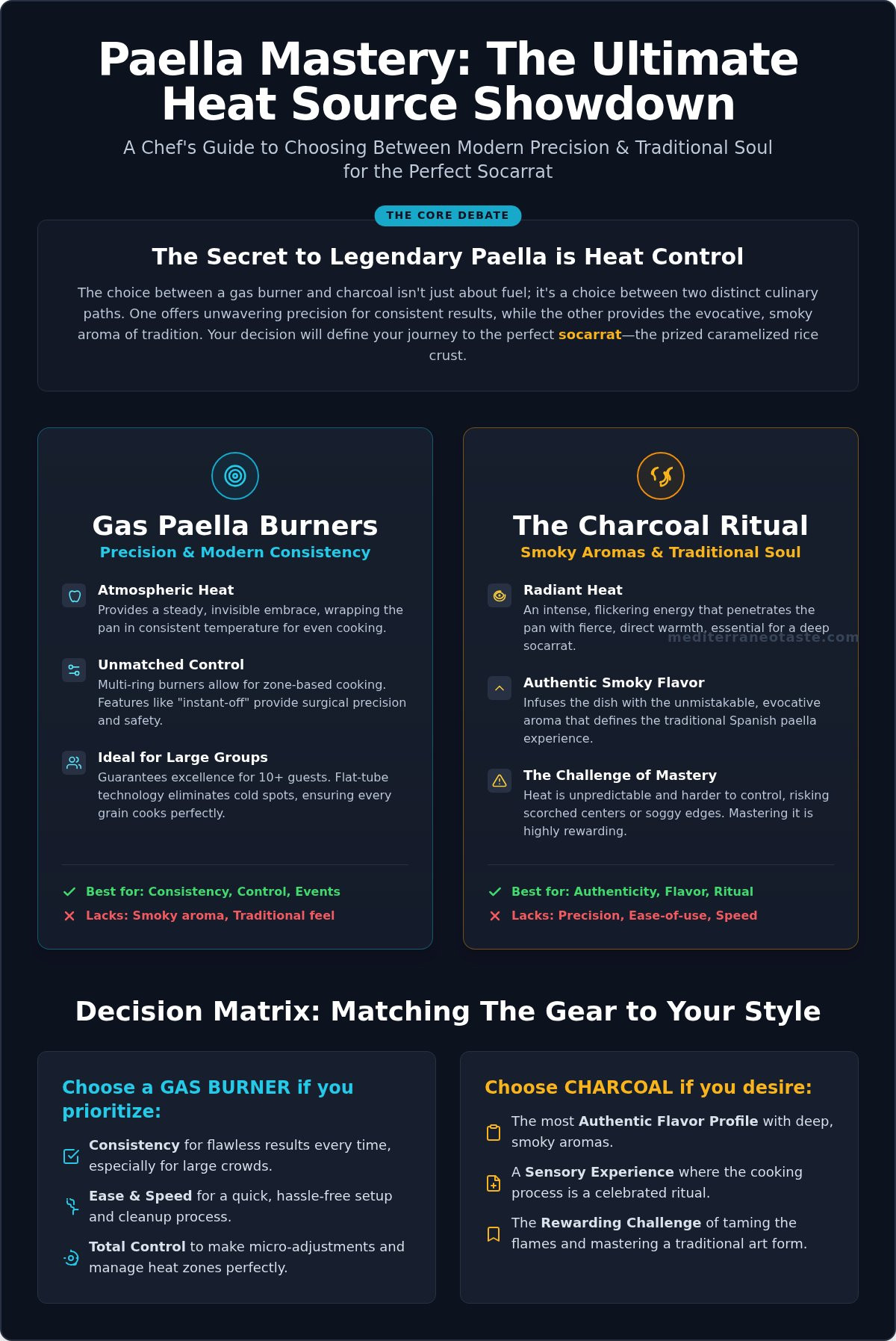
Decision Matrix: Matching the Gear to Your Entertaining Style
Choosing between a gas paella burner vs charcoal requires an honest look at your hosting ambitions. If you plan to serve twelve guests every second weekend, the efficiency of gas is unparalleled. It offers a professional, clinical edge that tells your guests you've mastered the craft. Charcoal, however, is pure theater. It transforms a meal into a rustic event, perfect for those rare, golden afternoons where time is an afterthought. Your decision rests on whether you value the predictable precision of a kitchen or the untamed drama of the hearth.
The learning curve for these methods couldn't be more different. Gas is essentially "plug and play." You'll find your rhythm within a single session, allowing you to focus on your guests rather than the fuel. Charcoal is a masterclass in patience. It demands a high level of skill to maintain that wide, flat heat bed required for an even simmer. Over time, a professional gas burner proves its worth as a long-term investment. These robust tools are built for durability, requiring little more than a quick wipe-down, whereas charcoal setups demand constant ash management and deep cleaning to prevent soot buildup.
Portability and Setup Logistics
Consider the logistics of your 2026 outdoor adventures. A 20-pound propane cylinder provides approximately 25 days of cooking time, making it the superior choice for national travelers or weekend campers. In contrast, a 20-pound bag of charcoal typically lasts for only three grilling sessions. For the busy host, the speed of "zero-to-cooking" is a decisive factor. Gas ignites instantly, reaching the perfect sauté temperature in minutes. If you value spontaneity, a gas setup allows you to start the ritual the moment the mood strikes. You can shop our professional paella burner Australia range to find a setup that travels as easily as you do.
The Socarrat Test: Which Wins?
The socarrat is the caramelized layer of rice at the bottom of the pan, prized by connoisseurs for its crunch and concentrated flavor. Achieving this prize is a high-risk, high-reward endeavor when cooking over coals. One wrong move with a hot spot can turn a perfect crust into a burnt ruin. Gas makes this milestone significantly easier for beginners to reach. By using the independent ring control mentioned earlier, you can apply a final, uniform burst of heat to the entire base of the pan. This controlled finish guarantees that coveted golden crust without the fear of scorched centers, ensuring every guest enjoys the hallmark of an authentic Spanish feast.
Curating Your Authentic Spanish Kitchen Infrastructure
Your journey toward the perfect Spanish feast culminates in the selection of your infrastructure. The choice of a gas paella burner vs charcoal ultimately influences the very steel you place over the flames. A pan is more than a vessel; it is a vital conductor of your culinary ambition. Choosing the right pairing ensures your rice achieves that legendary texture every time you host. It's about building a setup that feels both professional and deeply connected to the heritage of the dish.
For those who embrace the precision of gas, carbon steel paella pans are the professional standard. Their thin, responsive walls react instantly to the flicker of a multi-ring burner. This sensitivity allows you to command the heat with artisanal precision, seizing the exact second your socarrat reaches perfection. Pair this gear with high-quality Mediterranean delicacies and Spanish saffron to ensure your results match the sophistication of your tools. A truly authentic experience requires this harmony between gear and ingredients.
Essential Accessories for the Gas Burner
Outdoor entertaining in 2026 requires a robust support system to handle the elements. A dedicated wind shield is essential for maintaining a steady, uninterrupted flame during national outdoor events. Always verify that your gas regulator and hose comply with the latest safety standards to ensure a secure cooking environment. For those hosting ten or more guests, a reinforced tripod is a non-negotiable addition. It provides the unwavering level surface required for even liquid distribution in wide-diameter pans, preventing the common pitfall of unevenly cooked rice.
Final Verdict: The Curator’s Choice
The professional gas burner has emerged as the 2026 standard for the modern host who values reliability and consistent excellence. It removes the guesswork from the ritual, allowing you to focus on the joy of the gathering rather than the unpredictability of the fire. If you desire that traditional depth, simply infuse your broth with premium smoked paprika. This bridges the gap, offering the evocative "charcoal flavor" you crave alongside the effortless control of a professional gas ring. It's the ultimate compromise for the discerning chef who refuses to settle for anything less than perfection.
We invite you to elevate your home kitchen into a gateway of Spanish discovery. Explore our curated collection of professional tools, from the authentic Spanish paella pan to the professional paella burner Australia trusts. Visit Mediterraneo Taste to select the infrastructure for your next culinary masterpiece and begin your journey toward a truly evocative dining experience today.
Mastering Your Culinary Canvas
The journey to authentic flavor is a personal exploration of fire and steel. Whether you choose the surgical precision of a professional ring or the evocative ritual of the embers, your path leads to the same celebrated destination: the perfect socarrat. The debate of a gas paella burner vs charcoal isn't just about heat; it's about how you choose to host. You now have the framework to match your infrastructure to your lifestyle, ensuring every gathering in 2026 is a sensory success. It's about creating a moment where tradition meets modern excellence.
We provide the tools to elevate these moments. Our selection represents Artisanal Spanish Quality, expertly curated for the discerning home chef who refuses to compromise on heritage. With National Shipping Across Spain, your next artisanal discovery is only a few clicks away. Explore our Curated Collection of Professional Paella Burners and transform your terrace into a bastion of Mediterranean excellence. Your guests are waiting; it's time to ignite your passion for authentic craft and share the joy of a handcrafted feast.
Frequently Asked Questions
Is a gas paella burner safer than using charcoal?
Yes, gas burners offer superior safety through immediate control and manageable flames. Unlike charcoal, which can spark or remain hot for hours, gas allows you to extinguish the energy source instantly. When evaluating a gas paella burner vs charcoal, consider that gas eliminates the risk of flying embers. Always ensure your setup includes certified regulators and hoses to maintain a secure and professional environment for your guests.
Can I use a professional paella burner indoors?
No, you should never use a professional Spanish burner inside a standard residential kitchen. These high-BTU tools are designed strictly for outdoor use to ensure proper ventilation and prevent carbon monoxide buildup. They require significant clearance from combustible structures. For your 2026 gatherings, set up your burner on a stable tripod in a well-ventilated terrace or garden to enjoy an artisanal experience without safety compromises.
How do I clean a gas burner after an outdoor event?
Cleaning a professional gas burner is remarkably simple compared to the mess of ash and soot. Once the rings are completely cool, wipe the steel with a damp cloth to remove any stray oil or broth splashes. Avoid using abrasive chemicals that might damage the finish. If the flame holes become clogged, a soft brush or a small needle can clear the path. This minimal maintenance ensures your equipment remains a long-term investment.
What size gas burner do I need for a 60cm paella pan?
A 60cm pan typically requires a 40cm or 45cm double-ring burner to ensure uniform heat distribution. The outer ring must reach far enough to heat the edges of the steel, while the inner ring maintains the simmer. Using a burner that is too small will leave the perimeter of your rice undercooked. This specific pairing is vital for achieving a consistent socarrat across the entire surface of your large-scale feast.
Does charcoal really make the paella taste better?
Charcoal imparts a distinct smoky profile that gas cannot replicate, though "better" is a matter of personal preference. Purists value the earthy infusion of wood scents that penetrate the rice. However, when comparing a gas paella burner vs charcoal, many hosts prefer the clean results of gas. You can achieve a similar depth by using high-quality smoked paprika, allowing you to enjoy the convenience of gas without sacrificing that traditional, evocative aroma.
Can I use a regular BBQ instead of a dedicated paella burner?
You can use a BBQ, but it rarely provides the even, circular heat pattern required for a masterpiece. Most grills have linear burners or uneven coal beds that create problematic hot spots. A dedicated Spanish burner is engineered to cradle the wide diameter of the pan perfectly. This specialized equipment ensures that every grain of rice absorbs the broth at the same rate, which is essential for professional results.
What kind of gas do I need for a professional Spanish burner?
Most professional burners are designed to run on Propane (LPG) from standard cylinders. It's essential to use the correct regulator and hose kit that matches your national safety standards. A 20-pound propane cylinder provides approximately 25 days of cooking time, making it a highly efficient fuel source for the discerning host. Always check your burner's specific requirements to ensure a seamless and safe connection before you begin your next culinary journey.
How do I prevent my paella pan from warping over high heat?
Prevent warping by heating your pan gradually and ensuring it is never empty over a roaring flame. Always add your oil or liquid before the steel reaches extreme temperatures. Traditional pans are designed to expand slightly, but sudden, intense heat in one spot can cause permanent distortion. Using a burner with multiple concentric rings helps distribute the energy evenly, protecting the integrity of your artisanal cookware for years of celebrations.