

Your new polished steel pan is more than just cookware; it's an invitation to a centuries-old culinary tradition. That first glance at the gleaming surface often brings a touch of hesitation. You might worry about the creeping shadow of rust or the heartbreak of your rice sticking to the metal. These concerns are natural for anyone seeking a truly authentic Mediterranean experience.
Mastering how to season a paella pan is the essential ritual that turns raw steel into a professional tool. This process doesn't just protect your investment. It unlocks the ability to create that elusive, caramelized socarrat that defines a legendary dish. By bonding oil to metal through heat, you create a living, non-stick surface that only improves with time.
This guide provides everything you need to achieve a dark, resilient patina. We'll explore the best high-smoke-point oils, clarify the differences between polished and enameled steel, and walk you through the transformation of your pan into a cherished heirloom. Prepare to treat your kitchen to the gift of perfect Spanish flavors.
Key Takeaways
- Transform raw steel into a professional tool that develops a natural, non-stick surface over time.
- Master the initial ritual of removing the protective factory lacquer to prepare your pan for its first fire.
- Learn exactly how to season a paella pan using high-smoke-point oils for a durable and dark patina.
- Preserve your cookware for a lifetime of use with simple maintenance and the vital "never-dry" storage rule.
- Discover how a perfectly seasoned pan allows you to achieve the legendary, caramelized socarrat with every dish.
The Foundation of Flavor: Why Seasoning Your Paella Pan is Essential
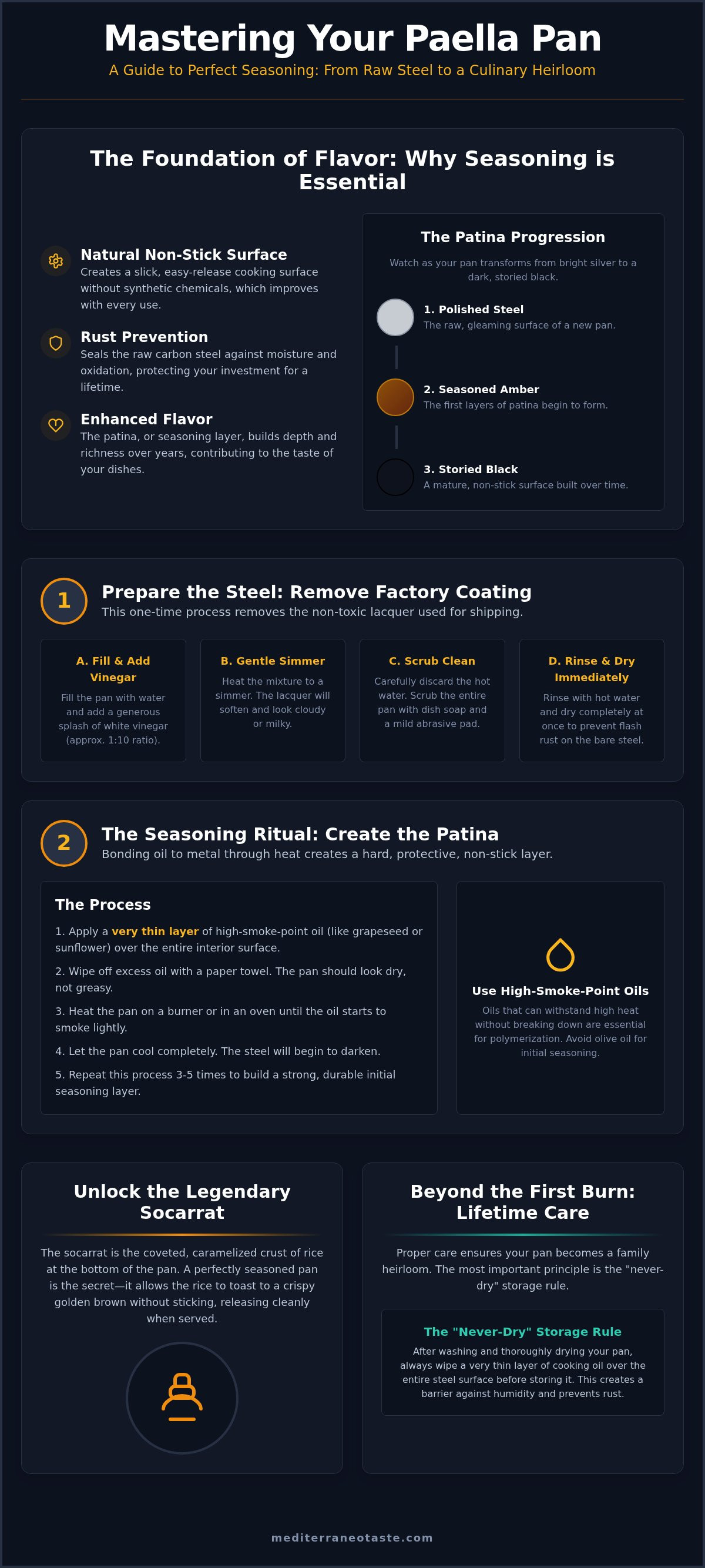
Your journey into authentic Spanish cooking begins with a single, transformative act. A new the traditional pan arrives as a gleaming canvas of polished steel. It's bright, silver, and full of potential. But raw carbon steel is delicate. Without a protective barrier, moisture in the air triggers oxidation, leading to the frustration of rust. Seasoning is the essential ritual that prevents this fate. It's the process of baking oil into the metal to create a natural, non-stick patina that protects the steel and enhances your cooking.
Understanding how to season a paella pan is about more than maintenance. It's about performance. A seasoned pan distributes heat with greater precision. This ensures that your ingredients cook evenly from the center to the very edge. You'll watch as the metal undergoes a beautiful sensory transition. The initial bright silver shifts into a warm, seasoned amber, eventually deepening into a dark, storied black. This patina is a badge of honor for any home chef.
A seasoned pan offers several distinct advantages for your kitchen:
- Natural Non-Stick: Creates a slick surface without synthetic chemicals.
- Rust Prevention: Seals the carbon steel against moisture and oxidation.
- Enhanced Flavor: The patina builds depth and richness over years of cooking.
- Thermal Efficiency: Improves heat absorption for a more consistent temperature.
The Chemistry of the Patina
Heat creates a permanent bond. When oil meets a hot steel surface, the molecules undergo polymerization. They transform into a hard, protective layer that is naturally slick. This organic shield is far superior to modern chemical non-stick coatings. It doesn't flake or release fumes at high temperatures. It thrives on heat. Instead, it becomes tougher with every use. This layer develops a unique character over time, absorbing the essence of your culinary adventures and making each subsequent meal more effortless than the last.
Seasoning and the Socarrat Connection
The true test of a master is the socarrat. This is the thin, caramelized crust of rice at the base of the pan that every guest craves. Achieving this perfect texture requires a surface that can withstand intense heat without sticking. A well-seasoned pan acts as an active participant in the recipe. It allows the rice to toast to a golden brown while releasing cleanly when served. Without this seasoned foundation, you risk burning the rice or losing that precious crust to the bottom of the pan. It's the secret to unlocking the deep, evocative flavors of your authentic Spanish cookware.
Preparing the Steel: Removing the Manufacturer’s Protective Coating
Before you can begin the seasoning ritual, you must strip away the past. Every authentic Spanish paella pan arrives with a thin, non-toxic lacquer. This factory seal is vital for the long journey from Spain. It guards the polished steel against rust during transit. However, this coating is not intended for cooking. Removing it is the first true step in learning how to season a paella pan. If left behind, it will scorch and ruin your first culinary experience. You're looking for the raw, bare soul of the metal.
Stripping this layer requires patience and heat. You'll need to be thorough. Any remnants of the factory seal will prevent the oil from bonding correctly with the steel. This initial cleaning is a one-time event. Once the lacquer is gone, you'll never need to scrub this aggressively again. Prepare your workspace and embrace the process of making the pan truly yours.
The Vinegar Simmer Technique
Fill your pan nearly to the brim with water. Add a generous splash of white or cider vinegar. A ratio of roughly one part vinegar to ten parts water works beautifully. Bring this mixture to a gentle simmer on your burner. As the water warms, you'll see the lacquer begin to soften. It often takes on a slightly cloudy or milky appearance. This is your visual cue that the bond is breaking. Avoid harsh industrial chemicals or paint strippers. These can penetrate the metal and compromise the artisanal quality of your cookware. A simple, natural simmer is all you need to reveal the pristine steel beneath.
Once the water is hot, carefully pour it out. Use a mild abrasive pad and standard dish soap to scrub every inch of the interior and exterior. Pay close attention to the rivets and handles. You want the steel to feel smooth and bare to the touch. Rinse thoroughly with hot water to remove any soap residue.
Immediate Drying and Flash Rust Prevention
Time is now of the essence. Towel drying is insufficient for raw carbon steel. It leaves behind microscopic droplets that invite oxidation. Place your clean pan directly onto a low flame on your stove. The heat will evaporate every trace of moisture in seconds. Watch for "flash rust." This fine, orange dust can appear almost instantly on damp, bare steel. If it occurs, don't panic. Simply wipe it away with a dry cloth and continue heating the pan until it's bone-dry.
Heat opens the pores of the metal, making it perfectly receptive to the first layer of oil. Most experts agree that thorough seasoning before use is the only way to ensure a lifetime of professional performance. With the steel bare and the moisture gone, you're ready for the transformation to begin.
The Seasoning Ritual: A Step-by-Step Guide to a Perfect Finish
Now that your pan is bare and pristine, you stand at the threshold of its transformation. This stage is a tactile, deliberate act of creation. You aren't just applying oil. You're bonding a protective shield to the steel that will define every meal you cook. The goal is a surface that feels as smooth as glass. This transition requires heat, the right fats, and a patient hand. When you understand how to season a paella pan correctly, you move beyond simple maintenance and into the realm of professional craftsmanship.
The most common mistake is over-application. Many enthusiasts believe a thick layer of oil provides better protection, but the opposite is true. Excess oil doesn't polymerize; it turns into a sticky, gummy residue that ruins the texture of your rice. Follow the "less is more" rule. Apply a few drops of oil and buff them into the steel with a lint-free cloth until the pan looks almost dry. You want a micro-thin film that heat can transform instantly.
Choosing Your Seasoning Oil
The choice of oil determines the durability of your patina. You need an oil with a high smoke point to ensure it bonds before it burns. Grapeseed oil and sunflower oil are exceptional choices for this process. While extra virgin olive oil is the soul of Mediterranean flavor, save it for the actual cooking. Its smoke point is too low for the intense heat required for the initial seasoning. The smoke point is the specific temperature at which an oil begins to break down and bond with the steel, creating a durable finish. Grapeseed oil, which typically retails for around $13.50 per 500ml, provides a clean, neutral base that won't interfere with your saffron's delicate aroma.
The Oven Method vs. The Stovetop Method
Your choice of method often depends on the size of your cookware. For smaller pans that fit comfortably in a domestic kitchen, the oven method provides the most consistent results. Preheat your oven to 200°C (400°F). Place the oiled pan inside, upside down, for one hour. This ensures the oil doesn't pool in the center. If you've invested in a large authentic Spanish paella pan, the stovetop or a dedicated gas burner is your best path. Heat the pan over a medium flame, rotating it constantly to distribute the heat evenly across the wide surface.
Expect a light wisp of smoke and a shifting color palette. The steel will darken, moving from silver to a deep, bronzed amber. This is the visual proof of success. Once the smoke stops, turn off the heat. Allow the pan to cool completely. This resting period allows the new patina to set and harden. Many experts suggest repeating this entire cycle two or three times. This layered approach to how to season a paella pan creates a resilient, professional-grade surface that is ready for its first fire. For more detailed insights on maintaining different styles of cookware, you can explore this guide on how to season a paella pan from BBC Good Food.
Beyond the First Burn: Maintaining Your Pan for a Lifetime of Use
The first seasoning is just the beginning. Your pan is a living tool that evolves with every feast. Treat it with the respect it deserves, and it will reward you with a flawless surface for decades. Authentic care ensures that your rice never sticks and your steel never fades. This ongoing relationship is what separates a casual cook from a true master of the fire.
Cleaning your pan is a gentle art. Avoid the dishwasher at all costs. The harsh salts and intense heat will strip your hard-earned patina in a single cycle. Instead, follow these steps for pristine results:
- Use hot water and a soft sponge to gently lift food particles.
- Avoid harsh detergents; a tiny drop of mild soap is sufficient only if absolutely necessary.
- Dry the pan immediately on a warm stovetop to ensure every trace of moisture evaporates.
- Apply a micro-thin film of oil while the metal is still warm to seal the surface.
Polished Steel vs. Enameled Care
Not all pans share the same needs. Enameled steel pans, easily identified by their black finish and white speckles, are virtually maintenance-free. They don't require seasoning and resist rust with ease. However, they lack the soul and heat-responsive nature of polished steel. Polished steel is the choice of the purist. It demands more attention but offers a superior, natural non-stick surface that only improves with time. If you prefer a tool that grows with you, a polished authentic Spanish paella pan remains the gold standard.
| Feature | Polished Steel | Enameled Steel |
|---|---|---|
| Seasoning Required | Yes | No |
| Rust Resistance | Requires oil film | High |
| Non-Stick Surface | Develops over time | Fixed coating |
| Cooking Style | Traditional/Pro | Convenience-focused |
How to Fix a Rusted Paella Pan
Accidents happen. Perhaps a guest left the pan soaking or it was stored in a damp cupboard. If you see orange spots, don't despair. A rusted pan is never a lost cause. It's simply an opportunity for a fresh start. Use a piece of fine steel wool to scrub away the rust until you reach the bright, bare metal once more. Once the surface is smooth and clean, you must repeat the process of how to season a paella pan from the very beginning. This reset restores the integrity of the steel and prepares it for its next journey to the table.
Watch for signs of a dull, greyish surface. If your rice starts to cling to the bottom in an uncharacteristic way, it's time for a maintenance burn. Knowing how to season a paella pan as an ongoing practice ensures your cookware remains in peak condition. A quick re-application of oil and heat will refresh the patina and keep the tradition alive in your kitchen.
From Steel to Table: Elevating Your Mediterranean Culinary Experience
The ritual is complete. Your pan boasts a deep, lustrous patina. It's no longer just a piece of hardware; it's a bridge to a richer culinary heritage. Mastering how to season a paella pan is the essential prelude to a sensory masterpiece. Now, the focus shifts from the vessel to the vibrant ingredients that will fill it. A perfectly seasoned surface is the only way to achieve the legendary socarrat. This caramelized, crispy layer of rice at the base of the pan is the hallmark of a true Mediterranean host. It requires that delicate bond of oil and steel to form without sticking, turning every bite into a discovery of texture and smoke.
Your seasoned pan deserves the finest companions. It demands ingredients that mirror its artisanal quality. You are now ready to curate an environment of authentic flavor. This is the moment to explore the art of Mediterranean delicacies at home. Every grain of rice and every thread of saffron contributes to the story you are about to tell at your table. Embrace the confidence that comes with professional-grade tools.
The Essential Paella Pantry
Start with the foundation. Use only authentic bomba rice, known for its incredible ability to absorb three times its volume in broth while remaining firm. This rice relies on your pan's even heat distribution to cook to perfection. Add the soul of the dish with authentic Spanish saffron. It provides that unmistakable golden hue and a floral aroma that defines the experience. Complement this with pimentón, a smoked paprika that adds a deep, earthy resonance. For a complete checklist of what your kitchen requires, consult our Mediterranean pantry essentials guide.
Hosting with Confidence
The paella pan is designed to be the centerpiece. Carry it to the table with pride, letting the dark patina contrast with the vibrant colors of the feast. A Sunday lunch is a slow, celebratory event. Invite your guests to linger over the meal. Pair your creation with a selection of authentic Spanish appetizers to create a full tapestry of regional specialties. Once you understand how to season a paella pan, you possess the key to a lifetime of these shared moments. Browse the Mediterraneo Taste collection today to find the premium tools and ingredients that turn every meal into a special event.
Ignite Your Passion for Authentic Spanish Cooking
A perfectly seasoned pan is the heart of every great Mediterranean kitchen. By removing the factory seal and mastering how to season a paella pan, you've transformed raw steel into a professional-grade tool. This ritual ensures your cookware remains a lifetime investment, capable of producing the legendary, caramelized socarrat that guests adore. You're now ready to host with the quiet confidence of a master curator.
As direct importers of traditional Spanish cookware, we provide the expert guidance and premium artisan ingredients needed for culinary success. From rare saffron to heritage rice, every element we offer supports your journey toward authentic flavor. Discover our curated collection of authentic Paella Pans and Kits and bring the vibrant spirit of Spain to your own table. Your new patina is a story waiting to be written. Embrace the fire, trust your craft, and enjoy every sensory moment of the feast ahead.
Frequently Asked Questions
Do I need to season a stainless steel paella pan?
Stainless steel doesn't require seasoning. It's a non-reactive and rust-resistant material by nature. While it offers incredible convenience and easy maintenance, it lacks the ability to build a natural, non-stick patina like carbon steel. You'll miss out on the deep, seasoned character that develops over years of use. For the most authentic Mediterranean results and a superior socarrat, we always recommend sticking to a traditional polished steel pan.
What happens if I forget to oil my paella pan after washing it?
Rust is the immediate consequence of leaving bare steel unprotected. Without a thin film of oil, moisture in the air triggers oxidation almost instantly. You'll likely see fine orange spots across the surface within hours of washing. If this happens, don't panic. Simply scrub the rust away with fine steel wool and repeat the steps for how to season a paella pan to restore its protective, amber shield once again.
Can I use soap on my seasoned paella pan?
Mild soap is acceptable only for the very first cleaning to remove the factory lacquer. Once you've established a patina, avoid detergents entirely. Soap is designed to strip oils, which means it will eat away at your hard-earned seasoning. Stick to hot water and a soft sponge. For stubborn bits, a gentle scrub with coarse salt and a little oil works wonders without damaging the surface. This preserves the natural non-stick qualities you've worked to build.
How often should I re-season my carbon steel pan?
Re-seasoning depends on your cooking frequency and care. You'll know it's time when the surface looks dull or food begins to cling. A well-maintained pan actually seasons itself with every use. However, a quick maintenance burn every few months keeps the patina resilient. If you've accidentally used soap or scrubbed too hard, a full re-seasoning session will bring back that professional, slick finish. It's a simple way to protect your long-term culinary investment.
Why is my paella pan turning black after seasoning?
Turning black is a definite sign of success. This deep color indicates that the oil has successfully polymerized and bonded with the steel. It's the ultimate goal of the seasoning process. This dark layer provides the natural non-stick properties and protects the metal from oxidation. Embrace the change. Your pan is developing the storied character that defines a professional tool. It's a badge of honor that shows you've mastered the art of the fire.
Can I season a paella pan on an induction cooktop?
You can season a pan on an induction cooktop, but it requires patience. Induction heats the base very quickly, which can lead to warping if the pan is large. Use a low setting and rotate the pan frequently to distribute the heat. If your pan is significantly wider than the induction element, consider the oven method instead. This ensures the entire surface, including the sloping sides, receives an even, durable coating for a lifetime of use.
Is the factory coating on a new paella pan toxic?
The factory coating on an authentic Spanish paella pan is a non-toxic, food-safe lacquer. It's specifically designed to prevent rust during the long journey from Spain to your kitchen. While it isn't harmful, it will burn and smell unpleasant if you attempt to cook with it. Always strip this layer away using the vinegar simmer method before you begin learning how to season a paella pan to ensure a clean, professional finish.
What is the best oil for seasoning a paella pan?
High-smoke-point oils are the best choice for a durable finish. Grapeseed, sunflower, and flaxseed oils are excellent because they withstand the intense heat required for polymerization. Avoid extra virgin olive oil or butter for the initial seasoning. They burn too quickly and leave a gummy residue. Grapeseed oil provides a clean, neutral base that won't interfere with the delicate aroma of your premium saffron, making it the preferred choice for discerning chefs.