

A vinegar’s label can tell you more than its country of origin. It can offer clues about how it was made and what to expect from its flavour. If you’ve wondered how sherry vinegar from spain differs from other wine vinegars, look beyond the word “sherry” on the bottle. Origin and production matter, as does how the vinegar’s acidity works with food.
Choose with confidence by learning what the protected “Vinagre de Jerez” designation means and which origin and ageing details to check. Then explore what to expect when tasting it: lively acidity, savoury depth and, in some bottles, a softer or sweeter finish. You’ll also find practical ways to use it in vinaigrettes, soups, roasted vegetables and richer dishes, without letting the acidity take over.
This guide explains the Spanish tradition behind this vinegar, how to taste it and how to add it gradually. A little restraint helps its character complement the food.
Key Takeaways
- Learn how wine becomes vinegar and how fermentation and maturation shape its aroma, texture and intensity.
- Use the protected “Vinagre de Jerez” designation as an important clue when assessing sherry vinegar from spain.
- Compare ingredient lists, producer details and ageing information to make a more informed choice.
- Add vinegar gradually, then taste and adjust seasoning and richness to balance its acidity.
- Follow the bottle’s storage directions and handle it cleanly to help preserve its quality after opening.
What Is Sherry Vinegar from Spain, and What Makes Its Character Distinctive?
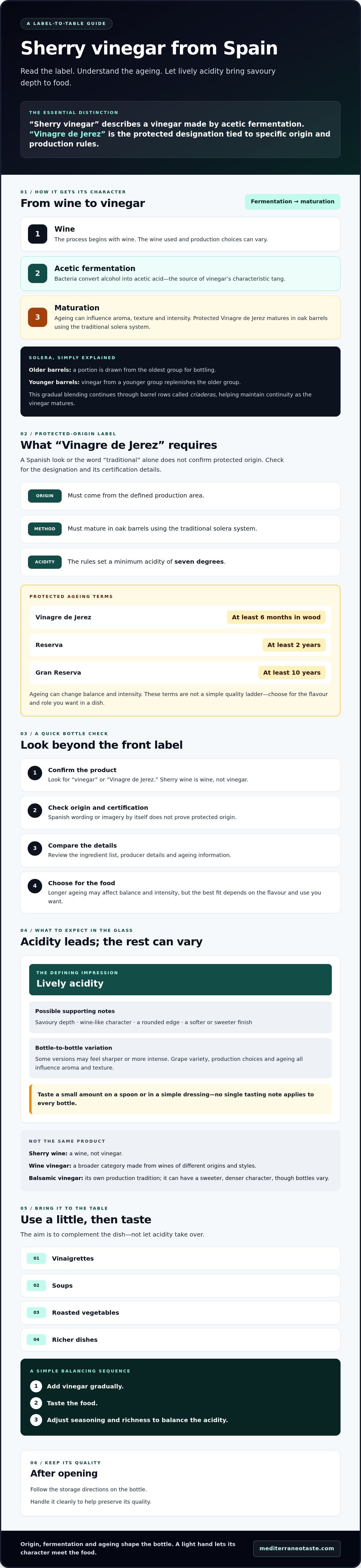
Sherry vinegar from Spain is wine vinegar made through acetic fermentation, while “Vinagre de Jerez” is the protected designation for vinegar that meets the origin’s production rules. The distinction matters: Spanish wording or imagery on a label doesn’t, by itself, confirm protected origin. Check the designation and certification details on the bottle.
Its connection to Spain’s wine tradition gives the vinegar a wine-derived character, but it is more than wine with extra sharpness. Acidity leads, while some bottles may also offer savoury depth, a rounded edge or notes shaped by maturation. These impressions vary. Grape variety, production choices and ageing can all influence the finished vinegar. The What Is Sherry Vinegar overview offers further background on its history, production and protected status.
Sherry vinegar and sherry wine are different products: one is vinegar, the other is wine. Sherry vinegar is also distinct from wine vinegar as a broader category, which can be made from wines with different origins and styles. Balsamic vinegar has its own production traditions and can have a sweeter, denser character, though bottles vary. Check the product and origin wording rather than assuming that vinegars with similar colours or sharp aromas taste alike.
Is sherry vinegar the same as sherry wine?
No. Sherry wine is a wine; sherry vinegar is produced when wine undergoes acetic fermentation. The wine used and the production process can vary between vinegars. Look for “vinegar” or “Vinagre de Jerez” on the label to identify the product. A bottle labelled as sherry wine is not vinegar, even if the names sound closely related.
What does Spanish sherry vinegar taste like?
Expect acidity, but let the bottle’s flavour guide you beyond that. Some versions may taste savoury and wine-like, with a softer, rounded finish; others can feel sharper or more intense. Ageing and production affect aroma and texture, so no single tasting note applies to every bottle. Try a small amount on a spoon or in a simple dressing to see how its tang and depth work with food.
How Spanish Sherry Vinegar Is Made, Fermented and Aged
The process begins with wine, but fermentation and maturation give the finished vinegar its own character. Acetic fermentation turns wine into vinegar as bacteria convert its alcohol into acetic acid. The wine, production method and ageing can all shape the aroma, texture and intensity of the vinegar.
From wine to vinegar through acetic fermentation
Wine is exposed to conditions that allow acetic acid bacteria to work. “Acetic fermentation” describes the conversion of alcohol into acetic acid, which gives vinegar its characteristic tang. The wine used, fermentation choices and any later maturation can differ, so don’t assume every bottle starts with the same grape or follows an identical recipe.
For vinegar bearing the protected “Vinagre de Jerez” designation, the production rules are more specific. The vinegar must come from the defined production area and mature in oak barrels for at least six months using the traditional solera system. The rules also set a minimum acidity of seven degrees. For an overview of the designation and production context, see Spain’s Protected Designation of Origin (PDO) information.
What ageing and the solera system can contribute
In a solera, barrels are arranged in groups of different ages. A portion is drawn from the oldest group for bottling, then replenished with vinegar from a younger group. The process continues through the rows, or criaderas. This gradual blending helps maintain continuity while maturation influences the vinegar’s aroma and texture. Solera ageing is a feature of protected “Vinagre de Jerez,” but it isn’t a guarantee that every vinegar described as sherry-style uses the same method.
The protected ageing terms offer useful clues: “Vinagre de Jerez” requires at least six months in wood, “Reserva” at least two years, and “Gran Reserva” at least ten years. Longer ageing can change the vinegar’s balance and intensity, but the terms aren’t a simple quality ladder. Choose based on the flavour and role you want in a dish, and check that the wording appears on the bottle.
These details help explain sherry vinegar from spain: fermentation creates its acidity, while maturation shapes its style. To explore more food traditions that inspire Spanish cooking, browse Spanish and Mediterranean pantry favourites.
How to Choose Authentic Sherry Vinegar from Spain
A Spanish flag, rustic design or phrase such as “traditional” may tell a story, but none alone proves protected origin. To assess sherry vinegar from spain, start with the exact product name and any protected-origin wording. Then compare those details with the producer’s information and the current official specification.
Which label details are worth checking?
For vinegar protected under the “Vinagre de Jerez” PDO, look for that designation and any certification or control mark indicated by current rules. Check the wording against official guidance rather than relying on a place name or Spanish imagery. The table below separates useful label clues from claims that need supporting detail.
| Label detail | What to look for | How to read it |
|---|---|---|
| Product name | “Vinagre de Jerez” | Check that the protected designation appears clearly, not just a general reference to sherry or Spain. |
| Origin and certification | Protected-origin wording and relevant control information | Verify the current label language and certification details against the official specification. |
| Ingredients | Grape or wine details, if stated | Palomino is the primary grape associated with the vinegar; Pedro Ximénez and Moscatel may also be used. Ingredient wording can help explain style, but it doesn’t prove origin on its own. |
| Producer and ageing | Identifiable producer; category or maturation details | Check whether the producer explains the claim and whether ageing terms match the protected categories. |
Words such as “premium,” “artisan” and “traditional” may describe a maker’s approach, but they don’t establish PDO status. Colour, packaging and price can’t confirm authenticity either. For broader advice on assessing provenance and product claims, read this Spanish ingredient authenticity guide.
How do style and ageing affect your choice?
For protected “Vinagre de Jerez,” the verified ageing categories are “Vinagre de Jerez” at a minimum of six months in wood, “Reserva” at least two years, and “Gran Reserva” at least ten years. Treat these as maturation information, not a ranking of better and worse. Longer-aged vinegar may have a more pronounced finish; choose a style that suits your palate and intended dish.
For a delicate dressing, you may prefer a lighter touch. A bolder vinegar can stand up to richer ingredients or deeper flavours. Read the label, then consider how you’ll use it. Choose for the balance you want in your cooking, not simply for the grandest-sounding claim.
How to Use Spanish Sherry Vinegar in Everyday Cooking
A little vinegar can bring a dish into focus. Use sherry vinegar from Spain to lift flavours rather than drown them. Its acidity can brighten vegetables and pulses, cut through richness and add a savoury edge to sauces. Start with a small amount, especially with an aged or unfamiliar bottle, and build to taste.
Where sherry vinegar brings brightness and depth
Try it in a simple dressing for leafy greens, over cooked vegetables, or stirred into lentils and chickpeas. Add a small splash to a pan sauce near the end of cooking so it mingles with the cooking juices. For a finishing touch, drizzle a little over roasted vegetables or a hearty pulse dish just before serving. Adding it later tends to keep its fresh tang more noticeable.
Use this simple method:
- Add modestly. Start with a small splash rather than pouring directly from the bottle.
- Taste the dish. Check whether the vinegar brightens the other ingredients or dominates them.
- Adjust the balance. Add more gradually, then reassess the seasoning and richness before serving.
How to balance acidity in a dish
If the result tastes too sharp, add richness with olive oil a little at a time. A hint of sweetness can soften the edge too, but use it sparingly to keep the dish savoury. Salt changes how flavours register, while chilli or pepper can make the overall impression feel more intense. Taste after each adjustment. There’s no single amount that suits every recipe or bottle.
Sherry vinegar can often replace another wine vinegar, but it won’t be a neutral swap. Its acidity and savoury notes may change the flavour of a dressing, marinade or sauce. Start with less than the recipe calls for, taste, then adjust. If the vinegar is sweetened or especially intense, allow for that difference as well.
For more ideas on combining Mediterranean ingredients, explore this Mediterranean pantry guide. You can also explore Spanish pantry ingredients for home cooking and build a meal around the flavours you enjoy.
Serving, Storing and Exploring Spanish Vinegar with Confidence
Once you’ve chosen a bottle, follow its storage guidance. Recommendations can vary by product, so check the label and producer information rather than assuming every vinegar should be handled in the same way. Clean handling and a securely closed cap help limit unwanted contamination and preserve quality between uses.
How should sherry vinegar be stored?
Follow the storage instructions on the bottle, including any directions for after opening. Use clean utensils, keep food and other liquids out of the bottle, and close it securely after pouring. If the label doesn’t answer a storage question, consult the producer. Don’t rely on a universal shelf-life promise or assume that every style has identical storage needs.
A simple final checklist for choosing and using it
Keep the decision practical. First, confirm what the product is and review its origin information. Next, consider its intended role: a light lift for a dressing or a more pronounced finish for a richer dish? Finally, taste before adding more. Gradual adjustments help preserve balance and show you what suits your cooking.
- Identify the product: Read the name and origin details, and verify protected-origin claims against current official guidance.
- Choose for the dish: Decide whether you want a subtle lift or a more assertive note. Ageing language can help describe style, but it doesn’t replace personal preference.
- Taste and adjust: Add a little, taste the finished dish, then make small changes to seasoning or richness as needed.
- Store with care: Follow the bottle’s directions, handle it cleanly and close it securely after use.
That’s a confident path from label to plate: identify, match, taste and fine-tune. There’s no need to chase status words or pour generously. Let the character of sherry vinegar from spain complement the dish, then stop when the flavours feel balanced.
For more inspiration beyond vinegar, explore Spanish Mediterranean delicacies and discover pantry traditions that bring Spanish flavours into home cooking.
Bring Spanish Flavour to Your Table
Choosing sherry vinegar from spain starts with checking the product and origin details, not just its Spanish styling. Production and ageing shape its character, while the right choice depends on how you plan to use it. Add a little at a time, then adjust the acidity with seasoning or richness until the dish feels balanced.
Follow the bottle’s storage directions, too. Clean handling and a securely closed cap help you care for it between meals. These small steps let you explore its flavour with confidence, whether you’re dressing vegetables, enriching a sauce or adding a bright finishing note.
Mediterraneo Taste Spain specializes in authentic Mediterranean delicacies and traditional Spanish food products for home cooks seeking Mediterranean flavours. Explore Spanish Mediterranean delicacies and find inspiration for your next meal. Choose thoughtfully, taste as you cook and enjoy bringing Spanish food traditions into your kitchen.
Frequently Asked Questions
What is sherry vinegar from Spain?
Sherry vinegar from Spain is wine vinegar associated with Spanish culinary tradition, but the exact origin and production depend on the bottle. “Vinagre de Jerez” is a protected designation with defined production requirements. Check the product name and origin or certification details rather than relying on Spanish imagery. Its acidity and savoury, wine-derived character can work well in dressings and sauces, though flavour varies by producer and maturation.
How can I tell if sherry vinegar is authentic?
Check the exact product name, producer details and origin wording on the label. For vinegar claiming the protected “Vinagre de Jerez” designation, verify the current certification language against the relevant official specification. Spanish imagery and words such as “traditional” or “premium” aren’t proof of protected origin. If the label is unclear, ask the seller for product documentation rather than treating packaging, colour or price as confirmation.
What does sherry vinegar taste like?
Sherry vinegar is known for bright acidity and may have savoury, wine-derived depth, but bottles differ. Production choices and maturation influence aroma and intensity, so don’t assume every version has the same sharpness or sweetness. Taste a small amount before adding it to a recipe. If the flavour feels assertive, use less and balance it with olive oil or other ingredients suited to the dish.
Can I use sherry vinegar instead of balsamic vinegar?
Sometimes, but expect the dish to taste different. Sherry vinegar often brings a sharper, more savoury profile, while balsamic vinegars vary in sweetness and body. Rather than making an automatic one-for-one swap, start with a smaller amount and taste. Adjust richness and seasoning as needed. The substitution may work in a dressing, vegetable dish or sauce, but it won’t reproduce the original flavour in every recipe.
How should I use sherry vinegar in cooking?
Add it gradually to dressings, cooked vegetables, pulses, marinades or sauces, tasting as you go. A modest splash can brighten rich or savoury ingredients, while too much may make a dish taste sharp. Add it near the end for a more noticeable lift, or let it cook briefly into a sauce for a more integrated flavour. Adjust seasoning and richness after tasting.
Does sherry vinegar need to be refrigerated after opening?
Follow the storage directions on the bottle or provided by its producer. Instructions can differ, so don’t assume every vinegar has identical requirements. Close the bottle securely after pouring and use clean utensils to help maintain quality. Check the label for specific guidance after opening. If instructions aren’t provided or you’re unsure how to interpret them, contact the producer for advice.