

That bottle of "Extra Light" oil in your pantry isn't a shortcut to health; it's a missed opportunity for sensory indulgence. It's easy to feel overwhelmed by vague labels while searching for a truly high quality spanish olive oil, especially when you're worried about counterfeit products or stale inventory. You deserve the vibrant, peppery kick of a fresh harvest, not a characterless fat that disappears into the background of your cooking.
We believe that selecting a premium oil should be an act of refined anticipation. In this guide, you'll discover the sensory secrets and strict artisanal standards that define the world's most prestigious extra virgin olive oils. We will demystify the complex world of Spanish varietals and show you how to interpret the latest quality controls with total confidence. You'll learn to master the art of varietal pairing and curate a functional olive oil cellar that brings the soul of the Mediterranean to your home. Prepare to transform your kitchen into a gateway for authentic, artisanal discoveries.
Key Takeaways
- Learn why "Extra Virgin" is merely the baseline and how early harvest techniques unlock unparalleled sensory intensity.
- Master the distinct nuances of Picual and Arbequina to confidently select a high quality spanish olive oil for your collection.
- Discover the professional "Four S" tasting method to evaluate the freshness and artisanal craftsmanship of every bottle.
- Unlock the secrets of varietal pairing to elevate Mediterranean delicacies and ensure your premium oils always take center stage.
- Protect your investment by learning to decode harvest dates and shield your artisanal oils from the "three enemies" of preservation.
Defining the Gold Standard: What Makes Spanish Olive Oil "High Quality"?
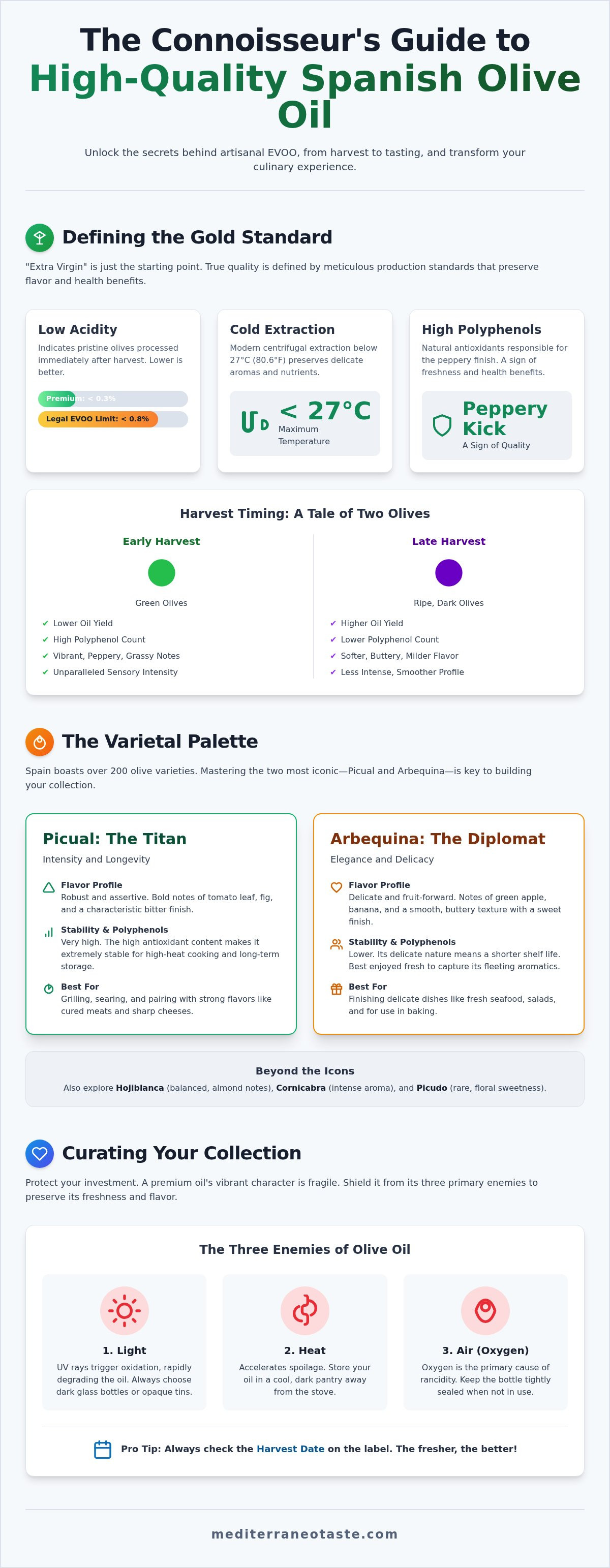
Spain is celebrated as the world's largest producer of olive oil, but for the discerning palate, volume is secondary to virtue. While the label "Extra Virgin" provides a legal baseline, it's merely the beginning of the story for a truly high quality spanish olive oil. The real gold standard lies in the meticulous details of the extraction process and the timing of the harvest. High-quality Spanish EVOO is an oil with <0.8% acidity and a vibrant polyphenol count.
Modern artisanal standards have shifted from traditional cold pressing to cold extraction. While pressing is romantic, modern centrifugal extraction at temperatures strictly below 27°C preserves the delicate aromatic compounds that would otherwise evaporate. This precision ensures that the oil you pour is as fresh as the day it left the mill. We also look for Early Harvest oils. Producers deliberately sacrifice yield, picking green olives that produce less oil but offer an unparalleled sensory intensity. It's a bold choice that prioritizes craftsmanship over profit.
The Chemistry of Craftsmanship
Authentic quality is measurable. Finding a high quality spanish olive oil requires looking past the marketing and into the science of the grove. Low acidity levels, often well below the 0.8% limit, indicate that the olives were pristine and processed immediately after picking. This freshness is guarded by the DOP (Denominación de Origen Protegida) seal, which guarantees the oil meets rigorous regional standards. Beyond acidity, we seek a high polyphenol count. These natural antioxidants create that signature peppery finish at the back of your throat. It's a sign of life and longevity in the oil.
Harvest Timing and Flavor Density
The calendar dictates the character of the oil. Early harvest olives, picked while still green, yield oils with vibrant notes of fresh grass and tomato leaf. As the fruit ripens to purple and black, the oil becomes softer and more buttery. This labor-intensive harvest requires careful handling to prevent bruising, ensuring the fruit's integrity remains intact. For the final touch, consider the choice between filtered and unfiltered oils. Filtered oils offer a polished clarity and longer shelf life, while unfiltered varieties provide a rustic, cloudy texture that feels straight from the grove. Both have their place in a curated collection.
The Varietal Palette: Navigating Spains Iconic Olive Varieties
Spain's landscape is a mosaic of over 200 varieties, each offering a distinct sensory footprint. To find a high quality spanish olive oil, you must first understand the character of the fruit. These major olive cultivars define the culinary identity of their regions. From the sun-drenched plains of Andalusia to the cool groves of Catalonia, the olive is a reflection of the soil and the sun.
Picual: Intensity and Longevity
Picual is the undisputed titan of Spanish production. It's famous for its robust profile, marked by bold notes of tomato leaf and fig. This variety boasts a high polyphenol content, making it the most stable choice for high-heat cooking and long-term storage. When you taste a premium Picual, look for a deliberate bitterness and a lingering, peppery pungency. It's an assertive oil that stands up to strong flavors and beautifully elevates authentic Spanish appetizers like cured meats and sharp cheeses.
Arbequina: The Gateway to Artisanal Oil
If Picual is the bold leader, Arbequina is the elegant diplomat. This variety is beloved for its buttery texture and fruit-forward personality. You'll often detect hints of green apple and banana with a smooth, sweet finish. It's the preferred choice for delicate tasks like baking or finishing fresh seafood. However, its mild nature comes with a shorter shelf life. Because it has lower stability than robust oils, it's best enjoyed fresh to capture its fleeting aromatics.
Mastering the Balance
Hojiblanca offers a sophisticated middle ground. It's a master of balance, featuring nuances of almond and fresh-cut grass. Its finish is often described as "white leaf," referencing the silver underside of the tree's foliage. Investing in a high quality spanish olive oil from this variety provides a versatile tool for any recipe. For those seeking rarity, Cornicabra and Picudo are the hidden gems. Cornicabra is known for its intense aroma and goat-horn shape, while Picudo offers a complex floral sweetness that is increasingly rare in the global market.
Exploring these regional specialties allows you to curate a truly personal kitchen experience. You can start your journey by exploring our curated selection of Mediterranean delicacies today.
The Connoisseur’s Ritual: How to Evaluate Premium Spanish EVOO
Tasting a high quality spanish olive oil is a deliberate act of discovery. To begin your ritual, pour a small amount of oil into a tapered glass. Professional tasters often use blue glass to hide the oil's color, ensuring the evaluation remains purely sensory. Warm the glass in the palm of your hand for a few minutes. This gentle heat releases the volatile compounds that define the oil's unique character. Keep a slice of green apple or a sip of sparkling water nearby to cleanse your palate between different samples.
Master the "Four S" method to unlock the hidden nuances of your collection. First, Swirl the oil to coat the glass. Next, Sniff deeply to capture the initial aromatics. Then, Slurp the oil by drawing it into your mouth with a sharp intake of air. This aeration spreads the liquid across your entire tongue, highlighting its complexity. Finally, Swallow the oil to judge the finish. A premium oil will feel clean on the palate, never greasy or heavy.
The Olfactory Experience
Your nose is your most powerful tool. When evaluating a high quality spanish olive oil, look for vibrant "green" notes like freshly cut grass, tomato vine, or green artichoke. Some oils lean toward a fruit-driven profile with hints of banana or apple, while others offer a spice-driven aroma of black pepper or cinnamon. The aroma should leap from the glass at room temperature, inviting you into the heart of the Spanish grove. If you detect scents reminiscent of crayons, sweaty socks, or mold, you've likely encountered an oil that is rancid, fusty, or musty.
The Throat Kick: Understanding Pungency
Don't be startled by a sharp sensation at the back of your throat. This "throat kick" is a hallmark of excellence. Connoisseurs often use the "one-cough" or "two-cough" rule to describe the intensity of an oil's pungency. This stinging sensation is caused by oleocanthal, a potent antioxidant. A strong kick indicates high polyphenol levels, proving the oil's freshness and health benefits. Your goal is to find a harmonious balance where this bitterness and pungency complement the oil’s underlying fruit profile rather than overwhelming it. This balance is what separates a standard oil from a true artisanal masterpiece.
Elevating the Menu: Culinary Pairings for Artisan Oils
A high quality spanish olive oil acts as the final brushstroke on a culinary masterpiece. It's time to move beyond the basic vinaigrette. We treat these oils as liquid seasonings, capable of transforming a simple ingredient into a sensory event. The secret lies in the "Like-with-Like" principle. You must match the intensity of your oil to the weight of your dish. A delicate oil will be lost on a ribeye steak, while a robust variety might overwhelm a poached sole. By curating a selection of intensities, you ensure your essential Mediterranean pantry staples always have the perfect partner.
You must also distinguish between finishing and cooking. While you can cook with these oils, their most nuanced aromatics are volatile. Heat can mute the very secrets you've worked so hard to discover. Use a standard oil for the sauté, but save your premium artisanal bottles for the final pour. This allows the heat of the food to release the oil's aromatics directly under your nose as you serve.
Pairing Robust Oils (Picual/Cornicabra)
Robust oils demand attention. Their peppery finish and bitter notes are the perfect foil for rich, heavy flavors. Drizzle a bold Picual over grilled red meats or aged Manchego cheese. These oils cut through the fat and provide a vibrant counterpoint. In a traditional Gazpacho, a high-intensity oil is the secret to that authentic, lingering depth. It's also the essential finishing touch for a home-cooked paella. A final swirl over the rice just before serving binds the saffron and seafood into a singular, luxurious experience.
Pairing Delicate Oils (Arbequina/Empeltre)
Delicate oils offer a velvety grace. Use these varieties when you want to enhance, rather than challenge, your ingredients. They are sublime over white fish, garden salads, or seasonal stone fruits. For a truly sophisticated host, the unexpected delight of high quality spanish olive oil over vanilla bean gelato or dark chocolate is a revelation. The oil adds a silky mouthfeel and a hint of fruit that elevates the dessert. You can also use these mild varieties to create artisanal emulsions and mayonnaises that feel light and sophisticated on the palate.
Experience the transformative power of these liquid seasonings by exploring our premium Spanish culinary collection today.
Curating Your Collection: Selection and Preservation
Treat your kitchen like a gallery and your pantry like a cellar. To maintain a high quality spanish olive oil, you must build a functional collection based on usage rather than habit. A sophisticated host maintains a three-tier oil cellar. Your everyday tier consists of stable varieties like Picual for versatile cooking. The finishing tier holds site-specific varietals for drizzling. Finally, the connoisseur-grade tier features rare, early-harvest limited editions. This layered approach ensures you always have the right sensory tool for the occasion.
Shield your investment from the "three enemies": heat, light, and oxygen. These elements accelerate oxidation and strip the oil of its liquid treasure. Dark glass bottles and stainless steel tins are non-negotiable for storage. Never display your artisanal oils on a windowsill or next to the heat of the stove. Instead, keep them in a cool, dark cupboard where the temperature remains stable. This preservation is essential to keep those fragile aromatics from fading before they reach your plate.
The Art of the Purchase
Buying oil is an exercise in curation. Avoid the generic retail aisle where bottles languish under fluorescent lights. Instead, seek out specialized Mediterranean curators who understand the journey from grove to glass. Price often acts as a proxy for artisanal care; low yields and hand-harvesting naturally command a premium. When reading the label, look for the harvest date rather than just the "Best Before" date. As we look toward the 2026/2027 harvest, ensure you are identifying authentic Spanish ingredients by checking for specific mill names and DOP seals. This transparency is the hallmark of a true artisan.
Preserving the Sensory Profile
Freshness is the ultimate luxury in the world of olive oil. Follow the 60-day rule: once you break the seal, aim to enjoy the bottle within two months. Premium oil is a living product that should be celebrated, not hoarded for a special occasion. While a supermarket bottle might sit for months, every tin of high quality spanish olive oil arrives with its sensory profile intact only if handled with respect. We invite you to explore the curated selection at Mediterraneo Taste Spain to begin building your own artisanal collection today. Your journey into the heart of Spanish flavor starts with a single, perfect pour.
Embrace the Spirit of the Spanish Grove
Your journey into the world of artisanal excellence is just beginning. You now possess the knowledge to look past vague labels and identify a truly high quality spanish olive oil by its harvest date, varietal character, and vibrant sensory profile. Whether you are finishing a slow-cooked paella with a robust Picual or drizzling a buttery Arbequina over dark chocolate, you are participating in a tradition of craftsmanship that spans generations. Remember that these oils are living products; protect them from light and heat, and enjoy their fleeting aromatics while they are at their peak.
We invite you to transform your kitchen into a gateway for premium, artisanal discoveries. By choosing oils with a documented heritage, you gain direct access to the authentic flavors of the Mediterranean. It's time to curate your own collection and experience the sensory joy of a fresh harvest. Discover authentic Mediterranean delicacies at Mediterraneo Taste Spain and bring the refined anticipation of the Spanish countryside to your table today. Happy tasting.
Frequently Asked Questions
Is Spanish olive oil better than Italian olive oil?
Spain's superior quality stems from its diverse terroir and its status as the global leader in both volume and artisanal innovation. While Italy produces excellent oils, a significant portion of oil labeled as Italian is actually sourced from Spanish groves and re-bottled. Choosing a high quality spanish olive oil ensures you're getting a product from the source. Look for estate-bottled options that guarantee the fruit was grown and milled in the same region.
How can I tell if my Spanish olive oil is truly extra virgin?
Look for the DOP or IGP seals on the label, which guarantee regional authenticity and strict production standards. Truly extra virgin oil must have zero sensory defects and low acidity. You can also verify the producer's transparency by looking for a specific harvest year on the bottle. Since Spain implemented Royal Decree 760/2021, traceability has reached new heights. This mandatory system ensures every bottle of premium oil can be traced back to its artisanal origin.
What does "early harvest" mean on a Spanish olive oil label?
Early harvest indicates that the olives were picked while still green, typically in October or early November. This process deliberately sacrifices the total amount of oil produced in favor of a more intense flavor and higher antioxidant count. These oils are prized for their vibrant, herbaceous notes and peppery finish. While more expensive due to the lower yield, an early harvest high quality spanish olive oil offers a sensory experience that ripe-fruit oils simply can't match.
Can I cook with high-quality extra virgin olive oil, or is it only for finishing?
You can absolutely cook with premium extra virgin olive oil; it's one of the most stable fats available for the home kitchen. Its high smoke point, approximately 210°C, makes it suitable for sautéing and even shallow frying. The natural antioxidants protect the oil from breaking down under heat. While some delicate aromatics may soften during the process, the oil's health benefits remain intact. It's a versatile tool that brings artisanal depth to any dish.
Why does some high-quality olive oil make me cough?
That tickle or cough is a definitive sign of high-quality health benefits. It's caused by oleocanthal, a natural anti-inflammatory compound found in fresh, high-polyphenol oils. Professional tasters often classify oils as "one-cough" or "two-cough" based on this specific intensity. If your oil makes you cough, it's a confirmation of its freshness and artisanal integrity. It's the sensory signature of an oil that hasn't been over-refined or aged past its prime.
How long does a bottle of premium Spanish olive oil stay fresh after opening?
Aim to finish your bottle within 30 to 60 days of opening to experience its full sensory potential. Once the seal is broken, oxygen begins to degrade the delicate flavors and healthy polyphenols. While the oil won't spoil immediately, its vibrant "green" notes will gradually fade into a flatter, more buttery profile. Treat your premium oil like a fresh ingredient rather than a pantry staple. Frequent use ensures you enjoy the artisanal craftsmanship at its peak.