

The perfect socarrat isn't a stroke of luck; it's a deliberate masterpiece of engineering and heat management. You've likely felt that pang of anxiety when the rice begins to crackle, wondering if you've achieved a golden crust or a burnt disaster. It's a common fear, especially when you're juggling guest expectations with the unpredictable nature of outdoor cooking. Choosing the right carbon steel paella pan is the first step toward reclaiming that confidence and ensuring even heat across every grain.
We agree that the transition from a home kitchen to an open flame can feel daunting. This article promises to transform your terrace into a professional Spanish kitchen by providing a definitive equipment checklist for 2026. We'll demystify the confusion surrounding pan dimensions and serving sizes, ensuring your culinary centerpiece is as functional as it is beautiful. You'll also find clarity on the latest gas regulator standards in Spain, so you can focus on the aroma of saffron rather than equipment compatibility. From selecting artisanal tools to mastering heat distribution, we are covering everything you need for a flawless alfresco feast.
Key Takeaways
- Learn to synchronize high-performance gas burners with your cookware to eliminate uneven heat and ensure a flawless, professional finish.
- Discover why the traditional carbon steel paella pan is the essential tool for superior heat conductivity and creating that authentic, crispy socarrat crust.
- Navigate the technicalities of outdoor dining with a clear guide to 2026 gas regulator standards and fuel selection tailored for the Spanish market.
- Identify the non-negotiable gourmet ingredients, such as Bomba rice and premium saffron, that define the sensory profile of a true Mediterranean feast.
- Master the "First Fire" seasoning ritual and professional leveling techniques to protect your equipment and guarantee a perfectly balanced cook every time.
The Core Components of a Professional Outdoor Paella Set
Authentic Spanish dining begins with a curated selection of tools that honor tradition while embracing modern precision. The centerpiece is always the carbon steel paella pan. This vessel is more than just cookware; it's a responsive canvas that translates fire into flavor. When you explore the history of paella, you'll find that the wide, shallow shape of the pan is essential for the rapid evaporation of liquid. This ensures that every grain of rice reaches its full potential without becoming mushy.
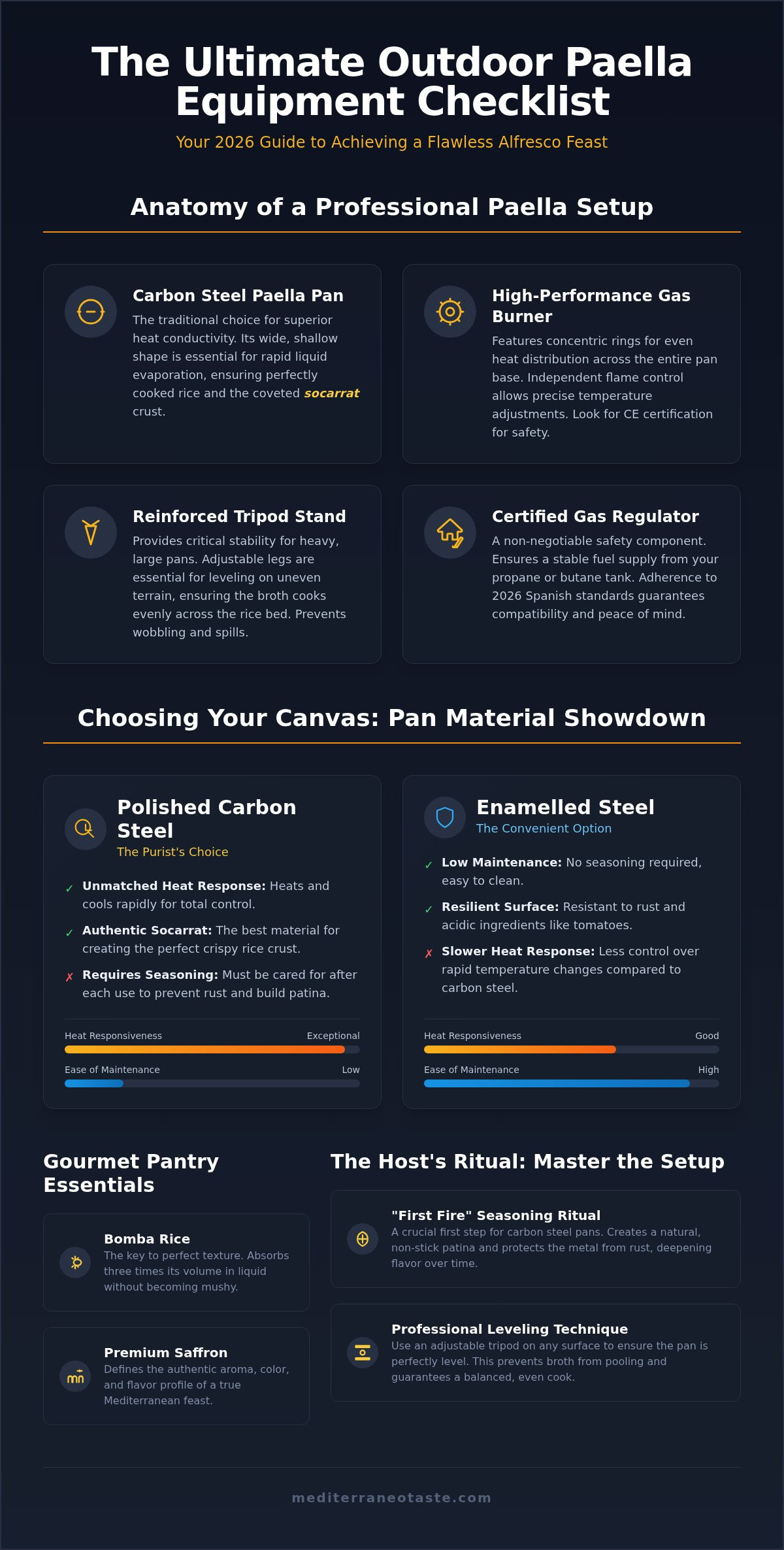
A professional set requires more than just a pan. You need a synchronized system. This includes a high-performance burner for even heat, a sturdy tripod for stability, and a certified gas regulator to manage the energy source. Together, these components create a reliable environment where you can focus on the art of the cook rather than the limitations of your equipment.
The Anatomy of a High-Performance Gas Burner
Achieving the perfect socarrat requires heat that is both powerful and precise. Modern gas burners feature a concentric ring design. This allows you to distribute flames evenly across the entire base of your carbon steel paella pan. For larger gatherings, burners with two or three rings are vital. They prevent cold spots that could ruin the texture of the rice.
Independent flame control is another hallmark of professional gear. It gives you the power to manage the transition from a vigorous simmer to the final, intense heat needed for caramelization. Always look for the CE certification on your burner. In the Spanish market, this mark ensures the equipment meets rigorous safety and performance standards for outdoor use. It's a non-negotiable detail for any host who values peace of mind as much as culinary excellence.
Tripods and Stability: The Host’s Foundation
Stability is the silent partner of a successful outdoor feast. When you're cooking for a crowd, the weight of the pan, broth, and ingredients can be substantial. A reinforced tripod stand is essential to keep your setup level. An uneven pan leads to uneven cooking, where one side of your paella might dry out while the other remains submerged.
Choosing between adjustable and fixed tripods depends on your typical terrain. Adjustable legs are a blessing on rustic garden paths or uneven stone terraces. Look for models with reinforced bracing. This extra support prevents wobbling during the crucial moments of stirring and serving. For those who enjoy social gatherings in different locations, portability is key. Select sets that feature simple assembly and compact storage without sacrificing the structural integrity needed for event-sized pans.
Selecting Your Canvas: A Checklist for Paella Pan Materials
Choosing the right pan is like selecting a canvas for a masterpiece. Each material offers a different dialogue with the fire. While modern non-stick options exist, they often fail to deliver the authentic, caramelized crust known as socarrat. To achieve that legendary texture, you must look toward traditional materials that prioritize heat conductivity over convenience. The carbon steel paella pan remains the undisputed choice for purists. Its thin, responsive surface allows for rapid temperature adjustments, which is vital for the final stages of cooking. It feels alive in your hands, reacting instantly to every turn of the gas dial.
For those who desire a touch of elegance, stainless steel offers a premium alternative. These pans provide exceptional durability and a stunning aesthetic flair for social gatherings. They don't require the same maintenance as carbon steel, making them a favorite for hosts who value both performance and a polished presentation. Regardless of the material, following outdoor cooking safety guidelines ensures that your focus remains entirely on the sensory joy of the experience.
Polished Carbon Steel vs. Enamelled Steel
The heat responsiveness of a carbon steel paella pan is unmatched. It heats up quickly and cools down just as fast, giving you total control over the simmer. However, this responsiveness requires a commitment to care. You must season the pan after every use to create a natural patina and prevent rust. It's a ritual that builds a deep bond between the cook and their tools over years of service.
If you prefer a more effortless experience, enamelled steel is an excellent choice. It provides sturdy construction without the need for seasoning. The enamel coating is particularly resilient against acidic ingredients like tomatoes and lemon. If you're just beginning your journey, The Ultimate Guide to the Enamelled Steel Paella Pan explores why this material is perfect for newcomers. You can find a curated selection of these professional tools at Mediterraneo Taste Spain.
Sizing Your Set for the Occasion
Size is more than a matter of volume. It dictates the depth of the rice layer. A thin layer is the secret to a perfect texture. For intimate family gatherings of 4 to 6 guests, a 40cm pan is the gold standard. It fits comfortably on most standard burners and ensures every grain is kissed by the heat. Scaling for events requires more precision. Moving to 60cm or larger pans demands specialized burners to maintain even heat distribution. Consult our Large Paella Pan Guide for event-specific metrics to help you plan your next grand celebration.
The Precision Checklist: Gas Management and Safety
The whisper of the gas and the blue dance of the flame are the opening notes of your culinary performance. While the history of paella began over the crackle of orange wood fires, modern precision relies on the steady, invisible flow of gas. Choosing between propane and butane is your first tactical decision. Butane is a classic, ubiquitous choice for the mild Spanish climate. However, propane offers superior performance when the evening air turns crisp. It maintains higher pressure, ensuring your burners never falter during the final, critical minutes when you're coaxing the rice into its caramelized glory.
Safety is the invisible ingredient in every great meal. Before you ignite the first ring, perform a simple leak test with soapy water on all connections. In Spain, ensuring your regulator matches national standards is paramount for both performance and insurance. Most domestic burners require a specific regulator certified for the local market. Don't overlook the expiration date on your gas hose. These components are built for durability, but the intense Spanish sun can cause wear over time. Replacing them according to the 2026 safety guidelines is a small price for a secure and joyful hosting experience.
Optimizing Flame Distribution
Your carbon steel paella pan requires a symphony of flames to cook evenly. For pans exceeding 40cm, managing the inner and outer rings is vital. Start with both rings to bring the broth to a vigorous boil, then dial back the outer ring to maintain a gentle, rhythmic simmer. Modern lateral gas burners are a revelation for heat control. They direct flames outward at an angle, preventing the center from scorching while the edges remain at the perfect temperature. If you notice a lazy yellow flame, it's a sign of inefficient combustion. Adjust the air intake to restore a sharp, blue cone of heat.
The Role of the Windshield
Even a light breeze can steal the heat from your carbon steel paella pan, leading to unevenly cooked rice and a ruined texture. A windshield is your most effective tool for maintaining a constant temperature. It doesn't just protect the flame; it focuses the energy where it belongs. This simple addition can reduce your gas consumption significantly while shortening your cooking time. Choose between clip-on guards for smaller family setups or standalone perimeter shields for larger, event-sized pans. It's a small investment that pays dividends in fuel efficiency and culinary consistency.
Beyond Hardware: The Gourmet Pantry Checklist
The hardware provides the structure, but the ingredients provide the soul. Once your carbon steel paella pan is seasoned and ready, the focus shifts to the artisanal treasures that define Mediterranean cuisine. This is where you transform a simple meal into a sensory event. Every element, from the grain of the rice to the thread of the saffron, must be selected with the same care as your professional equipment. It's a deliberate choice to prioritize quality over convenience.
A true paella is a choreography of flavors that requires specific, regional staples. You aren't just making dinner; you're curating an experience that honors centuries of tradition. By sourcing authentic components, you ensure that every bite carries the genuine essence of the Spanish coastline. It's the difference between a standard rice dish and a masterpiece of culinary art.
The Rice and Saffron Duo
Bomba rice is the undisputed secret of the master chef. Unlike standard long-grain varieties, Bomba can absorb up to three times its volume in liquid without losing its structural integrity. This unique property prevents the dreaded mushy texture and ensures each grain remains distinct and firm. To complement this texture, you need the world's most precious spice. Authentic Spanish Saffron Threads provide a complex, earthy aroma and that iconic golden glow. For the perfect balance, use a ratio of one part Bomba rice to three parts rich, seasoned stock.
Authentic Flavor Enhancers
The foundation of any great paella is the sofrito, and the foundation of the sofrito is Spanish Olive Oil. High-end, artisan extra virgin oil provides the necessary heat conduction to sauté your base ingredients in the carbon steel paella pan without scorching them. It adds a fruity depth that carries the other flavors across the palate. Next, introduce the smoky soul of the dish: Pimentón de la Vera. This smoked paprika is dried over oak fires and comes in dulce (sweet) or picante (spicy) varieties. Choose the sweet version for a subtle warmth or the spicy for a bold, traditional kick.
When these ingredients hit the hot surface of your pan, the aroma is immediate and intoxicating. It's the scent of a Spanish summer afternoon. To ensure your next gathering is truly authentic, buy our premium Spanish paella kit to start with the finest ingredients. Selecting the right stock is your final step. Whether seafood or meat-based, the liquid must be intensely seasoned to flavor the rice from within. This curated approach ensures that every bite is a celebration of Spanish heritage.
The Host’s Ritual: Setup, Care, and Curation
Hosting an outdoor paella is more than a meal; it's an act of cultural curation. The process begins long before the first flame ignites and continues well after the final guest departs. Every movement, from the way you level your tripod to the ritualistic seasoning of your carbon steel paella pan, contributes to the spirit of Spanish hospitality. It's a performance where the host acts as both chef and storyteller. By treating your equipment with the respect it deserves, you ensure that every gathering feels like a special event rather than a simple dinner.
Mastering the Level Surface
A perfectly level pan is the secret to a professional result. If your setup tilts even slightly, the broth will pool on one side. This leads to unevenly cooked rice and, more importantly, a ruined socarrat. One side may scorch while the other remains soggy. Before you add your ingredients, perform the oil test. Pour a small amount of artisan olive oil into the center of your carbon steel paella pan. If the oil stays centered, your foundation is true. If it drifts, adjust your tripod legs immediately. On the uneven stone terraces common across Spain, adjustable legs are essential for making these quick, precise corrections on the fly.
Preserving Your Artisanal Tools
Your cookware is an investment in future memories. The "First Fire" ritual is non-negotiable for new carbon steel. You must boil water with a splash of vinegar to remove the protective factory coating, followed by a thorough drying and a light coating of oil. This begins the journey of creating a natural, dark patina. The golden rule of maintenance is simple: never let your pan air dry. Water is the enemy of polished steel. After every event, wash the pan by hand, dry it immediately with a soft cloth, and rub a thin layer of neutral oil over the entire surface. Storing your Outdoor Paella Cooking Set in a dry, secure place keeps it pristine and ready for the next season of celebrations.
The Spirit of Spanish Hospitality
While the rice simmers, the atmosphere takes center stage. True Spanish dining is a marathon of sensory delight. Start the afternoon with a selection of curated tapas-think sharp Manchego, salty jamón, or a classic Gilda skewer. These small bites build anticipation for the main event. Pair the meal with a crisp Albariño or a bold Rioja to complement the smoky notes of the Pimentón de la Vera. The clinking of glasses and the warm evening breeze are just as important as the heat of the burner. When the paella finally rests under its cloth, the silence of anticipation is your greatest reward as a host.
Ignite Your Mediterranean Culinary Journey
Mastering the art of alfresco dining is a journey of sensory discovery. It starts with the responsive surface of a traditional carbon steel paella pan and ends with the shared joy of a perfectly caramelized socarrat. By selecting professional-grade burners and adhering to the latest safety standards, you create a foundation for consistent, flawless results. Don't forget the soul of the dish; artisanal staples like Bomba rice and smoky pimentón are what transform a simple gathering into a true Spanish feast. The fire is waiting.
Now, it's time to translate that knowledge into fire and flavor. Discover our curated Outdoor Paella Cooking Sets and bring authentic Spanish craftsmanship to your terrace. With professional-grade heat control and our national delivery for gourmet enthusiasts, your next social centerpiece is within reach. Embrace the ritual, trust your tools, and enjoy the vibrant spirit of Spanish hospitality.
Frequently Asked Questions
Is an outdoor paella burner better than a gas stove?
An outdoor paella burner is significantly better than a standard gas stove for achieving authentic results. Standard kitchen burners are too small for the wide diameter of a carbon steel paella pan, leading to a scorched center and undercooked edges. A dedicated burner provides concentric rings of fire that distribute heat evenly across the entire base. This precise control is essential for the rapid evaporation of liquid and the formation of a perfect crust.
Can I use a professional paella burner indoors?
Professional paella burners are almost exclusively designed for outdoor use. Using them indoors is dangerous because they consume large amounts of oxygen and can produce harmful carbon monoxide in enclosed spaces. Always check the manufacturer's certification before use. If you must cook inside, ensure you have a model specifically rated for indoor use and maintain excellent ventilation. Safety is the foundation of a successful hosting experience in any Spanish home.
What gas regulator do I need for a Spanish paella burner?
You must use a gas regulator that complies with the national safety standards of the Spanish market. Most domestic burners in Spain are designed for use with butane or propane bottles and require a specific 30mbar or 37mbar regulator. It's vital to match the regulator to the gas type and the burner's pressure requirements. Always inspect the hose for an expiration date to ensure your connection remains secure and efficient throughout the 2026 season.
How do I prevent my polished steel paella pan from rusting?
Preventing rust on a carbon steel paella pan requires a simple but disciplined post-cook ritual. You should never allow the pan to air dry after washing. Instead, dry it immediately with a soft towel and apply a thin, even layer of neutral oil over the entire surface. This creates a protective barrier against moisture. Over time, this process builds a seasoned patina that enhances the pan's performance and prevents the metal from reacting with the air.
What is the best pan size for an outdoor paella set for 10 people?
For a gathering of 10 people, a 45cm to 50cm pan is the ideal choice for your outdoor set. This size allows you to maintain a thin layer of rice, which is the secret to achieving a consistent texture and a golden socarrat. While a smaller pan might technically hold the volume, the rice would be too deep, resulting in a steamed rather than toasted finish. Choosing the correct diameter ensures every guest enjoys an authentic Mediterranean experience.
Do I need a specific tripod for different pan sizes?
Most professional tripods feature adjustable arms or fixed braces that accommodate a range of pan sizes. However, when you move to event-sized pans exceeding 60cm, you need a reinforced tripod with a higher weight capacity. These specialized stands provide the structural integrity required to support the heavy combination of steel, broth, and ingredients. Stability is paramount for even cooking, so always select a stand that matches the scale of your largest burner and pan.
How long does a gas bottle last when cooking paella?
A standard 12.5kg butane bottle is remarkably efficient and typically lasts for 15 to 20 large paellas. The exact duration depends on the number of burner rings you use and the intensity of the wind. On a calm day, a single 40cm cook uses approximately 0.5kg of gas. Using a windshield significantly extends the life of your bottle by focusing the heat and preventing the flame from flickering or losing energy to the surrounding air.
Can I cook other dishes on a paella burner set?
Your paella burner is a versatile tool that extends far beyond a single dish. It serves as a high-performance outdoor heat source for large-scale griddles, stockpots, or even traditional stews. As long as your cookware is wide enough to sit securely on the rings, you can use the burner for any recipe that requires precise, powerful heat. It's a celebratory addition to any terrace, turning every meal into an opportunity for artisanal discovery and shared pleasure.